Sumela is one of the most extraordinary monuments in Turkey — and one of the most storied. For more than a thousand years, a community of monks lived on the sheer cliff of Mount Karadağ in the Altındere Valley, in a monastery that became one of the most important in the Orthodox Christian world. The history of Sumela is the story of that long life: the founding legend, the centuries of pilgrimage and learning, the survival through the fall of empires, and the modern restoration that has made it one of Turkey’s great sights. And the culture of the region around it — the Black Sea’s own — is the world in which the monastery lived. This guide unpacks the history and culture of Sumela: how it was founded, what it became, and how the monastery and its region fit together.
The Founding Legend
The story of Sumela begins, according to tradition, in the 4th century AD. Two Athenian monks — Barnabas and Sophronius — were guided by a vision of the Virgin Mary to a cave on the cliff of Mount Karadağ, where they found an icon of the Virgin that had been hidden there. On the site of the vision, they founded a small monastery, and the icon — the Panagia Soumela, the “Virgin of the Black Mountain” — became the heart of the foundation.
The legend is unverifiable, but it set the pattern of the monastery’s long life: a place of pilgrimage, hidden in the mountains, built around a sacred object. The icon of the Virgin became the monastery’s greatest treasure, and pilgrims came to it from across the Orthodox world for more than a thousand years.
The Rise of the Great Monastery
From its legendary beginnings, Sumela grew over the centuries into one of the most important monasteries of the Byzantine world. By the medieval period it was a wealthy and influential foundation, with lands, endowments, and a community of monks that reached into the hundreds. The monastery was a center of pilgrimage, of learning, and of copying — its library and its scriptorium held the manuscripts and the traditions of the Orthodox Church.
The monastery’s position — high on the cliff, hidden in the forested valley — suited its life: a place apart, protected by the mountains, devoted to prayer and study. The complex grew across the cliff: the rock-cut chapel, the kitchens, the cells, the library, the aqueduct, and the terraces, all built into and against the living rock.

The Ottoman Centuries
The fall of Byzantium to the Ottomans in the 15th century could have ended Sumela’s story — but the monastery survived, and in some ways flourished. The Ottoman state, tolerant of its Christian subjects’ institutions, allowed the monastery to continue, and it received the protection and the patronage of sultans. The monastery kept its community, its lands, and its place in the Orthodox world.
The Ottoman centuries were the monastery’s longest chapter — centuries of continuing pilgrimage and monastic life, with the great complex maintained and expanded on its cliff. For the Orthodox communities of the Black Sea and beyond, Sumela remained what it had always been: the great sanctuary of the region, hidden in the mountains.
The Abandonment and the Long Silence
The monastery’s thousand-year life ended in the upheavals of the early 20th century. The wars and the population movements of that era scattered the region’s Orthodox communities, and the monks left Sumela — taking with them, in the tradition’s telling, the icon of the Virgin, which is today preserved in a museum in Greece. The great complex on the cliff was abandoned, and the forest began to reclaim it.
For decades, Sumela stood empty — a ruin on its cliff, known to the mountain’s shepherds and to the travelers who found their way to it. The silence was long, and the monastery’s slow decay was part of its legend.
The Restoration and the Modern Wonder
The modern chapter of Sumela’s history is the story of its rebirth. In the late 20th century, the Turkish state began the long work of restoring the abandoned monastery — the stabilization of the cliff, the reconstruction of the buildings, the cleaning of the frescoes — and Sumela reopened as one of Turkey’s great monuments. It has since become one of the country’s most visited sights, drawing pilgrims and travelers from around the world, and the restoration continues.
The modern Sumela is the meeting of the old and the new: the thousand-year monastery on its cliff, restored for the modern visitor, with the rock-cut chapel and its frescoes once again the heart of the site. The icon remains in Greece, but the sanctuary that held it for a thousand years is alive again.
The Culture of the Region
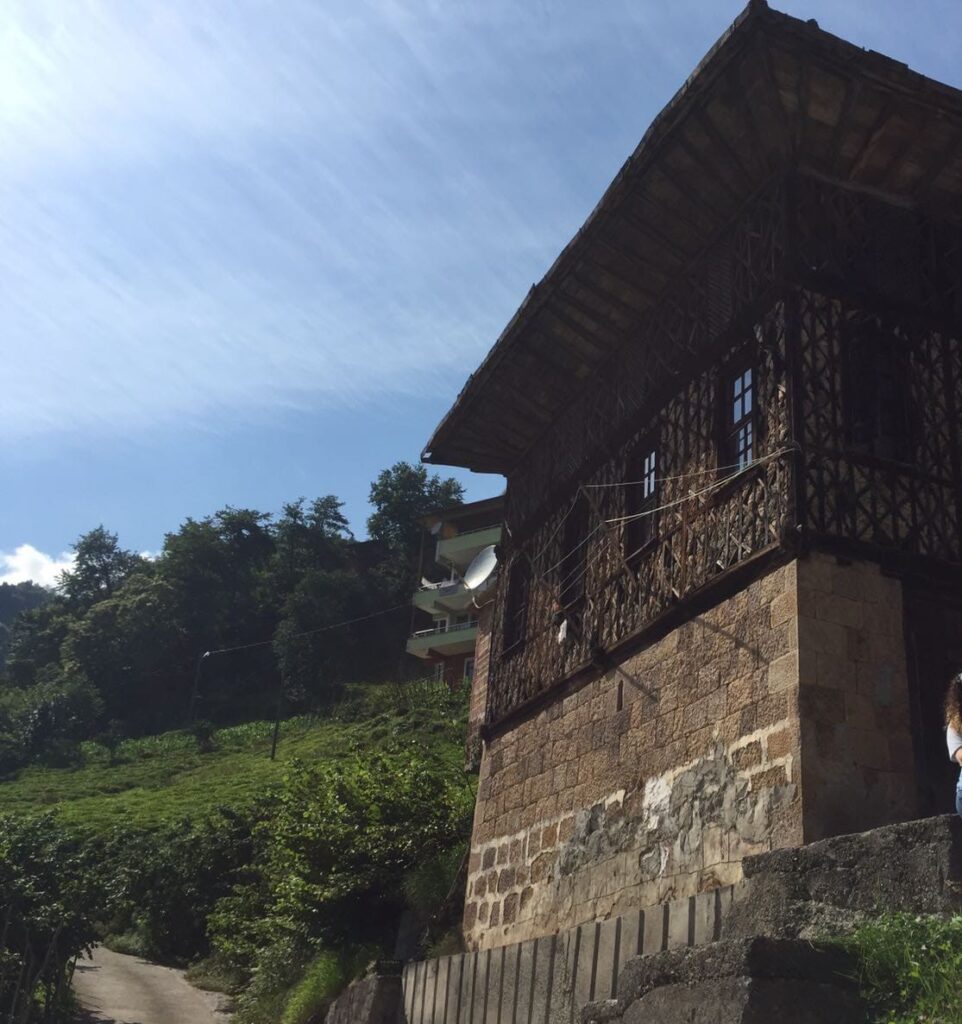
Sumela lived for a thousand years in the world of the eastern Black Sea, and the culture of that region is the monastery’s context. The people of the mountains — the herders of the yayla, the farmers of the valleys, the communities with their languages and their music — shaped the region that sheltered the monastery. The food of the region, its craft, and its hardworking life are the culture in which Sumela was built and kept. To visit Sumela is to see the great monument and the living region together — the cliff and the monastery, and the Black Sea world around them.

Visiting the History: What to Look For
A visit to Sumela is a walk through a thousand years, if you know what to look for:
- The rock-cut chapel and the frescoes — the heart of the site, carved into the cliff and painted over the centuries.
- The levels and the terraces — the maze of the monastery’s daily life, built into the rock.
- The kitchen, the cells, and the library — the working corners where the monks lived and learned.
- The aqueduct — the engineering that brought the water to the cliff.
- The views over the valley — the setting that made the monastery’s hidden life possible.
- The region around — the Black Sea’s mountains, valleys, and people, the world in which Sumela lived.
The Pilgrimage Continues
The most remarkable thing about Sumela is that its story is not finished. The monastery draws modern pilgrims as well as travelers — the Orthodox faithful of the region and beyond return to the cliff that was for a thousand years the great sanctuary of the Black Sea, and the memory of the icon and the monastery’s life continues in the Orthodox world. The modern Sumela is not only a monument but a living place of memory and faith: the pilgrims who climb the valley, the services that are held on the site, and the tradition that the monastery carries forward all continue the story that began with the founding legend. To visit Sumela is to see not only the stone and the frescoes but the living thread of a thousand years — a sanctuary that, emptied of its monks, has never been empty of its meaning.

The Takeaway
Sumela’s history is the story of a thousand-year life on a cliff: the founding legend, the centuries of pilgrimage and learning, the survival through the fall of empires, the abandonment, and the modern restoration. The rock-cut chapel and the frescoes, the levels and the terraces, and the views over the valley are all part of that long story — and the culture of the Black Sea around it is the world in which the monastery lived. To visit Sumela is to walk through a thousand years, and to understand why this hidden sanctuary in the mountains is one of the most loved places in Turkey.
Frequently asked questions
How old is Sumela?
According to tradition, it was founded in the 4th century AD; the surviving buildings and frescoes date from across the centuries of its long life, with the major structures from the medieval and Ottoman periods. The thousand-year life on the cliff is what makes the site extraordinary.
Who founded Sumela?
According to tradition, two Athenian monks — Barnabas and Sophronius — guided by a vision, founded the monastery around an icon of the Virgin Mary.
Is Sumela still a working monastery?
No — it was abandoned in the early 20th century, and the modern Sumela is a restored monument and museum, with the original icon preserved in a museum in Greece.
What is the Panagia Soumela?
The icon of the Virgin Mary around which the monastery was founded — the heart of the site for a thousand years, and today preserved in a museum in Greece.
How did Sumela survive the Ottoman period?
The Ottoman state allowed the monastery to continue, and it received the protection and the patronage of sultans — the great complex was maintained through the centuries.
When did Sumela reopen?
The restoration and the reopening are a late 20th-century development, and the monastery is now one of Turkey’s most visited sights.

All Over Information
The All Over Information editorial team researches and writes practical English-language guides to Turkey. Facts are checked against official and local sources before publication, prices are published as dated ranges rather than quotes, and guides are revised when things change. We accept no sponsored posts, paid placements or paid links.
More guides like this

Shopping Guide: What to Buy in Sumela
Sumela is a monastery in a forested valley — not a shopping destination — but the region around it is the eastern…

Nightlife Guide to Sumela
Let's be clear about what nightlife means around Sumela, because the monastery and its valley have nothing to do with neon, DJs,…
How to Get to Sumela from Istanbul
Getting from Istanbul to Sumela is a proper journey — over a thousand kilometers by road, across the width of northern Turkey…
A Foodie’s Guide to Sumela
Sumela is a monastery in a forested valley — not a food destination in itself — but the region around it is…

The Best Day Trips from Sumela
Sumela is a destination you could build a whole trip around — the monastery on its cliff, the valley below, and the…
Sumela in Summer: A Complete Travel Guide
Summer is Sumela at its fullest — the monastery at its most accessible, the valley at its greenest, and the region drawing…