You do not need to travel to Turkey to taste real kebab, though you should still travel. With the right meat, a few honest ingredients, and some patience, you can bring the smoke of the Anatolian grill into your own kitchen. This guide walks you through the authentic methods, from choosing the meat and building the marinade to managing the heat and serving the finished kebab the Turkish way. Follow the steps and you will be amazed at what your own hands and a little fire can produce.
Choosing Your Kebab Style
Before you buy anything, decide which kebab you want to make. Şiş kebab, grilled cubes of lamb, is the most forgiving for beginners because the meat is easy to handle and the technique is straightforward.
Minced kebab, the Adana and Urfa style, is the real test of the craft. It demands good meat, the right fat, and proper kneading, but the result is spectacular and well worth the effort.
Döner and Iskender are difficult to reproduce at home because they need a vertical spit, so most home cooks leave them to the professionals and focus on skewer kebab instead.
Whichever you choose, start simple. Master one kebab properly before attempting the whole family, and let each success build your confidence for the next.
The Ingredients You Need
For authentic kebab, start with lamb. Shoulder or leg works beautifully for şiş, and for minced kebab you want coarsely ground lamb with a good amount of fat, ideally including some tail fat if you can find it.
Salt and black pepper are the foundation. Red pepper flakes, pul biber, bring the heat of the south, and isot, the dried pepper of Şanlıurfa, gives the smoky depth that defines Urfa kebab. Onion, garlic, and a little olive oil complete the flavor.
For the side of the plate, you will want tomatoes, green peppers, flatbread such as lavash, onions, sumac, and fresh parsley. These are not decorations; they are essential partners to the meat.
Finally, charcoal and a grill are the only real equipment you need. If you have never cooked over charcoal, this is the dish that will teach you why it is worth learning.
Most supermarkets now stock lamb, and a good butcher can grind it to order for minced kebab. If you live far from a specialty market, consider lamb shoulder from a trusted source, and do not be afraid to ask questions. The right meat makes the difference between a good kebab and a great one, so choose your supplier with as much care as you choose the recipe.

Preparing the Meat
For şiş kebab, cut the lamb into even cubes of about two to three centimeters. Keep the pieces uniform so they cook at the same speed, and trim the meat of gristle while leaving a little fat on each cube.
For minced kebab, the meat must be coarsely ground. If your butcher grinds it too fine, ask for a coarse grind, or mince it at home in small batches. The texture should be rough, not pasty.
The fat is the soul of minced kebab. Without enough fat, the meat will be dry and crumbly, so do not trim it away. Mix the minced lamb with a generous portion of fat and season it simply.
Rest the prepared meat in the refrigerator before cooking. Cold, rested meat is easier to handle, and the flavors have time to settle into the mixture.
Building the Classic Marinade
For cube kebab, the marinade is where the magic starts. Grate or blend a large onion and squeeze out its juice; this juice is the traditional tenderizer and flavor base for şiş.
Whisk the onion juice with olive oil, black pepper, and a little salt. Some cooks add milk or yogurt for extra tenderness, and others add a pinch of dried thyme. Keep the marinade simple and let the lamb speak.
Place the cubes in the marinade and turn them well. Cover and refrigerate for at least four hours, though overnight produces the deepest flavor. Do not marinate so long that the meat loses its character.
For minced kebab, skip the liquid marinade entirely. Instead, knead the meat, fat, and spices together for several minutes until the mixture becomes sticky and cohesive, then rest it in the cold. Kneading is the marinade.
Shaping the Skewers
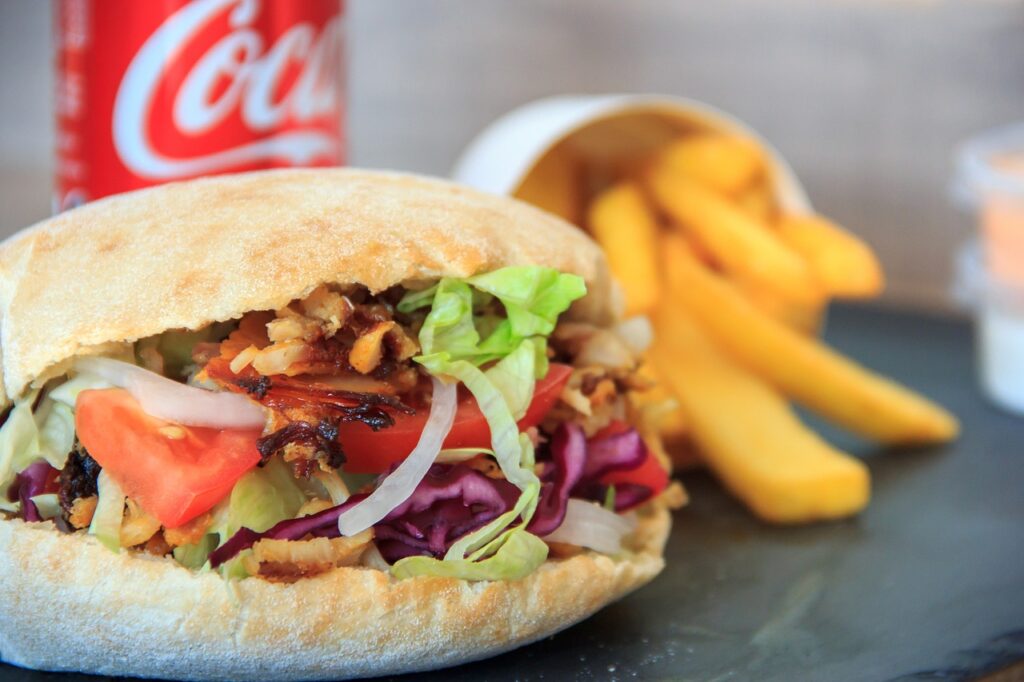
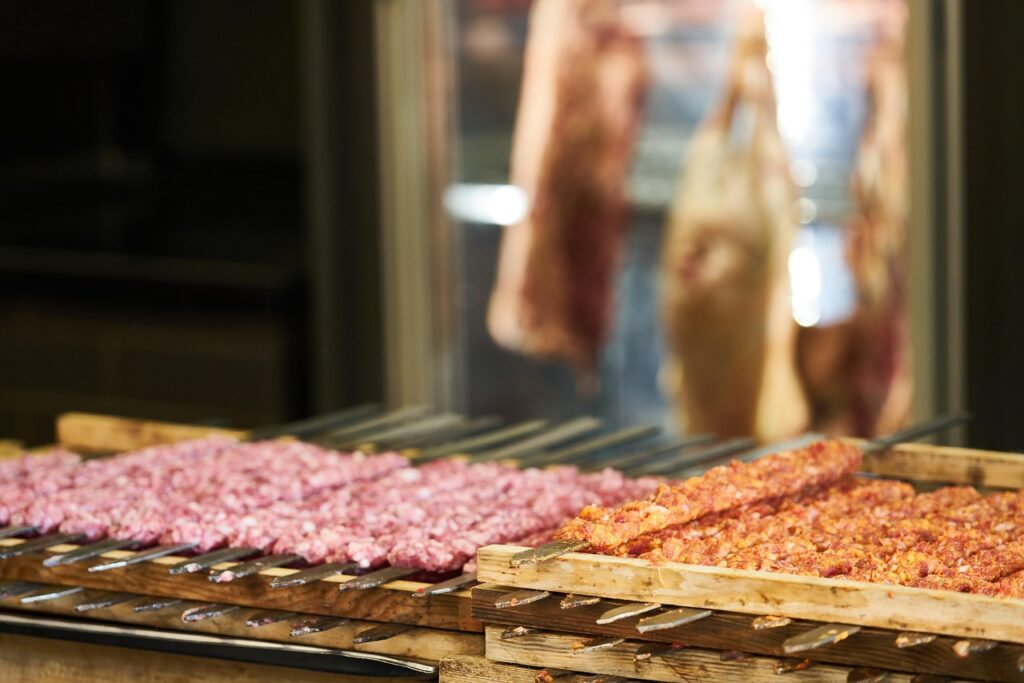
Flat metal skewers, about two to three centimeters wide, are the traditional tools for minced kebab. They hold the meat in place and cook it evenly on both sides.
Wet your hands before shaping the meat so it does not stick. Take a portion of the mixture, press it along the length of the skewer, and smooth it into a flat, even ribbon about one centimeter thick.
The meat must be pressed firmly around the skewer or it will slip off on the grill. Run your fingers along the edges to seal them, and make sure the shape is uniform from end to end.
For cube kebab, thread the cubes onto regular skewers with a small piece of fat between every two or three cubes. Leave a small gap between pieces so the heat can reach all sides.
Fire, Charcoal, and Heat
Real kebab means real charcoal. Fill a chimney starter or a pyramid of coals and light them, then wait until the coals are covered in gray ash and glowing from within.
Spread the coals in a single layer and set your grill grate over them. Let the grate heat thoroughly before you add any meat, because a hot grate sears and prevents sticking.
Manage the heat with the grate height if your grill allows it. You want intense, steady heat, not licking flames, so keep a spray bottle of water nearby to tame any flare-ups.
Let the coals talk to you. A proper charcoal fire hisses, glows, and radiates heat you can feel on your face. That feeling is the sign that you are ready to cook.

Cooking Step by Step
For minced kebab, lay the skewers on the hot grate and let them cook undisturbed for two to three minutes. When the edges color and release from the grate, turn the skewer carefully.
Turn the skewers every couple of minutes, cooking until the meat is firm and cooked through, with a charred, smoky crust. The total time is usually eight to twelve minutes, depending on thickness.
For cube kebab, sear all sides over the hottest part of the fire, then move the skewers to slightly gentler heat to finish. Medium to medium-well is the traditional finish; the meat should be juicy, never dry.
When the kebab is ready, slide it off the skewer onto a warm plate and brush it with a little melted butter or sprinkle it with dried mint and red pepper. Rest it for a minute before serving.
To test for doneness, press the meat gently. It should feel firm with a little give, and the juices should run clear. For minced kebab, the interior must be fully cooked through, so if you are unsure, make a small cut to check before serving. Undercooked lamb is unsafe and overcooked lamb is sad, and a careful cook never serves either.
Serving the Turkish Way
Serve the kebab on a warm plate with grilled tomatoes and green peppers, charred over the same fire, and a generous heap of onions sliced paper-thin and tossed with sumac and parsley.
Warm the flatbread on the grill for a few seconds on each side. It should be soft and pliable, ready to wrap around the meat, not crisp like a cracker.
Set out cold accompaniments: ezme, a spicy chopped salad of tomato and pepper, and haydari, yogurt blended with herbs and garlic. Let everyone build their own plate.
Pour glasses of ayran, the salted yogurt drink, and encourage your guests to wrap, dip, and share. The food is the message, and the table is the tradition.
Common Mistakes to Avoid
The most common mistake is using too little fat in minced kebab. Lean meat produces dry, crumbly kebab, so embrace the fat and your reward will be juiciness.
Another error is cooking over flames instead of embers. Flames char the outside and leave the inside raw, so always wait for the coals to settle into a glowing bed.
Do not overwork or underwork the minced meat. Too little kneading leaves the kebab fragile, while too much makes it dense. Stop when the mixture feels sticky and cohesive.
Finally, do not serve the kebab cold. Everything about Turkish kebab is warm, from the plate to the bread to the table itself, so keep the food hot and the mood warmer.
Adapting Without a Charcoal Grill
If charcoal is not possible, a gas grill still produces respectable kebab, though you will miss some smoke. Heat it to high, oil the grate, and cook the skewers as you would over coals.
An oven broiler can work in a pinch. Place the skewers on a rack close to the heat source, turn them often, and accept that the flavor will be simpler than fire-cooked kebab.
To add smoky depth without a fire, a small amount of smoked paprika or a soaked wood chip packet on a gas grill can help mimic the taste of the mangal.
Remember that the spirit of kebab is not the equipment but the care. Fresh meat, honest spice, and a table shared with friends will make your kebab feel Turkish, whatever the grill.
Frequently asked questions
What cut of lamb is best for kebab?
For şiş kebab, shoulder or leg of lamb cut into even cubes works best. For minced kebab, use coarsely ground lamb with plenty of fat, ideally including tail fat. The fat keeps the meat juicy during grilling, so do not trim it away.
How long should I marinate kebab meat?
Cube kebab benefits from four hours to overnight in the marinade, with onion juice as the classic base. Minced kebab is not marinated; it is kneaded with spices and rested in the refrigerator for at least an hour so the flavors meld.
Can I make kebab without a charcoal grill?
Yes. A gas grill works well if you heat it high and oil the grate, and an oven broiler is possible in a pinch. You will lose some smoky flavor, which you can partly replace with smoked paprika or wood chips on a gas grill.

All Over Information
The All Over Information editorial team researches and writes practical English-language guides to Turkey. Facts are checked against official and local sources before publication, prices are published as dated ranges rather than quotes, and guides are revised when things change. We accept no sponsored posts, paid placements or paid links.
More guides like this

A Guide to Turkish Coffee Culture and Fortune Telling
Turkish coffee is far more than a drink; it is a ceremony, a social ritual, and a window into a culture that…
Iskender Kebab Vs. International Variations: What Makes It Turkish
Turkish restaurants around the world serve dishes that look like relatives of Iskender kebab: shawarma wraps in the Middle East, gyros in…

How to Make Authentic Baklava at Home
Baklava may look like the work of a pastry wizard, but with good ingredients, a little patience, and the right method, you…

Where to Find the Best Testi Kebab (Pottery Kebab) in Turkey
Testi kebab is a dish with a clear address: central Anatolia, and above all the pottery country of Cappadocia. But the sealed…

Turkish Pilav: A Taste of Turkish Culture
Pilav is the grain of Turkish daily life, the quiet constant of every table.

Where to Find the Best Doner Kebab in Turkey
Doner kebab is served in every city of Turkey, and while the turning spit is everywhere, the best versions are found by…