Turkey is often described as a Muslim country, and in many ways it is, but that description hides a far richer reality. Anatolia has been a crossroads of religions for thousands of years, and the marks of that history are everywhere, in ancient churches, synagogues, and mosques standing within sight of one another. Understanding religious diversity in Turkey means understanding the deep layers of its past, the delicate balance of its present, and the living traditions that still shape daily life.
A Land of Many Faiths
Anatolia has been home to an extraordinary succession of religions. The earliest communities worshiped the gods of the ancient world, and the region later became one of the cradles of Christianity, with cities and councils that shaped the faith.
Islam arrived in the eleventh century and gradually became the majority religion over the following centuries, but it never erased what came before. The Ottoman Empire, which ruled for six centuries, was a deliberately multi-religious state, and its cities, above all Istanbul, were mosaics of communities living side by side.
That mosaic is still visible today. Turkey contains thousands of churches, synagogues, and mosques, and communities of several faiths continue to live within its borders, their histories layered upon one another like the stones of the cities themselves. Walking through the old quarters of Istanbul, a traveler can pass a mosque, a church, and a synagogue within a single hour.
Islam in Turkey: Sunni and Alevi Traditions
Islam in Turkey is not a single, uniform thing. The majority of Muslims are Sunni, following the Hanafi school of law, and their practice is expressed through mosques, prayer, fasting, and the great festivals of the religious calendar.
A significant minority are Alevis, who follow a distinct tradition with its own beliefs, practices, and communal life, centered on devotion to the family of the Prophet and on spiritual leaders called dedes. Alevism is one of the most distinctive features of Turkish religious life.
The relationship between these communities, and between them and the state, is one of the defining themes of modern Turkish history, discussed in politics, in universities, and in everyday conversation. The diversity within Islam itself, its schools, its orders, and its traditions, is as important as the diversity between religions.

Christianity in Anatolia: Ancient Roots
Christianity’s roots in Anatolia run astonishingly deep. The Apostle Paul was born in the region, many of the early churches addressed in the New Testament were founded there, and some of the first ecumenical councils of the church met in Anatolian cities.
For centuries, Anatolia was a heartland of Christianity, and the region produced theologians, saints, and monastic movements that shaped the faith worldwide. The great churches of the Byzantine era are among the wonders of the country.
Today, Christian communities in Turkey are small but real, including the Orthodox, Armenian, and Syriac traditions, and the ancient sites of their faith draw pilgrims and visitors from around the world.
The Jewish Community of Turkey
The Jewish presence in Anatolia also has deep roots, reaching back to antiquity. Communities flourished under the Romans and Byzantines, and the region’s synagogues and cemeteries testify to centuries of continuous life.
The largest chapter of Jewish history in Turkey began in the late fifteenth century, when the Ottoman Empire welcomed Jews expelled from Spain and Portugal. These exiles, known as Sephardim, brought their language, Ladino, and their traditions, and they prospered in Ottoman cities.
Istanbul’s synagogues, the historic Jewish neighborhoods, and the traditions of the community remain part of the city’s fabric. The community today is small, but its history is one of the great stories of tolerance in the region.

Minorities in the Ottoman Empire
The Ottoman Empire was one of the most religiously diverse states in history, and its system for managing that diversity was distinctive. Communities of different faiths were organized under the millet system, each governing its own religious and civil affairs.
Under this system, Christians and Jews lived as subjects of the Muslim state but enjoyed a large measure of autonomy in matters of family, education, religion, and law. The arrangement was not equality in any modern sense, and its limits were real, but it allowed centuries of remarkable coexistence to take root and endure.
The legacy of the millet system is complex and contested, celebrated by some as a model of tolerance and criticized by others for its inequalities. Whatever the judgment, it shaped the religious geography of the modern Middle East.
The Secular Republic and Religion
The founding of the Turkish Republic in 1923 brought a radical reordering of religion and state. The new republic was secular in its constitution, and religious institutions were brought under state control in ways that were unprecedented.
The secularism of the Republic, known in Turkish as laiklik, was not the separation of church and state familiar in the West. It was a state-managed secularism, in which the state supervised religious life and sought to keep it within national boundaries.
This arrangement has been debated and revised ever since, and the balance between secularism and religious identity remains one of the most sensitive questions in Turkish public life.
Sacred Sites You Can Visit
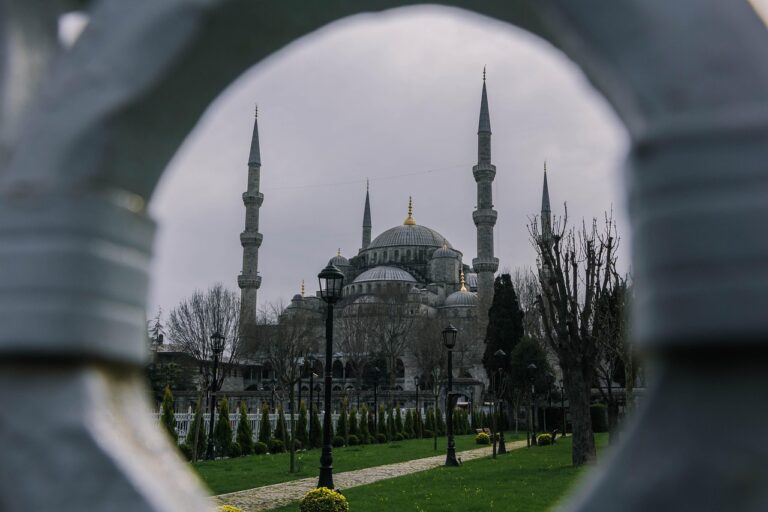
For travelers, the religious diversity of Turkey is visible above all in its monuments. Istanbul alone contains the great mosques of the Ottoman era, the Byzantine churches of the old city, and synagogues that have served their communities for centuries, often within walking distance of one another.
Beyond the capital, the country is rich in sacred geography. The monasteries of Cappadocia, the churches of the southeast, and the pilgrimage sites of many faiths dot the landscape, and many are open to respectful visitors.
Visiting these sites with understanding deepens the experience enormously. Each building carries centuries of devotion, and the coexistence of so many traditions in one country is itself a remarkable heritage.
Religious Festivals and Calendars
The religious calendar of Turkey is rich with observances. The two great festivals of Islam, marking the end of the fasting month and the sacrifice of Abraham, are national holidays, and the holy month of Ramadan shapes the rhythm of daily life.
The traditions of other faiths continue as well. Orthodox, Armenian, and Jewish communities observe their own calendars, and their festivals and commemorations mark the year in their churches and synagogues.
For visitors, awareness of these calendars is practical as well as cultural. Knowing when Ramadan falls, for example, helps you understand the rhythms of restaurants and daily life, and witnessing a festival can be one of the deepest experiences of a trip.

Contemporary Attitudes and Tensions
Religious diversity in Turkey today is lived against a background of tension as well as coexistence. The great majority of the population is Muslim, and the position of minorities, their rights, and their place in the national story are subjects of ongoing debate.
At the same time, the daily reality is often more harmonious than the headlines suggest. People of different faiths work, study, and live alongside one another, and the historic sites of all traditions are valued as part of a shared heritage.
For the visitor, the honest approach is to observe without assuming, to respect the faith of every community, and to understand that Turkey, like every country, is more complex than any single description.
Practical Advice for Respectful Travel
The simplest rule for visiting religious sites in Turkey is respect. Mosques welcome visitors outside prayer times, and modest dress is expected; women cover their heads and everyone removes their shoes. The same courtesy extends to churches and synagogues.
Photography rules vary. In many mosques, photography is allowed but should be discreet, while in some churches and synagogues it is restricted. When in doubt, ask, and follow the guidance of those who care for the buildings.
Above all, approach with curiosity and humility. The religious life of Turkey is alive, not a museum display, and visitors who treat it with respect will be welcomed as guests rather than merely tolerated as tourists.
The Call to Prayer and the Sounds of the City
One of the most immediate ways visitors experience religious diversity in Turkey is through sound. Five times a day, the call to prayer rises from the minarets of mosques, echoing across neighborhoods and marking the hours of Muslim practice.
The call is beautiful and moving, and it shapes the rhythm of daily life. In conservative districts, shops may close briefly for prayer; in mixed neighborhoods, the streets continue as the voices of the muezzins float overhead, reminders of a faith that is woven into the fabric of the country.
Beneath and around the Islamic soundscape, other traditions sound their own notes. Church bells ring in the historic Christian communities, and the festivals of the Jewish calendar mark the seasons in the synagogues. Listening to the city is a way of hearing the diversity that the eye also sees.
Frequently asked questions
Which religions are practiced in Turkey today?
The majority of the population is Muslim, predominantly Sunni, with a significant Alevi minority. Christian communities, including Orthodox, Armenian, and Syriac traditions, and a small Jewish community continue to live in the country, centered mainly in Istanbul and the southeast. The ancient religious heritage of Anatolia is visible in thousands of historic sites.
Are religious minorities still present in Turkey?
Yes, though the communities are small. Istanbul retains active Orthodox, Armenian, and Jewish communities with historic synagogues and churches, and Syriac communities survive in the southeast. The numbers are far smaller than in Ottoman times, and the communities face the challenges of any small minority, but their traditions remain alive.
How should visitors behave at religious sites?
Dress modestly, and at mosques remove your shoes and cover your head if required. Respect prayer times, keep your voice low, and follow the photography rules of each site. Approach every building with the same courtesy you would show a place of worship at home, and you will be welcomed.

All Over Information
The All Over Information editorial team researches and writes practical English-language guides to Turkey. Facts are checked against official and local sources before publication, prices are published as dated ranges rather than quotes, and guides are revised when things change. We accept no sponsored posts, paid placements or paid links.
More guides like this
Turkey’s Religious Diversity Beyond Islam
Ask most travelers what religion they expect to find in Turkey and the answer is usually one word: Islam. That is true…

Traditional Turkish Medicine Practices
Before the modern hospital, Turkey had a medicine of its own.

A Deep Dive into the Concept of Misafirperverlik (hospitality)
Misafirperverlik is the Turkish word for hospitality, but it is also a key to the whole culture.

Understanding the Lydian Kingdom: A Beginner’s Guide
You may not know the Lydian Kingdom by name, but you use its invention every day.

Turkish Carpet Weaving Traditions Explained for Foreigners
Walking into a Turkish carpet shop for the first time can be overwhelming: carpets stacked to the ceiling, tea arriving before you…

Understanding Turkish Holiday Customs
Holidays in Turkey are the heart of the calendar, times when the country closes its shops, fills its homes, and turns its…