Lake Van is the largest lake in Turkey and one of the great natural spectacles of the Middle East. It lies more than 1,600 meters above sea level in the country’s far east, a vast inland sea of soda-rich water ringed by snow-covered volcanoes and framed by ancient history. Because the lake has no outlet, minerals have accumulated in it for millennia, making the water intensely alkaline and almost lifeless. Yet around its shores you will find medieval churches, Urartian fortresses, orchards, and the famous pearl mullet, a fish found nowhere else on Earth. This guide introduces the lake’s geology, its wildlife, and the practical ways you can experience its extraordinary landscape.
The Largest Lake in Turkey
Lake Van is the biggest lake in Turkey and one of the largest closed-basin lakes on the planet, covering more than three thousand square kilometers of open water. It fills a deep tectonic basin in the eastern highlands, where the Anatolian plateau rises toward the peaks of the far east. Standing on its shore, you see a horizon of water that behaves more like a small sea than a mountain lake.
The lake stretches more than a hundred kilometers across at its widest point, and its deepest water reaches several hundred meters down. It sits at roughly 1,650 meters above sea level, so the altitude shapes everything about the region, from the thin, clear air to the sharp temperature swings between day and night. Because the lake is so large, it creates its own local weather. Breezes move across the water daily, clouds gather over the surface, and the settlements along the rim all orient themselves toward this immense blue presence.
How the Lake Was Formed
Geologists classify Lake Van as a volcano-tectonic lake, meaning that both faulting and volcanic activity shaped its basin. The region sits where tectonic plates grind together, cracking the crust and slowly lowering the land into a depression that would eventually hold the water.
The crucial moment came when the Nemrut volcano erupted and its lava flows blocked the basin’s natural outlet. With the drainage toward the lowlands sealed, rivers, rainfall, and snowmelt gradually filled the depression, creating the lake you see today.
Because no water can leave the basin except through evaporation, the lake is described as endorheic, a closed system. Every mineral carried in by its streams stays behind, and over thousands of years this process concentrated salts and carbonates to remarkable levels.

The Remarkable Soda Waters
Lake Van is a soda lake, rich in sodium carbonate and other dissolved minerals that give the water a chemistry closer to weak washing soda than to ordinary lake water. It is strongly alkaline, far saltier than most mountain lakes, and completely unsuitable for drinking.
The water’s density makes floating easy, and in some places the mineral content is high enough to leave white crusts on the rocks and along the shoreline. The lake’s smell is faintly mineral rather than fishy, simply because there are so few organisms living in it.
Only a handful of life forms tolerate these conditions, including an endemic sponge and specialized algae. The scarcity of life is precisely what makes the lake’s few inhabitants so celebrated, and it is also the reason the water stays a vivid, clear blue.
For swimmers, the alkalinity can irritate the skin and especially the eyes, so a short dip is wiser than a long soak. ## The Islands of the Lake
Four main islands rise from the lake’s waters, and the most famous is Akdamar, a small rocky island crowned by the tenth-century Church of the Holy Cross. Its walls are covered with carved stone reliefs depicting biblical scenes, created by Armenian craftsmen in the medieval kingdom of Vaspurakan.
The church has been restored and now stands as a museum, drawing visitors from around the world. Boats run from the lakeside towns when the weather is calm, and the crossing itself, over the deep blue water, is a highlight of any visit to the lake.
The other islands, including Carpanak, Adir, and Kus, are quieter and largely uninhabited. They have served over the centuries as pastures, refuges, and sites of vanished monasteries, and their lonely shores reward travelers who approach them slowly.
Life in and Around the Water
The lake itself supports only a few species, but the shoreline is full of life. The rivers that feed Lake Van create freshwater deltas, and these wetlands attract birds, insects, amphibians, and the plants that grow in the moist margins.
Beyond the shore, the surrounding highlands are home to a tougher kind of wildlife. Wolves, bears, and wild goats roam the remote mountains, while foxes, hares, and a rich variety of birds live closer to the villages and fields.
In the water, the pearl mullet dominates, joined by an endemic sponge and hardy algae. The brackish fringes and salty pools also support brine shrimp, which in turn attract the flamingos that occasionally visit the lake’s wetlands.

The Pearl Mullet and Its Spawning Run
The pearl mullet, known locally as inci kefali, lives nowhere in the world except Lake Van and its tributary streams. It has evolved to tolerate the alkaline water that kills most other fish, making it one of the lake’s great biological treasures.
Each spring, as snowmelt swells the rivers, the mullet swim upstream in dense, glittering shoals to spawn in the freshwater. The migration is one of eastern Turkey’s great wildlife spectacles, and the streams fill with silver bodies pushing against the current.
The fish are central to the region’s culture and economy. Fishermen harvest them as they complete their spawning runs, and the mullet is dried, salted, and served across eastern Turkey, often alongside the region’s famous breakfast spread.
Local people and authorities work to protect the spawning streams, since the fish’s entire existence depends on these seasonal migrations. Visitors during late spring may see the run and the traditional fishing that follows it.
The Volcanoes That Surround the Lake
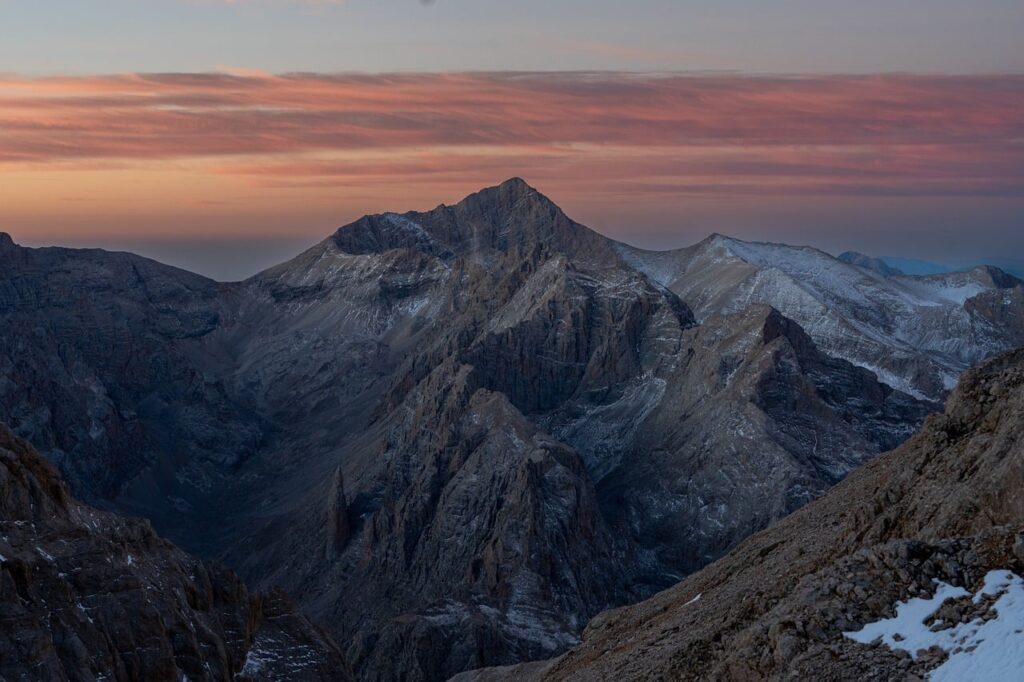
Lake Van is ringed by some of the highest volcanoes in Turkey, reminders that this landscape was built by fire. Mount Suphan, on the northern shore, rises to more than four thousand meters, its snowy cone dominating the skyline for miles around.
To the west stands Mount Nemrut, the volcano whose eruption dammed the basin and created the lake itself. Nemrut is a great caldera mountain, and its crater shelters a small lake of its own, reached by a rough road that adventurous travelers sometimes drive.
These peaks are geologically young, and the region remains active. Hot springs bubble up around the lake, and the volcanic soils support orchards and meadows that have fed people here since ancient times.
For hikers, the volcanoes offer some of the most dramatic walking in eastern Turkey, though both are demanding climbs that require fitness, planning, and respect for the weather.
Van City and the Lake’s Eastern Shore
The city of Van sits on the eastern shore and is the natural gateway to the lake. Overlooked by the ancient Urartian citadel of Van Castle, it has been a crossroads of trade and power for nearly three thousand years.
From the city you can reach the lakeside in minutes. The waterfront is a place of tea gardens, promenades, and small boats setting out for the islands, while the bazaars of Van are famous for breakfast foods, honey, and the distinctive local cheese.
The castle hill itself is worth a visit, both for the Urartian ruins and for the sweeping panorama over the city and the lake. The old town was rebuilt in the twentieth century, but traces of its layered history survive in churches, mosques, and crumbling walls.
The eastern shore also holds the ruins of medieval Armenian settlements, some standing at the water’s edge. Exploring them, you understand why so many civilizations chose this dramatic and defensible setting.
Seasons and Weather on the Lake
The region around Lake Van has a harsh continental climate. Winters are long and cold, with the shallow bays freezing over and the surrounding mountains buried under deep snow, and many guesthouses close until spring.
Spring brings the great thaw, when meltwater pours into the lake and the pearl mullet begin their upstream migration. It is a lively season, though the weather can change quickly between brilliant sun and sudden storms.
Summer is the best time for most visitors, with warm, dry days and calm water for boat trips. Because of the altitude, even July evenings call for a light jacket, and the lake itself stays cool enough that most swimmers prefer a quick dip.
Autumn paints the shore in gold, and the first snows return to the peaks by late November. Each season gives the lake a different character, and repeat visitors often have a favorite month.

Visiting and Protecting the Lake
You can explore Lake Van by car, circling the shore on roads that pass through orchards, small towns, and ancient ruins, with the city of Van as your base for most services. Boats connect the shore to the islands on calm days.
The lake’s future depends on careful management. Its alkaline water is sensitive, and the pearl mullet’s spawning streams must be protected from pollution and overfishing. As a visitor, you can help by staying on marked paths, taking your rubbish away, and respecting the wildlife.
Above all, move slowly. The lake rewards travelers who take time to sit by the water, watch the light change on the volcano cones, and absorb the deep quiet of one of Turkey’s most extraordinary natural places.
Frequently asked questions
Is Lake Van safe to swim in?
You can swim in Lake Van, and the dense, salty water makes you float with remarkable ease. However, the strong alkalinity can irritate your skin and especially your eyes, so most visitors take a short dip rather than a long swim. The water stays cool even in summer, and there are no lifeguards or designated beaches in most places, so always stay close to shore and never swim alone.
Why is Lake Van water so salty?
Lake Van is a closed basin with no outlet to the sea. Rivers and streams carry dissolved minerals into the lake, and because the only way water leaves is through evaporation, those minerals accumulate over time. After thousands of years, sodium carbonate and other salts have built up to the levels you find today, making the lake strongly alkaline and noticeably salty, though less so than the ocean.
When is the best time to visit Lake Van?
Summer, from June through September, is the most comfortable season, with warm days, calm water, and the best conditions for boat trips to the islands. May is lovely for the pearl mullet migration, and October offers golden colors with fewer visitors. Winter is harsh and cold, and boat services largely stop, so only travelers seeking dramatic snowscapes should plan a trip then.

All Over Information
The All Over Information editorial team researches and writes practical English-language guides to Turkey. Facts are checked against official and local sources before publication, prices are published as dated ranges rather than quotes, and guides are revised when things change. We accept no sponsored posts, paid placements or paid links.
More guides like this

Exploring Uzungol Lake: A Complete Guide
Uzungol is one of Turkey's most beloved natural landscapes, a jewel of a lake set in the green mountains of the Black…

Bird Watching Hotspots in Turkey
Turkey is a birdwatcher's paradise, sitting directly on one of the world's great migration routes.

Turkey for Beach Lovers: A Complete Guide
Turkey has more than seven thousand kilometers of coastline, washed by four seas, and for the beach lover it is one of…

Beysehir Lake: Turkey’s Natural Wonder
Beysehir Lake is a natural wonder in the truest sense: a vast inland freshwater sea that most visitors to Turkey never even…

Best Hiking Trails Around Ihlara Valley
Ihlara Valley offers some of the most atmospheric walking in Turkey, and its trails range from an easy riverside stroll to full-day…

Exploring Ihlara Valley: A Complete Guide
Ihlara Valley is one of the most beautiful and least expected landscapes in Turkey.