Summer is Ortakoy’s liveliest season — the long days, the full square, the kumpir stalls at their busiest, the ferries crossing through the warm evenings. The village runs on the summer’s energy: the day-trippers fill the square, the gulls circle the shore, the sunset draws the crowds to the water, and the Bosphorus does the cooling. This guide covers the complete summer experience of Ortakoy — the weather, the rhythms, the food, and the hours of the village’s peak season.
The Summer Climate: The Heat and the Water
Istanbul’s summer is hot and dry — the afternoons in the high twenties and the thirties, the sun strong, the humidity low by the standards of the region. Ortakoy, at the water’s edge, catches the breeze off the Bosphorus, and the evenings cool noticeably — the village’s nights are the season’s secret, pleasant and fresh after the heat of the day. The practical kit: the light clothes, the sun protection, the hat and the sunglasses, the water bottle — the village’s walking is the season’s activity, and the middle hours belong to the shade and the breeze. The visitor should plan the outdoors for the mornings and the evenings, and the indoors — the cafes of the back streets, the air-conditioned rooms — for the heat of the afternoon. The summer Ortakoy is a village of two rhythms: the shaded day and the cool evening.
The Morning: The Postcard at Its Cleanest
The summer mornings are the village’s best hours — the light clean on the mosque and the bridge before the heat and the crowds. The postcard composition is at its finest in the morning: the mosque at the water’s edge, the bridge overhead, the strait calm in the clear light. The morning is also the walking hour: the promenade both ways before the heat, the back streets’ climb in the cool of the day. The visitor should make the mornings the village’s own — the postcard first, the walks after, the photography done before the crowds — and the summer Ortakoy gives its best face to the early riser.
The Midday: The Kumpir and the Shade
The midday belongs to the kumpir and the shade. The kumpir stalls of the square do their busiest trade at the lunch hour — the baked potatoes stuffed with the fillings of the counter, the village’s famous meal in the hand. The shade of the village — the trees of the square, the back streets’ lanes, the covered tables of the cafes — is the midday’s refuge, and the breeze off the water is the village’s air-conditioning. The ferries are the midday’s escape: the crossing to the Asian side, the breeze and the spray, the twenty minutes of the coolest air in the city. The summer midday of Ortakoy is the kumpir and the water, the shade and the crossing.
The Afternoon: The Water and the Life
The late afternoon brings the village’s second act. The shore fills with the summer life: the swimmers at the water’s edge, the boats and the ferries, the families of the promenade. The light turns golden over the strait as the afternoon deepens, and the photographers arrive for the golden hour. The ferry crossings — the rides at the price of a card swipe — are the afternoon’s classic: the village from the water, the breeze of the strait. And the cafes of the back streets — the garden tables, the coffee in the old houses — are the afternoon’s calm, the village behind the postcard in the summer light.

The Evenings: The Sunset and the Night
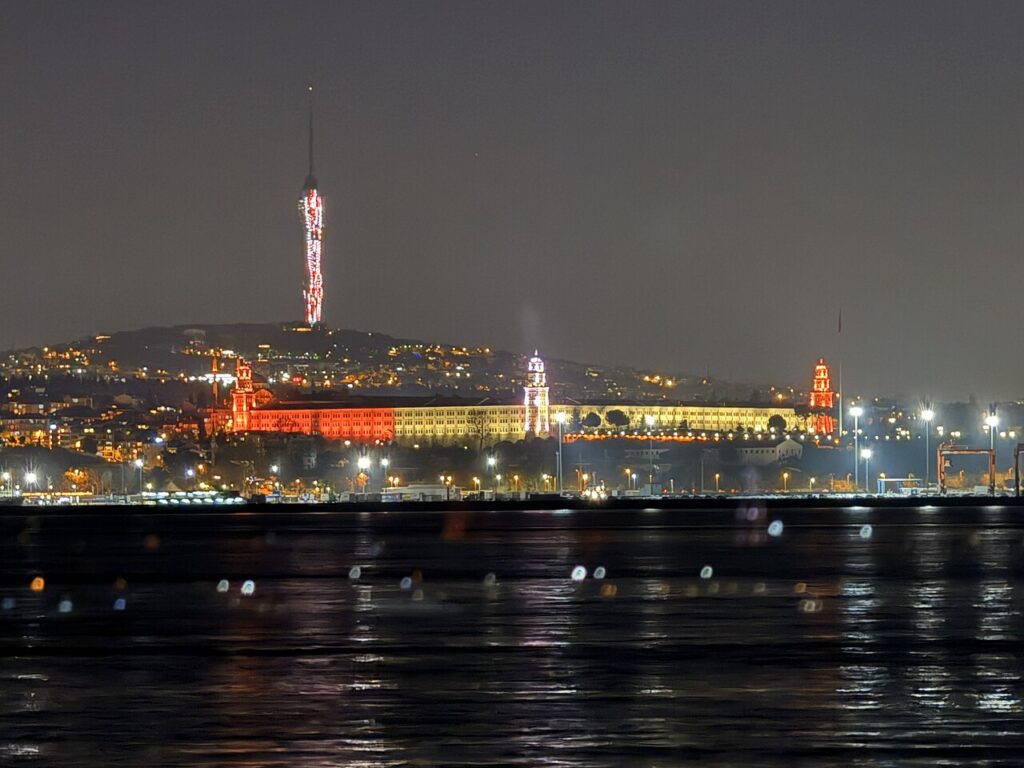
The summer evenings are the village’s finest hours. The sunset over the Bosphorus draws the crowds to the water: the bridge and the mosque lit, the strait turning amber, the ferries crossing in the low light — the golden hour that the village is famous for. The dinner follows at the fish tables of the shore — the fish of the strait, the meze, the water below — or the kumpir and the tea at the square. And the night of the village — the mosque lit, the bridge’s lights overhead, the strait black and the Asian shore’s lights across — is the summer evening’s end, the postcard at night. The summer visitor should plan the evenings as carefully as the days — the village’s best hours come after the heat.
The Weekend Rhythm: The Crowds and the Calm
The summer weekends bring the crowds — the day-trippers of the city filling the square, the kumpir stalls at their busiest, the postcard framed by the crowds. The weekdays are the calm: the square walkable, the tables findable, the village at its own pace. The visitor should follow the rhythm — the weekdays for the quiet village, the weekends for the full one — and the summer Ortakoy gives both versions of the season. The early mornings of the weekends are the compromise: the postcard before the crowds, the photography done, the village’s best hours taken before the day-trippers arrive.

The Practical Notes
A few things make the summer visit smooth. The mornings and the evenings are the days: plan the outdoors for the cool hours and the indoors — the cafes, the shaded lanes — for the heat. The water is the cooling: the ferries and the breeze off the strait are the summer’s air-conditioning — take the crossings and the promenade. The kumpir is the midday: the stalls of the square do their best trade at the lunch hour — take the potato at its freshest. The sunscreen is the kit: the summer sun is strong, and the hat and the water are the season’s necessities. And the sunset is the evening: the golden hour over the bridge is the village’s best hour — plan the evening around it.
The Summer Food and Drink
Summer in Ortaköy means eating outside, and the neighborhood does it better than almost anywhere in Istanbul. The kumpir stands reach their peak in the warm months, when the queues for the loaded baked potatoes stretch across the square and the topping counters groan under bowls of corn, olives, sausage, cheese, and pickles. Order one, find a spot on the waterfront wall, and eat it while the ferries go by — it is the defining Ortaköy summer meal.
The cold drinks follow the same rhythm. Ayran, the salty yogurt drink, is the perfect antidote to the midday heat, and the vendors sell it from every corner. For something sweeter, fresh pomegranate and orange juice stalls press the fruit to order, and the chilled glasses vanish within minutes. The tea gardens stay busy all afternoon, and the wise move is to time your tea for late in the day, when the sun has softened and the square fills with families.
One warning: the ice cream and dessert stalls sell the famous stretchy dondurma, and the queues are longest in the afternoon. Go early in the morning or after nine at night for the shortest wait and the freshest product.

Summer Events and Rhythms
Ortaköy does not host a major summer festival of its own, but it sits at the center of Istanbul’s summer calendar. The Bosphorus concerts and the open-air cinema evenings along the shore draw crowds throughout July and August, and the neighborhood fills with locals heading to the waterfront. The 15 Temmuz Şehitler Bridge lights up in patriotic colors on national holidays, and the square celebrates with music and families until late.
The real summer rhythm, though, is the weekend. Saturdays and Sundays bring day-trippers from all over Istanbul, and the square is at its liveliest — and its most crowded. If you want the postcard view without the crush, go on a weekday morning, when the light is clear, the stalls are setting up, and you can photograph the mosque and the bridge without a single stranger in the frame.
The Takeaway
Summer Ortakoy is the village at its most alive — the full square and the busy stalls, the long evenings and the sunset crowds, the ferries and the breeze and the postcard in the golden light. The heat is real and the water answers it: the mornings for the postcard, the midday for the kumpir and the shade, the evenings for the sunset and the night. Come for the kumpir and the bridge; stay for the long evenings and the summer nights; and watch the sunset from the shore — the summer Ortakoy, the season the postcard village lives for.
Frequently asked questions
How hot does it get in Ortakoy in summer?
The afternoons reach the high twenties and the thirties, but the breeze off the Bosphorus cools the evenings — the nights are the season’s secret.
Is the square too crowded in summer?
The weekends bring the day-trippers — go early for the postcard without the crowds, and take the weekdays for the village’s calm.
What is the best summer meal?
The kumpir at the midday and the fish at the sunset — the village’s summer tables, the famous and the classic.
What is the best summer hour?
The sunset — the golden hour over the bridge and the mosque, the village’s most dramatic moment.
Should I book ahead in summer?
Yes — the rooms and the fish tables of the village fill with the season’s crowds; book the beds and the dinners ahead.

All Over Information
The All Over Information editorial team researches and writes practical English-language guides to Turkey. Facts are checked against official and local sources before publication, prices are published as dated ranges rather than quotes, and guides are revised when things change. We accept no sponsored posts, paid placements or paid links.
More guides like this

Top 10 Things to Do in Ortakoy
Ortakoy is the postcard of the Bosphorus — the waterfront village where the baroque mosque stands beside the great bridge, where the…

A Foodie’s Guide to Ortakoy
Ortakoy is the Bosphorus village on the plate — the kumpir at the square and the fish at the shore, the tea…

Nightlife Guide to Ortakoy
Ortakoy is not the nightlife district of Istanbul — the clubs and the loud bars belong to the modern quarters — but…

How to Get to Ortakoy from Istanbul
Ortakoy sits on the Bosphorus at the foot of the first bridge — the buses along the shore, the ferries at the…

Hidden Gems of Ortakoy Most Tourists Miss
Ortakoy has a famous face — the mosque and the bridge, the kumpir and the square — and most visitors never see…

History and Culture of Ortakoy
Ortakoy sits on the European shore of the Bosphorus, roughly halfway between the old city and the Black Sea, and its history…