Every famous dish has a history, and cig kofte has one of the deepest in Turkish cooking. It begins in legend, with the prophet Ibrahim grinding meat and bulgur together on a stone in Sanliurfa, and it continues through centuries of regional kitchens, the great migrations of the twentieth century, and the transformation of a raw-meat delicacy into a meatless street food eaten across the country. Along the way, the dish changed shape, lost its raw meat, and gained a national audience, yet it kept the hand kneading that defines it. This article traces that long story, from the stone to the street counter.
A Dish with Deep Roots
The story of cig kofte begins with the wheat and the sheep of southeastern Anatolia, where bulgur has been the staff of life for thousands of years. Bulgur is wheat that has been boiled, dried, and cracked, and it keeps almost indefinitely, which made it the foundation of the region’s cooking.
The southeast is also sheep country, and the combination of bulgur and lamb appears everywhere in the local kitchen, from kofte to icli kofte to the great pilavs. Cig kofte belongs to this ancient pairing, a dish built from the two foods that defined the region.
Historians point out that raw-meat preparations, spiced and served fresh, appear in many old culinary traditions, and the eastern Mediterranean is rich in them. What makes cig kofte distinctive is not the idea of raw meat but the bulgur that came to define it.
The Legend of Ibrahim
The foundation story of cig kofte belongs to Sanliurfa, a city that claims a deep connection to the prophet Ibrahim. According to the local tradition, Ibrahim created the dish when his family had little: a handful of meat and some bulgur, ground together with a stone and shaped by hand.
The legend is told with variations, but its meaning is consistent. Cig kofte is food born of necessity and turned into generosity, a dish for sharing with guests and for feeding people who have little. That moral is part of why the dish commands such respect in Urfa.
Whether the story records an actual event is beside the point. It explains why the dish is treated as sacred by some families, why the kneading is performed with ceremony, and why Sanliurfa defends its claim to cig kofte with pride.

From Raw Meat to Cooked Bulgur
For most of its history, cig kofte was exactly what the name says: a raw meatball. Lean lamb or beef was minced or pounded, mixed with fine bulgur, onion, and spice, and kneaded until it formed a smooth paste, then eaten within hours.
The raw version was a food of special occasions. Without refrigeration, it had to be made fresh and consumed quickly, and the quality depended entirely on the butcher and the hour. It was served to honored guests, and making it was a demonstration of skill and freshness.
Somewhere along the way, the dish began to change. Cooks found that increasing the bulgur and working the paste longer produced a similar texture with less meat, and in the lean times of the twentieth century, the balance shifted steadily toward the grain.
The Role of Sanliurfa
Sanliurfa is the city that gave cig kofte its identity. The city sits on the ancient plains of Harran, where wheat cultivation has a history stretching back millennia, and it has always been a crossroads of trade, religion, and cuisine.
The isot pepper, which defines the modern dish, is a product of the Urfa region. Grown on the hot plains, sun-dried and then rubbed with oil, it has a fruity, smoky character that no other pepper quite matches, and it became the signature of the city’s cooking.
Urfa’s claim to cig kofte is not just sentimental. The city’s cooks developed the dish, its pepper, and its technique, and for centuries it remained a local specialty that travelers carried home with them, spreading the taste of Urfa across the region.
Visitors to Urfa often notice that the city restaurants serve cig kofte with a formality reserved elsewhere for grilled meat. The reason is history: for the people of the city, the dish is a legacy, and serving it is a way of honoring the past.
The Ottoman Table
By the Ottoman period, the cuisine of southeastern Anatolia had entered the kitchens of the empire. The great Ottoman cooks drew on regional traditions from across their lands, and the bulgur-and-meat dishes of the southeast found their way onto tables far from Urfa.
Cig kofte itself remained a regional dish rather than an imperial favorite, partly because raw meat did not travel. But the technique of kneading meat with bulgur and spice was part of a shared culinary language that connected the kitchens of the empire.
The Ottoman records tell us less about cig kofte specifically than about the food culture that surrounded it: the emphasis on lamb, on wheat in all its forms, and on spiced preparations that could be made fresh and eaten the same day.
The Hand-Kneading Craft
The kneading that defines cig kofte is an old technique with a practical history. Pounding and working the mixture by hand did what the mortar and pestle did for other foods: it broke down the fibers and bound the ingredients into a smooth, unified paste.
In the old kitchens, the kneading was also a social ritual. The tray was set on the low table, and family and neighbors took turns, talking and working together. The kofte carried the rhythm of the household into the meal.
When the dish moved into shops, the kneading became a profession. Skilled kneaders developed the distinctive motions still used today, and their craft gave cig kofte its texture, its gloss, and much of its flavor.
The old raw version had one more virtue that kept it alive in memory: freshness. In the era before refrigeration, a kofte not eaten by evening was simply impossible, and the daily making and sharing of the dish gave it a rhythm of urgency and generosity that the modern version still echoes.

The Modern Transformation
The twentieth century changed cig kofte forever. As people from the southeast moved to the big cities, vendors began selling their regional food, and cig kofte found itself on the street, where the raw-meat version was impractical.
Health concerns and economics pushed the recipe toward bulgur. Meat was expensive, raw meat was risky, and the bulgur version was cheaper, safer, and easier to produce in quantity. Within a generation, the meatless recipe became the standard.
The transformation was so complete that many Turks today do not realize cig kofte ever contained meat. The dish was not abandoned but reinvented, and the reinvention saved it: the meatless version could be sold anywhere, to anyone, at any hour.
The Isot and the Spice Trade
The flavor of modern cig kofte is inseparable from isot, and the pepper’s story is part of the dish’s history. The Urfa region developed the variety and its drying technique, and the pepper became a trade good carried across the southeast.
Isot is not simply hot. The long sun-drying gives it a deep, fruity character, and the traditional oil rub deepens the color and the aroma. When the meatless kofte needed color and depth, isot provided both, and the pepper became the dish’s soul.
Today, isot is produced and sold throughout the region, and the best bags come from the Urfa area. The spice trade that once carried the pepper along caravan routes now carries it to kitchen shelves around the world.
Cig Kofte in the Republic Era
In the early decades of the Turkish Republic, cig kofte remained a southeastern specialty, known mainly in its homeland. The great internal migrations of the 1960s and 1970s changed that, as millions of southeastern families settled in Istanbul, Ankara, and the industrial cities.
The new city dwellers opened shops and counters, and cig kofte followed the same path as other regional foods: adapted, simplified, and made for speed. By the 1980s and 1990s, the wrapped street version was a familiar sight in every Turkish city.
The dish had completed its journey from home kitchen to national street food, and in doing so it became a symbol of the southeast itself, a taste of Urfa carried into the heart of modern Turkey.
The Global Spread
The final chapter of the story is being written abroad. Turkish communities in Europe and beyond opened cig kofte shops in Berlin, London, Amsterdam, and other cities, and the meatless version needed no special permits, making it easy to sell.
The vegan identity of the dish has given it a second audience. Food markets and street events outside Turkey present cig kofte as a traditional plant-based food, and diners who would never try raw meat are happy to taste it.
Back in Sanliurfa, the tradition continues, with festivals, competitions, and a fierce local pride. The dish that began on a stone has circled the world, and its history is still being made, one tray at a time.
Frequently asked questions
Did cig kofte really contain raw meat?
Yes. For most of its history, cig kofte was made with raw minced lamb or beef, kneaded with bulgur and spice and eaten the same day. The raw version survives mainly in private homes in the southeast. In the late twentieth century, commercial kofte became meatless for safety and cost reasons, and that version dominates today.
How old is cig kofte?
The dish’s exact age is unknown. Its ingredients, bulgur and lamb, have fed the southeast for millennia, and the local legend ties the dish to the prophet Ibrahim. Written records are thin, but travelers’ accounts and the region’s food culture suggest cig kofte in some form is centuries old. What is certain is that the dish is far older than the modern Turkish state that carries its name.
Why did the meatless version replace the raw-meat one?
Health concerns and economics drove the change. Raw meat is risky to sell from street counters, and bulgur is far cheaper than lamb. Vendors discovered that extra bulgur, oil, pepper pastes, and a long kneading could mimic the texture and color of the original, and the safer version won. The same change happened across Turkish street food, where safety and price reshaped many traditional dishes.

All Over Information
The All Over Information editorial team researches and writes practical English-language guides to Turkey. Facts are checked against official and local sources before publication, prices are published as dated ranges rather than quotes, and guides are revised when things change. We accept no sponsored posts, paid placements or paid links.
More guides like this
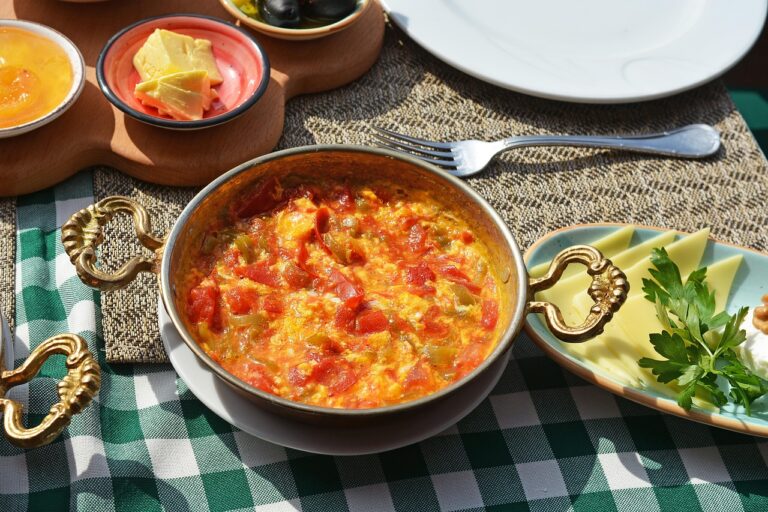
The Ultimate Guide to Menemen
Menemen is the soul of the Turkish breakfast table, a simple dish of eggs, tomatoes, and peppers simmered gently in olive oil…

Where to Find the Best Gozleme in Turkey
Gozleme is the great equalizer of Turkish street food: a thin, griddled flatbread stuffed with cheese, spinach, potatoes, or minced meat, cooked…

How to Make Authentic Turkish Ice Cream (Dondurma) at Home
Making authentic dondurma at home is a project, but it is a glorious one.

Lahmacun: A Taste of Turkish Culture
Lahmacun is more than a thin flatbread with a meat topping; it is one of the great social foods of Turkey.

The Ultimate Guide to Pide
Pide is the boat-shaped flatbread of Turkey, baked with a golden crust and a generous filling, and served hot from the wood-fired…

How to Make Authentic Turkish Simit Sandwiches at Home
The simit sandwich looks almost too simple to need a recipe, but its beauty hides a few small skills: getting the bread…