Turkish breakfast looks like a modern invention, a spread so abundant and so deliberate that it feels designed by a marketing department. In fact, kahvalti is the product of centuries: a word from the Ottoman coffee house, a tea revolution that changed the national morning, and a village table that survived every modernization. The history behind the breakfast explains why Turks eat this way, why the table looks the way it does, and why no other country sets a morning spread quite like it.
The Meaning of the Word
The word kahvalti means before coffee, combining kahve, coffee, and alti, the under or before part. It is a linguistic fossil of an older morning, when the day began with something small eaten before the first cup of coffee.
In the Ottoman world, coffee was the morning anchor, and the custom of a light bite before it spread through the cities. Nobody planned a banquet; the original kahvalti was a quick taste, bread, cheese, olives, to steady the stomach before the coffee ritual.
The word outlived the custom. The coffee-first morning faded, the tea took over, and the breakfast grew enormous, but the old name stayed, a small history lesson served with every morning table.
Ottoman Mornings: Coffee First
In the Ottoman centuries, the day did not begin with a meal but with coffee. The coffee house was the center of urban life, and even at home, the first act of the morning was the preparation and sharing of the small, strong cup.
The bite before the coffee was practical. Coffee on an empty stomach was considered harsh, so bread, cheese, olives, and dried fruit appeared first, eaten standing or in passing. This was the modest ancestor of the modern spread.
The coffee culture also shaped the social morning. Coffee was shared, discussed, and lingered over, and the morning habit of gathering around a hot drink was already established before tea ever arrived.

The Rise of Tea
The great turning point of the Turkish morning was the arrival of tea. Coffee was expensive and imported; tea, once it reached the Black Sea coast, became a domestic crop, affordable to everyone, and the national drink shifted decisively.
By the twentieth century, tea had replaced coffee as the morning fuel, and the tea culture rebuilt the breakfast around its rhythm: the double pot, the small glasses, the endless refills. The breakfast table organized itself around the tea service.
The change was democratic. Coffee had belonged to the cities and the elite; tea belonged to every village, every home, and every morning. The democratization of the hot drink is the real beginning of the modern kahvalti.
The Village Breakfast
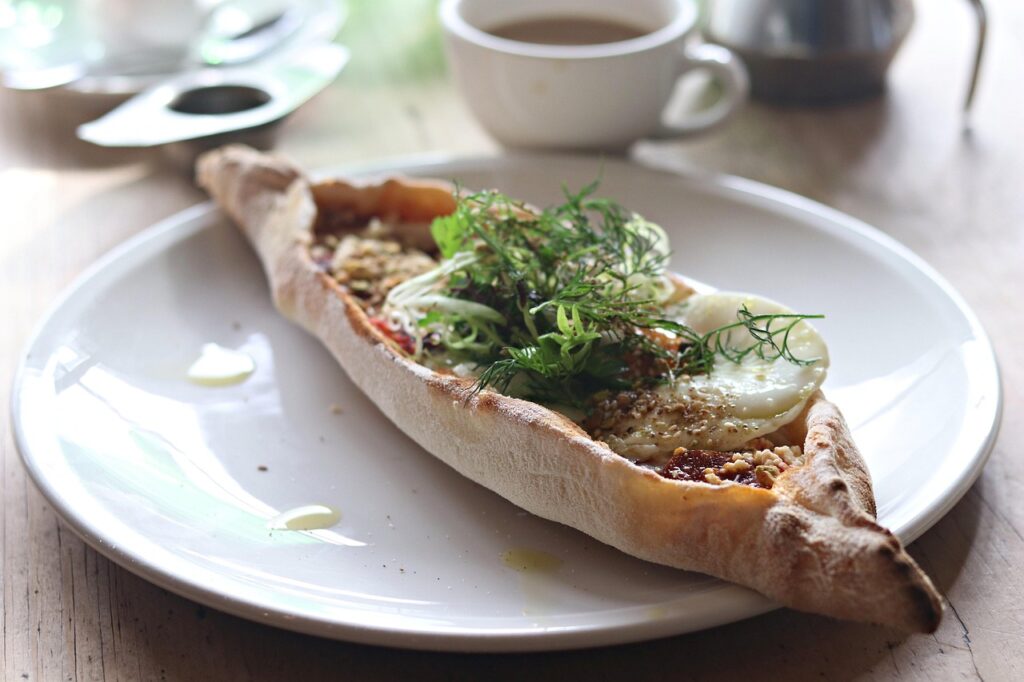
The soul of kahvalti is the village table, which has changed least of all. On the farm, the morning meal has always been built from the household’s own production: the morning milk, the home cheese, the garden vegetables, the olives from the family trees.
The village breakfast was seasonal and frugal, but its pattern, many small things, shared and unhurried, is the exact structure of the modern spread. The abundance of the city table is an enlargement of the village idea, not a departure from it.
Village life also preserved the breakfast as a social event. Farm work demanded an early, serious meal, and the table gathered the household before the day scattered it. That gathering is the emotional core of kahvalti.
The Empire’s Pantry
The Ottoman Empire’s vast geography stocked the breakfast table with variety. The empire’s territories produced the olives of the Aegean, the cheeses of the pastures, the honey of the mountains, and the jams of the orchards, all flowing to the imperial table.
The palace kitchens refined and spread techniques: cheesemaking, preserving, and the art of the sweet corner. The empire’s trade routes brought new fruits, new sugars, and new ideas, and the morning table grew richer with each connection.
This imperial inheritance explains the breakfast’s range. The modern kahvalti is, in a real sense, a map of the old empire, with a plate for every province and a taste for every border.
Cheeses, Olives, and the Black Sea
The breakfast’s two pillars, cheese and olives, have their own regional histories. The cheesemaking traditions of Anatolia developed in the mountain pastures, where summer herds produced the fresh white cheeses that became the table’s anchor.
The olive traditions belong to the Aegean and Mediterranean coasts, where the tree has been cultivated since antiquity. Brined and cured in countless ways, the olive brought the sea’s edge to every inland breakfast.
The Black Sea added its own contributions: corn breads, anchovies, and eventually tea itself. Each region’s morning is a portrait of its landscape, and the national table is the sum of those portraits.
Menemen and the Modern Kitchen
The hot dishes of the breakfast arrived with the modern kitchen. Menemen, the scrambled eggs with tomatoes and peppers, is a twentieth-century classic, born of the tomato’s late arrival in Ottoman cooking and perfected in the home kitchens of the republic.
Sucuklu yumurta and the other egg dishes followed the same path: the spread needed a hot center, and the pan provided it. The modern breakfast houses, kahvalti salonlari, institutionalized the pattern in the twentieth century.
These dishes also modernized the breakfast’s image. The village table had been cold and simple; the city table added heat, theater, and the sizzle of the pan, and the breakfast became a meal you could order in a restaurant.
The Birth of the Breakfast House
The restaurant breakfast is a surprisingly recent institution. For most of history, kahvalti was a home meal, and eating breakfast outside was a traveler’s necessity rather than a social pleasure.
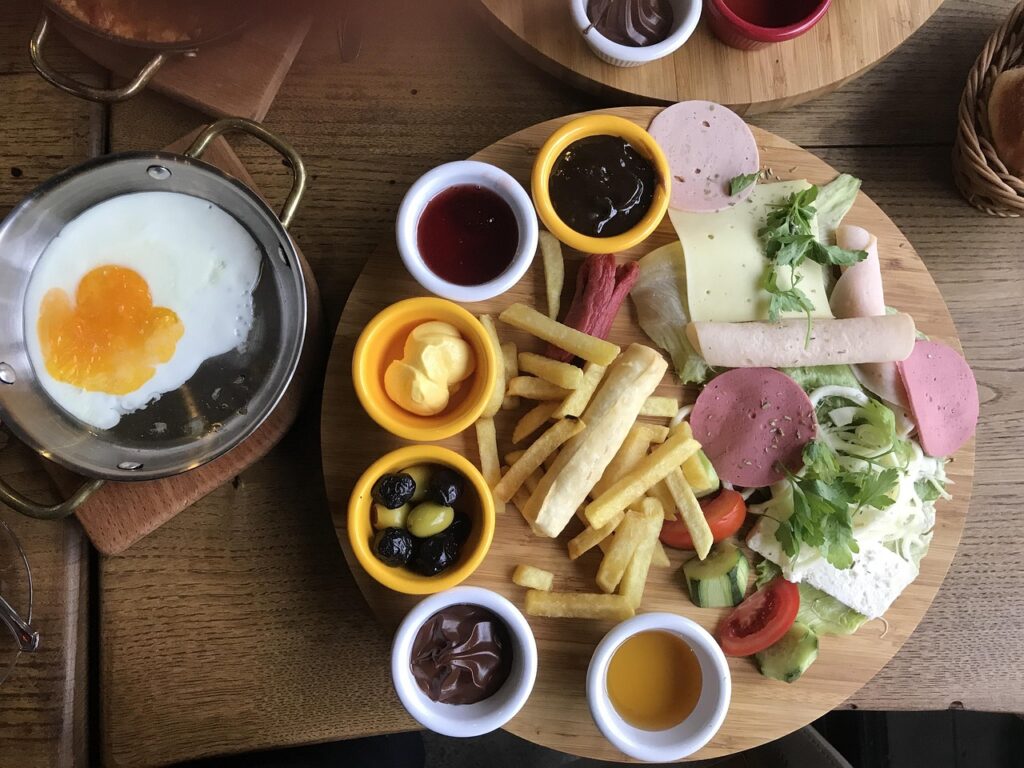
In the twentieth century, as cities grew and work patterns changed, breakfast restaurants appeared, first for workers and then for everyone. The serpme kahvalti, the set spread, was born in these rooms, turning the home table into a menu.
The breakfast house changed the ritual without breaking it: the table remained communal, the tea remained endless, and the components remained the classics. The institution simply gave the home tradition a public home.
The Sunday Breakfast as Social Institution
The long Sunday breakfast is the twentieth century’s greatest gift to kahvalti. With the work week fixed, the weekend acquired a ceremonial morning, and the family table became a gathering that could run for hours.
Sunday breakfast spread from the home into the city. Families colonized the breakfast restaurants, and the tables filled with three generations sharing one spread, the ritual becoming a fixed point of the Turkish week.
This institution is now as solid as any in the culture. The Sunday breakfast explains the crowds, the reservations, and the devoted queues, and it is the clearest sign that kahvalti is not merely food but social architecture.
Kahvalti in the Twenty-First Century
The modern kahvalti is both more and less traditional than ever. It is more, because the internet and food tourism have spread regional tables, like Van’s famous spread, to a national audience, turning local habits into pilgrimage destinations.
It is less, because the city breakfast is now a flexible concept: brunch menus, single servings, delivery boxes, and cafe versions that dress the classics in new clothes. The tradition absorbs every change without losing its shape.
What remains constant is the core: many small dishes, shared among people, anchored by tea, and eaten with attention. That core has survived the Ottoman coffee house, the tea revolution, the village, and the city, and it shows no sign of leaving the table.
Bread deserves its own chapter in the kahvalti story. In the Ottoman world, bread was the center of every meal, and the breakfast’s bread, warm, fresh, and endlessly refilled, carried that heritage into the morning table.
The breakfast breads also carry regional history: the corn breads of the Black Sea, the flatbreads of the southeast, the sesame simit that became the street breakfast of the cities. Each bread is a migration story on its own.
The ritual of the torn loaf is old too. Bread is broken, not cut, a gesture that predates the fork and connects the modern breakfast to the oldest tables of the region. The bread is the history you can eat.
The breakfast’s variety owes much to trade. The old caravan routes carried sugar, tea, and spices into Anatolia, and the ports brought coffee and citrus, each arrival enriching the morning table in its turn.
The honey and the jams came from the orchards and the hives of the region, but the sugar that sweetened them traveled the trade routes from distant fields. The breakfast table is, quietly, a museum of the old commerce.
This history explains why kahvalti varies so much across Turkey: each region tasted the trade differently, and the morning table recorded the difference. Trade built the spread, and the spread remembers the trade.
In the end, the history of kahvalti is the history of the Turkish home. The table has changed its clothes many times, but the act of gathering around it, early, together, with tea, has remained the same for centuries.
Frequently asked questions
What does kahvalti literally mean?
Kahvalti means before coffee, from kahve, coffee, and alti, under or before. The name remembers the Ottoman habit of eating a small bite before the first morning coffee. The modern breakfast has grown far beyond that bite, but the old word remains.
When did tea become part of the Turkish breakfast?
Tea became the national morning drink in the twentieth century, after it was cultivated successfully on the Black Sea coast and became affordable for everyone. Its double-pot brewing method and small glasses then shaped the rhythm of the modern kahvalti table.
How did Turkish breakfast become so elaborate?
The modern spread grew from the village table of many small shared dishes, expanded by the Ottoman Empire’s wide pantry of olives, cheeses, honeys, and jams. The twentieth-century breakfast houses and the Sunday breakfast ritual then turned the home table into a public institution.

All Over Information
The All Over Information editorial team researches and writes practical English-language guides to Turkey. Facts are checked against official and local sources before publication, prices are published as dated ranges rather than quotes, and guides are revised when things change. We accept no sponsored posts, paid placements or paid links.
More guides like this

The Ultimate Guide to Lahmacun
Lahmacun is the thin flatbread of Turkey that carries a topping of spiced minced meat, baked in a fierce oven until the…
The History Behind Ayran
Ayran is one of the oldest drinks on the Turkish table, and its history reaches back to a time before written records,…

The History Behind Turkish Meze Platters
This is the story of how a handful of small plates became the heart of Turkish dining.

The Ultimate Guide to Kofte
Kofte is the dish Turks reach for when they want the taste of home in its most honest form: seasoned minced meat,…
Where to Find the Best Kebab in Turkey
Turkey is a country of kebab cities, and each one argues passionately that it holds the crown. The good news for you…

The Role of Bread in Turkish Meals
Bread is the quiet center of the Turkish meal. It arrives before the food, stays through every course, and is still on…