This is the story of how a handful of small plates became the heart of Turkish dining. Meze platters fill the table before the main course, a parade of dips, pickles, stuffed leaves, and seafood that can easily become the meal itself. They look casual, but the tradition behind them runs deep. From Ottoman palace kitchens to the smoky taverns of old Istanbul, from Aegean harbors to the spice markets of the Levant, the meze table carries centuries of trade, empire, and hospitality. Understanding where it all came from makes every bite richer.
The Meze Table as a Living Tradition
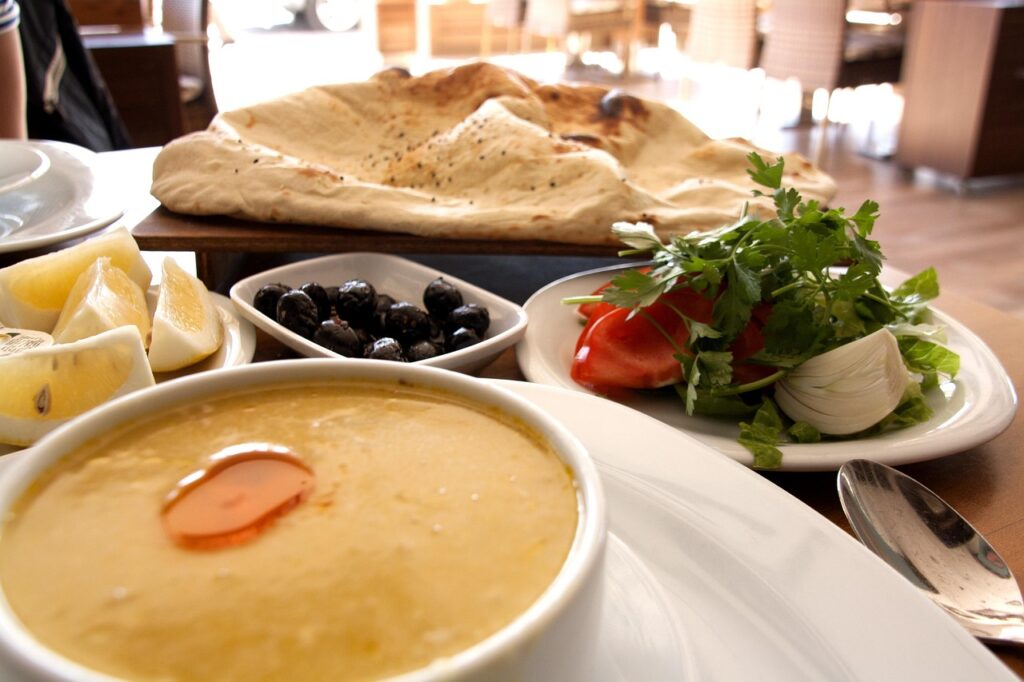
Walk into any Turkish restaurant and you will see it: a counter crowded with small plates, each holding something different. There may be a white bean salad slick with olive oil, a purple smear of eggplant, a bowl of garlicky yogurt, stuffed grape leaves, and a plate of spicy cheese paste. Ordering is part of the pleasure because you point, taste, and decide as you go.
A meze is not a single recipe but a way of eating. The word covers anything served in small portions before or alongside the main food, and the platter is the collection arranged for the table. In Turkey the custom is to order many meze, share everything, and keep the conversation moving.
The genius of the system is that it rewards variety. One diner can eat through cold yogurt dishes while another focuses on grilled items, and both leave satisfied. This flexibility is why the meze table survived every change in Turkish history, from palace banquet to neighborhood tavern to modern restaurant.
Ancient Roots: The Banquets of Antiquity
The word meze is usually traced to the Persian maze, meaning taste or flavor, and it reached Turkish through centuries of exchange with Iran. But the habit of opening a meal with small savory bites is far older. Ancient Greeks and Romans both began formal dinners with appetizers: olives, cheese, salted fish, and herb-dipped bread designed to sharpen the appetite.
In the eastern Mediterranean the tradition never really died. Harbors and caravan routes connecting Anatolia, Greece, and the Levant kept small-plate eating alive for thousands of years. Travelers carried ingredients and ideas with them; one port introduced salted fish, another brought vinegar sauces, a third contributed the spices that made appetizers worth serving.
By the time the Ottoman Empire rose, the region already shared a language of small dishes. What the Ottomans did was collect, refine, and spread it. Istanbul sat at the meeting point of these traditions, and its kitchens turned scattered regional habits into something like a national style.

The Ottoman Palace and the Birth of Meze Culture
The kitchens of Topkapi Palace were among the largest and most sophisticated in the world, feeding thousands of people every day. Palace cooks perfected techniques for preserving, pickling, and seasoning, and many dishes on modern meze platters began as palace inventions or refinements.
Ottoman feasts opened with a ceremonial display of appetizers before the main courses arrived. Cooks prepared elaborate stuffed vegetables, cured meats, fish in oil, and cold yogurt dishes, all arranged to impress as much as to feed. The palace’s openness to different culinary traditions, Armenian, Greek, Jewish, Persian, and Arab, created a cosmopolitan kitchen where recipes crossed freely.
When palace cooks retired, married, or opened shops, they carried these dishes into the city at large. This is how the refined appetizer culture of the palace slowly became the everyday meze of Istanbul, a rare case of elite food trickling down rather than the other way around.
The Influence of the Greek and Levantine Exchange
No history of Turkish meze is complete without acknowledging how much Greeks and Turks exchanged. For centuries the two communities lived side by side in the same cities, and their tables looked remarkably alike. Olive oil, fresh herbs, fish, and yogurt were the shared vocabulary of both cuisines.
The meyhane, the tavern that became the spiritual home of meze, was deeply shaped by the Greek, Armenian, and Jewish residents of Istanbul. In the nineteenth century many of the city’s most celebrated meyhanes were run by non-Muslim families, and their cooks developed the fish meze, the herb salads, and the seafood appetizers that still anchor Turkish platters today.
When families moved between the two countries, they carried recipes with them, which is why so many dishes appear on both tables under different names. The meze platter is one of the clearest examples of a cuisine that belongs to a whole region rather than a single nation.
The Golden Age of the Meyhane
The meyhane was the tavern where people gathered to drink raki, eat meze, listen to music, and argue about everything. Its golden age ran through the nineteenth and early twentieth centuries, when Istanbul’s taverns were famous across the empire for their food, their musicians, and their long, loud evenings.
A good meyhane judged its reputation by its meze. Regular customers expected a changing roster of dishes, and cooks competed to offer something new: pickled fish, stuffed mussels, liver with onions, artichokes in olive oil, eggplant in every possible form. The meze counter became a display of the cook’s skill and the house’s ambition.
The meyhane also fixed the ritual that still governs meze platters: start with cold meze, move to hot meze, and let raki flow throughout. That structure, informal but firm, is the skeleton of the Turkish meze meal.
Raki and Meze: The Ritual Pairing
Ask a Turkish diner why meze exists and the answer will often be short: because of raki. The anise-flavored spirit is traditionally drunk with food, never alone, and meze exists partly to give raki a proper companion. The two developed together in the meyhane.
Raki is a demanding partner. Its strong flavor calls for food with character, so the meze that survived around it are bold: salted fish, sharp cheese, garlicky yogurt, bitter greens, spicy spreads. Lightly flavored dishes disappear next to raki, and the meze table adjusted accordingly.
This pairing explains why Turkish meze leans savory rather than sweet, why salt and acid appear everywhere, and why the meal is designed to last. Raki is sipped slowly, so the table spreads out over hours. The meze platter is, in a real sense, the clock that measures the evening.

Regional Streams: From the Aegean to the Southeast
While Istanbul defined the national style, every region of Turkey fed its own currents into the meze tradition. The Aegean coast, with its olive groves and wild greens, produced the herb-heavy meze of zucchini flowers, artichokes, and wild greens simmered in olive oil. Fish and octopus meze naturally dominate along the shore.
The southeast, around Gaziantep and Sanliurfa, brought a spicier, more assertive style: dried peppers, pomegranate molasses, walnut pastes, and meat-based appetizers that look nothing like the Aegean’s light vegetable dishes. The Black Sea added anchovy meze and corn-based dishes with a distinctly northern character.
The great cities then mixed these regional streams together. A modern Istanbul meze counter will offer Aegean herbs next to southeastern spice pastes, Black Sea anchovies beside Mediterranean octopus. This regional collage is one of the things that makes Turkish meze so varied and so hard to exhaust.
The Republican Era and Modern Restaurant Culture
The founding of the Turkish Republic in 1923 did not erase the meze culture, but it did change where people ate it. The old meyhanes declined for a time, while restaurants, hotel dining rooms, and family-run eateries took over the role of serving meze.
By the late twentieth century a new model had appeared: the meze restaurant where the counter is the centerpiece. Diners walk up, inspect dozens of dishes, and order by pointing. This format, now familiar in every Turkish city, preserved the tradition by making it visible and accessible to a new generation.
At the same time, home cooking kept the tradition alive in the kitchen. No family celebration is complete without a table of small plates, and most Turkish cooks hold a private repertoire of meze handed down from parents and grandparents. The restaurant and the home have carried the platter forward together.

Meze in the Twenty-First Century
Turkish meze has gone global. In the last few decades, restaurants from London to Tokyo have discovered the appeal of the small-plate table, and Turkish restaurants abroad now build entire menus around meze platters. The word meze appears on menus everywhere, often adapted to local tastes.
Cookbooks, food television, and social media introduced the world to smoky eggplant, yogurt dips, and stuffed leaves, and the platter format itself, many small dishes shared by everyone, fits modern dining habits beautifully.
Global popularity has also sparked a return to tradition inside Turkey. Young chefs are reviving forgotten meze, restoring old recipes, and presenting them with contemporary polish. The meze platter is simultaneously an ancient custom and one of the freshest things on the Turkish table.
Why the Platter Matters
The meze platter matters because it is the most social food Turkey ever created. A table covered in small plates forces sharing, and sharing forces conversation.
It also matters because it preserves the memory of the region’s great exchange. Every bite of eggplant dip carries the taste of the Ottoman kitchen, every stuffed leaf remembers the Aegean coast, every spicy paste speaks of the southeastern bazaar. The platter is a small map of Turkey and its neighbors.
Finally, the meze platter matters because it is still being made new. Every generation adds its own dish, its own twist, its own favorite corner of the counter. A tradition that has lasted this long, through empires and republics, is clearly doing something right, and the small plates keep proving it.
Frequently asked questions
Why is meze served before the main course in Turkey?
Meze opens the meal to sharpen the appetite and give people something to share while the table warms up. Turkish meals are also long social events, and meze keeps the evening moving. The small plates are designed to be eaten slowly with raki or conversation, so the main course arrives when diners are ready, not when the kitchen decides.
What is the difference between meze and tapas?
Both are small shared plates, but their cultures differ. Meze is tied to raki drinking and follows a loose cold-then-hot structure, often built around yogurt, eggplant, and seafood. Tapas come from Spain, are usually served with wine or sherry, and lean more on cured meats, cheeses, and simple bar snacks served in quicker rounds.
What are the most essential Turkish meze?
The classics include haydari, a thick garlicky yogurt dip; patlican ezmesi, a smoky eggplant spread; hummus; white bean salad; stuffed grape leaves; and hot options like fried liver, calamari, and cheese pastries. A platter with three or four of these, plus fresh bread, gives a proper first taste of the tradition.

All Over Information
The All Over Information editorial team researches and writes practical English-language guides to Turkey. Facts are checked against official and local sources before publication, prices are published as dated ranges rather than quotes, and guides are revised when things change. We accept no sponsored posts, paid placements or paid links.
More guides like this

Where to Find the Best Turkish Flatbread (Bazlama) in Turkey
Bazlama is everywhere in Turkey, but the best examples are found where the tradition runs deepest: in villages, at roadside breakfast stops,…
Turkish Simit Sandwiches Vs. International Variations: What Makes It Turkish
Every great bread culture has its ring, its roll, or its crust that gets split and filled, from the New York bagel…

Turkish Flatbread (Bazlama) Vs. International Variations: What Makes It Turkish
Bread made on a hot surface is a universal human invention, from the griddle cakes of Mexico to the naan of India.…

Turkish Breakfast Culture: Why It Takes Hours
If you sit down to a Turkish breakfast expecting a quick bowl of cereal, you are in for a surprise.
Pide: A Taste of Turkish Culture
Pide is more than a boat-shaped bread with a filling; it is one of the most social foods of Turkey. It is…