Every Turkish city has a dish it claims as its own, but few claim one as fiercely as Adana claims its kebab. The spicy, hand-minced lamb kebab on wide iron skewers is not simply a recipe that happens to come from this southern city; it is a matter of local identity, defended in conversation, judged in competitions, and protected by tradition. Understanding how this dish came to be means understanding the story of Adana itself, its riverside geography, its markets, and the families who built a craft around an open flame.
A Dish Named for a City
The kebab’s name carries the city with it. Long before it became a restaurant menu item, the people of Adana were grilling small pieces of meat over coals, a practice shared across the eastern Mediterranean. What made Adana’s version different was the commitment to a single style: minced lamb, heavily seasoned, pressed onto wide flat skewers, and cooked over a fierce charcoal fire.
The connection between the city and the kebab grew stronger through the nineteenth century, when Adana developed as a trading and agricultural center on the Seyhan River. Cotton brought workers, workers brought appetites, and the riverside grills multiplied to feed them. The kebab became the food of the working day, cheap, filling, and fast.
By the early twentieth century the identity was fixed. When travelers wrote about Adana, they wrote about its kebab. The dish and the place had become inseparable.
The Meat, the Fat, and the Hands
The defining detail of Adana kebab is not the fire but the preparation that comes before it. The meat must be lamb, and it must be minced by hand, traditionally by striking it with a heavy curved blade called a zırh until it reaches a fine, almost pasty texture. Machine mincing, purists insist, crushes the fibers and ruins the result.
Into this hand-minced meat goes tail fat from the fat-tailed sheep, chopped fine and kneaded into the mix. The fat is the kebab’s secret: it melts during cooking, keeps the meat moist, and gives the finished skewer its characteristic richness.
The seasoning follows a strict regional script. Red pepper flakes, usually the hot variety locals call pul biber, provide the heat that distinguishes Adana kebab from every other kebab in Turkey. Salt completes the mixture. Beyond that, traditionalists add little, trusting the lamb and the pepper to do the work.

The Skewer and the Fire
Adana kebab is cooked on wide, flat steel skewers, not the thin pointed ones used elsewhere. The width is practical: the minced meat is pressed along the whole blade, and the flat shape lets the meat grip the metal and turn as one piece during cooking.
The fire is equally specific. Authentic grills use charcoal from oak or similar hardwoods, burned down until the flames subside and the coals glow. The skewers are laid close above the bed of coals, so the heat is intense and the fat drips onto the embers, sending up quick bursts of flame that lick the meat.
The cooking is a performance as much as a technique. The griller turns the skewers constantly, reading each one for the moment the surface chars evenly and the interior stays juicy. Nothing is cooked ahead; the kebab is finished when you order it.
The Coffeehouse and the Nightlife of Adana
The kebab found its natural home in the coffeehouses and taverns of old Adana, where men gathered to talk business, politics, and gossip over long evenings. The grilled skewer arrived with bread, grilled tomato, and onion salad, and the meal stretched as long as the conversation.
This social role shaped the kebab’s character. Because it was eaten late and shared, the kebab had to be immediate and uncomplicated, a dish that announced itself loudly with heat and smoke. It also had to be honest: a bad kebab in a room full of critics would end a cook’s reputation overnight.
The coffeehouse culture faded in the twentieth century, but the kebab’s association with conviviality survived. The long shared table at an Adana kebab restaurant, with plates passed and bread torn and şalgam refilled, is a direct descendant of those older gatherings.

Şalgam and the Kebab Table
No account of the kebab’s history is complete without its traditional drinking companion, şalgam, the purple fermented turnip juice that Adana’s grill houses serve in tall glasses. The drink is salty, sharp, and slightly fizzy, and locals insist it is the perfect counterweight to the heat of the kebab.
Şalgam was originally the drink of the region’s working people, cheap and refreshing in the scorching Çukurova heat. Its rise alongside the kebab was practical: the salt of the drink balanced the richness of the tail fat, and its acidity cut through the chili heat.
Over time the pairing became a cultural statement. In Adana, ordering a kebab without şalgam marks you as a visitor; ordering it with şalgam, served from the big glass jars that stand in every grill house, signals that you understand the local code.
The Masters of the Craft
The kebab’s survival as a craft rests on the usta, the master who has spent decades at the grill. In Adana, cooking kebab is a career passed down through families, with children learning to mince and knead before they learn to manage the fire.
The master’s authority is absolute. He decides the proportion of fat, the strength of the pepper, the size of each skewer portion, and the exact moment of doneness. His reputation is built on consistency, the ability to produce the same perfect skewer a hundred times a night.
This craft culture explains why Adana kebab never became a fully standardized industrial product. Even as other foods were mechanized, the kebab stayed handmade, because the customers demanded it. The usta remains the heart of the dish.

The Kebab in the Republic Era
As Turkey modernized in the twentieth century, the kebab followed the migrants. Adana’s population grew rapidly with industry and irrigation, and the city’s grill houses expanded from small shops into large, purpose-built kebab restaurants that could feed hundreds in an evening.
The dish also traveled. Istanbul, Ankara, and Izmir developed their own Adana kebab houses, often run by families from Adana who brought their zırh, their coals, and their standards with them. For the first time, people outside the south could judge what the city’s pride tasted like.
The spread created a new kind of scrutiny. Purists began to police the recipe from a distance, complaining that watered-down versions used beef, skipped the tail fat, or toned down the pepper. The debates of the modern era are about exactly the details that made the dish famous.
From Adana to the World
In recent decades the Adana kebab has joined the ranks of Turkish foods known far beyond the country’s borders. International restaurants list it on menus, food writers describe it in glowing terms, and visitors to Turkey come with the name already on their lists.
The international version, however, often tells a different story than the Adana original. Abroad, the kebab is frequently served mild, made with beef, or cooked on thin skewers. Locals respond with a mixture of pride and amusement, welcoming the fame while insisting that the true version can only be tasted in the city itself.
The fame has also pushed the dish toward official recognition, protecting it the way other regional products are protected. The people of Adana take the ownership of their culinary heritage seriously.

The Kebab Today
Today the Adana kebab stands as one of Turkey’s most beloved foods, and its rituals remain intact. In Adana, grill houses still mince by hand, still press the meat onto wide skewers, and still serve the kebab with charred tomato, pepper, onion salad, lavash bread, and tall glasses of şalgam.
What has changed is the audience. The kebab now belongs to travelers as much as to locals, and the best grill houses are used to curious visitors asking questions about technique. The masters answer patiently, happy to explain a craft they spent a lifetime learning.
The future looks secure. A new generation of cooks is taking up the zırh, and a new generation of eaters, Turkish and foreign alike, is learning why this particular kebab, from this particular city, earned its place at the center of Turkish cuisine.
The Legend Behind the Flame
Every great dish collects legends, and the Adana kebab has its share. Some say the wide skewer was invented so a cook could feed many hands from a single fire; others trace the heavy pepper to the hot climate, arguing that the chili was a practical response to the heat of the south.
The most persistent story links the kebab to the wandering minstrels and poets who passed through Adana, carrying tastes and techniques between regions. Whether or not the details are true, the stories bind the dish to the city’s soul.
The legends also explain the fierce local pride. When an Adanalı tells you that you cannot truly know the kebab unless you eat it in Adana, they are simply repeating what the history, the craft, and the stories have taught them: some things belong to a place.
Frequently asked questions
Why is Adana kebab spicy when other Turkish kebabs are not?
The heat comes from pul biber, the red pepper flakes of the region, which are a defining ingredient of the Adana recipe. While many Turkish kebabs rely on herbs and mild seasoning, Adana kebab deliberately uses hot pepper both for flavor and for identity. The spice level is part of what separates it from milder relatives like Urfa kebab, and most Adana grill houses can adjust the heat only within narrow limits before the dish stops being itself.
What is the difference between Adana kebab and shish kebab?
The differences start with the meat and end with the fire. Adana kebab is made from hand-minced lamb kneaded with tail fat and pepper flakes, pressed onto wide flat skewers, and cooked over charcoal. Shish kebab, by contrast, is made from chunks of meat threaded onto skewers and grilled. The minced texture, the tail fat, and the heavy seasoning make Adana kebab a distinct category, closer in spirit to a seasoned meat paste than to grilled cubes of lamb.
Why is şalgam served with Adana kebab?
Şalgam, the fermented turnip juice of the Çukurova region, has been paired with Adana kebab for generations. Its salty, tart, slightly fizzy character cuts through the richness of the tail fat and cools the chili heat, which is why locals treat the pairing as essential. The drink also carries regional pride: serving and drinking şalgam with kebab signals belonging to Adana’s food culture rather than merely visiting it.

All Over Information
The All Over Information editorial team researches and writes practical English-language guides to Turkey. Facts are checked against official and local sources before publication, prices are published as dated ranges rather than quotes, and guides are revised when things change. We accept no sponsored posts, paid placements or paid links.
More guides like this
Where to Find the Best Turkish Ice Cream (Dondurma) in Turkey
Dondurma is one of Turkey's most beloved treats, and it is also one of its most regional.

A Guide to Turkish Pastry Shops (Pastane)
If you spend any time in a Turkish city, you will notice glass-fronted shops filled with colorful cakes, cookies, and pastries. These…

Pide: A Taste of Turkish Culture
Pide is more than a boat-shaped bread with a filling; it is one of the most social foods of Turkey. It is…
The Ultimate Guide to Menemen
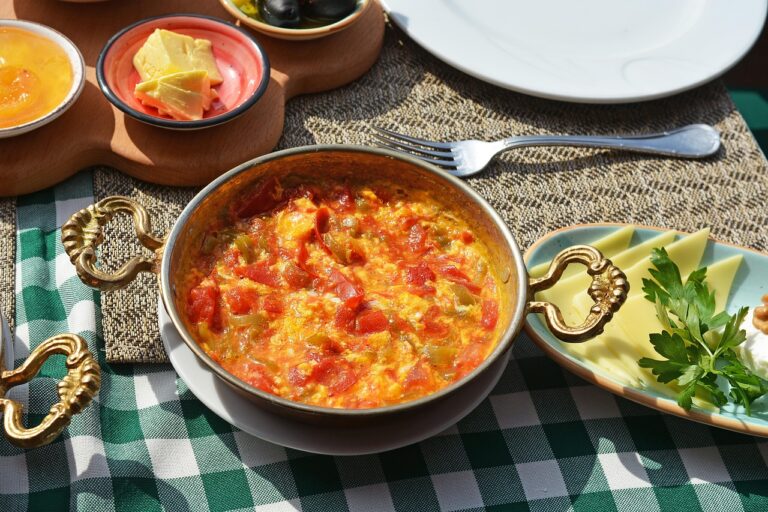
Menemen is the soul of the Turkish breakfast table, a simple dish of eggs, tomatoes, and peppers simmered gently in olive oil…
Iskender Kebab: A Taste of Turkish Culture
Iskender kebab is more than a meal; it is a piece of Turkish identity, born in Bursa and carried across the country…

How to Make Authentic Menemen at Home
Menemen is the dish that wakes up Turkey: a soft scramble of eggs folded into tomatoes and green peppers that have been…