Sivas is one of central Anatolia’s most rewarding cities, and nearly all of its highlights sit within a compact, walkable old town. A single unhurried day covers the medreses, the mosque, and the congress building where the modern Turkish republic took shape in 1919; a second day opens up the surrounding plateau and the great UNESCO monument at Divriği. This list orders the essentials from the heart of the city outward, so you can build your own itinerary around the sights that call to you most.
1. Visit the Atatürk Congress Museum
The stone lycée building where the Sivas Congress met from September 4 to 11, 1919 is the city’s most important historical site. Mustafa Kemal Pasha, later Atatürk, directed the congress from this building while delegates from across Anatolia debated the nation’s future, rejecting foreign mandates and declaring the country indivisible.
Today the restored hall looks much as it did during those nine days, with period furniture, flags, and portraits of the delegates lining the walls. The museum also houses ethnographic collections of plateau life: carpets, household tools, and clothing that show how this part of Turkey lived a century ago.
Allow a full hour. Arrive early in the morning, before tour groups from Ankara and Istanbul fill the rooms, and read a little about the congress beforehand, because the quiet power of the place depends on knowing what happened here.
2. Marvel at Gök Medrese
The Gök Medrese, built in 1271 by the Seljuk statesman Sahip Ata, is widely considered the finest medrese portal in Anatolia. Its towering stone doorway is a dense composition of carving: interlaced stars, geometric bands, and floral reliefs that reward close inspection, while the name, Blue Medrese, recalls the tiles that once clad its upper walls.
The building now operates as a museum of Seljuk and Ottoman crafts, with rooms of woodwork, metalwork, and calligraphy displayed inside the vaulted chambers. Its courtyard, with a fountain at the center and twin porticos on either side, is one of the most photogenic spaces in the city.
Give it forty minutes. Stand back from the portal first to take in the whole composition, then move in close to study the individual motifs, which change with the angle of the morning light.

3. See the Twin Minarets
A few steps from Gök Medrese stands Çifte Minareli Medrese, whose two truncated brick minarets rise above the street like broken fingers of history. Commissioned in 1271 by the Ilkhanid governor Cüveyni, the building lost the upper sections of its minarets long ago, and their jagged tops are now its signature.
The stone portal is carved with a web of geometric patterns, and the broad facade is lined with two rows of arches that once opened onto student cells. Much of the interior is in ruins, which gives the place a romantic, melancholy air, especially in the late afternoon when the sun rakes across the brickwork.
You need only fifteen or twenty minutes here. Photograph the minarets against the sky, walk the length of the facade, and then continue next door, because the story of 1271 continues at the neighboring medrese.
4. Step Inside the Grand Mosque
Sivas’s Ulu Cami, completed in 1197, is one of the oldest Seljuk mosques in Anatolia, and it is startlingly different from the domed mosques of Istanbul. It is wide and low, covered by a great flat timber roof supported on rows of reused columns, with a single minaret rising at one corner.
The prayer hall is cool, dim, and quiet, with a forest of columns leading the eye toward the mihrab. Because it remains an active mosque, visit outside prayer times, remove your shoes at the entrance, and dress modestly; women are asked to cover their hair.
Spend twenty minutes inside absorbing the atmosphere, then step back outside and notice how the building hides in the old town rather than dominating it. This is a working monument, woven into the daily life of the quarter rather than preserved behind barriers.
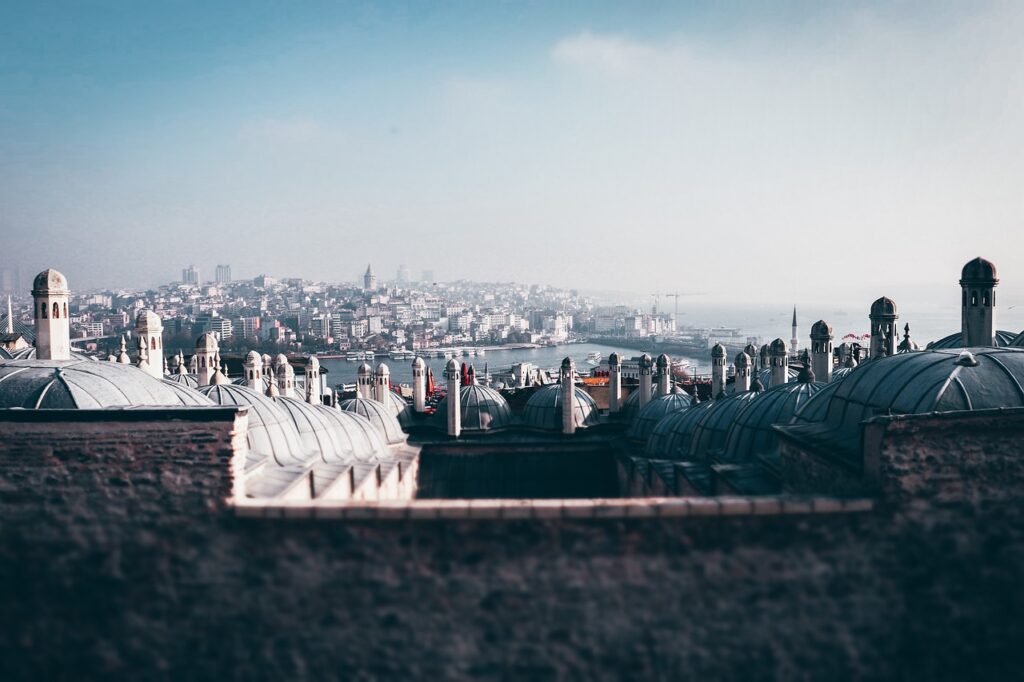
5. Wander the Old Bazaar
The lanes around the Grand Mosque form Sivas’s traditional market district, where the rhythm of the day is set by shopkeepers, tea glasses, and deliveries of fresh produce. Spice sellers stack their pyramids of red pepper and cumin, textile stalls display printed cloth, and hardware shops sell tools that look unchanged from a century ago.
It is not a tourist bazaar in the Grand Bazaar sense: no one pressures you, prices are ordinary, and the commerce is genuinely local. That is exactly its charm. Stroll slowly, buy a handful of spices or a kilo of dried fruit, and accept a glass of tea if a shopkeeper offers one.
The best time is mid-morning, when the awnings go up and the lanes fill with shoppers. The market also feeds directly into the medrese district, so you can weave the two together into a single loop through the old city.
6. Walk the Crooked Bridge
Just below the old town, the Eğri Köprü bends its long stone spine across the Kızılırmak, the river that gives this plateau its life. The medieval bridge takes its name from its gentle S-curve, a design that lets the structure shrug off the river’s spring floods, and it is one of the most distinctive bridges in Anatolia.
The bridge is a short walk from the bazaar, downhill toward the river, and it is best visited in the late afternoon, when the light turns the stone golden and the water reflects the arches. On the far bank, paths run along the water, popular with local families on fine evenings.
Bring your camera and allow half an hour. The bridge also makes a fine vantage point for photographs of the city rising up the slope behind you, with the minarets and medrese domes layered against the sky.

7. Explore the City Museum
Sivas has deep roots, and the city museum tells that story through objects rather than words. The province was home to the ancient city of Sebastia, an important Roman and Byzantine center, and the museum’s collection includes stone inscriptions, coins, and domestic objects from those centuries, alongside later Seljuk and Ottoman material.
Smaller than the great museums of Ankara or Istanbul, it has the advantage of being calm and manageable, and the displays are arranged in a way that leads you clearly from the ancient world to the recent past. Knowledgeable staff can usually offer a few pointers in English or Turkish.
Allow forty-five minutes to an hour. The museum is a good rainy-day choice and a useful complement to the Congress Museum: together the two institutions cover the region’s story from antiquity to the republic.
8. Try Sivas Cuisine at a Lokanta
Sivas cooking is built for long winters, and the old town’s family-run lokantas are the best place to discover it. Start with tarhana, the fermented wheat and yogurt soup that is the city’s signature comfort food, then move on to kesme, hand-cut noodles served in a rich broth with chickpeas.
If you are hungrier, order Sivas köfte, grilled meatballs served with charred tomato and flatbread, or look for hıngel, little pasta squares under garlic yogurt and sizzling red pepper butter. In spring, madımak, a foraged wild green cooked with lemon and olive oil, appears on menus and is worth asking for.
Lunch is the right meal for this kind of eating: the kitchens cook fresh each morning and the best dishes run out by evening. Finish with a sesame-crusted pesmet pastry and a glass of tea, and you will have eaten like a local.
9. Take the Day Trip to Divriği
The single greatest thing to do from Sivas is not in the city at all. The Divriği Ulu Cami and Darüşşifa, a UNESCO World Heritage Site about 180 kilometers east, is one of the world’s most extraordinary pieces of medieval architecture, famous for stone portals carved with patterns that never repeat.
Built between 1228 and 1243 by the Mengücek ruler Ahmet Şah and his wife Turan Melik, the mosque and hospital complex is small, remote, and breathtaking. The drive takes about three hours each way, so most visitors dedicate a full day to it, either by public bus or rental car.
Plan carefully: leave at first light, carry water and food, and remember that services around the monument are limited. The effort is genuinely repaid, because few buildings anywhere reward patience so completely.
10. Meet the Plateau: Kangal and Beyond
For a gentler second day, head east to Kangal, about eighty kilometers from Sivas, where two very different attractions await. The famous Kangal shepherd dogs, massive white livestock guardians bred here for centuries, are the region’s living symbol, and the Balıklı Kaplıca thermal springs offer the unusual experience of doctor fish nibbling at your skin, a traditional treatment for skin ailments.
Closer to home, the town of Şarkışla is remembered as the birthplace of Aşık Veysel, the blind folk poet whose songs are loved throughout Turkey, and a small museum keeps his memory alive. Zara and Gürün offer riverside scenery and simple village hospitality.
If you only have time for one excursion, choose by mood: Divriği for architecture and awe, Kangal for landscape and curiosities. Either way, the vast, quiet plateau between the sights is itself part of the experience.
Frequently asked questions
How many days do I need in Sivas?
Two days is ideal: one for the old town, the medreses, and the Congress Museum, and one for the day trip to Divriği. A single day can still cover the city center comfortably, since the main sights are all within walking distance of each other.
Is the Divriği trip worth the long drive?
Yes, if you have the time. The Divriği Ulu Cami and Darüşşifa is a UNESCO World Heritage Site with stone carving found nowhere else, and the three-hour drive each way passes through dramatic plateau scenery. It is a long day, but it is the highlight of many visits.
When is the best time to see Sivas?
Late spring and early autumn are ideal, with mild days for walking. Winter brings heavy snow and the city’s most atmospheric mood, but roads can be tricky. Summer is hot and dry, best avoided in the middle of the day.

All Over Information
The All Over Information editorial team researches and writes practical English-language guides to Turkey. Facts are checked against official and local sources before publication, prices are published as dated ranges rather than quotes, and guides are revised when things change. We accept no sponsored posts, paid placements or paid links.
More guides like this

Day Trip Ideas from Sivas
Sivas is a rewarding base for exploring the eastern Anatolian plateau, a vast, quiet landscape of rivers, mountains, and small towns where…

A First-Timer’s Guide to Sivas
Few Turkish cities reward the curious traveler as generously as Sivas, yet most visitors rush past it on the way to Cappadocia…
Where to Stay in Sivas
Sivas is a compact city, and the good news for visitors is that nearly everything worth seeing sits within a small historic…

Best Local Food in Sivas
Sivas sits on a high plateau where winter lasts half the year, and its cuisine is the delicious consequence: warming soups, hand-cut…
History and Culture of Sivas
Sivas is one of the most historically layered cities in Turkey, a place where Seljuk scholarship, Ottoman provincial life, and the birth…