The Selimiye Mosque in Edirne is the masterpiece of Ottoman architecture, the building that the great architect Mimar Sinan called his own finest work. Set on a hill above the old capital, it is free to enter, easy to reach, and far calmer than the great mosques of Istanbul. A visit combines one of the finest buildings on earth with one of Turkey’s most charming small cities, and it can be done comfortably as a day trip. This guide covers tickets, hours, and everything else you need to plan the visit.
Free Entry and No Tickets
Like all Turkish mosques, the Selimiye is free to enter, and there is no ticket to buy. You can walk into the great courtyard and the prayer hall without any admission charge, and the surrounding complex, including the arasta market street, is also open to the public. A donation box near the entrance supports the upkeep of the building, but giving is entirely voluntary.
This makes the Selimiye one of the best-value experiences in all of Turkey. The only costs you are likely to face are for the bus or train to Edirne, a guide if you choose one, and the shops and cafes of the old town. For the price of a cup of tea, you can stand under the largest dome ever built over an unbroken interior space.
Opening Hours and Prayer Closures
The Selimiye is open every day of the year, but the visiting hours follow the five daily prayers. The mosque closes to visitors about half an hour before each prayer and reopens roughly an hour later, once the service has ended. Because prayer times move with the seasons, the schedule shifts through the year, and checking the day’s prayer times before you go is wise.
The longest closure is around the midday prayer on Friday, when the congregation is largest. On other days, the best visiting windows are mid-morning and mid-afternoon. If you arrive during a prayer, the courtyard and the arasta remain open, and you can enjoy them while you wait, which makes the closure far less frustrating than it sounds.

Dress Code and Etiquette
The rules at the Selimiye are the same as at any Turkish mosque. Dress modestly, covering shoulders and knees, and women should cover their hair with a scarf, which you can borrow at the entrance if you do not have one. You must remove your shoes before stepping onto the prayer carpet and carry them with you in the bag provided.
Inside, behave as you would in any place of worship: speak quietly, avoid walking in front of people who are praying, and leave the camera flash off. The Selimiye is a working mosque, and the local worshippers are used to visitors but appreciate courtesy. Follow these simple customs, and you will be made welcome by everyone you meet.
Getting to Edirne from Istanbul
Edirne lies about two hundred and twenty kilometers west of Istanbul, close to the borders with Greece and Bulgaria. Regular buses leave from the Istanbul bus terminals and take roughly two and a half hours, and there are also train connections. The road crosses the Thracian plain, passing fields, sunflower plantations, and small towns, and the journey itself gives you a sense of the landscape beyond the capital.
If you are coming from Greece or Bulgaria, Edirne is an easy border city to enter, and many travelers combine a visit with the journey between the two countries. The Selimiye is visible from across the city as you approach, its great dome and minarets rising above the rooftops, which makes the final part of the journey a steadily more exciting approach.

Walking the Old City to the Mosque
Edirne is a small, walkable city, and the Selimiye stands on a hill at its eastern edge, a pleasant walk from the center and the bus station. The route passes the old market streets, the stone bridges over the Tunca River, and the city’s other great mosques, including the Old Mosque and the Three Balconies Mosque, both of which are worth a look on the way.
Allow about twenty minutes for the walk from the center, and be ready for the final climb, which is gentle but steady. The approach is part of the experience: as you rise, the dome and the four minarets grow above the rooftops, and the mosque reveals itself the way Sinan intended, gradually and magnificently, from every direction.
Inside the Prayer Hall
The interior is dominated by the great dome, more than thirty-one meters across, which covers the entire prayer hall without any supporting structure except eight slender piers set into the walls. The space is vast, open, and flooded with light from rings of windows, and the effect is of standing inside a single great vault of stone and light. Nothing in Ottoman architecture quite prepares you for it.
The decoration is restrained and exquisite. The mihrab, the niche marking the direction of Mecca, is carved from marble and framed by painted panels, and the calligraphy of the period’s great scribes runs across the walls. The floor is carpeted, the galleries are delicate, and the acoustics are famous: a single voice carries clearly to every corner of the enormous hall.

The Courtyard and the Minarets
Before entering, take time in the great courtyard, which is framed by porticoes and centered on a marble fountain. The courtyard is where you best appreciate the four minarets, which rise from the corners of the building, each nearly seventy-one meters tall and each crowned with three balconies. They are among the tallest minarets in Turkey and the most elegant in the Ottoman world.
The minarets are not just decoration. Their slender proportions and careful spacing make the dome appear even larger than it is, and their position at the four corners of the building turns the mosque into a single sculptural mass. Walk slowly around the courtyard and look up: the composition of dome and towers is the finest Sinan ever achieved.
The Arasta and the Complex
Below the mosque, running down the hill, lies the arasta, the covered market street built to fund the mosque’s upkeep. Its shops, restored and thriving, sell carpets, textiles, local sweets, and souvenirs, and walking it gives you a sense of how the great complex worked as a self-supporting institution. The rents of the arasta once paid for the mosque’s repairs, and it is still a working commercial street.
The rest of the complex, including the old madrasas and the library, stands around the mosque, and the gardens below are a pleasant place to rest. The complex makes the Selimiye more than a building: it is a small quarter of the city, alive with commerce and community, exactly as it was designed to be more than four centuries ago.

Combining the Mosque with Edirne
A visit to the Selimiye is best combined with the rest of Edirne, and the city packs a remarkable amount into a small area. The Old Mosque, the Three Balconies Mosque, and the Grand Synagogue, restored and reopened, are all within walking distance, and the stone bridges over the rivers are beautiful in the evening light. The city is famous for its local food, including its fried liver specialty, served in the riverside restaurants.
For a day trip from Istanbul, a sensible pattern is to arrive by late morning, visit the Selimiye when the light is good, lunch in the old town, spend the afternoon on the other sights, and catch an evening bus back. Edirne is small enough that a day covers it, and the Selimiye deserves to be the centerpiece rather than the whole of the visit.
Practical Tips for a Smooth Visit
A few small choices make the day go well. Go early, ideally arriving at the mosque by mid-morning, when the light is at its best and the crowds are small. Wear comfortable shoes, because there is walking and one gentle climb. Carry a scarf and modest clothing, and check the prayer times the evening before so you can plan around the closures.
Allow at least an hour at the mosque itself, and two if you include the complex and the arasta. Carry a little cash for tea, food, and the shops, since small businesses in Edirne often prefer it. And remember the best advice of all: sit quietly in the prayer hall for a few minutes. The Selimiye is a building to be felt, not just seen.
Photography and the Light
The Selimiye rewards photographers at every hour. In the morning the light falls across the courtyard and the marble, and the interior of the dome glows through its rings of windows. At midday the light is even and strong, excellent for the interior and the calligraphy. In the late afternoon the facade warms to gold, and at sunset the dome and minarets silhouette against the sky over the Thracian plain.
The classic photographs are taken from the gardens below the mosque, where the whole composition rises above the trees, and from the market streets of the old town, where the minarets appear between the rooftops. There is no charge for taking pictures anywhere in the complex, though the flash should stay off inside the prayer hall. Allow time at the end of the day for the exterior light, which can be the finest of all.
Frequently asked questions
How much does it cost to visit the Selimiye Mosque?
Entry is free. The mosque, the courtyard, and the surrounding complex have no admission charge, and donations are voluntary. The main costs are getting to Edirne, which takes about two and a half hours by bus from Istanbul, and anything you buy in the shops and restaurants of the old town.
What should you wear to visit the Selimiye?
Modest dress is expected, with shoulders and knees covered, and women should cover their hair with a scarf, which is usually available to borrow at the entrance. Shoes must be removed before entering the prayer hall. These simple customs apply at all Turkish mosques and take only a minute to follow.
Is the Selimiye worth a special trip from Istanbul?
Absolutely. The Selimiye is the masterpiece of Ottoman architecture, a UNESCO World Heritage site, and the building its own architect called his finest work. The journey of about two and a half hours is easy, Edirne is a charming city worth exploring, and the mosque alone justifies the day trip.

All Over Information
The All Over Information editorial team researches and writes practical English-language guides to Turkey. Facts are checked against official and local sources before publication, prices are published as dated ranges rather than quotes, and guides are revised when things change. We accept no sponsored posts, paid placements or paid links.
More guides like this

The Complete History of Dolmabahce Palace
Few buildings tell the story of Turkey's last imperial century as completely as Dolmabahce Palace.
Istanbul’s Best Rooftop Bars and Views
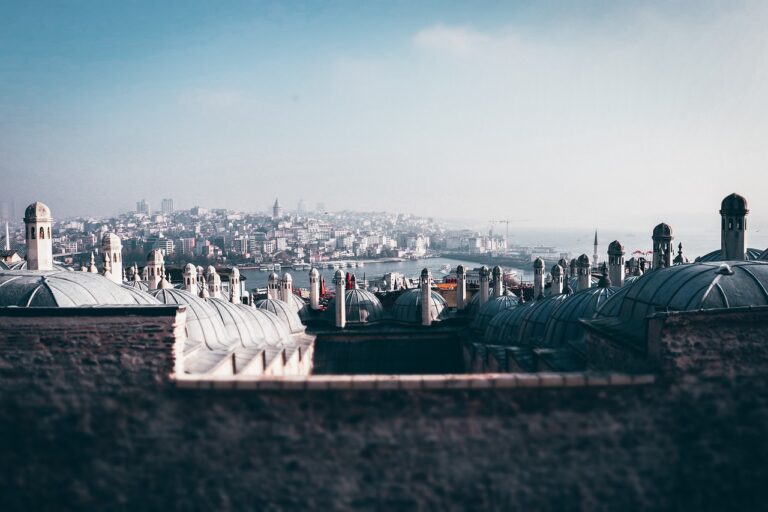
Istanbul is a city that rewards height. From a rooftop, the chaos of the streets resolves into order: the minarets and domes…

The Architecture of Topkapi Palace Explained
Topkapi Palace is not a palace in the European sense.

Galata Tower Through the Centuries
Galata Tower has outlived the empire that built it, the empire that adopted it, and most of the city that grew up…

Best Time to Visit Selimiye Mosque to Avoid Crowds
The Selimiye Mosque in Edirne is one of the easiest great monuments in Turkey to visit peacefully.

Byzantine Architecture Surviving in Modern Turkey
When you travel through Turkey, you are walking through the living museum of the Byzantine Empire.