The Maiden’s Tower is a small site with a big reputation, and its crowds are limited by the water: only the people who take the boats can reach the islet, which keeps the visit intimate in a way that the city’s other landmarks cannot match. Even so, the tower has its busy hours, and a little planning makes the difference between a serene hour on the Bosphorus and a crowded queue on the shore. This guide maps the crowd patterns of the tower by season, by day, and by hour, so you can time your visit perfectly.
How the Crowds Work at the Tower
The crowds at the Maiden’s Tower work differently from any other sight in Istanbul, because the boats are the gate. The number of visitors on the islet at any moment is limited by the number of seats on the crossings, and that natural limit keeps the tower manageable even on busy days.
The queue forms on the shore, not at the tower. When the boats are busy, visitors wait at the landing points at Salacak and the other piers, and the wait becomes part of the visit, a stretch of anticipation with the tower visible across the water.
The tower’s own capacity adds a second layer. The islet is small, and the rooms and terraces can hold only so many people, so at peak times the visit is shaped by timing slots and waiting, which makes the choice of hour the most important decision of the day.`n`nThere is also a detail worth knowing: the tower is at its most popular in the late afternoon all year round, because the light brings everyone out at once. The morning, by contrast, belongs to the early birds, and the difference between the two windows is the biggest single factor in the comfort of your visit.
The Seasons at the Tower
The seasons shape the tower’s crowds just as they shape everything in Istanbul. Summer brings the most visitors and the longest waits for the boats, while winter brings the quietest crossings and the most relaxed visits to the islet.
Spring and autumn offer the ideal balance. The weather is pleasant, the light is beautiful, and the crowds are moderate, so the tower can be enjoyed without either the summer queues or the winter weather gamble.
The tower also has a seasonal charm of its own. In spring the shores around it are fresh and green, in autumn the light turns golden, and in winter the strait can be dramatic and empty, so each season gives the visit a different character.
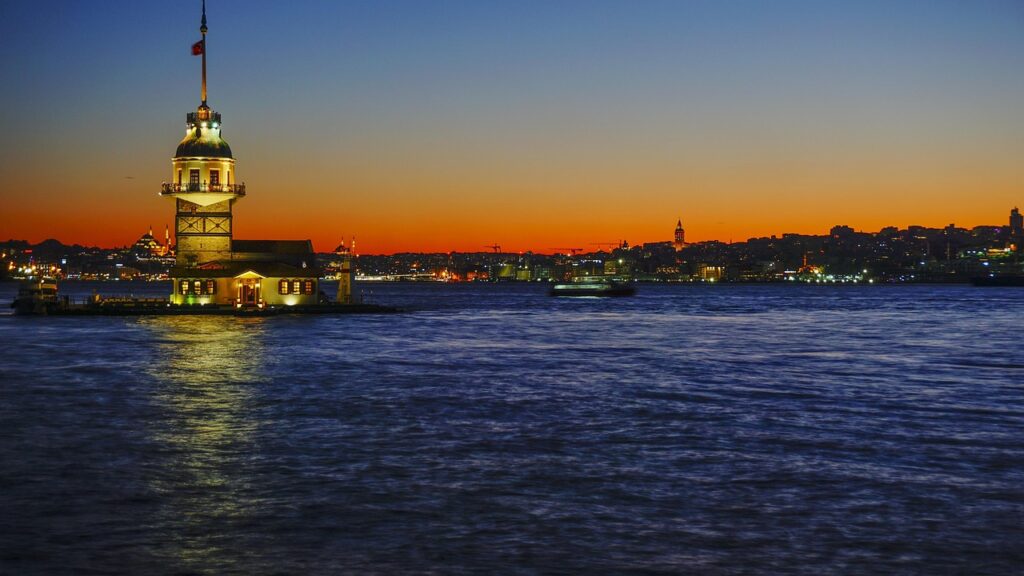
Summer: Busy but Beautiful
Summer is the tower’s busiest season, and the boats fill through the middle of the day. Cruise passengers, tour groups, and summer travelers all make their way to the islet, and the waits at the landing points can stretch on warm weekends.
The summer strategy is to go early or go late. The first boats of the day carry the smallest crowds, and the late-afternoon boats, after the midday rush, give you the golden light with fewer people on the terraces.
Summer also brings the best evening conditions for the second show: the tower lit against the dark water. Even if you skip the islet in the evening, the view from the shore is one of the season’s classic images, free of any queue.`n`nThe summer evenings also draw crowds to the shores, not for the boats but for the view. The promenades of Üsküdar fill with people watching the tower light up, and joining them is one of the free pleasures of the season, a fitting end to a day that began at the islet.
Winter: Quiet Waters
Winter is the tower’s quiet season, and for many travelers it is the best time of all. The boats run less frequently but carry fewer passengers, and the islet can feel like a private retreat in the middle of the strait.
The winter visit has a special atmosphere. The light is low and clear, the water can be steely and dramatic, and the tower, bare of summer crowds, shows its true character as a lone stone sentinel on the Bosphorus.
The only caution is the weather itself. Wind and rough water can pause the boats entirely, so winter visits should be timed around the forecast, and a calm winter day is worth waiting for.

Spring and Autumn: The Best Balance
Spring and autumn give you the tower at its most pleasant. The crowds are moderate, the weather is kind, and the light is lovely, which makes these seasons the easiest time to have a relaxed and beautiful visit.
In spring, from April through June, the city shakes off the winter and the tower sees steady but manageable numbers. In autumn, the crowds thin after summer, and the golden hour over the Bosphorus is at its finest.
The shoulder seasons also make the boat schedule more relaxed. The crossings are frequent enough to be convenient, but quiet enough that you rarely wait, which is exactly the combination you want for a small, perfect visit.
The First Boats of the Day
The single best move at the Maiden’s Tower is to take one of the first boats of the day. The morning crossings carry the smallest crowds, and the islet in the early hours is at its calmest and most atmospheric.
Arriving early also gives you the best of the light. The morning sun over the strait is clear and bright, and the tower, the shores, and the water all photograph beautifully before the day heats up and the crowds gather.
The practical side is simple: reach the landing point early, take the first crossing, and give yourself the opening hours on the islet. It is the easiest way to experience the tower the way its legends deserve.

The Golden Hour Window
The late afternoon is the tower’s most beautiful time and, increasingly, its most popular. As the sun drops toward the European skyline, the water turns gold, the tower glows, and the photographers arrive with the light.
If you want the golden hour, plan for company. The boats fill in the late afternoon, and the terraces of the islet are at their busiest, so allow time for the wait and share the view with the other travelers who had the same idea.
The alternative is the hour after the sun has set. The crowds thin quickly, and the tower, lit against the darkening water, offers a different but equally beautiful show, often with far fewer people on the islet.`n`nPhotographers should also remember that the best light does not stop at the tower itself. From the islet, the golden hour transforms both shores, and the ferries passing in the warm light make the classic moving shots of the Bosphorus, so keep your camera ready through the whole window.
Weekdays versus Weekends
The day of the week matters at the tower more than at most sights, because weekends bring local visitors as well as travelers. Families, couples, and day-trippers from across the city head to the islet on Saturdays and Sundays.
Midweek visits are the quietest, especially in the mornings. Tuesday through Thursday offer the most relaxed crossings, and the tower’s weekday rhythm is noticeably calmer than its weekend one.
If your visit must fall on a weekend, use the edges of the day. The first boats and the last boats are quieter even on Saturdays and Sundays, and the middle hours are the ones to avoid.`n`nA final note on holidays: national days and long weekends bring extra visitors to the shores, and the boats can be busier than a normal weekend. Checking the calendar before you commit to a day is the small step that protects a calm visit.

Weather and the Boat Schedule
The weather is the master of the Maiden’s Tower, because the visit depends on the water. Wind, rain, and strong currents can pause the boats, so the forecast is the first thing to check when you plan your trip.
A calm, clear day gives you the perfect conditions: smooth crossings, comfortable terraces, and views in every direction. A marginal day can still work, but a rough one can cancel the visit entirely, so flexibility is part of the plan.
The tower is easy to reschedule, since the crossings are short and the shore is always nearby. If the weather turns, come back another day, and the tower will be waiting, as it has waited for centuries.
Planning the Perfect Visit
You can combine every strategy into one plan. Choose a shoulder-season weekday, check the forecast, take one of the first boats, and you have the recipe for the calmest and most beautiful visit to the tower.
Before you go, do the small checks: confirm the boat schedule and the current ticketing arrangements, and look at the sky. The tower rewards the traveler who decides in advance whether they want the morning light or the golden hour.
The reward is the tower at its best: a quiet islet, a smooth crossing, and the Bosphorus turning around you. The Maiden’s Tower is lovely at any hour, but with the right timing it becomes the memory you came to Istanbul to make.
Frequently asked questions
What is the best time of day to visit the Maiden’s Tower?
The first boats of the day carry the smallest crowds and give you the calmest time on the islet, with the clearest morning light for the views. The hour after sunset is also good, when the crowds thin and the tower is lit against the dark water, while sunset itself is the busiest window.
Is the tower crowded in summer?
Yes, the boats fill through the middle of the day and the islet reaches capacity. Going early or late keeps the visit calm, and on warm weekends the waits at the landing points are longest around midday.
Can bad weather prevent a visit?
Yes. The visit depends entirely on the boats, and wind, rain, and strong currents can pause the crossings. Checking the forecast and staying flexible is essential, and a calm winter or shoulder-season day is often the most beautiful time to go.

All Over Information
The All Over Information editorial team researches and writes practical English-language guides to Turkey. Facts are checked against official and local sources before publication, prices are published as dated ranges rather than quotes, and guides are revised when things change. We accept no sponsored posts, paid placements or paid links.
More guides like this

Visiting Rumeli Fortress: Tickets, Hours, and Tips
The Rumeli Fortress is one of the most impressive sights on the Bosphorus, a vast medieval castle of towers and walls that…
The Complete History of Selimiye Mosque
The Selimiye Mosque in Edirne is the crowning achievement of Ottoman architecture, the building that its own creator, Mimar Sinan, called his…

The Complete History of Yildiz Palace
On a wooded hill above the Bosphorus, in the Besiktas district of Istanbul, stands the last great palace of the Ottoman Empire.

The Complete History of Galata Tower
Galata Tower has watched over Istanbul for nearly seven centuries, and its history is a compressed version of the city's own: born…

Best Time to Visit Topkapi Palace to Avoid Crowds
Topkapi Palace is one of the most visited museums in the world, and its crowds are legendary: queues at the ticket gates,…

The Architecture of Chora Church Explained
The Chora Church — the Kariye — is the architectural treasure of the Byzantine world, and its design holds the story of…