At the waterfront of Eminönü, where the ferries dock and the seagulls wheel above the fishing boats, stands one of the most fragrant buildings in the world: the Spice Bazaar, known in Turkish as the Egyptian Bazaar. Built in the seventeenth century as part of a great imperial complex, it has traded spices, sweets, and remedies for more than three and a half centuries, and its vaulted lanes still carry the scents that made it famous. The story of this remarkable market is the story of Istanbul‘s trade, its architecture, and its changing fortunes, and it is a story well worth knowing before you step into the aroma.
The Setting: Eminönü and the Waterfront
The Spice Bazaar stands where the old city meets the sea, on the shore of the Golden Horn in the district of Eminönü. For centuries, this waterfront was the commercial gateway of Istanbul, where ships from the Black Sea, the Mediterranean, and the East unloaded their cargoes.
The location was no accident. Markets live by their access to goods, and the quays of Eminönü gave the spice trade its natural home: the pepper, the herbs, and the dried goods arrived by sea and moved directly into the vaults of the market behind the shore.
The district around the bazaar has always been a working world of docks, warehouses, and trading halls, and the Spice Bazaar remains its centerpiece. Standing at the waterfront today, watching the ferries and the crowds, you are seeing the same conjunction of sea and commerce that gave the market its reason to exist.
A Project of the New Mosque
The history of the Spice Bazaar is inseparable from the great mosque beside it. In the seventeenth century, the sultans and their families built the Yeni Mosque, the New Mosque of Eminönü, and the market was conceived as part of that vast religious and commercial complex.
The pattern was an Ottoman tradition. Great mosque complexes supported themselves through revenue-generating buildings, and markets, baths, and shops were built around them to fund their upkeep. The Spice Bazaar was the commercial engine of the Yeni Mosque, its rents paying for the mosque’s maintenance and its charitable works.
The two buildings were built together in the 1660s, and they still stand as one ensemble. The mosque raises its domes over the waterfront, the market spreads its vaults beside it, and the courtyard between them remains the meeting point of the district, exactly as the builders intended.
The Builders and the Construction
The Spice Bazaar was built in the mid-seventeenth century, in the years when the Yeni Mosque was rising, and its construction belongs to the same building campaign. The work was supervised by the imperial architects, and the market was completed and opened in the 1660s.
The building that rose was a long, covered hall, L-shaped in plan, with vaulted galleries and a series of gates opening onto the surrounding streets. Its construction used the same stone and brick techniques as the mosque, so that the market and the temple read as parts of a single, harmonious composition.
The completion of the complex was a public event in the life of the city. The new mosque gave the waterfront a monumental landmark, and the new market gave the district a covered, orderly home for its trade. The combination transformed Eminönü into the commercial heart of the old city.
The Name: Why “Egyptian”
The Turkish name of the Spice Bazaar is the Egyptian Bazaar, and the name carries a story of trade and empire. The market’s revenues, and much of the trade that passed through it, were tied to the Ottoman province of Egypt, whose riches flowed to Istanbul through the state’s accounts.
In the Ottoman system, the taxes and revenues of Egypt were an important source of imperial income, and the spice trade itself was historically linked to the routes that passed through the Arab lands. The new market, financed and supplied through these channels, took the name of the province that stood behind it.
Over the centuries, the name stuck while the reasons faded. Travelers and locals alike called the market the Egyptian Bazaar, and the name survives today, even though the spices in the stalls now arrive from every corner of the world, a reminder of the global networks that have always fed Istanbul.
The Spice Trade: The Goods of the East
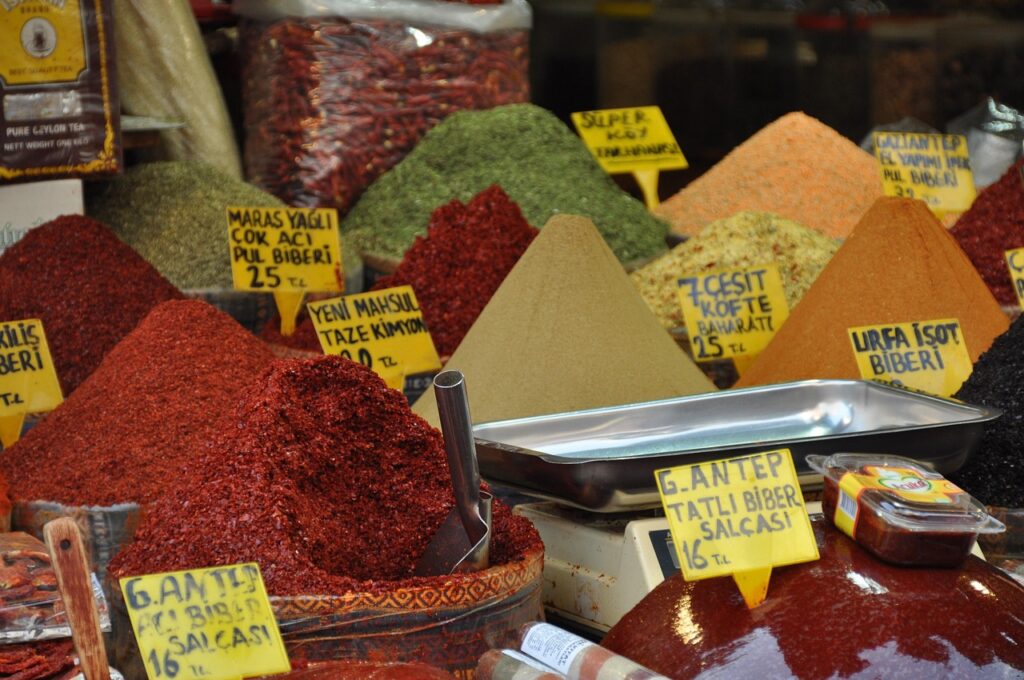
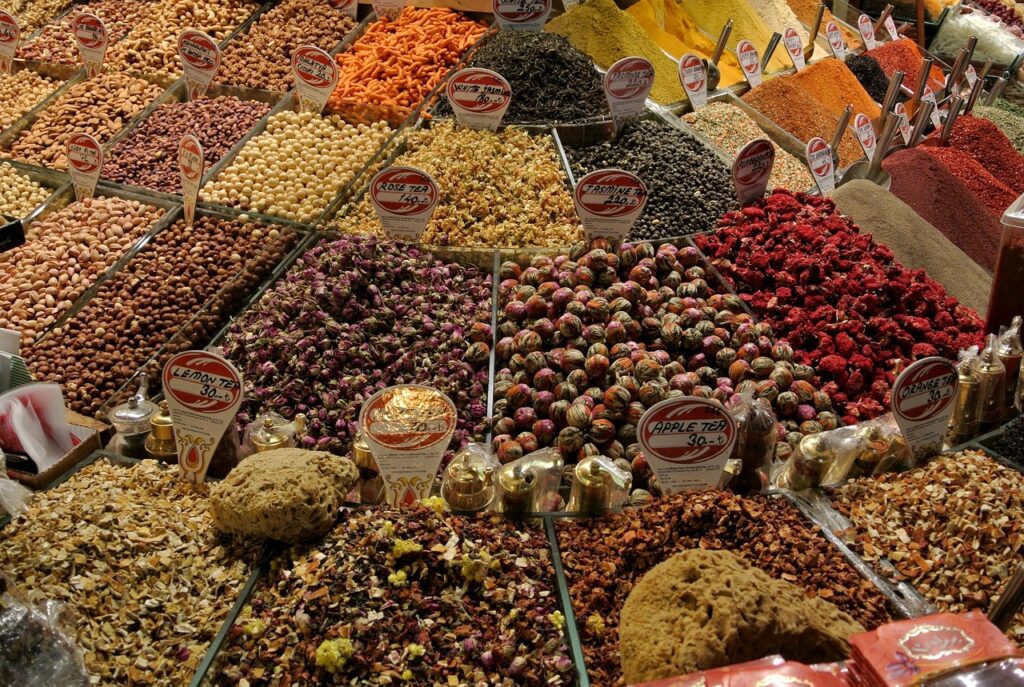
For three centuries, the Spice Bazaar was one of the great spice markets of the world, and its trade defined its identity. Pepper, cinnamon, cloves, saffron, and the herbs of Anatolia filled its vaults, along with the remedies and dyes of the traditional apothecaries.
The market was more than a shop: it was a pharmacopoeia. The herbalists of the bazaar compounded traditional medicines, and their craft was respected across the city, so that the lanes carried not only the smell of spice but the authority of healers and their ancient recipes.
The trade also had a social life. The bazaar was a meeting point, a place of news and gossip, where the city’s households sent their servants for the daily provisions and where the coffeehouses and stalls made the market a living neighborhood, not merely a warehouse.
The Merchants and Their Traders
Behind the counters of the Spice Bazaar stood a community of merchants whose families worked the market for generations. In the Ottoman era, the spice trade was organized and disciplined, and the right to keep a stall in the market was a valuable inheritance.
The merchants knew their goods with a scholar’s precision. A master of the spice trade could judge a shipment of pepper by its weight and color, blend a tea by its leaf, and compound a remedy from memory, and this expertise was passed from father to son across the centuries.
That tradition survives in diluted form today. The stalls are still often family businesses, and the knowledge of the goods, the suppliers, and the customers still passes through the market in the way it always has, keeping the bazaar a living trade rather than a mere souvenir stop.

Fire and Restoration Through the Centuries
Like every great Ottoman market, the Spice Bazaar has faced fire and disaster, and its survival is part of its history. The wooden fittings and the crowded stalls made the old markets vulnerable, and the bazaar suffered damage more than once in its long life.
Each time, the repair followed the traditional pattern. The damaged vaults were rebuilt in brick and stone, the shops were restored, and the market reopened, because a working bazaar was too valuable to the city to leave in ruins. The structure you see today carries the evidence of these repeated renewals.
The modern era added another chapter. In the twentieth century, major restoration campaigns renewed the fabric of the building, cleaning the stone, repairing the vaults, and reinforcing the structure. The Spice Bazaar that visitors see today is a carefully maintained monument that is still, at heart, the market of the 1660s.
The Republic and the Modern Market
When the Turkish Republic was founded in 1923, the Spice Bazaar entered a new era, but its trade continued without interruption. The old imperial system gave way to a modern state, and the market settled into its role as a beloved institution of Istanbul’s commercial life.
The twentieth century transformed the neighborhood around it. The waterfront modernized, the ferries multiplied, and Eminönü became one of the busiest crossroads of the city, and the Spice Bazaar, at the center of it all, grew busier with every decade.
The market also began its long relationship with tourism. Travelers had always been drawn to its exotic scents, and as Istanbul’s visitor numbers grew, the bazaar’s stalls learned to serve the new customers, adding the sweets, the dried fruits, and the teas that tourists carry home as memories of the city.
The Twenty-First Century: A Tourist Landmark
Today, the Spice Bazaar is one of the most visited places in Istanbul, and its modern history is the history of its transformation into a global landmark. The lanes are packed throughout the year, and the market has become a symbol of the city as recognizable as its mosques.
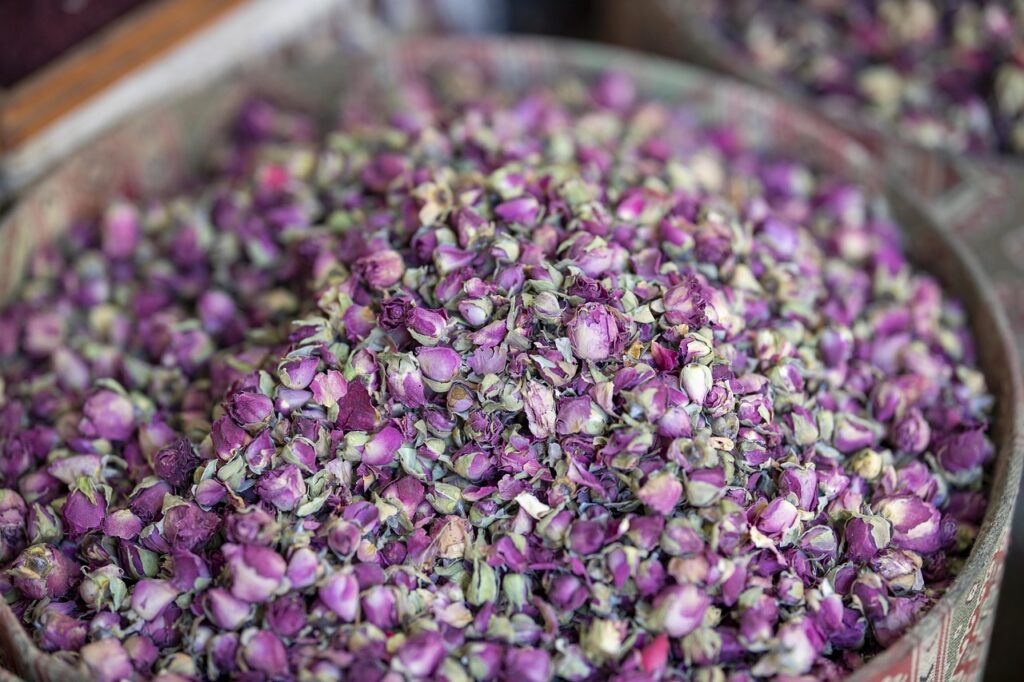
The trade has adapted. The spice merchants still reign in their stalls, but they are joined by the purveyors of Turkish delight, saffron, honey, and the thousands of goods that visitors seek out. The market remains a working bazaar, but its customers now come from every country on earth.
The building itself has been restored and protected as a historic monument, and the balance between preservation and commerce is the story of its present. The vaults are maintained, the gates are cleaned, and the centuries-old structure carries on its trade, as it has done since the 1660s.
The Legacy: A Living Monument
More than three and a half centuries after it opened, the Spice Bazaar remains what it was built to be: a working market at the heart of the city. Its history is written in its vaults, its gates, and the layers of restoration that have kept it alive.
The legacy is also sensory. The smell of the spices, the gleam of the sweets, the murmur of the bargaining: these are the immaterial inheritance of the market, and they are what visitors carry away. The bazaar has outlived the empire that built it and the trade that named it, yet its daily life continues unchanged.
To stand in its lanes is to stand in a living museum of Ottoman commerce. The mosque rises beside it, the ferries call across the water, and the merchants weigh out the pepper as their predecessors did in the 1660s. The Spice Bazaar is history you can taste, and it is one of the enduring wonders of Istanbul.
Frequently asked questions
When was the Spice Bazaar built?
The Spice Bazaar was built in the 1660s as part of the Yeni Mosque complex on the waterfront of Eminönü. It was designed to fund the mosque through rents, a traditional Ottoman pattern, and it has traded continuously since it opened.
Why is the Spice Bazaar called the Egyptian Bazaar?
Its Turkish name means Egyptian Bazaar, a reference to the Ottoman province of Egypt, whose revenues and trade were historically linked to the market. Over time the name stuck even as the spice trade became a global affair.
Is the Spice Bazaar the same as the Grand Bazaar?
No, they are separate markets. The Grand Bazaar is the huge covered market in the heart of the old city, founded in 1461. The Spice Bazaar is a smaller, L-shaped market on the Eminönü waterfront, built in the 1660s beside the Yeni Mosque.

All Over Information
The All Over Information editorial team researches and writes practical English-language guides to Turkey. Facts are checked against official and local sources before publication, prices are published as dated ranges rather than quotes, and guides are revised when things change. We accept no sponsored posts, paid placements or paid links.
More guides like this

Why Sumela Monastery Should Be on Your Turkey Bucket List
Most travelers come to Turkey for the Mediterranean coast, the fairy chimneys of Cappadocia, or the skyline of Istanbul, and all of…

Contemporary Turkish Architecture and Urban Design
Turkey's cities today are among the most dynamic construction sites in the world, and contemporary Turkish architecture tells an exciting story of…

Aspendos Theatre Through the Centuries
The theatre of Aspendos has been standing for nineteen centuries, and in all that time it has never quite ceased to be…

Visiting Dolmabahce Palace: Tickets, Hours, and Tips
Planning a visit to Dolmabahce Palace takes a little more thought than most Istanbul sights, because the palace runs on guided tours,…

Why Chora Church Should Be on Your Turkey Bucket List
The Chora Church — the Kariye — is the greatest treasure of the Byzantine art in Istanbul, and one of the essential…

Mimar Sinan: Ottoman Turkey’s Master Architect
No single person shaped the skyline of Turkey more than Mimar Sinan, the chief architect of the Ottoman Empire in its golden…