Two days is exactly the right amount of time for Karakoy — long enough to walk the quarter whole and to cross its water, and short enough to keep the energy of the port’s new life. The itinerary runs the quarter’s own rhythm: the bridge and the ferries in the mornings, the galleries and the coffee in the middays, the fish tables and the bars in the evenings. It assumes you arrive with a full first day and leave on the evening of the second, and it builds in the crossings and the climbs that make the quarter what it is.
Day One: The Bridge and the Water
Morning — the bridge. Start where the quarter begins: the Galata Bridge at first light, when the fishermen are already at their lines and the morning mist hangs over the Golden Horn. Walk the bridge’s full length — the rods in a row, the anglers’ buckets, the view of the old city’s domes and minarets across the water — and pause at the middle for the classic panorama: the Süleymaniye and the Blue Mosque’s skyline to the south, the Galata Tower rising behind you. The bridge at the morning is the quarter’s opening act, the working water of the city’s port at its most characteristic.
Late morning — the waterfront and the museum. Cross back to the Karakoy side and walk the waterfront east: past the piers where the ferries load, past the old customs houses, to the Istanbul Modern, the city’s contemporary art museum in its converted warehouse on the shore. The morning is the museum’s quiet hour: the great collection of modern Turkish art, the exhibitions of the international scene, the glass walls with the water beyond. Give it two hours — the collection deserves them — and come out onto the promenade of the new Galataport, the waterfront opened to the public, with the cruise ships and the views along the Bosphorus.
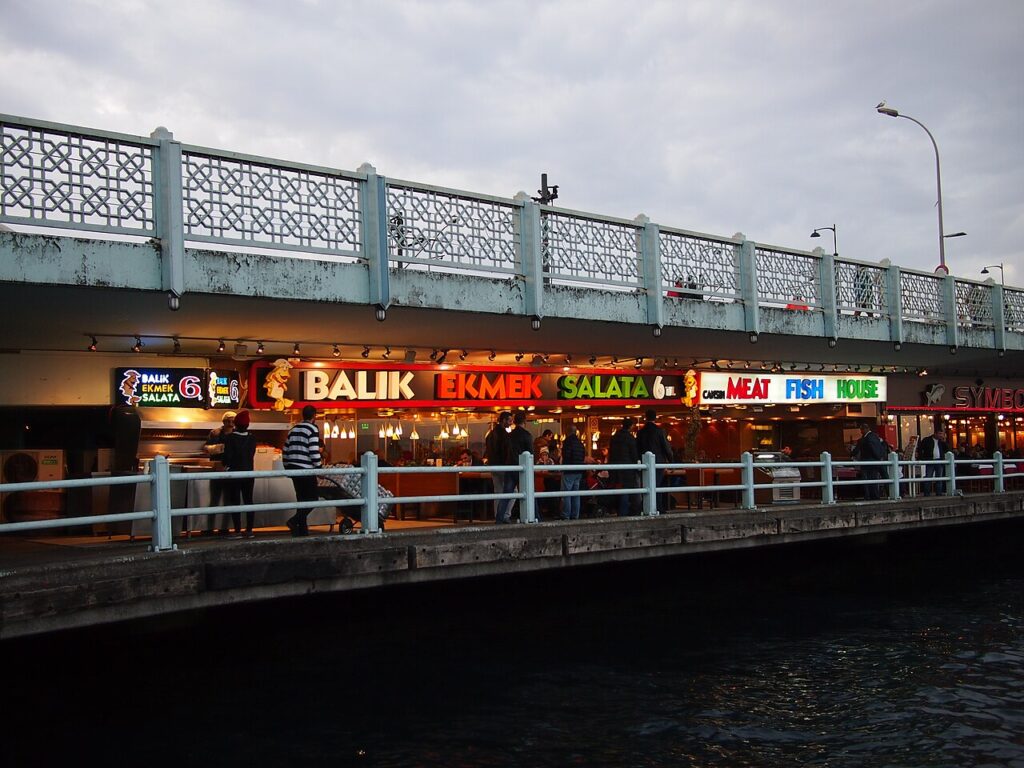
Lunch — the balık ekmek. At the bridge’s foot, the balık ekmek boats serve the classic meal: the grilled fish in the bread, the squeeze of lemon, the salt from the shaker — eaten standing at the rail with the gulls and the water. It is the quarter’s most honest lunch and its most characteristic, and it costs a fraction of the sit-down tables. Follow it with the tea from the nearby stand, and the morning is complete: the bridge, the museum, and the fish — the quarter’s three essentials before the afternoon.
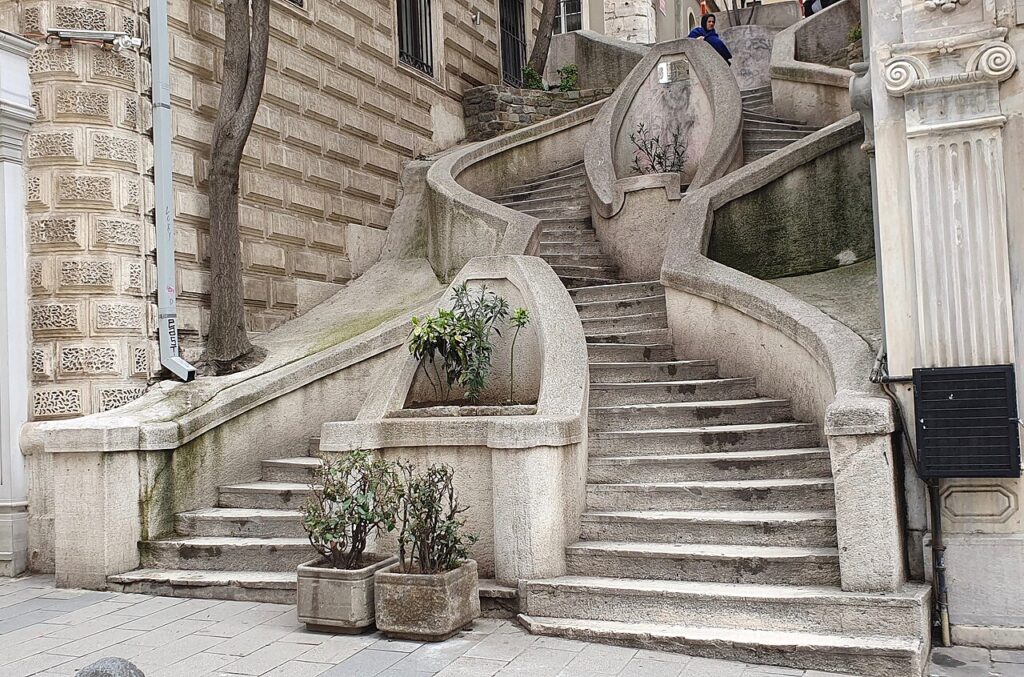
Afternoon — the streets and the stairs. The afternoon belongs to the quarter’s streets. Walk inland from the water: the old banks of Bankalar Caddesi with their grand facades, the working streets of the port with their shops and their life, the graffiti alleys of the new quarter with their murals. Then take the Camondo stairs — the baroque stone staircase of the great banking family, the curves climbing the hill — up to the streets of Galata, where the climb continues toward the tower. The afternoon is the quarter’s depth: the old finance and the new art, the stone and the spray paint, the layers of Karakoy read in a single walk.
Evening — the fish table and the night. As the light fades, return to the water. The fish restaurants of the bridge’s lower level — the tables over the Golden Horn, the meze and the fish of the day — are the traditional dinner, with the lights of the old city across the water. Or choose the meyhanes and the restaurants of the quarter’s side streets, where the new Karakoy eats its fashionable dinners. After, the night belongs to the quarter’s bars and coffee houses — the specialty coffee by night, the bars of the waterfront, the terrace views of the tower — before the tram or the walk home along the lit water.

Day Two: The Crossing and the Hill
Morning — the ferry crossing. Day two begins on the water. Take the ferry from the quarter’s piers across the Bosphorus to the Asian side — the crossing of the city’s daily life, the gulls and the spray, the skyline of both shores in the frame. Land at Kadıköy and walk the market streets and the waterfront of the Asian quarter: the fish market, the bookshops, the cafes of Moda with their views back across the strait. The morning is the counterweight to Karakoy itself: the same water, the other shore, the city’s life from the Asian side.
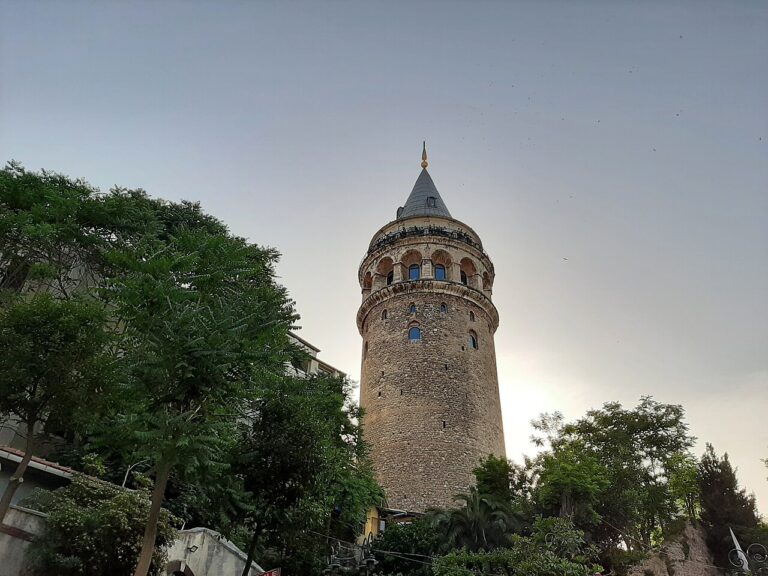
Midday — back across, and up the hill. Return by the ferry — the views even better on the return, the old city ahead — and take the Tünel from the quarter’s station: the old funicular climbs to the avenue of Istiklal in ninety seconds. The upper world is Galata and Beyoğlu: the tower at the top of the hill, the great avenue of the modern city stretching away, the streets of the old neighborhood with their shops and their galleries. The Galata Tower is the reward: the climb or the lift to the top, the panorama of the whole city — the Bosphorus, the Golden Horn, the old city, the sea — the view that explains Istanbul in a single turn.
Afternoon — the side streets of Galata. The afternoon belongs to the streets of the hill: the old stone lanes of Galata climbing and falling between the tower and the water, the boutiques and the cafes of the fashionable quarter, the hidden courtyards and the viewpoints over the Golden Horn. It is the walk the locals take: the neighborhood of the tower, the old Genoese quarter with its narrow lanes, its churches and its houses, its views at every turn. End the walk back at the Tünel, and descend to the quarter’s streets for the last evening.
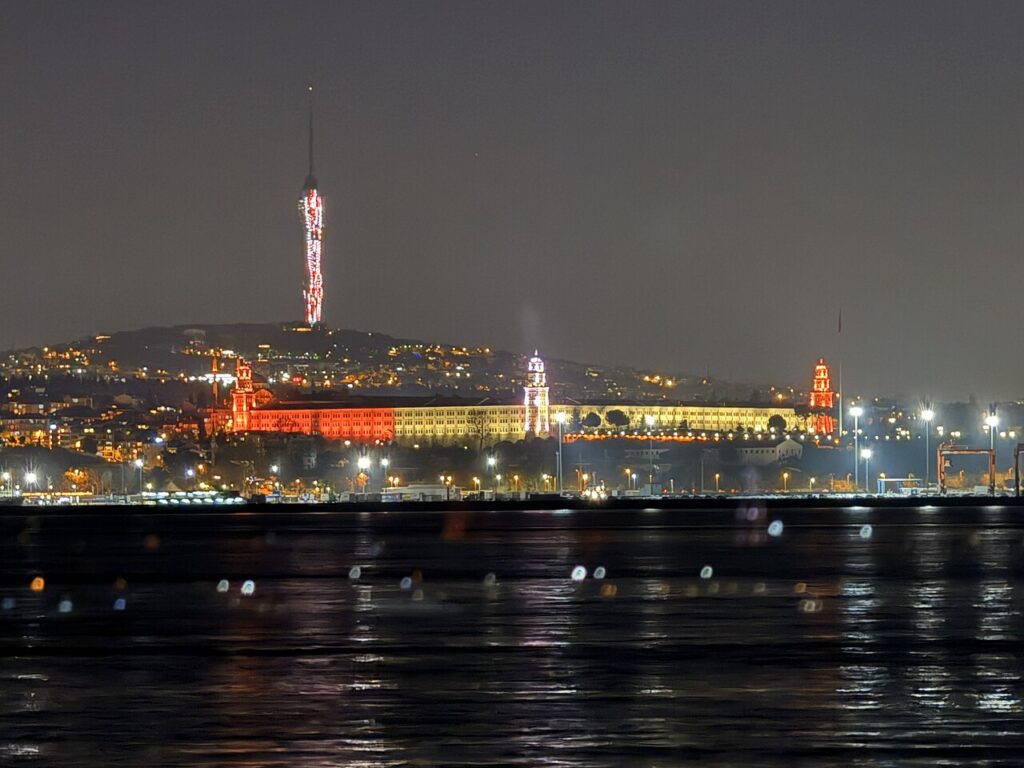
Evening — the farewell dinner. The last dinner should be the quarter’s own. Choose the fish table on the water for the classic end — the meze spread, the fish of the day, the lights of the old city across the strait — or the fashionable tables of the quarter’s new restaurants for the modern end. Leave time after for one last walk: the bridge at night, the fishermen gone and the lights on, the tower lit above the quarter, the water black and the city’s lights strung across it. It is the memory that will bring you back — the port at night, the gateway quarter, the two days that showed it whole.
The Practical Notes
A few things make the two days smooth. The card is the ticket: the Istanbulkart covers the tram, the Tünel, and the ferries — buy it at the station and load it once, and the whole itinerary is covered. The water is the rhythm: the bridge in the morning, the ferry in the day, the fish table at night — the itinerary runs on the quarter’s water life. The climbs are the views: the Camondo stairs and the tower reward the ascent — wear the walking shoes and take the stairs slowly. The reservations are for the evenings: the fashionable tables and the bridge’s fish restaurants fill in the high season — book the dinners ahead. And the quarter is walkable: the bridge, the waterfront, the streets, and the hill are all on foot — the walker covers the two days completely.
The Takeaway
Forty-eight hours in Karakoy is a tour of the gateway quarter — the bridge and the ferries, the galleries and the banks, the fish tables and the coffee shops, the stairs and the tower. The itinerary takes you from the morning bridge through the waterfront museum and the balık ekmek lunch, up the Camondo stairs into the old streets, across the water to the Asian side and back, and up the hill to the tower’s panorama — the quarter whole, in the time it deserves. It is the old port and the new city together, the gateway to the two Istanbuls, and the two days that show why the city’s most fashionable quarter is also its oldest working one.
Frequently asked questions
Can I see the old city in the 48 hours?
Yes — the T1 tram crosses the bridge to the old city in minutes, and a morning there fits the itinerary if you want both sides.
What is the best time for the bridge?
The early morning, when the fishermen are at their lines and the light is soft over the Golden Horn — and the night, when the lights come on.
Is the Istanbul Modern worth the time?
For the quarter’s new life, yes — the collection of modern Turkish art is the city’s best, and the waterfront setting is part of the experience.
What should I not miss?
The balık ekmek at the bridge, the climb up the Camondo stairs, and the ferry crossing to the Asian side — the three essentials of the quarter.
Is the Tünel worth taking?
Yes — it is the world’s oldest surviving subterranean funicular, and the ninety-second climb from the quarter to Istiklal is the city’s most charming shortcut.

All Over Information
The All Over Information editorial team researches and writes practical English-language guides to Turkey. Facts are checked against official and local sources before publication, prices are published as dated ranges rather than quotes, and guides are revised when things change. We accept no sponsored posts, paid placements or paid links.
More guides like this
Top 10 Things to Do in Karakoy
Karakoy is the gateway quarter of Istanbul — the port at the mouth of the Golden Horn, where the bridge spans and…
Karakoy in Winter: What to Expect
Winter changes Karakoy the way it changes every city, but the quarter takes the season well.
Best Time of Year to Visit Karakoy
Karakoy is a year-round quarter — the ferries and the galleries, the fish tables and the coffee shops run through all four…
History and Culture of Karakoy
Karakoy is the gateway quarter of Istanbul — the port at the mouth of the Golden Horn where the city's history and…
Hidden Gems of Karakoy Most Tourists Miss
Karakoy has a public face — the bridge and the balık ekmek, the Istanbul Modern and the coffee shops — and most…

Karakoy in Summer: A Complete Travel Guide
Summer is Karakoy's liveliest season — the long days, the late evenings, the waterfront full, the quarter's fashionable life at its most…