Ottoman calligraphy is one of the great artistic achievements of the Islamic world, and one of the least understood outside it. For six centuries, the empire’s hattats transformed the Arabic script into an art of unsurpassed refinement, at once religious, political, and aesthetic. This deep dive follows the tradition from its roots to its golden age, explains the technical system behind the letters, profiles the decisive masters, and traces how the art survived the end of the empire to flourish again today.
The Roots: From Kufic to the Cursive Revolution
Calligraphy’s history begins with the Quran. In the first Islamic centuries, scribes developed angular, geometric scripts, of which kufic is the most famous, to write the holy text with dignity. Kufic dominated early manuscripts and architecture, but its rigid forms were slow to write and hard to adapt to daily use. Meanwhile, cursive scripts were developing in the chanceries of the expanding empire.
By the tenth century, the cursive styles had matured and the balance shifted decisively. The great Abbasid calligrapher Ibn Muqla codified the cursive scripts into a rational system of proportion, and his successors, especially Ibn al-Bawwab, raised the art to a level of refinement that later generations could only admire. The stage was set for the tradition the Ottomans would inherit.
The Ottoman conquests of the fourteenth and fifteenth centuries brought this heritage into Anatolia. Scribes and artists moved between the courts of Persia, the Arab lands, and the emerging Ottoman state, carrying styles and tools with them.
The Aklam-ı Sitte: Ibn Muqla’s System
The technical heart of Ottoman calligraphy is the system of the six pens, the aklam-ı sitte, formulated by Ibn Muqla in the early tenth century. He established that every letter could be constructed from geometric principles based on the rhombic dot, the impression made by a single pressure of a reed pen. Height, width, and curvature could all be measured in dots.
The six canonical scripts each had a distinct character. Thuluth was grand and monumental; naskh was clear and compact; muhakkak was bold and extended; rayhani was delicate and fine; tawqi was strong but informal; and riqa was small and quick. Each served a purpose, from royal inscriptions to everyday correspondence, and together they covered the whole range of writing.
This system transformed calligraphy from an individual skill into a teachable discipline. Because the proportions were objective, a student’s work could be measured against a standard. The six pens remained the curriculum of Ottoman training for a thousand years, and they are still taught today.
The Ottoman Renaissance: Şeyh Hamdullah
The turning point of the tradition came at the end of the fifteenth century with Şeyh Hamdullah, the calligrapher of Sultan Bayezid II. Hamdullah studied the great Persian and Arab masters, then reformed thuluth and naskh to a new standard of elegance. His letters gained a supple grace that later generations called the Ottoman manner.
Bayezid II gave Hamdullah extraordinary support, and the master produced Qurans and specimens that became the foundation of Ottoman teaching. His influence was so complete that nearly every later Ottoman calligrapher traced their artistic lineage through him. The art’s center of gravity shifted decisively from Persia to Istanbul.
Hamdullah’s achievement was not invention but perfection: he refined existing scripts until their proportions seemed inevitable. The result was a national school of calligraphy with its own identity, and it is this school, not the earlier traditions, that we call Ottoman calligraphy.
Hafız Osman and the Quranic Standard
If Hamdullah founded the Ottoman school, Hafız Osman defined its most sacred product: the Quran. Working in the late seventeenth century, he perfected a naskh so clear, regular, and beautiful that it became the model for Quranic copying throughout the empire and far beyond. His Qurans were prized by sultans and collectors, and his style is still followed today.
Hafız Osman’s achievement lay in discipline. He reduced the letters to a calm, almost musical regularity, and his pages have a serenity that makes the text feel inevitable.
His influence outlived him. For three centuries students copied his work as their first serious exercise, and his name appears in almost every modern teaching lineage. When you see a Quran described as in the style of Hafız Osman, you are seeing the continuation of a three-hundred-year tradition.
Celi: Calligraphy as Architecture
The most public face of Ottoman calligraphy is celi, the monumental script of inscriptions. Written with a broad pen or painted directly onto walls, celi letters are designed to be read from a distance, and their scale gives them an architectural presence. The bands of writing that circle the domes of Istanbul’s great mosques are celi thuluth.
The supreme master of celi was Mustafa Rakım, who worked in the early nineteenth century. He solved the problems of composing large letters whose proportions must hold at any distance, and his inscriptions became models for all later work. His letters are so perfectly constructed that they appear effortless.
Celi was the art of the empire’s public voice. It announced the names of God and the Prophet, recorded builders and benefactors, and carried the sultans’ tughras across the face of the state.
The Tughra and the Arts of State
The tughra was calligraphy in the service of power: the sultan’s official monogram, combining his name, his father’s name, and the title always victorious in a composition of vertical strokes and sweeping curves. It functioned as signature, seal, and symbol, and it appeared on every instrument of imperial authority, from treaties to coins.
Tughra design was a specialized craft: the calligraphers who drew them, the tughrakeş, held a unique rank at court, and each new sultan required a new monogram. The finest tughras are masterpieces of balance, and they remain among the most recognizable images of the Ottoman state.
Beyond the tughra, the state generated an ocean of documents, and chancery calligraphy was a profession in itself. Decrees, diplomas, and land registers each had their script and conventions. The art of the state was inseparable from the art of the pen, and the empire ran on beautiful writing.

Materials: Reeds, Soot, and Marbled Paper
The calligrapher’s toolkit was small but demanding. The reed pen was cut from the stem of a special reed, hollow and flexible, and its nib was trimmed with a knife to the slanted cut that produced thick and thin strokes. The cut, the sharpness, and the balance of the reed were matters of personal craft.
Ink was made from lamp soot, ground and mixed with binders until it flowed evenly and dried without bleeding. Paper was handmade from rags, sized to resist the ink, and polished with a smooth stone for its characteristic sheen. Marbling, the Turkish art of ebru, decorated the borders of many pages.
The preparation of materials was itself a discipline. A calligrapher who made his own ink and paper could guarantee their quality, and the care showed in the work.
The Mastery System and the Icazet
Ottoman calligraphy was transmitted through an unbroken chain of personal teaching. A student approached a master with a sample of writing, and, if accepted, spent years in his studio. The master corrected every letter, often over the student’s hand, and the student filled countless practice sheets before a single style was mastered.
The journey ended with the icazet, the diploma of mastery: the student composed a finished specimen, often a sacred passage, and the master certified it with a signed statement naming his entire lineage of teachers.
The icazet system kept the tradition conservative and pure. Innovation was possible, but it had to arise within a known lineage, and a master’s reputation rested on his teachers as much as his work. Even today, modern hattats display their icazet with pride, and the chain remains unbroken.
The 1928 Rupture and the Modern Revival
In 1928, the Turkish Republic replaced the Arabic alphabet with the Latin alphabet, ending six centuries of Ottoman written culture at a stroke. The public lost the ability to read its own history, and calligraphers lost their official roles. To many observers, the art appeared condemned to the museum.
It survived through its religious core: the Quran is always written in Arabic, so the need for expert calligraphy never vanished, and a small circle of masters continued the old method in private.
The revival of recent decades has been remarkable. Museums have opened major calligraphy galleries, cultural institutions run courses and competitions, and a new generation of hattats has restored the art to public life. Ottoman calligraphy, once the private glory of an empire, is now celebrated as a living world heritage, and the chain of masters stretches onward.
Reading Ottoman Calligraphy Today
To read Ottoman calligraphy without reading Arabic is to read visually. Begin with proportion: in the finest work, the letters hold a perfect balance and the space around them feels composed. Compare the sweeping drama of celi with the quiet regularity of naskh, and the artist’s choices become visible.
Then look at the making: the cut of the reed shapes the strokes, the evenness of the ink shows the hand’s control, and the gilding reveals the collaboration between calligrapher and illuminator.
Finally, let the words speak through their setting. A Quran in a museum, a tughra on a treaty, an inscription circling a dome: each was made for a community and a purpose. To stand before Ottoman calligraphy is to stand before the writing of an empire, and now you know how to read what it says.
Frequently asked questions
How is Ottoman calligraphy different from Persian or Arabic calligraphy?
All three schools share the Arabic script, but each developed distinct standards of proportion and favored styles. Ottoman calligraphy is known for its refined thuluth and naskh, its monumental celi inscriptions, and its perfectionist training system. Persian calligraphy favored the elegant nasta’liq script, while the Arab lands preserved older styles like maghribi. The differences are visible in the shape and slant of the letters.
What is celi script used for?
Celi is the monumental form of calligraphy, written large for public display. It decorates the walls and domes of mosques, the facades of public buildings, fountains, and tombstones, and it is designed to be read from a distance. Ottoman architects planned entire interiors around bands of celi writing, and the master Mustafa Rakım set the standard for the art in the nineteenth century.
How long does it take to become a master calligrapher?
Traditional training took ten to fifteen years of daily work. Students spent years mastering naskh and thuluth before attempting the other scripts, and only after a finished masterpiece could they receive the icazet, the diploma of mastery. Even today, serious students devote years to the art, and full mastery is still measured in decades.

All Over Information
The All Over Information editorial team researches and writes practical English-language guides to Turkey. Facts are checked against official and local sources before publication, prices are published as dated ranges rather than quotes, and guides are revised when things change. We accept no sponsored posts, paid placements or paid links.
More guides like this

Understanding the Alexander the Great’s Anatolian Campaigns: A Beginner’s Guide
In 334 BCE, a twenty-two-year-old king led an army across the narrow strait between Europe and Asia and began one of the…

Understanding Turkish Youth and Social Media Trends
Turkey has one of the youngest populations in Europe, and its young people live online.
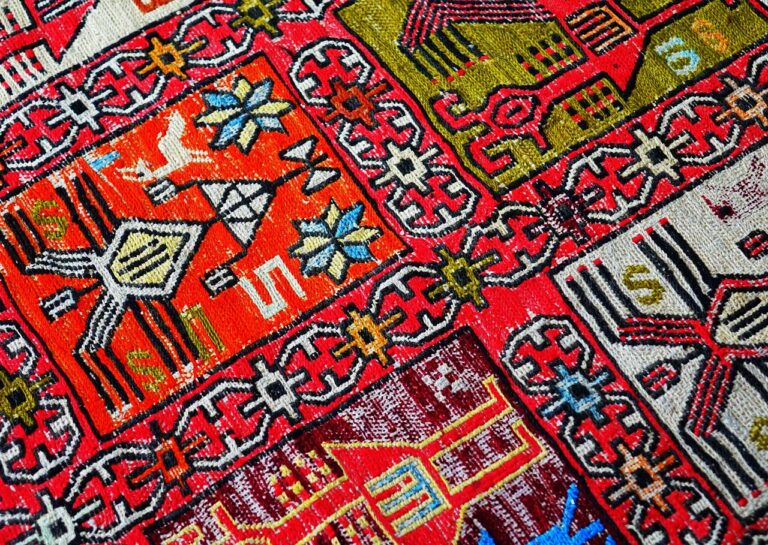
Understanding Turkish Carpet Weaving Traditions
Turkish carpets are among the most famous crafts in the world, and behind every woven pattern lies a tradition that stretches back…

A Deep Dive into Orhan Pamuk’s Istanbul
Istanbul is not simply the setting of Orhan Pamuk's work; it is the subject, the method, and the medium of his entire…

Understanding Turkish Family Values
If you spend any time in Turkey, you will notice that family is everywhere.

A Deep Dive into Turkish Coffee Fortune Telling
Turkish coffee fortune telling, fal, is a tradition that travelers encounter with delight and scholars approach with curiosity.