The Turkish barbershop looks simple from the street: a chair, a mirror, a spinning barber pole. But behind that modest storefront lies a profession with deep roots in Ottoman society, a craft guarded by generations of apprenticeship, and a ritual that has conquered the world through sheer showmanship. This deep dive explores the history of Turkish barbering, the skills behind the famous shave, and the social role the barber has played for centuries. You will come away understanding why the barbershop is far more than a place for a haircut.
The Roots of the Barbering Trade in Turkey
Barbering is one of the world’s oldest professions, and in Turkey it arrived early. The Ottomans inherited traditions from the medieval Islamic world, where barbers were respected craftsmen attached to courts, armies, and neighborhoods alike. Their duties went beyond hair; they also performed bloodletting, tooth pulling, and other simple medical tasks.
These combined roles shaped the profession’s character. The barber was a man of many skills, trusted with a razor and with the secrets of the community. Guilds of barbers existed in Ottoman cities, setting standards, training apprentices, and protecting the craft’s reputation, a system that kept quality remarkably consistent.
As medicine professionalized in the modern era, the barber shed his surgical duties and concentrated on grooming. But the residue of that history remains: the confidence, the trust, and the barber’s role as a man who touches your face and knows your neighborhood inside out.
From Ottoman Coffeehouse to Modern Shop
In Ottoman times, the barber worked in a variety of settings. Some operated from small shops, while others set up in public squares and marketplaces. Crucially, many barbers worked inside the coffeehouses, where men gathered for conversation, news, and games, and a shave or a haircut was part of the afternoon’s entertainment.
The coffeehouse connection mattered enormously. It placed the barber at the center of male social life, surrounded by conversation and gossip, and it taught generations of barbers to work comfortably in front of an audience. The modern barbershop inherited this theatrical instinct; the performance is part of the product.
When coffeehouses declined, the barbershop itself became the gathering place. The chairs, the mirrors, and the banter moved indoors, and the shop took on the living-room atmosphere it still has today. The continuity is remarkable; sit in a Turkish barbershop and you are essentially sitting in an updated Ottoman coffeehouse.

The Master-Apprentice Relationship
The heart of Turkish barbering is the apprenticeship. Young boys, often from the same family or village, entered a shop as çirak, an apprentice, sweeping floors, running errands, and watching every move the master made. The learning was slow, deliberate, and entirely hands-on.
Advancement came in stages. The apprentice progressed from shaving foam onto a balloon without bursting it, a classic training exercise, to working on willing regulars under the master’s eye. Finally he became a kalfa, a journeyman, and eventually opened his own shop, often with the master’s blessing and equipment.
This system transmitted far more than technique. It passed down the shop’s reputation, its clientele, its tricks of the trade, and its standards of behavior. That is why Turkish barbers often trace their lineage through named masters, and why the craft feels so consistent from one city to the next.
The Tools of the Turkish Barber
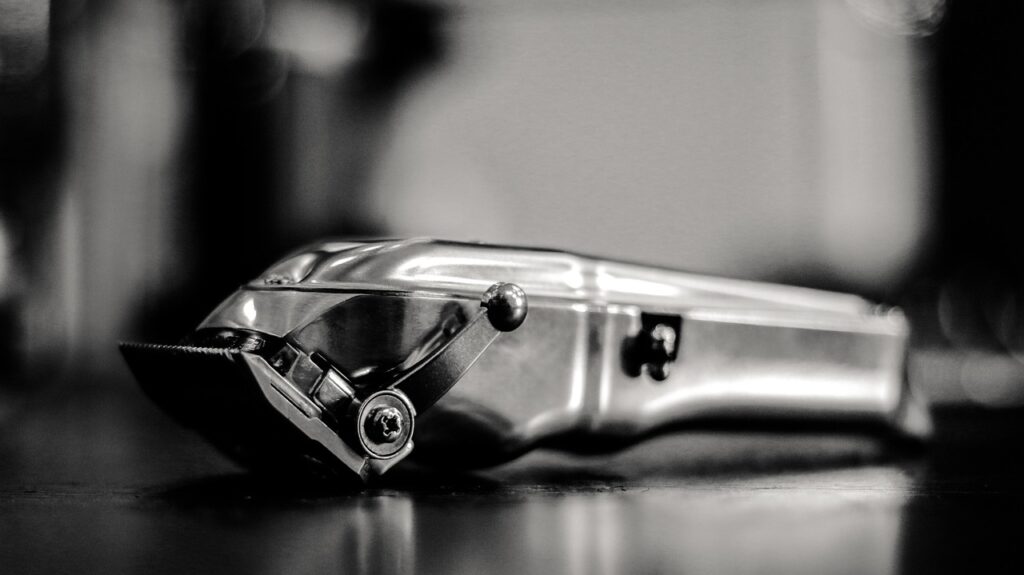
The Turkish barber’s toolkit is deceptively simple and has changed little over the centuries. The centerpiece is the straight razor, kept razor-sharp on a leather strop and used for every shave. Around it sit the scissors, the clippers, the comb, and the lather brush, each chosen for quality and cared for meticulously.
Water and heat are just as important as steel. Hot towels soften the beard, warm water rinses the skin, and the famous lather is whipped in a special bowl or on a copper cup. In traditional shops, the water is heated on a small stove, and the barber’s whole rhythm follows the heat.
Fire completes the set. The cotton wick, soaked in alcohol and set alight, is the barber’s boldest tool, used for singeing fine hairs. Far from a gimmick, it descends from an old practice, and mastering it safely is considered proof of a barber’s maturity and nerve.
The Art of the Straight Razor
Using a straight razor is one of the most demanding skills in grooming, and Turkish barbers are among its finest practitioners. The razor has no guard and no safety features; everything depends on the angle of the blade, the tension of the skin, and the steadiness of the hand. A moment of distraction can mean a cut.
The technique is taught in stages, and the early lessons are humbling. Apprentices practice on balloons and leather before ever touching a face, learning to control pressure and direction without a single slip. When they finally work on real customers, a master stands close, watching every stroke.
Beyond safety, the Turkish style has an aesthetic. The barber aims for a perfectly clean finish, with sharp lines at the temples, a crisp neckline, and smooth skin over the cheeks and chin. The result is a shave that feels surgical, and watching it performed is genuinely mesmerizing.
Fire, Cotton and Antiseptic: The Burn Ritual
The burn ritual, as the fire treatment is known, has a longer history than most customers realize. Singeing hair with flame is an ancient practice, once used to remove unwanted hair and to seal cuts, and Turkish barbers kept it alive long after it vanished elsewhere.
In practice, the ritual is carefully controlled. The cotton wick burns quickly, the flame is passed in a smooth waving motion, and the skin is barely warmed. Experienced barbers gauge exactly how far to bring the flame, and regulars trust them completely.
The ritual also carries a symbolic charge. Fire cleanses, sharpens, and renews, and for many men the brief flash is a kind of punctuation mark at the end of the shave. Whatever its practical merits, the burn ritual is the moment that makes Turkish barbering unforgettable, and it has become the signature of the craft worldwide.

The Barber as Community Figure
In Turkish neighborhoods, the barber holds a unique position of trust. He is the first to see a young man’s first beard, the one who prepares men for weddings and funerals, and the keeper of countless secrets heard across years of conversation. His shop is neutral ground where arguments are settled and news is exchanged.
This trust has practical consequences. Barbers have traditionally served as matchmakers, carrying messages between families, and as informal advisors on everything from business to health. In times of crisis, the barbershop is where a community gathers to talk, and the barber often knows the full story before anyone else.
Modern life has diluted some of this role, but not destroyed it. The barber still knows his regulars by name, still asks after their families, and still holds the shop’s door open to anyone who walks in. For visitors, this warmth is the most accessible introduction to Turkish neighborhood life.
The Journey of Turkish Barbers Around the World
In the twenty-first century, Turkish barbering went global. Trained barbers emigrated to Europe and beyond, opened shops, and found customers immediately, because the services they offered simply did not exist elsewhere. The hot towel, the open razor, and the fire treatment were revelations to men who had known only electric clippers.
The expansion followed the Turkish diaspora, but it soon reached beyond it. Local customers discovered that a Turkish shave was not just a haircut but an experience, and queues formed at the new shops. The barbers adapted their craft to new languages and cultures without losing its essence.
Today you can find Turkish-style barbershops on several continents, and the style has influenced barbering worldwide. The craft that began in Ottoman shops now travels the globe, carried by the same apprenticeship system and the same theatrical flair that made it famous.

Changing Trends in a Modern Market
The barbershop is adapting to a new generation. Young Turkish men, like their peers everywhere, experiment with beards, fades, and designer styles, and barbers have embraced the latest tools and trends. Social media has made the barber a content creator, filming shaves that gather millions of views.
At the same time, the traditional core endures. The straight razor is still the gold standard, the massage is still part of the deal, and the fire still makes customers smile. Modern shops add espresso machines and charging cables, but the ritual remains recognizably the same as it was a hundred years ago.
The economics have shifted too. Rising competition has kept prices sharp, and the best barbers build careers on reputation and personality. For the customer, the result is a golden age: more choice, more skill, and more style than the Ottoman barber could ever have imagined.
The Cultural Meaning of Looking Good
Finally, the barbershop is a window into what Turkish society values about appearance. Looking well groomed is a matter of respect, both for yourself and for the people you meet. A man who arrives neat at a wedding, a meeting, or a holiday gathering shows that he takes the occasion seriously.
This is why grooming is tied to the great moments of life. Before the religious holidays, before weddings, and before important events, the barbershop fills with men preparing to be seen. The haircut is the visible proof of care, and the barber is the trusted hand that provides it.
For the foreign visitor, this cultural meaning is the real discovery. The barbershop is not just a service; it is a ritual of self-respect performed in public, and joining in is a way of showing you understand the culture. Sit down, let the razor work, and you will leave with more than a haircut.
Frequently asked questions
How long does the apprenticeship for a Turkish barber take?
The traditional apprenticeship lasts several years. Beginners start with cleaning and simple tasks, then practice on training materials like balloons before working on real customers. Most barbers spend at least three to five years learning the full craft, including the straight razor and the fire treatment, before they are considered fully trained.
Is the barbershop tradition disappearing in modern Turkey?
No, it is thriving. Modern Turkish barbers combine traditional techniques with contemporary styles, and the profession has even expanded internationally. Young men still train in the classic skills, and the social role of the shop remains strong. If anything, the tradition has grown, thanks to social media and worldwide demand.
Why do Turkish barbers use fire on the face?
The fire treatment singes fine hairs that are hard to remove with a razor, and it descends from an old practice of using flame for hair removal and wound care. It is also believed to tighten the skin and leave a fresher feel. Performed by skilled hands, it is quick, safe, and painless.

All Over Information
The All Over Information editorial team researches and writes practical English-language guides to Turkey. Facts are checked against official and local sources before publication, prices are published as dated ranges rather than quotes, and guides are revised when things change. We accept no sponsored posts, paid placements or paid links.
More guides like this

Understanding Turkish Social Hierarchies and Etiquette
Turkish society is built on relationships, and those relationships follow clear, gentle rules.

Understanding Respect for Elders in Turkish Culture
Respect for elders is one of the first things visitors notice about Turkey.

Turkish Ceramic and Tile Art Explained for Foreigners
Every visitor to Turkey meets its ceramics: in the blue tiles of the mosques, in the painted plates of the bazaars, and…

A Deep Dive into Turkish Folk Dances like Halay and Zeybek
Turkish folk dance looks simple, but it is a complex cultural system: a code of history, ritual, and identity written in the…
Understanding Turkish Carpet Weaving Traditions
Turkish carpets are among the most famous crafts in the world, and behind every woven pattern lies a tradition that stretches back…
Earthquake Zones in Turkey: What Travelers Should Know
Turkey sits on one of the most seismically active regions on Earth, where the Arabian and Eurasian plates collide.