Turkish ceramics are among the most beautiful decorative arts in the world, and no visit is complete without at least looking at them. From the luminous tiles of Istanbul‘s mosques to the plates and bowls of every bazaar, the tradition is everywhere. But authenticity is the traveler’s challenge: alongside genuine handmade pieces, the market is full of factory imitations and tourist-grade souvenirs. This guide explains the history behind Turkish ceramics, how to recognize the real thing, and where to buy authentic pieces with confidence.
A Tradition That Shaped the World
The story of Turkish ceramics begins long before the Ottomans. The Seljuks, who ruled Anatolia from the eleventh century, decorated their buildings with tiles, and the art developed steadily through the medieval period. The golden age came in the sixteenth century, when the potters of Iznik created the tiles and vessels that still define the craft.
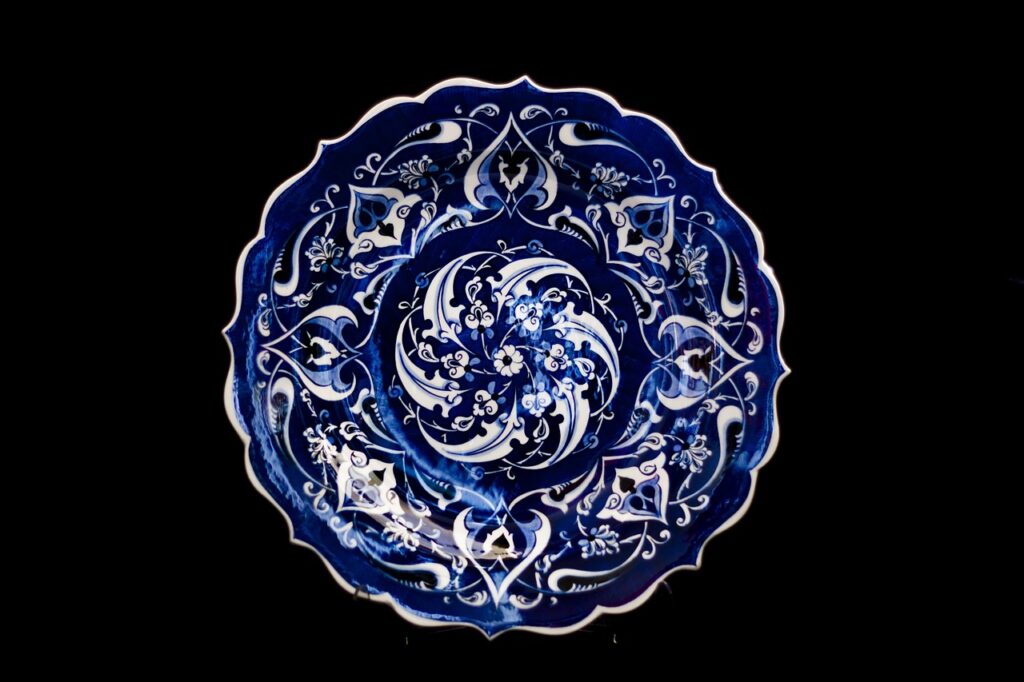
Iznik ware is famous for its white frit body, its vivid blue, turquoise, and red pigments, and its floral designs, especially the tulip and carnation that became symbols of Ottoman art. The tiles from Iznik’s kilns decorated the mosques of Istanbul, from the Blue Mosque to the Rüstem Pasha Mosque.
The industry declined after the seventeenth century as Iznik’s kilns fell silent, but the tradition never died. In the twentieth century the craft was revived, particularly in Kutahya, which had become the center of tile production. Today the best workshops blend this heritage with contemporary design.
The Two Great Centers: Iznik and Kutahya
Iznik, the lakeside town in northwestern Turkey, is the historical heart of the craft. Though the original kilns closed long ago, the town has been revived as a ceramic center, with workshops reproducing the classic designs. Visiting lets you see the process from clay to finished piece.
Kutahya, in western Anatolia, is the modern powerhouse. Since the eighteenth century its potters have produced tiles and vessels in the classical style, and today the town hosts dozens of workshops. The quality ranges from cheap souvenirs to museum-grade work.
Both towns welcome visitors who want to see the craft in action. The workshops are often open, the potters are happy to explain their work, and the prices are far lower than in Istanbul’s tourist shops.

What Makes a Piece Authentic
Authenticity in Turkish ceramics is a question of how the piece was made. A genuine handmade piece is thrown on a wheel or formed by hand, painted freehand, glazed, and fired in a kiln. Because of the handwork, no two pieces are identical, and slight variations in color are signs of the real thing.
The decoration is the next clue. Traditional designs are painted with a brush, and the lines have a lively, organic quality, while machine-made pieces are printed with perfectly uniform patterns. Run your fingers over the surface: on a hand-painted piece, you can often feel the glaze and paint slightly raised.
Ask the seller direct questions: who made it, where, and how long did it take? A genuine workshop will answer with names and details, while a seller of factory goods will be vague. Be aware that many pieces sold as handmade are in fact molded, which is a different thing entirely.
Recognizing Iznik Style
The classic Iznik style is instantly recognizable once you know what to look for. The white body, called frit ware, is harder and finer than ordinary pottery, giving the pieces a distinctive ring when tapped. The palette of cobalt blue, turquoise, a characteristic tomato red, and touches of green and black is specific to the tradition.
The red is the famous test of quality: true Iznik red is a thick, slightly raised pigment, almost coral, and getting it right is difficult even for modern potters. On fine pieces, the designs include saz leaves and compositions built around the tulip, which the Ottomans considered the perfect flower.
A fine piece of Iznik-style work also has a perfectly white, glossy surface and crisp, confident brushwork. When you see a plate or tile that combines all these elements, you are looking at the tradition at its best, whether it was made in the sixteenth century or last week in a Kutahya workshop.

Where to Buy in Istanbul
Istanbul is the easiest place to start your search. The Grand Bazaar is the famous destination, with shops selling everything from mass-produced tiles to serious collectible pieces. The atmosphere is part of the experience, and the range of styles and prices is unmatched, but the quality varies wildly, so compare carefully.
The Arasta Bazaar, tucked behind the Blue Mosque, is smaller and calmer, with a handful of ceramic shops that lean toward quality. The Cağaloğlu and Nuruosmaniye areas, near the Grand Bazaar, are lined with wholesalers and workshops. The Bosphorus districts of Beyoglu and Kadikoy also have good shops, often run by artists who sell their own work.
A strategy that works well in Istanbul: browse widely, ask questions, and let the sellers compete for your attention. Once you have seen twenty shops and held fifty plates, you will have an instinct for what is genuine. Then buy from the shop where the workmanship and the story convinced you, not necessarily the cheapest one.
Where to Buy in the Provinces
Beyond Istanbul, the best buying is in the producing towns. Kutahya is the obvious destination, with its workshops, its ceramics market, and its tile museum, where you can study the history before you shop. Prices here are typically a fraction of Istanbul’s, and the choice of styles is wider.
Iznik offers a smaller, more focused experience, with workshops clustered in the town center and the restored kiln area. Cappadocia has a growing ceramics scene of its own, centered on the town of Avanos, whose potters have worked the local clay for centuries and now produce a lively mix of traditional and contemporary ware.
The resort towns and cities of the Aegean and Mediterranean coasts have ceramics shops too, but they are more expensive and less authentic than the producing centers. If you are passing through a major city like Izmir or Antalya, its bazaar can be worth a browse, but for serious buying, go to the source.

What to Buy: Plates, Tiles, and Vessels
The classic purchase is a decorated plate, the form that shows off the Iznik and Kutahya styles best. Plates come in a range of sizes, from small display pieces to large wall-hung works, and they are easy to transport and display. Look for plates with clean, centered designs and even glaze.
Tiles are the other great tradition. Loose tiles, both antique and new, are sold everywhere, and they can be framed, made into tables, or incorporated into kitchen splashbacks. Check the edges for chipping and the glaze for crazing, the fine network of cracks that can appear on older or poorly fired pieces.
Bowls, vases, and jugs offer more sculptural variety, and the traditional forms, from the deep Iznik bowl to the tulip vase, are beautiful on their own. For a smaller budget, cups, egg cups, and trinket dishes make charming souvenirs that still carry the craft’s signature designs.
How to Check Quality Before Buying
Before you hand over money, hold the piece and look at it properly. Hold it up to the light: fine frit ware is translucent at the rim in a way that ordinary pottery is not. Tap it gently with a fingernail: a clear ring suggests a well-fired piece, while a dull thud hints at under-firing.
Examine the glaze for uniformity and flaws. Some crazing, the fine crackle in the glaze, is natural on older pieces, but on new work it suggests a firing problem. Look at the base and the foot ring: a well-made piece is finished carefully there too, while a sloppy base betrays careless production.
Check the underside for marks. Many workshops sign their work or stamp their mark, and a signature adds value and provenance. And always ask about the maker and the process. A seller who can tell you the artist’s name and the technique is selling craft; a seller who cannot is selling product.
Caring for Ceramics and Getting Them Home
Ceramics travel well if you pack them properly. Wrap each piece in soft cloth or bubble wrap, nest plates with padding between them, and place them in a sturdy box with cushioning on all sides. If you buy from a reputable shop, ask about shipping: most can pack and send purchases worldwide reliably.
At home, ceramics are easy to care for. Dust with a soft cloth, wash by hand with mild soap, and avoid abrasives and dishwasher cycles for hand-painted pieces. Keep decorated plates out of direct sunlight, which can fade the pigments over years. Handled sensibly, a fine piece will last for generations.
One note on antiquity: genuine antique ceramics are rare, expensive, and subject to export regulations, and the overwhelming majority of pieces on sale are modern, however traditional their designs. Buy a piece because you love its beauty and craft, and you will never regret it, whatever its age.
The Revival of Iznik and the Artists Who Carry It On
The story of Iznik ceramics has a remarkable second act. After the original kilns fell silent centuries ago, the craft was revived in the twentieth century, and today a community of dedicated potters keeps the tradition alive.
The revivalists studied the museum collections and the mosque tiles, reverse-engineering the recipes for the body, the glazes, and the famous red pigment. Their work ranges from faithful reproductions to contemporary interpretations.
Visiting the workshops, you can watch this process firsthand: the clay being prepared, the freehand painting, the careful firing. The artists are proud of their lineage and happy to explain it, and buying from them supports the living continuation of the tradition.
Frequently asked questions
What is the difference between Iznik and Kutahya ceramics?
Iznik is the historic center, famous for the classic sixteenth-century style with its vivid cobalt blue, turquoise, and tomato red palette. Kutahya is the modern production center, where the tradition has continued since the eighteenth century. Both produce fine hand-painted pieces, and the styles overlap heavily, with Kutahya the easier place to buy today.
How can I tell a hand-painted piece from a printed one?
Look closely at the decoration. Hand-painted pieces show lively, individual brushwork, slight variations between identical motifs, and paint that sits slightly raised on the surface. Printed or transfer-decorated pieces have perfectly uniform patterns and flat surfaces. Asking the seller about the maker and technique also separates genuine workshops from sellers of factory goods.
Is it safe to buy ceramics in the Grand Bazaar?
It is safe in the sense that you will pay a fair price if you compare and negotiate, and the range is the widest in Turkey. Quality varies enormously, from tourist souvenirs to fine craft, so examine each piece carefully and ask direct questions. For guaranteed quality, the producing towns of Iznik and Kutahya offer better value.

All Over Information
The All Over Information editorial team researches and writes practical English-language guides to Turkey. Facts are checked against official and local sources before publication, prices are published as dated ranges rather than quotes, and guides are revised when things change. We accept no sponsored posts, paid placements or paid links.
More guides like this
The Sufi Mevlevi Tradition Explained for Foreigners
Among all the treasures of Turkish culture, few fascinate visitors as much as the whirling dervishes of the Mevlevi tradition.

The Evil Eye (Nazar) Symbol Explained for Foreigners
As a visitor to Turkey, you will meet the nazar, the blue glass evil eye bead, within your first hour in the…

Ottoman Calligraphy Traditions Explained for Foreigners
If you have visited a Turkish mosque, museum, or market, you have already seen Ottoman calligraphy: the flowing Arabic letters on walls,…

Orhan Pamuk’s Istanbul Explained for Foreigners
If you are planning to visit Istanbul, Orhan Pamuk is the writer who can transform your trip from a sightseeing tour into…

Turkish Cinema’s Rise on the Global Stage
Turkish cinema has moved from the local screens to the world stage in a remarkable few decades.

The Modern Art Scene in Istanbul
Istanbul is a city of layers, and its contemporary art scene sits on top of thousands of years of history like the…