Most first-time visitors to Turkey never make it to Diyarbakir, and that is exactly the point. This ancient city on the banks of the Tigris River rewards travelers who step off the well-worn Istanbul-to-Cappadocia circuit. Its black basalt walls wrap the old city in nearly six kilometers of medieval stone, its bazaars hum with Kurdish and Turkish voices, and its food is among the boldest in the country.
This guide covers everything a first-timer needs: how to get there, what to see, where to eat, and how to move around the city with confidence.
Why Diyarbakir Belongs on Your Turkey Itinerary
Diyarbakir is a city that surprises. Ask most travelers what they know about it and they will mention the walls, the UNESCO listing, and little else. Spend two days here and you will understand why the region’s people speak of it with such pride. The old city, known as Sur, is a living neighborhood rather than a museum piece, with centuries of layers visible in a single street.
The city sits at a crossroads of civilizations. Assyrians, Romans, Byzantines, Seljuks, and Ottomans all left their mark, and the culture that survives today blends Turkish and Kurdish traditions in ways you will not find elsewhere.
Expect a slower, more authentic travel experience. Shopkeepers invite you for tea rather than pushing sales, the call to prayer echoes over rooftops at dusk, and the famous walls glow amber as the sun drops behind the Tigris valley. For travelers willing to look past old headlines, Diyarbakir offers something increasingly rare: a major historic city that still feels undiscovered.
Getting to Diyarbakir
Diyarbakir is well connected despite its distance from the western tourist trail. The most practical option for most visitors is to fly. Diyarbakir Airport sits roughly six kilometers from the city center and receives daily flights from Istanbul, Ankara, and Izmir, with the flight from Istanbul taking around one hour and forty minutes.
Buses from Istanbul are an adventure in themselves. The journey takes roughly eighteen to twenty hours, and Turkish long-distance coaches are far more comfortable than you might expect, with reclining seats, meal stops, and Wi-Fi on the better lines.
Trains are the least convenient option. The passenger rail connection from the west is limited and slow, so most travelers skip it.
The City Walls: A Walk Through Stone
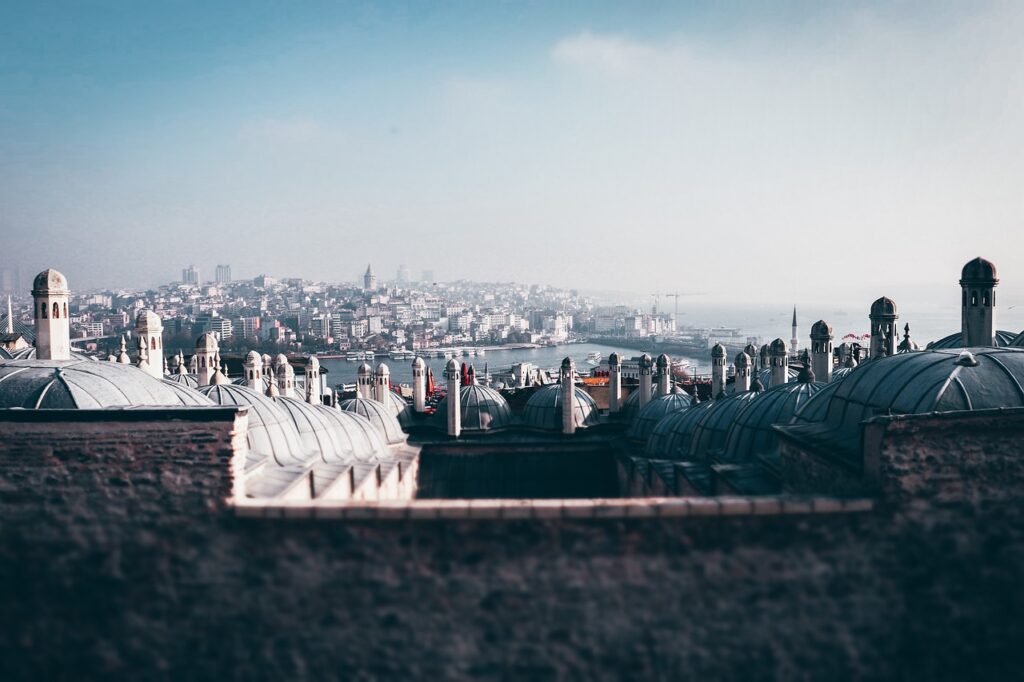
The black basalt walls of Diyarbakir are the reason the city has its nickname, “the city of black stone,” and they are the first thing you should see. Stretching about five and a half kilometers around the old city, they are the longest surviving city walls after the Great Wall of China, built from the dark volcanic stone that gives the city its character.
You can walk long stretches of the walls and climb the towers for sweeping views over the old city on one side and the Hevsel Gardens on the other. The walls were inscribed on the UNESCO World Heritage list in 2015 together with the gardens below, a recognition of their extraordinary state of preservation.
The main gates are the natural starting points. The Mardin Gate, the Urfa Gate, and the New Gate each open onto different parts of the city, and the towers between them hold small museums and exhibition spaces. Visit late in the afternoon when the light turns the basalt warm. Bring water and good shoes, and allow a couple of hours to do the circuit justice.
Hevsel Gardens and the Tigris
Below the walls, the Hevsel Gardens spread across the floodplain of the Tigris River in a patchwork of vegetable plots and orchards that have been cultivated for thousands of years. They are not gardens in the ornamental sense but a working agricultural landscape, irrigated by canals fed by the river, and they remain a lifeline for the city’s food supply.
The gardens are best appreciated from the walls above, where the contrast between dark stone and green farmland is striking. A walk down through one of the gates takes you into the fields themselves, where farmers still tend onions, peppers, and watermelons by hand. The view across the Tigris toward the low hills on the far bank is quietly magnificent.
The Tigris itself runs green and wide below the city, and the stretch between the walls and the modern bridges is a popular evening promenade. It is also where you will find the historic Dicle Bridge, an old stone crossing that once carried caravans on the Silk Road. This is the Diyarbakir that postcards cannot capture.

Exploring the Sur District
The Sur district is the walled old city, a dense tangle of narrow lanes, stone houses, mosques, and bazaars. This is where Diyarbakir’s history is most concentrated, and you can spend an entire day getting lost here in the best possible way. The neighborhood has been through difficult decades, but restoration work has revived much of the historic core.
The heart of Sur is the area around Ulu Cami, the Grand Mosque, built in the eleventh century and one of the oldest mosques in Anatolia. Its courtyard, with a fountain and arcades, is a calm retreat from the streets. A short walk away stands the four-legged minaret, an unusual structure supported on four stone pillars that is one of the most photographed sights in the city.
The bazaar quarter stretches between the mosque and the New Gate. Covered streets overflow with copperware, textiles, jewelry, and spices, and the craftsmen working metal with hammers and chisels have been doing the same work for generations. Do not rush through Sur. The neighborhood rewards wanderers, and its lanes change character with the light.
Hasan Pasha Han and the Bazaar Quarter
In the middle of the bazaar quarter stands Hasan Pasha Han, a seventeenth-century caravanserai built for travelers and their camels on the trade routes through the southeast. Restored in recent years, the two-story stone building now houses tea gardens, shops, and restaurants around a central courtyard, and it is the best place in the city to rest your feet.
Order a tea, sit under the arcade, and watch the life of the caravanserai unfold. The architecture shows the classic Anatolian pattern of a trading house wrapped around a courtyard, with stables below and rooms above.
From the han, the covered bazaar lanes run in every direction. The coppersmiths’ street rings with hammer blows, the fabric sellers’ street glows with color, and the spice market fills the air with cumin, sumac, and mint. Bargaining is expected here, though prices are gentler than in Istanbul’s grand bazaar. Even if you buy nothing, the quarter is a walk through the living commercial heart of the city.
The Food of Diyarbakir
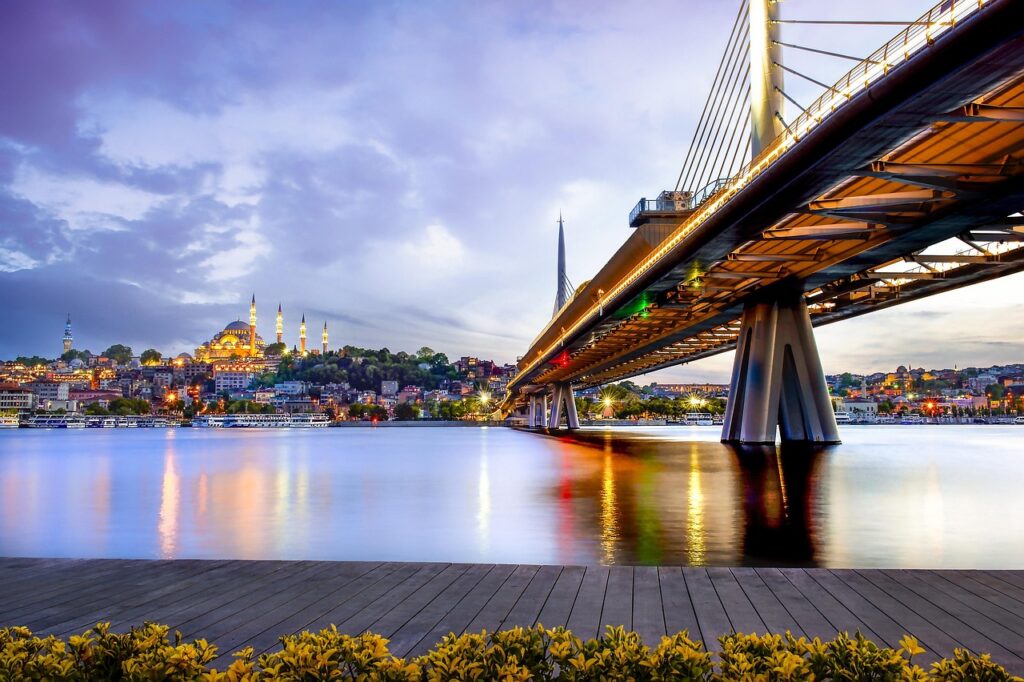
Diyarbakir is one of Turkey’s great food cities, and eating well here is easy. The local cuisine draws on the agricultural riches of the Tigris valley, and several dishes claim the city as their home. Kaburga dolmasi, lamb ribs stuffed with rice, almonds, and spices, is the signature dish, slow-cooked until the meat falls from the bone.
Breakfast in Diyarbakir is a serious affair. The local spread includes fresh bread from the stone ovens, clotted cream and honey, olives, cheese, and menemen, eggs scrambled with tomatoes and peppers. The city is also famous for its lamb and for the flatbreads baked in the old-style ovens that dot the market streets.
Street food deserves attention too. Meat skewers grilled over charcoal, stuffed flatbreads, and the local take on lahmacun, a thin crisp pizza-like flatbread, are all excellent and inexpensive. Finish meals with the regional sweets, particularly the pistachio pastries that the southeast does so well. Most restaurants cluster around the bazaar quarter and the streets near the main square.
Practical Tips for First-Timers
A few practical notes will smooth your visit. The city is conservative, so dress modestly, particularly when visiting mosques, and women should cover their heads inside them. English is less widely spoken than on the western coast, so a few phrases of Turkish, or a translation app, will make life easier. People are genuinely hospitable and will often go out of their way to help.
Money matters are straightforward. Cards are accepted in hotels and larger restaurants, but the bazaars, small eateries, and tea gardens are cash businesses, so carry enough Turkish lira for the day. Tap water is not recommended, and bottled water is cheap and everywhere. The summer heat is intense, so plan outdoor sightseeing for the morning and evening hours.
Safety concerns appear in the news, but for ordinary travelers the city functions like any Turkish provincial capital. Use the same common sense you would anywhere, avoid late-night wandering in unfamiliar quarters, and you will find Diyarbakir welcoming.

When to Visit Diyarbakir
The best times to visit Diyarbakir are spring and autumn. April through June brings mild days, green gardens, and comfortable temperatures for walking the walls, while September and October offer the same pleasant conditions as the harvest fills the markets. These shoulder seasons are when the city is at its most photogenic.
Summer, from June to September, is intensely hot. Daytime temperatures regularly climb into the high thirties, and the old stone streets bake in the sun. If you come in summer, plan sightseeing around the early morning and late evening, and spend the middle of the day in shaded tea gardens or air-conditioned museums.
Winter is cold but quiet, with occasional rain and, some years, snow that transforms the black walls into a dramatic sight. Rooms are cheap, and you will have the sights almost to yourself. For a first visit, spring is the sweet spot: warm enough to enjoy the riverbanks, green enough to appreciate the gardens, and light enough to make the old city shine.
Frequently asked questions
How many days should I spend in Diyarbakir?
Two full days is the right amount for a first visit. Day one covers the walls, Hevsel Gardens, and the Tigris riverside. Day two explores the Sur district, Ulu Cami, the four-legged minaret, and the bazaar quarter around Hasan Pasha Han. If you want to add a day trip to nearby sights, budget a third day.
Is Diyarbakir safe for tourists?
For ordinary visitors, Diyarbakir is as safe as any Turkish provincial city. The historic Sur district has a visible security presence, locals are welcoming to travelers, and the main sights are busy during the day. Use standard precautions, avoid wandering late at night in unfamiliar lanes, and keep up with travel advisories before you go.
What is the best way to reach Diyarbakir?
Flying is the most practical option. Diyarbakir Airport has daily flights from Istanbul and other major Turkish cities, with the flight from Istanbul taking about an hour and forty minutes. Overnight buses from Istanbul take eighteen to twenty hours and suit travelers who want to save money and see the country.

All Over Information
The All Over Information editorial team researches and writes practical English-language guides to Turkey. Facts are checked against official and local sources before publication, prices are published as dated ranges rather than quotes, and guides are revised when things change. We accept no sponsored posts, paid placements or paid links.
More guides like this

Diyarbakir Airport and Transport Guide
Diyarbakir is a compact city, and the transport picture is refreshingly simple: a small, efficient airport close to the center, a walkable…
Best Local Restaurants in Diyarbakir
Diyarbakir is one of the great food cities of Turkey, and eating well here needs no guidebook star ratings.
Diyarbakir on a Budget: Money-Saving Travel Tips
Diyarbakir is one of the best-value destinations in Turkey, and a traveler with a tight budget can do very well here.

Where to Stay in Diyarbakir: Neighborhood Guide
Diyarbakir is a city of two halves for travelers. Inside the black basalt walls lies Sur, the historic old city, atmospheric and…
Top 10 Things to Do in Diyarbakir
Diyarbakir is one of Turkey's most underrated cities, a place where six thousand years of history sit within walking distance of each…

Hidden Gems of Diyarbakir Most Tourists Miss
Every visitor to Diyarbakir sees the walls, walks the Hevsel Gardens, and stands before Ulu Cami.