Turkey is the homeland of lokum, and the country is full of sweet shops where the craft is practiced with devotion. Yet not all lokum is equal, and knowing where to look makes the difference between a memorable sweet and a forgettable one. This guide maps the lokum landscape of Turkey, from the historic counters of Istanbul to the rose-scented workshops of Afyon, and gives you the knowledge to buy the best of every city.
The Lokum Map
The lokum map of Turkey has clear landmarks. Istanbul is the historic capital of the sweet, with the country’s most famous shops and its richest variety.
Afyon, in western Anatolia, is the other great name, famous for its rose-scented lokum and a regional technique that gives it a distinctive softness.
Safranbolu, in the north, is known for its saffron lokum, while the pistachio country of the southeast produces the nut-studded versions beloved across the country.
Every city has its local shop, and the best strategy is simple: find where the locals buy, and buy there.
The map is not fixed, because the best lokum is wherever a great confectioner is at work. Ask locals, follow the smell of boiling sugar, and you may find a shop no guidebook mentions. The map also includes the small towns between the famous cities, where family workshops supply the local shops, and their lokum is worth a detour.
Istanbul’s Historic Shops
Istanbul is where the lokum tradition lives most visibly. The historic districts of the old city are home to sweet shops that have served the city for generations.
These shops carry the full history of the sweet in a single counter, from rose and lemon classics to pistachio and modern fruit flavors.
The best of them still make lokum in traditional copper kettles, and the craft is on display for anyone curious enough to look.
Istanbul is also the easiest place to taste widely. Buy a small box of mixed flavors, and let the city teach you the range of the sweet.
The historic shops are also museums of packaging, with antique tins and labels that tell the story of the trade. Take a moment to look, because the containers are part of the charm. Each shop has its specialties and its devotees, and asking a local which shop they prefer will start a friendly argument that guides you well.

The Spice Bazaar Experience
The Spice Bazaar, in the heart of the old city, is the most atmospheric place to buy lokum in Istanbul. The market hums with color, scent, and commerce.
The lokum stalls here are plentiful, and the sellers are practiced at catching the eye of a traveler. Samples are pressed into your hand before you can ask.
The trick is to compare. Visit two or three stalls, taste the samples, and buy where the lokum is freshest and the pistachios are greenest.
The bazaar is theater as much as shopping, and a box of lokum bought among its colors and voices carries the memory of the place itself.
The bazaar is best visited in the morning, when the stalls are freshly stocked and the crowds are thinner. Later in the day, the atmosphere is livelier but the choice is smaller, so choose your moment.
Afyon: The Rose City
Afyon, west of Ankara, is the most famous name in Turkish lokum after Istanbul. The city is known for the roses that grow in its hills.
The local lokum is scented with rose water and made with the region’s soft mineral water, which gives it a gentle, melt-soft texture.
The city has turned its lokum into a point of pride, and its sweet shops offer the rose versions that made the region’s name.
For the traveler passing through western Anatolia, Afyon is a delicious detour, and its rose lokum is unlike anything you will taste elsewhere.
The rose connection also flavors the city identity, and the hills around Afyon bloom with roses in the late spring. A visit in that season adds a whole sensory layer to the lokum experience. The mineral water of Afyon is a point of pride in the local story, and the confectioners insist it is the reason their lokum is softer than any other.

Safranbolu’s Saffron Lokum
The beautiful old town of Safranbolu, in the north, gives its name to a distinctive lokum flavored with saffron, the spice that made the region famous.
Saffron lokum is golden, aromatic, and quietly luxurious, a taste of the town’s storied history as a trading center.
Safranbolu is also a UNESCO-listed town of Ottoman houses, so the lokum is best enjoyed as part of a visit to one of Turkey’s most charming corners.
The saffron version makes an unusual gift, and the shops of the town are happy to explain the tradition to curious travelers.
The saffron lokum is also beautiful, with its golden color, and it makes a distinctive gift that travelers rarely find elsewhere. Buy a little extra, because it will not survive the journey home untouched.
Gaziantep’s Pistachio Delight
In the southeast, the pistachio rules, and the lokum of Gaziantep is built around it. The city’s green pistachios are the finest in the country.
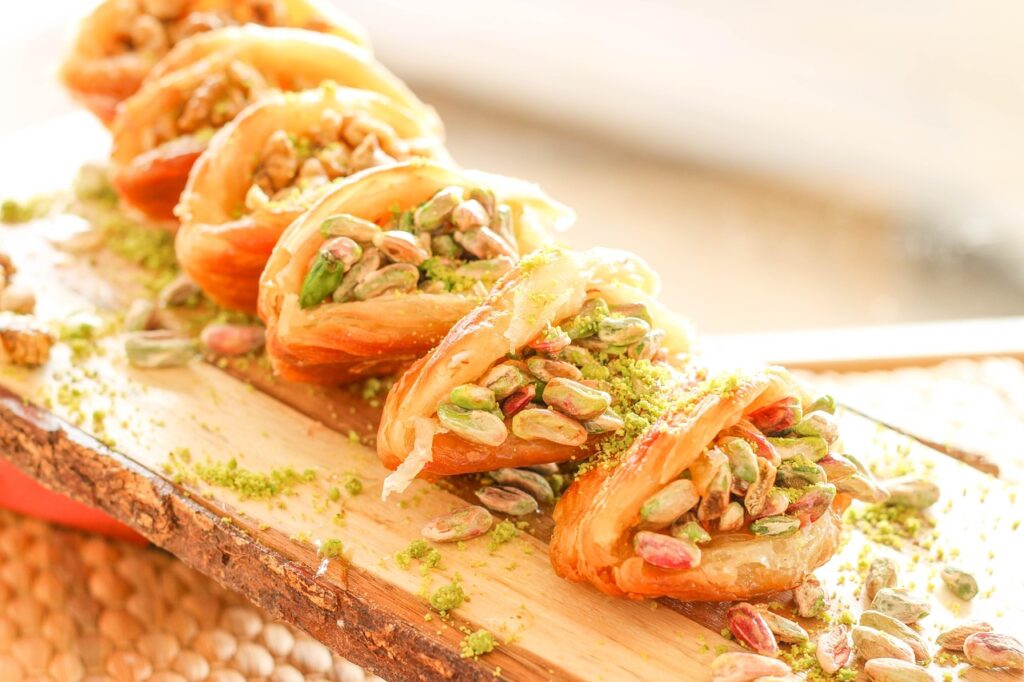
Pistachio lokum from the region is dense with nuts, sometimes studded inside and out, and its flavor is intense and green.
The sweet shops of Gaziantep, already famous for baklava, extend the same craft to lokum, and the quality is outstanding.
If you love pistachio, the southeast is the place to indulge, and a box of Antep pistachio lokum is one of the best souvenirs Turkey offers.
The southeast also offers lokum in flavors that reflect the region, including pistachio, rose, and even local fruits. Ask the shop what is special, and let the recommendation guide you.
If your travels take you through the southeast, leave room in your bag. The pistachio lokum of the region, dense with green nuts and packed in simple boxes, is the souvenir that outlives every photograph, and it will remind you of the region for months.

New Artisan Makers
Alongside the historic shops, a new generation of confectioners is reinventing lokum. These artisans experiment with chocolate, exotic fruits, and refined packaging.
Their creations, like chocolate-dipped lokum or pomegranate and bergamot versions, are modern expressions of an ancient craft.
The artisan shops are often small and passionate, and they welcome travelers who want to understand the sweet beyond the tourist stalls.
Seek them out in the big cities, and you will taste the future of a tradition that is anything but static.
The artisan shops also make fine gifts, with beautiful boxes that need no wrapping. Their products cost more, but the craft and the presentation justify the price, and the memory lasts longer than the sweet.
The new makers also demonstrate that lokum is a living craft, not a museum piece. Their experiments keep the tradition in motion, and the best of them will become the classics of the next generation.
Shopping Tips for Visitors
Buy lokum from a shop with a fast turnover, where the trays are refreshed daily. Stale lokum hardens and loses its perfume.
Taste before you buy. Turkish sweet shops expect you to sample, and the taste will tell you more than any label or promise.
Check the pistachios. In pistachio lokum, the nuts should be bright green and plentiful, and the color is the sign of quality.
Finally, buy in modest quantities. Fresh lokum is best eaten within weeks, so let your appetite and your luggage guide the purchase.
Packaging matters for gifts, so ask for a box rather than a bag when you plan to give the lokum away. The presentation is part of the gift, and the shopkeepers understand this better than anyone.
What to Avoid
Avoid lokum sold in sealed plastic packs that sit for months on supermarket shelves. It will be hard, flavorless, and disappointing.
Be wary of garish colors. Real lokum is tinted softly, and violent pinks and greens usually mean artificial everything.
Skip the bargain boxes at heavily touristy stalls unless you have tasted them. The cheapest lokum is usually the oldest.
And do not buy more than you can eat fresh. Lokum is a sweet of the moment, and its pleasure fades with its softness.
A final caution about weight: lokum is heavy, and a generous box can strain your luggage allowance. Plan your purchases with the journey home in mind, and buy the lightest favorites if space is tight.
Bringing Lokum Home
Lokum travels well, which is why it has conquered the world. Buy it fresh, in a sealed box, and it will survive the journey home.
Keep the box cool and away from direct sun during travel, and eat the lokum within a few weeks of purchase.
The historic shops are practiced at packing for travelers, so ask for their advice, and consider a mixed box to share the range of flavors.
Back home, serve the lokum with coffee, and let the sweet carry the memory of the Turkish shop where you found it.
The pleasure of lokum continues after the box is empty, because the memory of a perfect piece stays with you. Let the sweet lead you back to Turkey, where it will be waiting fresh at the same counter.
Frequently asked questions
Which city has the best Turkish delight in Turkey?
Istanbul has the most famous shops and the greatest variety, while Afyon is renowned for its rose-scented lokum made with local mineral water. Safranbolu is known for saffron lokum, and the southeast, especially Gaziantep, produces the finest pistachio versions.
Where should I buy lokum in Istanbul?
The Spice Bazaar and the historic sweet shops of the old city are the classic choices. Compare several stalls, taste the samples, and buy where the lokum is freshest and the nuts are greenest. Shops with a fast turnover are always the safest bet.
How can I tell good lokum from bad?
Good lokum is soft, uniform, and freshly made, with natural colors and a light perfume of real ingredients. Bad lokum is hard, stale, heavily colored, and flavorless. Always taste before buying, and trust shops with a quick turnover of fresh trays.

All Over Information
The All Over Information editorial team researches and writes practical English-language guides to Turkey. Facts are checked against official and local sources before publication, prices are published as dated ranges rather than quotes, and guides are revised when things change. We accept no sponsored posts, paid placements or paid links.
More guides like this

Turkey’s Best Food Tours
Turkey is one of the world's great food destinations, and there is no better way to explore its flavors than on a…
The Ultimate Guide to Turkish Flatbread (Bazlama)
Bazlama is the soft, puffy flatbread of the Turkish countryside, baked on a griddle and served warm with almost anything.
Pide: A Taste of Turkish Culture
Pide is more than a boat-shaped bread with a filling; it is one of the most social foods of Turkey. It is…
The Ultimate Guide to Turkish Soups (Corba)
In Turkey, no meal truly begins until a bowl of corba has been set on the table.

Hunkar Begendi: A Taste of Turkish Culture
Hunkar begendi is more than a recipe; it is a story that Turkey has told itself for centuries, a dish named for…
The History Behind Adana Kebab
Every Turkish city has a dish it claims as its own, but few claim one as fiercely as Adana claims its kebab.