Central Anatolia is a high plateau, roughly a thousand meters above sea level, and its climate is one of extremes: cold winters, hot summers, and enormous daily temperature swings that take many visitors by surprise. Unlike Turkey’s mild coasts, the plateau has a continental climate, with four distinct seasons and a character shaped by dryness, wind, and huge skies. The good news is that every season has its defenders, from winter’s snow-dusted fairy chimneys to autumn’s golden light. This guide explains the region’s weather month by month so you can choose the time that fits the trip you want to have.
The Climate of the Plateau in a Nutshell
The Central Anatolian climate is continental: long, cold winters and hot, dry summers, with spring and autumn as short, pleasant bridges. The plateau’s altitude is the key factor, cooling the air compared with the coasts and intensifying the difference between day and night.
Rainfall is modest and falls mainly in spring and early summer, with dry summers and dry winters. Snow arrives from December and can linger well into March, while summer brings weeks of clear, cloudless skies. The region is one of the sunniest parts of Turkey.
The practical consequence is that weather dictates the season more strongly here than anywhere else in the country. Winter days are cold but often brilliant, and summer afternoons are hot but comfortable in the shade. The secret is preparation: dress in layers, respect the sun, and the plateau rewards you in every season.
Spring: The Green Reawakening (March to May)
Spring on the plateau arrives late and transforms the landscape. March is still wintry, with possible snow and cold winds, but April brings the first warmth and the steppe turns green almost overnight, carpeted with wildflowers that vanish by early summer.
May is the finest spring month: mild days, cool nights, and the landscape at its freshest. The valleys of Cappadocia are green, the fruit trees blossom, and the light is soft and clear. This is a wonderful month for walking and for photography before the summer crowds arrive.
The trade-off is unpredictability. April can deliver rain, wind, and sudden chills, so pack for all seasons. If you want the flowers without the weather lottery, target mid-May, when the plateau is usually settled, green, and gloriously uncrowded.
Summer: Warm Days, Cool Nights (June to August)
Summer in Central Anatolia is defined by contrast. Days are hot, dry, and intensely sunny, with afternoon temperatures climbing well into the thirties, but nights cool down dramatically, often dropping to pleasant levels that let you sleep easily without air conditioning.
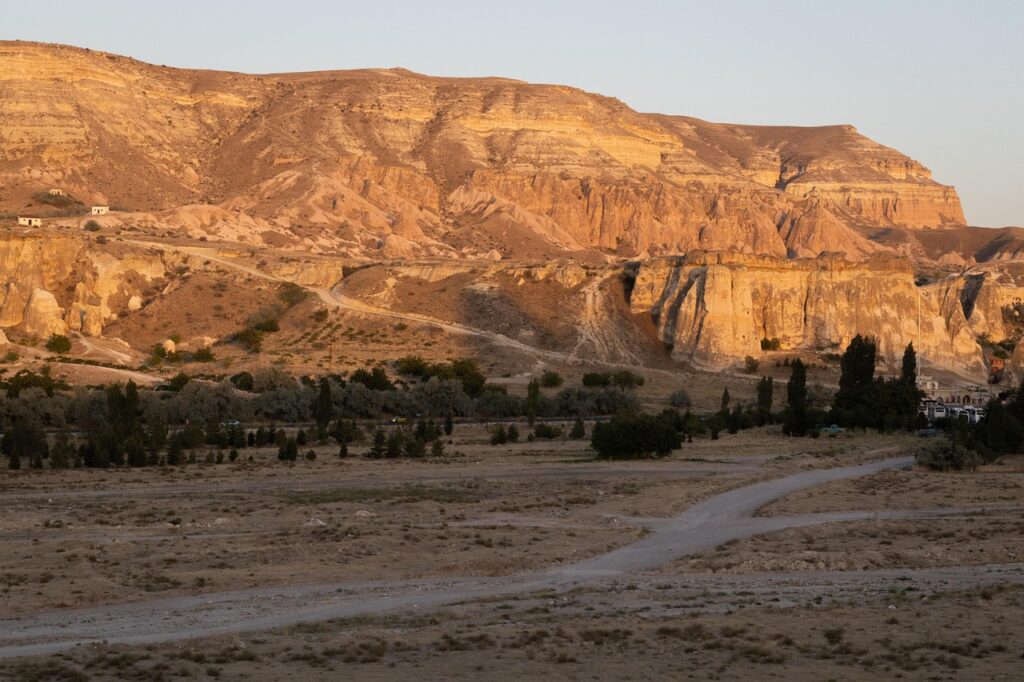
This is the classic travel season for the region. The famous Cappadocia valleys are at their most inviting in the morning and evening light, and the summer is the peak time for balloon flights, hiking, and open-air sightseeing. The dry air keeps the heat from feeling oppressive.
The rhythm of summer travel is simple: start early, rest in the afternoon heat, and go out again as the sun softens. High summer also brings the crowds and the prices. June and September give you the same clear weather with fewer people.
Autumn: Golden Light and Harvest (September to November)
Autumn is many travelers’ favorite season in Central Anatolia, and it is easy to see why. September keeps the summer’s warmth with softer edges, October brings crisp days and spectacular light, and the landscape turns gold as the harvest begins.
The valleys of Cappadocia glow in the low autumn sun, and the grape harvest gives the region’s wine towns their busiest and most festive weeks. Temperatures are ideal for walking, ballooning, and exploring the ancient sites, and the crowds of summer have thinned dramatically.
November is a transition month: early November can still be beautiful, but by the end of the month the cold returns, and the first snows dust the highest ground. For the best balance of weather, color, and calm, October is the standout month of the year.

Winter: Snow, Silence, and Fairy Chimneys (December to February)
Winter is the plateau’s most dramatic season. Temperatures drop well below freezing at night and often stay below zero through the day, snow falls regularly, and the region takes on a monochrome beauty that is entirely different from summer.
Snow-dusted fairy chimneys are one of the most photographed sights in Turkish travel, and the valleys are at their most magical in the weeks after a snowfall. The balloon flights still run when conditions allow, and flying over a white landscape is unforgettable. The cave hotels, carved into rock, stay cozy through the coldest nights.
Winter travel here is not for everyone, but it rewards the prepared: quiet sites, low prices, and a fairy-tale landscape. The main challenge is that some rural roads and viewpoints close in heavy snow, so flexibility and warm clothing are essential.
The Temperature Swing: Days vs. Nights
The single most important thing to understand about Central Anatolia’s climate is the daily temperature swing. Because the plateau sits high and dry, the ground heats quickly in the sun and loses heat rapidly after dark, and the difference between afternoon and night can reach fifteen degrees or more.
In summer, a hot afternoon is followed by a genuinely cool evening, which is why the region’s famous restaurants and terraces feel pleasant at night. In winter, a bright afternoon may reach above freezing while the same day’s night drops far below it. In spring and autumn, the swing means you need layers for every single outing.
This swing is also a travel strategy: the golden hours of early morning and late afternoon are the most comfortable for walking, and the midday heat of summer is best spent indoors or in the shade. Plan your days around the light and the temperature, and the climate becomes an ally.

How the Climate Shapes Cappadocia
Cappadocia’s landscape is a direct product of its climate. Millions of years of volcanic ash hardened into soft rock, and the region’s dry climate with its big temperature swings and occasional heavy rain then carved the valleys, chimneys, and gullies you see today. Weather and geology are inseparable here.
The dry air also preserves the region’s treasures. The Byzantine frescoes in the cave churches survived for a thousand years partly because the climate is so dry, and the same conditions keep the cave dwellings comfortable in both summer and winter heat.
For the traveler, this means Cappadocia’s climate is generally kind: dry, sunny, and rarely humid. The extremes of heat and cold are manageable with planning, and the clear air delivers the sharp visibility and brilliant light that make the region so photogenic.
Best Time for Balloon Flights
Balloon flights are the defining experience of Cappadocia, and they are weather-dependent. Flights launch at sunrise, when the winds are calmest, and they fly only in safe conditions, so a good weather window is essential.
The best flying months are April through November, when conditions are most settled. Spring and autumn offer the most reliable flying days, with summer mornings calm and clear. Winter flights are possible and magical over snow, but they are cancelled more often because of cold and wind.
To maximize your chances, plan at least two or three mornings in the region, book with a company that offers flexible rescheduling, and treat the flight as a bonus rather than a fixed plan. The valleys are wonderful from the ground too, whatever the weather does.

Best Time for Hiking and Outdoor Exploration
The valleys of Cappadocia and the wider plateau are made for walking, and the best months are May, June, September, and October. These windows offer mild temperatures, clear skies, and the golden light that makes the rock formations glow.
Summer walking is possible with an early start, and the long evenings allow evening hikes that are genuinely delightful. Winter walks can be magical, especially in fresh snow, but icy paths and short daylight demand care. Spring brings the greenest landscapes and the wildflowers.
The region’s trails are surprisingly uncrowded outside the main viewpoints, and a morning walk in Rose Valley or along the ridges of Urgup is one of the great pleasures of travel here. Whatever the season, start early, carry water, and let the landscape set the pace.
Festivals, Crowds, and Seasonal Practicalities
The plateau’s seasonal rhythm is clear. Summer brings the crowds and the peak prices, with Cappadocia hotels and balloon seats booked well ahead. Spring and autumn offer the sweet spot, and winter is the bargain season, with empty sites and dramatically lower prices.
The region’s events follow the seasons too: the grape harvest and wine festivals in autumn, the December ceremonies of the Whirling Dervishes in Konya, and cultural festivals in Ankara through the year. These events draw their own crowds, so plan around them if you want quiet.
The practical details matter: hotels in Cappadocia often have no traditional central heating in cave rooms, so winter guests should check heating arrangements; summer guests should book restaurants for dinner, when the terrace tables fill. With a little planning, every season on the plateau works.
Frequently asked questions
Is Central Anatolia hot in summer?
The days are hot and intensely sunny, often climbing well into the thirties, but the altitude and dry air keep it comfortable, and nights cool down dramatically. The heat is at its peak in July and August, so start sightseeing early. June and September offer the same sunshine with gentler temperatures and fewer crowds.
Can you visit Cappadocia in winter?
Yes, and winter is one of the region’s most magical seasons. Snow dusts the fairy chimneys, the crowds vanish, and the cave hotels stay cozy. Temperatures fall well below freezing at night, balloon flights are less reliable, and some roads close, so pack warmly and stay flexible. The reward is a landscape few visitors ever see.
What should I pack for the Central Anatolian climate?
Layers are the golden rule, because the temperature swings so much between day and night in every season. In summer, add sun protection and a warm layer for the evening; in winter, bring serious cold-weather gear, boots, and gloves. In spring and autumn, a windproof jacket is essential. Comfortable walking shoes complete the kit.

All Over Information
The All Over Information editorial team researches and writes practical English-language guides to Turkey. Facts are checked against official and local sources before publication, prices are published as dated ranges rather than quotes, and guides are revised when things change. We accept no sponsored posts, paid placements or paid links.
More guides like this

Hidden Gems of the Mediterranean Region
The Mediterranean coast of Turkey is one of the most visited stretches of shoreline in the country, yet most travelers never leave…

Climate and Best Time to Visit the Black Sea Region
The Black Sea region is the rainiest corner of Turkey, and that single fact shapes everything about traveling there.

Exploring the Central Anatolia Region: A Complete Travel Guide
Central Anatolia is the heart of Turkey in every sense: a vast high plateau of steppe, wheat fields, and volcanic rock that…
Hidden Gems of the Aegean Region
Beyond the famous names of Ephesus, Bodrum, and Alacati, the Aegean Region hides a quieter world of ancient cities, village streets, and…

Best Cities and Towns in the Mediterranean Region
The Mediterranean Region of Turkey is a coastline of superlatives: the country's most beautiful beaches, its best-preserved ancient theaters, and its most…

Climate and Best Time to Visit the Marmara Region
The Marmara Region has a transitional climate, sitting where the Mediterranean, the Black Sea, and the continental interior meet.