Konya is one of Turkey’s great eating cities, though it rarely gets the credit. The food is the honest cooking of the Central Anatolian plain: wheat, butter, lamb, and yogurt, prepared with centuries of confidence and served without fuss. The signature dishes are few and perfect, and the city’s restaurants range from wood-fired kebab houses to elegant modern dining rooms. This guide is organized by what you are hungry for, so you can match the meal to the moment. One rule applies everywhere: follow the locals. In Konya, the busiest restaurant at lunch is almost always the best one.
Etli Ekmek Houses
Etli ekmek is the dish that defines Konya, and the restaurants that specialize in it are the city’s most beloved institutions. The dish is a long, thin flatbread topped with spiced minced meat and baked in a wood-fired oven until the edges blister and the center stays juicy. It is served on a metal tray, to be eaten with your hands, and it arrives in minutes.
The best etli ekmek houses are busy, loud, and proud of their craft, with ovens visible from the dining room. Watch the bakers stretch the dough, throw it onto the hot stone, and slide the finished bread onto a fresh tray with practiced ease.
Order one tray per person, a side of cacik, the cold yogurt and cucumber soup, and a glass of sour cherry juice. It is a simple meal, and it is one of the most satisfying in Turkey. Portions are generous, so resist ordering two trays if you are unsure; you can always order more, and the second tray arrives just as fast as the first.
Firik Pilavı and the Traditional Konya Table
Beyond etli ekmek, the second pillar of Konya cuisine is firik pilavı, a pilaf made from green wheat that is roasted over the fire before cooking, giving it a deep, smoky flavor and a chewy texture. It is served alongside slow-cooked lamb, and the combination is the taste of winter in Konya.
Many traditional restaurants build their whole menu around this style of cooking, offering a set of small dishes known as the Konya table: soups, stews, and pilafs served family style. Tirit, a lamb dish served over soaked bread, is another local classic worth seeking out.
These restaurants tend to be formal by local standards, with white tablecloths and attentive service, and they fill with families at the weekend. Go for lunch on a weekday if you want the room at its calmest. These are the restaurants where the city celebrates: expect wedding parties, family gatherings, and long tables of colleagues, and do not be surprised if the staff brings an extra dish ‘from the house’ when you look like you are enjoying yourself.

Lokantas: Everyday Home Cooking
For the everyday food of Konya, look for a lokanta, the simple eatery where workers and families eat lunch. The format is the same across Turkey: a display counter of steaming pots, and you point at what you want.
The food is home cooking at its most honest: lentil soup, meatballs, beans, stuffed vegetables, and rice, served with bread and salad. Portions are generous, prices are low, and the quality is usually excellent, because the regulars come every day.
Lokantas close early, often by mid-afternoon, and they do their best work at lunch. Go around noon, point at the pots, and eat like the city does. You will leave full, happy, and with a new understanding of Turkish food. Two practical notes: ask what the day’s soup is before you choose, since it is usually the best thing on the counter, and take your time, because rushing a lokanta lunch is not the local way.
Breakfast and the Morning Spread
Turkish breakfast is a feast, and Konya’s version has its own identity. The local spread includes the region’s sweet, creamy butter, thick kaymak clotted cream, honey, cheeses, olives, and tomatoes, with fresh bread or simit and endless glasses of black tea.
In the old city, breakfast cafes and hotel gardens serve this spread to a mix of locals and visitors, and the meal routinely stretches an hour or more. Menemen, scrambled eggs with tomatoes and peppers, is the hot dish to add if you are hungry.
The best breakfast streets are around the Mevlana Museum and in the modern center. Go early on weekends, when families claim the best tables, and order a full spread if you have a big day of walking ahead.
The Bazaar Eateries
Konya’s bazaar is not just for shopping; it is one of the best places in the city to eat. Tucked among the goldsmiths and spice stalls you will find tiny eateries serving the food the merchants eat: gözleme, thin folded pastries filled with cheese or spinach, and dürüm, wraps of grilled meat folded into flatbread.
The bazaar’s sweet shops are equally essential. This is where the city’s famous Turkish delight is made and sold in dozens of flavors, from rose to pomegranate to pistachio, and the stalls will happily let you taste before you buy.
Eat in the bazaar for lunch if you want the liveliest food experience in Konya. Follow the crowds, eat standing at a counter if that is what the shop does, and you will eat well for very little money.
Sweet Stops: Lokum and Desserts
Konya’s claim to the confectionery world is Turkish delight, which the city has been making for centuries and still produces with old-fashioned care. The best shops are in the old bazaar, where you can watch the delight being cut and dusted with powdered sugar.
Beyond lokum, Konya offers the familiar Turkish dessert canon: künefe, a hot pastry of shredded wheat and cheese soaked in syrup, and the milk puddings that every Turkish city does well. In winter, hot desserts reign; in summer, the city turns to cold ones.
For a proper sweet stop, sit down at a dessert cafe with a plate of künefe and a glass of tea. It is the perfect end to a day of walking, and the ritual of the pause matters as much as the sugar.
Summer Treats: Bici Bici and Cold Drinks
If you visit Konya in summer, you must try bici bici, a local specialty you will find nowhere else in Turkey. It is a mound of shaved ice flavored with rose syrup, served with cubes of starch jelly, and it is the traditional way the city cools down.
Bici bici vendors set up in parks and near the bazaar as soon as the weather warms, and the queues tell you where the best ones are. It is cheap, refreshing, and utterly of this place.
The other essential drink of the city is sour cherry juice, made from the orchards of the region and sold everywhere, from street stalls to restaurant tables. It is tart, sweet, and dark red, and it pairs with everything on the Konya menu.
Eating Around the Mevlana Museum
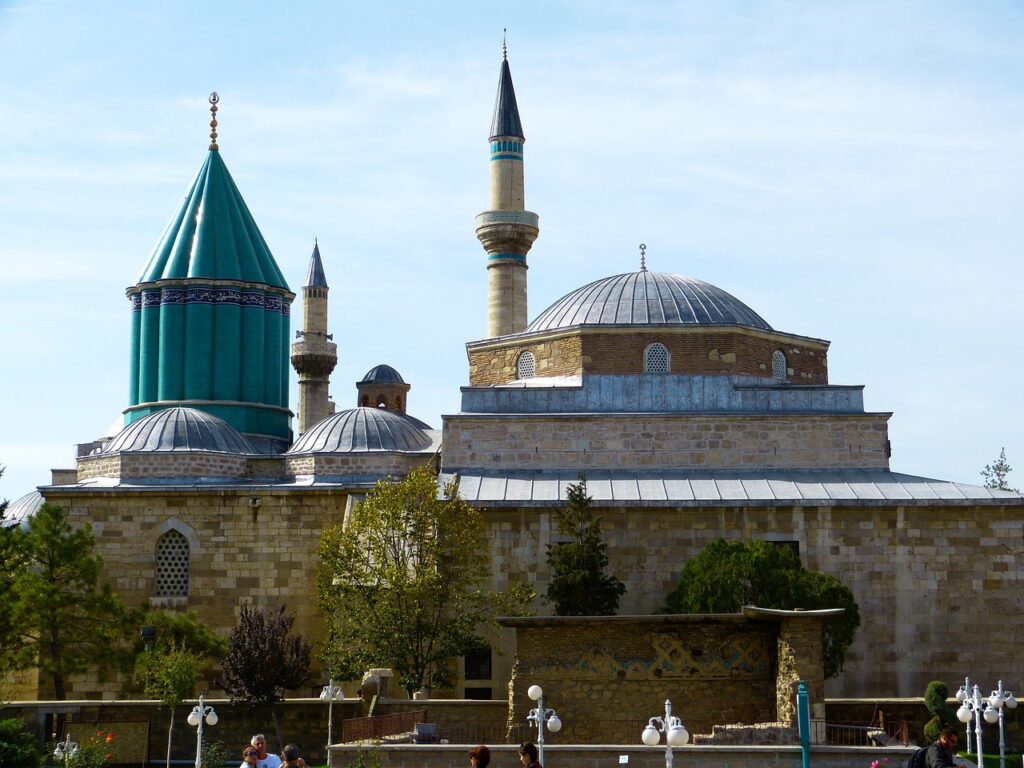
The streets around the Mevlana Museum are tourist Konya’s dining corridor, and the quality is better than you might expect. The restaurants here serve the full local repertoire, from etli ekmek to firik pilavı, alongside the Turkish classics that visitors expect.
Prices are higher than in the rest of the city, but still moderate, and the locations are unbeatable after a morning at the museum. Look for the places with menu boards in multiple languages and local families at the tables, which is the best guarantee of a good meal.
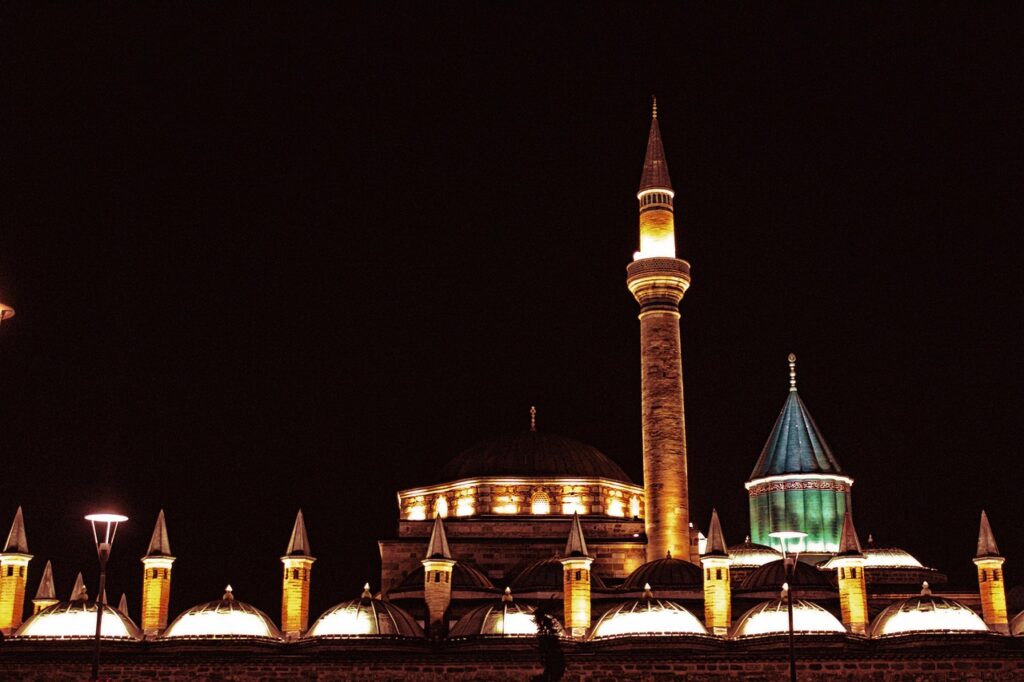
For a special evening, choose a restaurant with a view of the green dome, and eat as the floodlights come on. It is the classic Konya dinner, and it never gets old. During the Mevlana Festival in December, the museum gardens are lit and the streets fill with pilgrims and musicians, making this one of the most atmospheric dining experiences in Turkey.
The Konya Table: A Local Feast
For the fullest expression of the city’s cooking, seek out restaurants that serve the traditional Konya table, a set menu that presents the region’s dishes the way they have been eaten for centuries. It typically begins with soup, moves through several small meat and vegetable dishes, and builds toward the pilafs and the sweet finish.
The centerpiece is almost always a version of the lamb stew with firik pilavı, accompanied by seasonal vegetables cooked in butter and a selection of the pickles and relishes that every Turkish table takes for granted. These feasts are generous by design, and they are served slowly, the way the city’s families have always eaten.
Book the Konya table for a special evening, or for a farewell dinner before you leave. It is the culinary equivalent of the city’s great monuments: formal, generous, and deeply rooted in the place itself.
Restaurant Etiquette and Local Habits
Konya’s dining customs are easy to master. Lunch is the big meal of the day, and the city eats early: many restaurants stop serving by nine in the evening. Plan dinner accordingly, and do not expect the late-night kitchen culture of Istanbul.
Bread arrives with everything, tea follows every meal, and tipping is modest: rounding up the bill is standard, with around ten percent for good service. Card payment is common in restaurants but cash helps in the bazaar.
Finally, respect the city’s character. Konya is conservative, and restaurants are family spaces; dress modestly, and you will be welcomed warmly. In return, you will eat some of the most honest food in Turkey.
Frequently asked questions
What is the one dish I must eat in Konya?
Etli ekmek. It is the city’s signature dish, a long flatbread topped with spiced minced meat and baked in a wood-fired oven. Order it with cacik and sour cherry juice for the complete Konya meal.
Are there vegetarian options in Konya?
Yes, though the city’s reputation is meaty. Vegetarians will do well with breakfast spreads, gözleme, soups, stuffed vegetables, and the excellent dairy desserts. Many restaurants will happily serve the pilaf and side dishes without meat.
How much should I tip at restaurants in Konya?
Tipping is modest. Rounding up the bill is standard practice, and leaving around ten percent for good service is appreciated. Larger tips are not expected in local eateries.

All Over Information
The All Over Information editorial team researches and writes practical English-language guides to Turkey. Facts are checked against official and local sources before publication, prices are published as dated ranges rather than quotes, and guides are revised when things change. We accept no sponsored posts, paid placements or paid links.
More guides like this

Top 10 Things to Do in Konya
Konya is a city you come to for one famous sight and stay for a dozen more.
Photography Spots in Konya You Can’t Miss
Konya is a photographer's city, though it takes a moment to see it.

The Best Day Trips from Konya
Konya is a superb base for exploring central Anatolia, and the city itself is only half the story.

A First-Timer’s Guide to Konya
Most people arrive in Konya with one thing in mind: the Whirling Dervishes and the tomb of Rumi, the 13th-century mystic known…

Konya Airport and Transport Guide
Getting around Konya is easy, and understanding the transport before you arrive saves time and confusion.
History and Culture of Konya
Konya is a city where history is not a museum exhibit but a living presence.