The Grand Bazaar of Istanbul is one of the oldest and largest covered markets in the world, and for more than five and a half centuries it has been the beating heart of the city’s commerce. It is not a single building but a living district: covered streets, ancient bedestens, hidden hans, and thousands of shops that have traded through empires, fires, earthquakes, and revolutions. This guide traces the complete history of the Grand Bazaar, from its foundation after the Ottoman conquest to the bustling landmark that welcomes you today.
The Birth of the Bazaar
The story of the Grand Bazaar begins with the Ottoman conquest of Constantinople in 1453. Sultan Mehmed II, the conqueror, set about reviving the city, and a great market was part of his plan, a place where the commerce of the new capital could gather under one roof.
The traditional founding date of the bazaar is 1461, though the market complex grew gradually rather than rising all at once. Mehmed built the first of the great covered halls, and the market began to take its place at the center of Ottoman trade.
The site was chosen at the heart of the old city, where the great processional street of Byzantine times had run. The location put the market close to the palace, the docks, and the religious center of the city, and that position has kept the bazaar at the center of Istanbul ever since.
The First Bedestens
The core of the early bazaar was the bedesten, a solid, covered stone hall built for secure trading. The first of these, now known as the Old Bedesten, was built in the years after the conquest, and it anchored the entire market.
A bedesten was more than a market hall. It was a treasury and a strong room, where the most valuable goods were stored and traded under lock and guard. Gold, jewels, silk, and rare textiles passed through its heavy doors, and its security made it the financial heart of the market.
The second great hall, the Sandal Bedesten, was added in the following decades as trade expanded. Together the two bedestens formed the spine of the bazaar, and everything else, the streets, the hans, and the shops, grew out around them.
The Covered Streets Take Shape
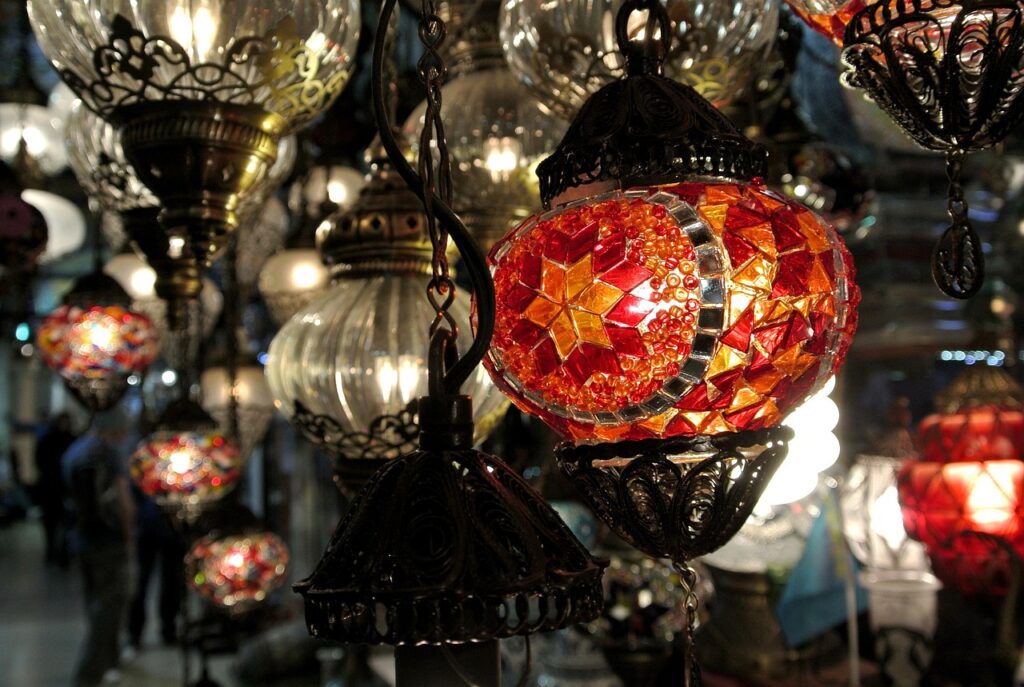
Around the bedestens, the bazaar spread along the city’s street grid, and the market’s genius was to cover the streets themselves. Arched roofs and vaulted lanes were built over the walkways, so that the entire district became one continuous covered market.
The covered streets solved a practical problem: trade could continue in any weather. Rain, snow, and the summer sun were kept out, and the market could operate every day of the year, which gave Istanbul’s commerce a permanent home.
Each street acquired its own trade. The lanes were organized by guild, with the jewelers on one street, the textile merchants on another, and the craftsmen grouped by craft, a system that made the bazaar easy to navigate and fiercely competitive at the same time.`n`nThe covered streets also created the bazaar’s famous atmosphere. The light that falls through the vaults, the shadows of the arches, and the long perspectives of the lanes are all products of that roofing, and they make the market a visual experience as much as a commercial one. Even the sound is shaped by the covers, with the murmur of the crowd echoing beneath the vaults.
The Hans: The Engine Rooms
Around the covered core, the bazaar is ringed by hans, the great courtyard buildings that served as warehouses, workshops, and lodgings for merchants. Each han was a small world, with rooms around a central courtyard and its own gate that could be closed at night.
The hans were the engine rooms of the bazaar’s economy. Goods arrived from across the empire and beyond, were stored in the hans, and were traded in the covered streets, while the traveling merchants who brought them slept and negotiated under the same roofs.
Over the centuries dozens of hans grew up around the market, and many still stand today, some as working spaces and some as restaurants and workshops. They are the quiet, hidden half of the bazaar, essential to understanding how the whole machine worked.`n`nThe hans also connected the bazaar to the wider world of Ottoman trade. Caravans and ships brought goods to the market, and merchants from Persia, the Arab lands, and Europe stayed in the hans while their wares were sold. The courtyards were where deals were closed and news from distant cities was exchanged.
The Bazaar in the Ottoman Golden Age
Through the sixteenth and seventeenth centuries, the Grand Bazaar reached the height of its power. Istanbul was the capital of a vast empire, and the bazaar was its shop window, receiving silks, spices, carpets, jewels, and crafts from three continents.
The guild system governed the market in these centuries. Each trade had its own guild, which set the rules of quality, price, and conduct, and the bazaar ran with an order that impressed every foreign visitor who described it.
The market was also a social world. Beyond the trading, the bazaar held mosques, fountains, schools, and eating places, and it functioned as a small city within the city, with its own rhythms of prayer, work, and gossip.
Fire, Earthquake, and Rebuilding
No structure in Istanbul survives centuries without disaster, and the Grand Bazaar has been damaged again and again. Major fires swept through the covered streets repeatedly, destroying large parts of the market, and earthquakes shook the old masonry.
Each disaster was followed by rebuilding, and the bazaar rose again each time. The pattern became part of its identity: the market was destroyed, rebuilt, and improved, and each reconstruction added new streets, new shops, and new generations of merchants.
The rebuilding also changed the bazaar’s character. Fires cleared away old quarters and allowed expansion, so the market grew with each recovery, and the complex of today is the descendant of many rebuilds layered over the original fifteenth-century plan.
The Nineteenth-Century Bazaar
The nineteenth century brought change to the bazaar and to the city around it. Istanbul modernized, new commercial districts grew outside the old walls, and the Grand Bazaar, while still thriving, lost its monopoly on the city’s trade.
The market adapted as it always had. The guilds weakened with the reforms of the era, and the bazaar became a more open, more individual marketplace, with shops and merchants trading on their own account.
The century also brought the photographers and the travel writers, who fixed the image of the bazaar in the European imagination. Its vaulted streets and crowded lanes became one of the stock images of the exotic Orient, and the market entered the age of tourism.
The Bazaar in the Republic
With the founding of the Turkish Republic, the Grand Bazaar passed into the modern era. The new state valued the market as a national institution, and the bazaar continued its life as the commercial heart of the old city.
The twentieth century brought new challenges. A great fire in the middle of the century destroyed a substantial part of the market, and the rebuilding that followed restored the covered streets and rehoused the merchants, returning the bazaar to its role.
The market also grew more international. As travel expanded in the later twentieth century, the bazaar became one of the most visited places in Turkey, and its shops learned to speak to the world in a dozen languages.

Restoration and Tourism
In recent decades the Grand Bazaar has been restored and renewed. The old roofs and vaults have been repaired, the historic fabric conserved, and the market has been maintained as a monument as well as a marketplace.
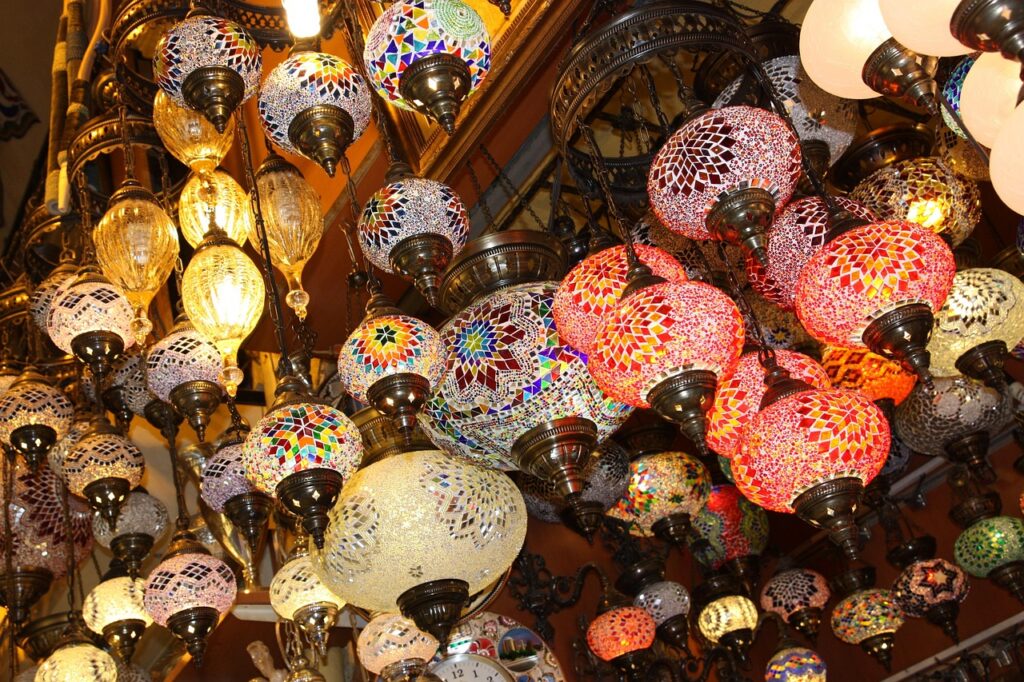
Tourism has transformed the bazaar’s economy. The souvenir trade, the carpets, the lamps, the jewelry, and the leather now serve visitors from every country, and the market’s ancient lanes carry the commerce of the modern travel industry.
The balance is delicate. The bazaar must remain a working market for its thousands of shopkeepers while also protecting the historic buildings that make it a world-famous monument, and the tension between those two lives is part of its daily story.
The Bazaar Today
Today the Grand Bazaar is one of the largest covered markets in the world, with thousands of shops spread across dozens of streets and lanes, and it draws visitors by the millions every year. Its gates open onto the heart of the old city, and its lanes teem from morning to evening.
The bazaar remains a place of trade first. The carpets are still rolled and unrolled, the gold is still weighed, the tea is still poured, and the ancient routines of bargaining continue in every shop, exactly as they have for centuries.
For the visitor, the bazaar is an overwhelming, unforgettable world: the light through the vaulted roofs, the smell of leather and spice, the clatter of the workshops, and the endlessly changing crowd. After more than five centuries, the market that Mehmed the Conqueror began is still the greatest show of commerce in Istanbul.`n`nThe bazaar’s working life is also its protection. Because the market is used every day, the buildings are watched, maintained, and renewed by the simple fact of being inhabited, and centuries of trade have kept the fabric of the bazaar alive in a way that empty monuments can never achieve.
Frequently asked questions
When was the Grand Bazaar founded?
The traditional founding date is 1461, in the years after the Ottoman conquest of Constantinople. Sultan Mehmed II built the first covered hall, and the market complex grew over the following centuries around its two great bedestens.
How large is the Grand Bazaar?
It is one of the largest covered markets in the world, with thousands of shops spread across dozens of streets and lanes, organized around its historic covered halls and ringed by the courtyard buildings known as hans. The exact counts change with the years.
Has the bazaar been damaged over the centuries?
Yes, many times. Major fires and earthquakes have repeatedly damaged the market, and each time it was rebuilt and expanded. A major fire in the twentieth century destroyed a large part of the bazaar, and the restoration that followed returned it to its role.

All Over Information
The All Over Information editorial team researches and writes practical English-language guides to Turkey. Facts are checked against official and local sources before publication, prices are published as dated ranges rather than quotes, and guides are revised when things change. We accept no sponsored posts, paid placements or paid links.
More guides like this

Why Spice Bazaar Should Be on Your Turkey Bucket List
Every great city has its essential experiences, and for Istanbul, few are more essential than a visit to the Spice Bazaar.

The Complete History of Anitkabir
Anıtkabir — the mausoleum of Mustafa Kemal Atatürk, the founder of the Turkish Republic — is the most important monument of modern…

The Complete History of Dolmabahce Palace
Few buildings tell the story of Turkey's last imperial century as completely as Dolmabahce Palace.

Turkey’s UNESCO World Heritage Sites Explained
Turkey is one of the great heritage countries of the world, and its UNESCO World Heritage Sites tell the story of ten…
Istanbul’s Best Rooftop Bars and Views
Istanbul is a city that rewards height. From a rooftop, the chaos of the streets resolves into order: the minarets and domes…

The Architecture of Anitkabir Explained
Anıtkabir — the mausoleum of Atatürk — is the masterpiece of the modern Turkish architecture, and its design carries the meaning of…