Cihangir sits at the center of European Istanbul, and its transport connections are among the best in the city. Two international airports serve the metropolis, the tram connects to the historic peninsula, the funicular and the ferries connect to the water, and the metro serves the wider city. Each mode has its moment: the tram for the center, the funicular for the water, the taxi for the luggage, the walking for the final climb. This guide covers every practical route — from the airports, from the main districts, and within the quarter.
From the Airports
Both of Istanbul’s airports connect to Cihangir, and the routes are straightforward. From Istanbul Airport (IST) on the European side, the airport shuttle to Taksim is the direct route — the journey takes about an hour, and Cihangir is a short walk or tram ride from the square. From Sabiha Gökçen (SAW) on the Asian side, the shuttle to the ferry piers and the crossing, or the direct road route over the bridge, both reach the center in about ninety minutes. For both airports, the ride-hailing apps show the fare in advance and remove the negotiation, and the taxis deliver to the door — the sensible choice with luggage, given the quarter’s steep streets.
From Taksim: The Top of the Hill
Taksim Square is the natural gateway to Cihangir, and the quarter begins at the square’s edge. The walk from Taksim to the heart of Cihangir takes about ten minutes downhill, past the first cafés and the first views; the tram runs along the boundary; and the taxis deliver to the door. The approach from Taksim frames the geography — the bohemian quarter beginning where the commercial heart ends — and the coffee at the boundary is the traditional first stop. For most visitors, the walk from Taksim is the arrival.
The Tram: The Historic Connection
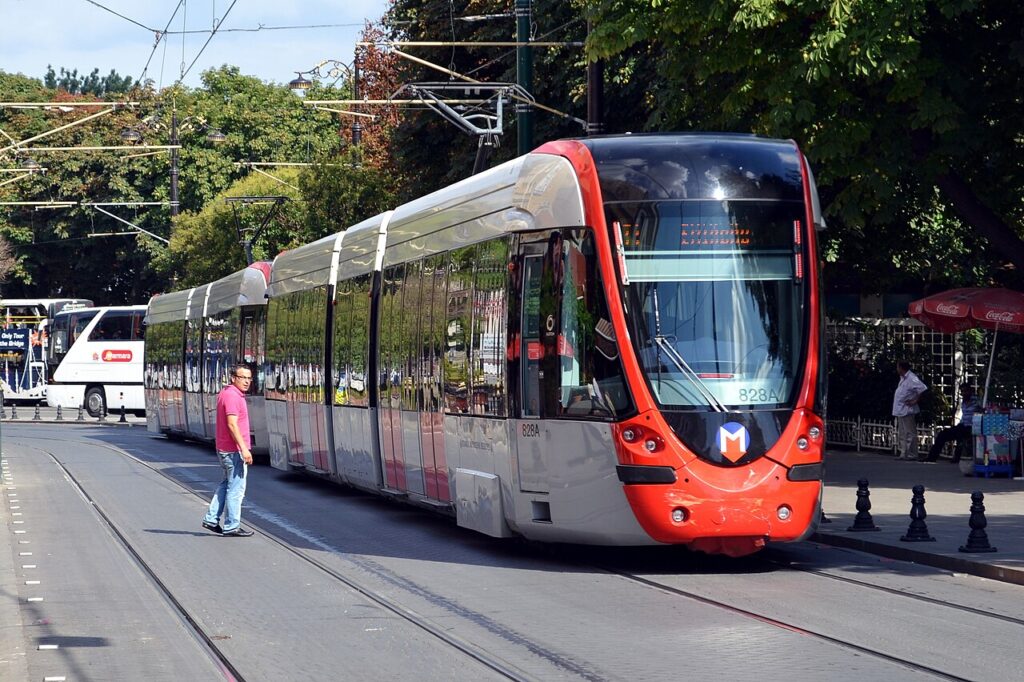
The tram line that runs along the neighborhood’s edge connects Cihangir to the historic peninsula and the old city. The trams run frequently through the day, the stops are a short walk from the quarter’s streets, and the ride passes through the layers of the city’s history — the old quarters, the monuments, the Grand Bazaar beyond. An Istanbulkart covers the trams, and the same card works on every mode of transport in the city. The tram is the connection to the old city, and the ride is part of the experience.
The Funicular and the Ferries: The Water Connection
The funicular from Taksim drops to the ferry piers at Kabataş, and the ferries from there cross to the Asian side and run along the Bosphorus. The connection is the water route: the funicular for the descent, the ferry for the crossing, and the whole journey — the strait, the bridges, the villages — is one of the great scenic rides of the city. The funicular and the ferries are the key to the Asian side and the Bosphorus, and the Istanbulkart covers them all. For the traveler based in Cihangir, the water connection is the daily adventure.

Getting Around the Quarter
Cihangir is small enough to explore entirely on foot, and its attractions — the viewpoints, the cafés, the streets, the stairs — are all within easy walking distance of the square and the tram stops. The neighborhood is steep, so the walking is the workout, and the stairs are part of the charm. The taxis and the ride-hailing cars deliver to the door for the luggage and the late nights, and the tram and the funicular connect to the wider city. For the quarter itself, the feet are the transport, and the climbs are the price of the views.
The Practical Tips
A few habits make the journeys smooth. Carry an Istanbulkart at all times — it is the key to the trams, the funicular, the ferries, the metro, and the buses, and the machines at the stations sell and top up the cards. Confirm the fare before taking a taxi, or use a ride-hailing app to avoid the negotiation. Allow extra time for the airport journeys — the Istanbul traffic is unpredictable. And for the late returns, check the last services before you set out — the trams and the ferries stop around midnight, and the taxis run all night.

The Accessibility Notes
The quarter’s steepness is the challenge for travelers with limited mobility, and the accessible planning is the key. The tram and the funicular are step-free on the main lines, and the taxis deliver to the door; the ferry piers are accessible. The streets themselves are steep, so plan the accessible route along the flatter lanes and the main streets, and use the taxis for the climbs. The hotels vary — the older buildings have steps, so ask about the lifts when booking. With a little planning, the essentials of the quarter — the cafés, the main viewpoints, the transport — are all reachable, and the Bosphorus views reward the effort.
The Alternative Routes
The alternatives to the standard routes round out the transport picture. The minibuses — the dolmuş — run the shore routes cheaply and quickly; they are the local secret, and they connect the quarter to the surrounding districts. The cycling along the shore is the active option, with the bike lanes on the main routes. And the walking is the final alternative: the descent to Galata, the climb from the water, the streets of the quarter — Cihangir is small enough that the feet cover what the transport cannot. The alternatives give the traveler the flexibility, and the quarter rewards the variety.
The Traveling with Children and Luggage
The practical details for the family journeys round out the transport picture. With children, the tram and the funicular are the adventures — the bells, the tunnels, the views — and the short rides suit the small attention spans; the ferries are the delight. With luggage, the taxi or the ride-hailing car is the sensible choice, and the drivers help with the bags; the steep streets of the quarter favor the backpack over the wheeled suitcase. The airports are the long journeys — allow the extra time, keep the passports and the tickets handy, and let the hotels arrange the transfers. The journeys with children and luggage need the patience and the planning, and the quarter repays the effort.
The Final Word on the Connections
The connections of Cihangir, in the end, are the freedom of the quarter. The tram, the funicular, the ferries, the metro, and the feet put the whole city within reach, and the traveler based on the hill holds the metropolis in the network. The connections frame the position — the bohemian quarter at the center of European Istanbul — and the position is the gift. Travel well, hold the card, allow the buffers, and let the city unfold from the hill.
The Final Word on the Connections
The connections of Cihangir, in the end, are the freedom of the quarter. The tram, the funicular, the ferries, the metro, and the feet put the whole city within reach, and the traveler based on the hill holds the metropolis in the network. The connections frame the position — the bohemian quarter at the center of European Istanbul — and the position is the gift. Travel well, hold the card, allow the buffers, and let the city unfold from the hill: the connections are the invitation, and the quarter is the home.
The connections of Cihangir, in the end, are the freedom of the quarter. The tram, the funicular, the ferries, the metro, and the feet put the whole city within reach, and the traveler based on the hill holds the metropolis in the network. The connections frame the position — the bohemian quarter at the center of European Istanbul — and the position is the gift. Travel well, hold the card, allow the buffers, and let the city unfold from the hill.
The Takeaway
Cihangir is well connected to every part of Istanbul, and the journeys there frame the neighborhood’s position — the tram for the old city, the funicular and the ferry for the water, the walk from Taksim for the geography. Choose the mode by the destination, and let the Istanbulkart handle the network. Once you arrive, the quarter is small enough to leave the transport behind — the feet do the rest, and the stairs are part of the charm.
Frequently asked questions
How do I get to Cihangir from Taksim?
The walk takes about ten minutes downhill from the square, the tram runs along the boundary, and the taxis deliver to the door.
How do I reach the old city from Cihangir?
The tram from the neighborhood’s edge runs to the historic peninsula, and the monuments are a short walk from the stops.
Can I reach the Asian side from Cihangir?
Yes — the funicular drops to the ferry piers at Kabataş, and the ferries cross to the Asian side in about twenty minutes.
Is the Istanbulkart useful in Cihangir?
Essential — it covers the trams, the funicular, the ferries, the metro, and the buses, and it is cheaper per ride than single tickets.

All Over Information
The All Over Information editorial team researches and writes practical English-language guides to Turkey. Facts are checked against official and local sources before publication, prices are published as dated ranges rather than quotes, and guides are revised when things change. We accept no sponsored posts, paid placements or paid links.
More guides like this

A First-Timer’s Guide to Cihangir
Cihangir is the bohemian heart of Istanbul — the steep, leafy quarter above Taksim where the artists, the writers, and the cats…
Top 10 Things to Do in Cihangir
Cihangir is the bohemian heart of Istanbul — the steep, leafy quarter above Taksim where the artists and the cats share the…
Nightlife Guide to Cihangir
Cihangir's nightlife is not the club scene of the surrounding districts — it is something rarer and, in its way, more memorable.

Shopping Guide: What to Buy in Cihangir
Cihangir is not a shopping district in the Grand Bazaar sense — there are no carpets and no haggling — but it…
Family-Friendly Activities in Cihangir
Cihangir is more family-friendly than its bohemian reputation suggests, and the quarter offers the families of Istanbul a rare combination: the safe…

A Solo Traveler’s Guide to Cihangir
Cihangir is a perfect neighborhood for the solo traveler.