Bodrum carries one of the deepest histories of the Turkish coast, and the town that is known for its yachts and its beaches was once the city of Halicarnassus, the home of the historian Herodotus and the site of one of the Seven Wonders of the ancient world. The layers of the history — the Carians, the Greeks, the Persians, the Romans, the Byzantines, the Knights, the Ottomans — are visible throughout the town. This guide explores the history and the culture of Bodrum.
The Ancient Halicarnassus
The history of Bodrum begins with the ancient city of Halicarnassus, and the foundations of that city underlie the modern town. The city was founded by the Greeks on the site of the earlier Carian settlements, and it rose to prominence under the Hecatomnid dynasty of the fourth century BC; King Mausolus made Halicarnassus his capital, building the city with the grand monuments that included his own tomb — the Mausoleum — which the ancient world counted among the Seven Wonders; and the city that grew around the harbor became one of the great cities of the region, the home of the historian Herodotus and the naval power of the Carian coast. The ancient Halicarnassus survives in the fragments — the Mausoleum foundations, the theatre, the Myndos Gate, the city walls — scattered through the modern streets, and the modern town is built directly upon its remains.
The practical history notes: the Mausoleum site, the theatre, and the gate are the visible remains, and the museum in the castle holds the artifacts; the ancient city’s streets lie beneath the modern ones, surfacing in the excavations throughout the town; and the reading of the history before the visit makes the fragments come alive. The ancient Halicarnassus is the deep layer of the Bodrum story, and the Wonder of the ancient world is its greatest mark.
The Mausoleum: The Wonder of the Ancient World
The Mausoleum of Halicarnassus is the most famous chapter of the Bodrum history, and the tomb that named a word deserves the telling. Mausolus, the satrap of Caria, died in 353 BC, and his widow Artemisia commissioned the tomb that became the wonder: the marble monument rising some forty-five meters, ringed with the sculpted friezes and crowned with the chariot group, decorated by the leading sculptors of the Greek world; the ancient writers ranked it among the Seven Wonders, and the word mausoleum entered the languages from the tomb’s name. The monument survived the centuries until the earthquakes and the later stone-robbers dismantled it; the Knights of St. John used its stones in the castle, and the surviving sculpture — the friezes and the statues — now stands in the British Museum. The Mausoleum site in the modern town shows the foundations, and the story of the Wonder is the heart of the Bodrum history.
The practical Mausoleum notes: the site sits in the middle of the town, a short walk from the harbor; the foundations and the excavation give the sense of the scale; and the museum in the castle and the books of the region tell the full story of the Wonder and its sculpture. The Mausoleum is the pride of the ancient Bodrum, and the tomb that named a word is the town’s greatest historical claim.
The Carian and the Persian Centuries
The centuries before the Mausoleum shaped the region, and the Carian heritage is the deep layer of the peninsula. The Carians — the people who inhabited the southwest of Anatolia before the Greek colonization — built the fortified hilltop settlements of the region, the Lelegian towns that predate the Greek cities; the Persians, who conquered the region in the sixth century BC, ruled through the Carian dynasts — the Hecatomnids of Mausolus among them — who governed in the Persian name; and the coast of Caria, with its harbors and its timber, was the naval resource of the empires. The Carian and the Persian centuries are the forgotten layers of the Bodrum history, and the ruins of the Lelegian towns — Pedasa and the others — survive on the hills of the peninsula.
The practical Carian notes: the Lelegian ruins of Pedasa, above Gümüşlük, are the accessible encounter with the deep history; the site gives the walls, the tombs, and the views over the peninsula; and the museum and the guides of the region tell the Carian story. The Carian and the Persian centuries are the deep past of the peninsula, and the hilltop ruins are the visible traces.
The Knights of St. John
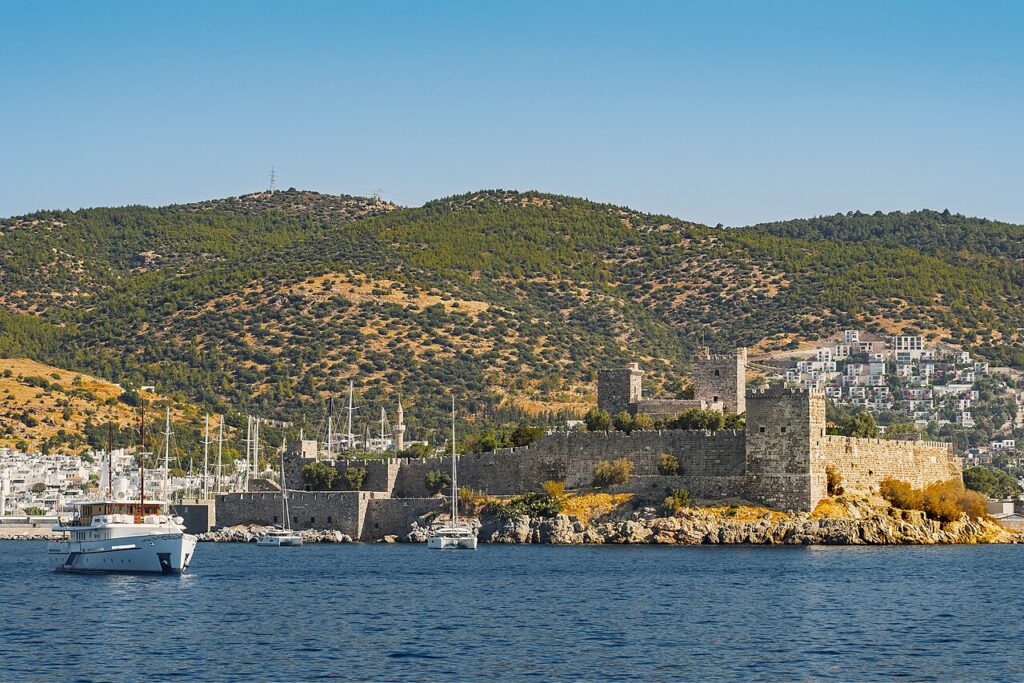
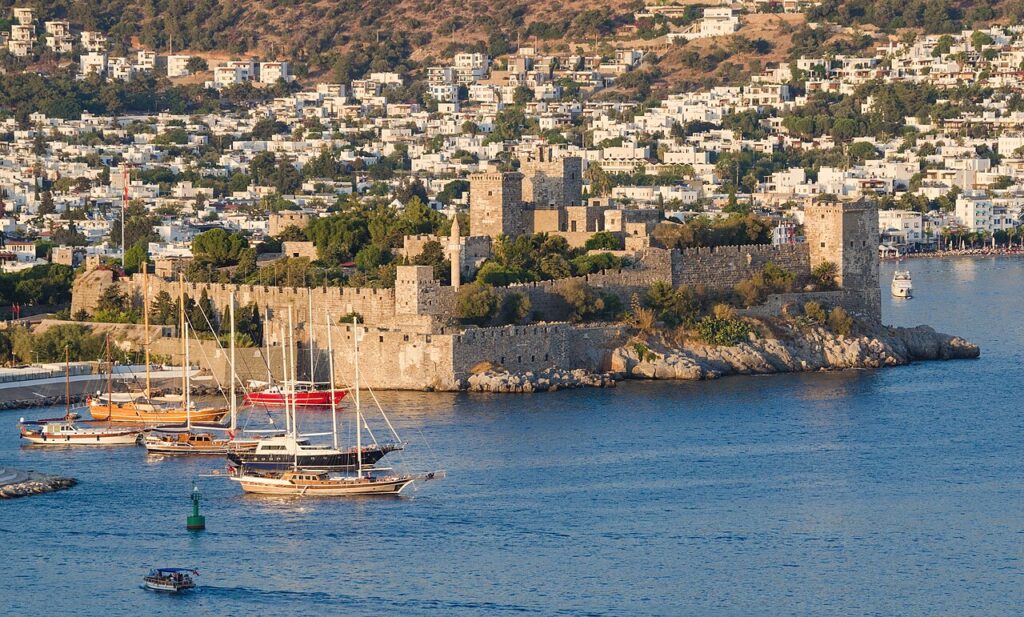
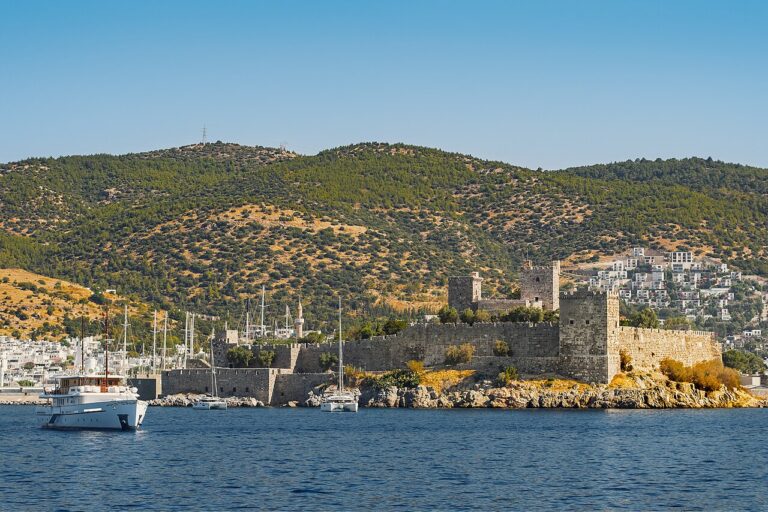
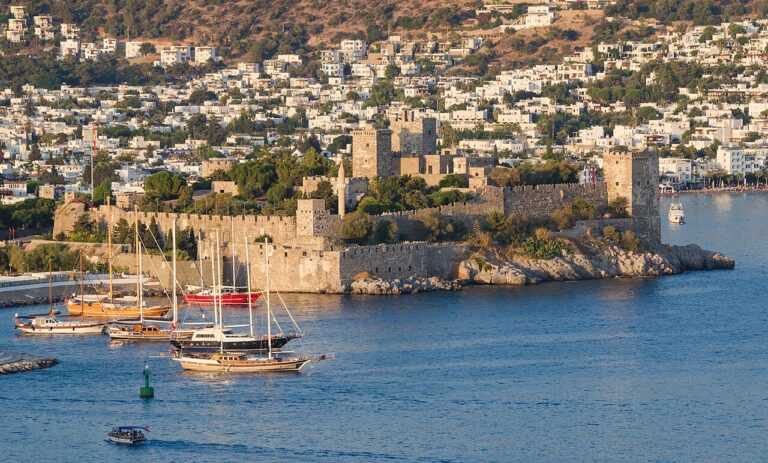
The medieval chapter of the Bodrum history belongs to the Knights of St. John, and the castle they built is the town’s most visible monument. The Knights, expelled from Rhodes in the fifteenth century, built the Castle of St. Peter on the harbor of Bodrum to guard the coast; they used the stones of the Mausoleum and the ancient city in the construction, and the castle’s towers carry the coats of arms of the knightly nations — the English, the French, the German, the Italian, the Spanish; the castle served as the fortress of the region for the centuries, and the town of Bodrum grew beneath its walls. The Knights’ castle survives intact, and the museum within it tells the story of the fortress and the sea.
The practical knight notes: the castle is the town’s centerpiece, and the rampart walk and the towers are the highlights; the coats of arms of the towers carry the marks of the knightly nations; and the museum inside — the underwater archaeology — extends the story to the ships and the trade of the sea. The Knights of St. John are the medieval chapter of the Bodrum history, and the castle they built is the town’s symbol.
The Ottoman Era and the Modern Town
The Ottoman era shaped the modern Bodrum, and the town that the Ottomans ruled became the fishing and the sponge-diving town of the coast. The Ottoman centuries brought the town its mosques and its daily life — the Ottoman Bodrum was the small, provincial port, known for its sponge divers and its shipbuilding; the Republican era that followed brought the gradual modernization; and the transformation of the twentieth century — the artist and the writer Cevat Şakir, the “Fisherman of Halicarnassus,” who celebrated the town and drew the intellectuals of Turkey to it — began the making of the modern resort. The Ottoman and the modern centuries are the near layer of the history, and the town that the travelers see today grew from the fishing port of those centuries.
The practical Ottoman notes: the mosques and the old houses of the town date from the Ottoman centuries, and the wander through the old quarter shows them; the story of the Fisherman of Halicarnassus is the bridge between the old and the modern Bodrum; and the resort development of the late twentieth century transformed the fishing town into the destination. The Ottoman era and the modern town are the living layers, and the resort of today carries the traces of the port of yesterday.
The Culture of the Coast
The culture of Bodrum is the culture of the Aegean coast, and the traditions of the sea and the land shape the town’s life. The fishing and the sponge-diving heritage, the boatbuilding and the seafaring, the cuisine of the sea and the meze table, and the music and the dance of the region — the zeybek and the folk songs of the coast — make the cultural texture; the mandarin orchards and the olive groves of the peninsula give the agricultural traditions; and the hospitality of the coast — the tea offered, the tables shared — is the culture’s most visible face. The culture of Bodrum is the living one, and the daily life of the town — the markets, the festivals, the fishing wharf — carries the traditions.
The practical culture notes: the village festivals and the harvest celebrations of the region give the cultural calendar; the meyhane music and the rakı table are the living traditions of the evenings; and the museums and the galleries of the town tell the stories of the region. The culture of the coast is the texture of the Bodrum visit, and the engagement with it — the food, the music, the conversation — deepens the trip.

The Fisherman of Halicarnassus and the Modern Renaissance
The modern cultural history of Bodrum has its own hero, and the story of Cevat Şakir Kabaağaçlı — the Fisherman of Halicarnassus — is the bridge between the provincial town and the resort. Şakir, exiled to Bodrum in the 1920s, fell in love with the town and the sea, and his writings — the novels and the essays celebrating the Aegean and its people — drew the artists, the writers, and the intellectuals of Turkey to the town; the town that the writers and the artists adopted became the cultural center of the coast, and the transformation from the fishing port to the resort of the intellectuals and later the jetset began. The story of the Fisherman of Halicarnassus is the modern foundation of the Bodrum culture, and the town that the writers celebrated is the town that the travelers visit today.
The Culture Today: The Town and the Visitors
The culture of Bodrum today is the meeting of the town and the visitors, and the balance is the living question of the resort. The tourism has transformed the fishing port into the international destination — the marinas, the festivals, the restaurants, the galleries — and the town has woven the new economy into its old identity; the local traditions — the fishing, the cuisine, the music — continue alongside the resort life, and the festivals and the events of the summer fill the calendar; and the town that hosts the yachts and the jetset keeps the working life of the coast — the boats, the markets, the families — beneath the surface. The culture of Bodrum today is the layered one, and the visitor who looks beneath the resort finds the town that the Fisherman of Halicarnassus celebrated.
The Takeaway
The history and culture of Bodrum run deep beneath the resort: the ancient Halicarnassus and its Wonder, the Carian and the Persian centuries, the castle of the Knights, the Ottoman fishing port, and the modern renaissance that the Fisherman of Halicarnassus began. Climb the castle, visit the Mausoleum site, wander the old town, and taste the meze table. The town that hosts the yachts carries the history of three millennia, and the layers are there for the traveler who looks.
Frequently asked questions
What is the history of Bodrum?
Bodrum was the ancient city of Halicarnassus, the capital of the Carian kings and the site of the Mausoleum, one of the Seven Wonders; the Knights of St. John built the castle in the fifteenth century.
What is the Mausoleum at Halicarnassus?
The tomb of King Mausolus, built in the fourth century BC and counted among the Seven Wonders of the ancient world; its name gave the word mausoleum.
Why is Bodrum famous historically?
For the Mausoleum, the ancient theatre, the Myndos Gate, and the Castle of St. John, and as the home of the historian Herodotus.
Who were the Knights of St. John in Bodrum?
The medieval order that built the Castle of St. Peter in the fifteenth century, using the stones of the Mausoleum and guarding the coast from their fortress.
What is the culture of Bodrum today?
The layered culture of the Aegean coast — the fishing and the seafaring traditions, the cuisine and the music, the festivals — meeting the international resort life.

All Over Information
The All Over Information editorial team researches and writes practical English-language guides to Turkey. Facts are checked against official and local sources before publication, prices are published as dated ranges rather than quotes, and guides are revised when things change. We accept no sponsored posts, paid placements or paid links.
More guides like this

Bodrum Airport and Transport Guide
Getting to Bodrum is the easy part of the trip, and moving around the town and the peninsula is the straightforward one.

A First-Timer’s Guide to Bodrum
Bodrum is the Aegean town that has it all: an ancient castle, a glittering marina, whitewashed houses cascading down the hills, and…

A Foodie’s Guide to Bodrum
For the food traveler, Bodrum is the Aegean at its most generous: the fish of the day, the mezes of the region,…
Bodrum in Winter: What to Expect
Winter transforms Bodrum from the summer's packed resort into a quiet Aegean town, and for the travelers who understand it, the season…
Best Time of Year to Visit Bodrum
Every season gives Bodrum a different character, and the best time to visit depends on what the traveler wants from the holiday.
Where to Stay in Bodrum: Neighborhood Guide
Choosing where to stay in Bodrum shapes the whole trip, because the town and its peninsula offer distinctly different experiences within the…