Bodrum shows its famous face to everyone — the castle, the marina, the beach clubs — but the town and the peninsula keep their secrets for the travelers who look past the obvious. The hidden gems of Bodrum are the quiet coves, the forgotten ruins, the local lanes, and the moments that the crowds never see. This guide uncovers the best of them.
The Myndos Gate and the Ancient Walls
The Myndos Gate is the fragment of the ancient Halicarnassus that most visitors walk past without noticing. The gate was one of the entrances of the ancient city, its towers and its walls guarding the approach from the west, and it stood through the siege of Alexander the Great, whose soldiers, the story says, filled the defensive ditch with their bodies; today the gate survives in the middle of the modern streets, a tumble of the stone blocks and the arches that the cars circle, and the short visit gives the tangible link to the city that the castle and the Mausoleum only hint at. The gate is the free, the obscure, and the atmospheric stop, and the ten minutes there reward the history-minded traveler.
The practical gate notes: the gate sits on the western edge of the town, a short walk or dolmuş ride from the center; the interpretation is the sparse one, and the reading up beforehand adds the context; and the surrounding streets and the cafés make the visit the easy detour. The Myndos Gate is the hidden ancient Bodrum, and the quiet stop connects the modern town to its besieged past.
The Windmill of Yalıkavak
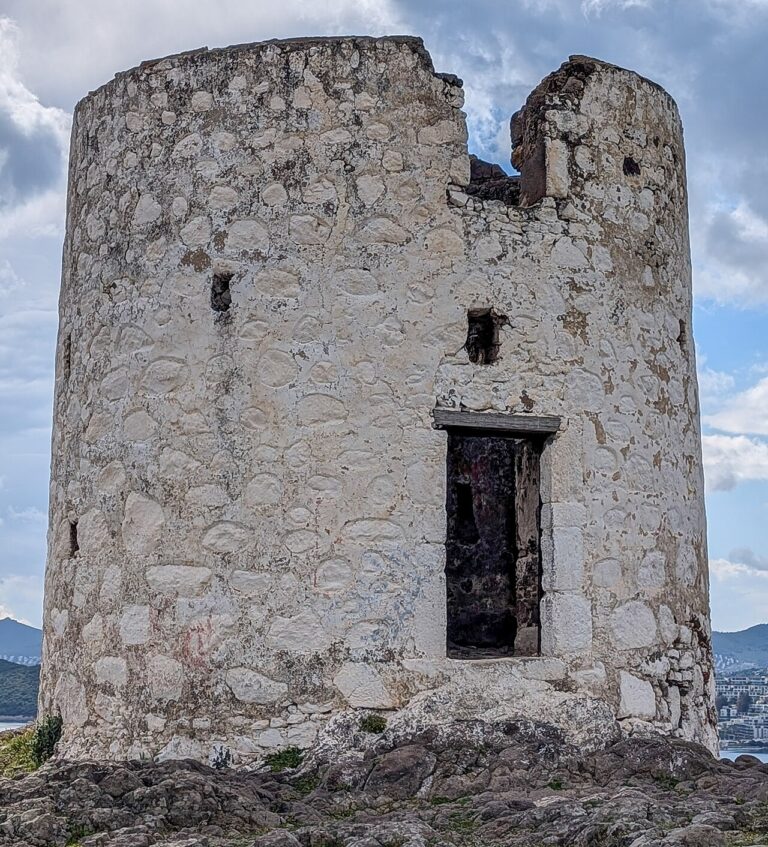
The windmills of Bodrum are the famous photo subjects, but the windmill of Yalıkavak — the one that crowns the hill above the marina village — holds the hidden reward. The restored windmill sits at the end of the peninsula’s west coast, and the walk up to it passes through the village lanes and the scrub of the hillside; the summit gives the 360-degree panorama — the bay below, the islands of the Aegean beyond, the sunset dropping into the sea — and the windmill itself, white and round against the sky, makes the frame that the postcards of the peninsula use. The windmill is the sunset spot that the crowds at the marina below never climb to, and the view from the top is the secret of the village.
The practical windmill notes: the climb takes the twenty minutes from the marina, and the path is the dusty and the uphill one, so the sturdy shoes matter; the sunset is the time, with the golden light on the bay and the islands; and the windmill interior, where open, houses the small exhibition of the village’s history. The windmill of Yalıkavak is the hidden viewpoint of the peninsula, and the sunset from the top is the reward of the climb.

The Sunken City of Myndos
The sunken city of Myndos is the hidden gem that lies beneath the water at Gümüşlük, and the swimming there is the archaeology. The ancient city of Myndos, whose ruins surround the modern village, extended into the sea, and the remains of its walls and its buildings lie submerged in the shallow water of the bay; the swim from the village shore passes over the stone blocks and the foundations, visible through the clear Aegean water on the calm days, and the snorkel turns the swim into the exploration. The sunken city is the free, the uncrowded, and the extraordinary experience, and the village that floats above it rarely points it out.
The practical Myndos notes: the calm, clear days give the visibility, and the morning light is the best; the snorkel gear — the rented or the brought — reveals the stones beneath; and the respect for the site — the no-touching, the no-taking — is the traveler’s duty. The sunken city of Myndos is the hidden history of the Bodrum coast, and the swim over the ancient stones is the memory that the beach clubs cannot match.
The Pedasa and the Lelegian Ruins
The Lelegian ruins of the region are the true hidden gems of the Bodrum area, and the ancient site of Pedasa leads them. The Lelegians — the people who inhabited the peninsula before the Greeks — built their fortified settlements on the hilltops, and the ruins of Pedasa crown the hill above the modern village of Gümüşlük; the site holds the fortification walls, the rock-cut tombs, the foundations of the houses and the temples, and the views over the peninsula from its commanding position, and the visitors who make the climb find the site almost to themselves. Pedasa is the wild, the ancient, and the magnificent ruin, and the fifteen-hundred-year-old stones tell the story that the polished sites do not.
The practical Pedasa notes: the site lies a short drive or the longer walk from Gümüşlük, and the climb to the summit is the moderate one; the interpretation is the minimal one, and the guidebook or the downloaded material adds the context; and the sunset light on the ancient stones and the sea beyond makes the site the photographer’s reward. The Lelegian ruins of the region are the deep history of the peninsula, and Pedasa is the finest of them.
The Quiet Coves of the South Coast
The quiet coves of the Bodrum peninsula’s south coast are the hidden beaches that the crowds never find. The road that runs along the south shore — past the villages and the olive groves — passes the small, unmarked coves where the local families swim: the pebble and the sand strips between the rocks, the water clear and calm, the shade of the tamarisks, and the silence broken only by the cicadas; the coves have no sunbeds, no clubs, no restaurants — just the sea, the rocks, and the few who know them. The south-coast coves are the antidote to the beach clubs, and the afternoon there is the swim that the travelers remember.
The practical cove notes: the rental car or the scooter reaches the coves, and the stopping is the informal one along the road; the bringing of the own water, the snacks, and the shade matters, because the coves are the wild ones; and the walking shoes and the care on the rocks complete the kit. The quiet coves of the south coast are the hidden beaches of the peninsula, and the wild swim there is the secret pleasure of the Bodrum trip.
The Fishermen’s Wharf of the Old Harbor
The fishermen’s wharf of the old harbor is the hidden corner of the Bodrum waterfront that the crowds rush past. The working end of the harbor — beyond the restaurants and the yachts — holds the fishing boats of the town, and the morning sees the catch unloaded, the nets mended, and the day’s fish laid out for the buyers; the wharf is the everyday, the unpolished, and the alive corner of the harbor, and the wander there gives the glimpse of the working Bodrum that the marina’s glamour hides. The fishermen’s wharf is the free, the authentic, and the quietly fascinating stop, and the early morning is its time.
The practical wharf notes: the morning visit catches the boats and the catch, with the activity winding down through the day; the photographing of the boats and the fishermen is the welcomed one, with the respectful distance; and the fish bought directly from the boats is the freshest of the trip, for the self-catering travelers. The fishermen’s wharf of the old harbor is the working heart of the town, and the wander there connects the visitor to the real Bodrum.
The Bodrum Windmill Trail
The windmill trail of the peninsula is the hidden walking route that links the region’s most iconic landmarks. The windmills of Bodrum — the relics of the grain trade that once dotted the hills — stand in the clusters above the bays, and the trail between the best of them — above the town, along the ridges, down to the coast — gives the walk with the panoramas and the solitude; the trail is the unofficial one, followed by the locals and the few who know it, and the reward is the sequence of the white windmills against the blue, with the sea on every horizon. The windmill trail is the hidden walk of the peninsula, and the golden-hour light along it is the photographer’s prize.
The practical trail notes: the trail segments run between the villages and the viewpoints, and the map app or the local advice guides the way; the sturdy shoes, the water, and the sun protection are the essentials of the exposed walk; and the late afternoon is the time, with the long shadows and the golden light. The windmill trail of the peninsula is the hidden route of the iconic landscape, and the walk along it sees the Bodrum that the cars miss.
The Village Markets
The village markets of the peninsula are the hidden shopping of the Bodrum area, and the wandering of them is the local experience. The weekly markets of the villages — the produce, the olives, the cheeses, the textiles, the household goods spread across the squares — draw the residents and the farmers of the region, and the few travelers who find them shop where the locals shop, at the prices that the town’s tourist stalls cannot match; the market day varies by the village, and the asking around — or the simple luck of the wander — finds them. The village markets are the authentic commerce of the peninsula, and the finds — the honey, the olive oil, the village cheese — carry the taste of the region home.
The practical market notes: the mornings are the market’s time, with the produce at its freshest and the crowds at their liveliest; the cash is the market’s currency, and the small notes smooth the buying; and the bargaining is the light and the friendly art of the stalls. The village markets of the peninsula are the hidden shopping of Bodrum, and the wandering of them buys the real region.

The Takeaway
The hidden gems of Bodrum are the layer beneath the resort: the Myndos Gate and the sunken city, the Lelegian ruins of Pedasa, the quiet coves of the south coast, and the windmill views that the crowds never climb to. Seek the obscure, walk the trails, and swim the wild coves. The Bodrum that the visitors miss is the one that the travelers remember, and the hidden gems are its landmarks.
Frequently asked questions
What are the hidden gems of Bodrum?
The Myndos Gate, the sunken city of Myndos, the Lelegian ruins of Pedasa, the quiet south-coast coves, and the windmill trail of the peninsula.
Is there anything ancient to see near Bodrum beyond the castle?
Yes — the Myndos Gate, the sunken city at Gümüşlük, and the Lelegian ruins of Pedasa on the hill above the village.
What is the best hidden beach in Bodrum?
The quiet coves of the south coast, unmarked and undeveloped, where the local families swim.
Where can I watch the sunset away from the crowds in Bodrum?
The windmill of Yalıkavak, reached by the short climb from the marina, gives the panorama that the crowds below never see.
Are the hidden gems of Bodrum free?
Mostly — the gate, the sunken city, the coves, and the windmill trail cost nothing, with only the transport to reach them.

All Over Information
The All Over Information editorial team researches and writes practical English-language guides to Turkey. Facts are checked against official and local sources before publication, prices are published as dated ranges rather than quotes, and guides are revised when things change. We accept no sponsored posts, paid placements or paid links.
More guides like this

A First-Timer’s Guide to Bodrum
Bodrum is the Aegean town that has it all: an ancient castle, a glittering marina, whitewashed houses cascading down the hills, and…

Bodrum Airport and Transport Guide
Getting to Bodrum is the easy part of the trip, and moving around the town and the peninsula is the straightforward one.
Photography Spots in Bodrum You Can’t Miss
Bodrum is the photographer's playground of the Aegean: the castle rising from the harbor, the white town cascading down the hills, the…
48 Hours in Bodrum: The Perfect Itinerary
Two days in Bodrum is enough to taste everything the town offers — the ancient heritage, the castle, the sea, the peninsula,…
Bodrum in Winter: What to Expect
Winter transforms Bodrum from the summer's packed resort into a quiet Aegean town, and for the travelers who understand it, the season…
A Solo Traveler’s Guide to Bodrum
Bodrum is one of the friendliest solo destinations on the Turkish coast: the town is safe, walkable, and sociable, and the mix…