Isparta is a city that most travelers pass through on the way to somewhere else, yet few Turkish provinces carry a clearer cultural identity. It is the heart of the Lakes Region, one of the world’s great centers of rose oil, and a place where a mountain town, a Byzantine lake city, and a working plain have all left their mark. Understanding that history explains the present: the rose fields, the orchards, the carpet looms, and the quiet pride of a province that has long made a living from beauty. This guide traces the layers of Isparta’s past and the culture that grew from them.
The Land of the Lakes: Geography and Identity
The province sits in southwestern Anatolia, between the Aegean coast and the Taurus mountains, in a basin dotted with large lakes: Eğirdir, Kovada, and Burdur at its edge. This geography gave the region its Turkish name, the Göller Bölgesi, the Lakes Region, and shaped everything that followed.
Lakes meant water in abundance, and water meant settlement. The shores of Eğirdir have been inhabited for thousands of years, and the lakes themselves became highways, food sources, and natural defenses. The mountains around them gave timber, stone, and pasture. It is no accident that the region’s oldest towns sit exactly where a lake meets a mountain pass.
The result is a landscape of contrasts: steep forested slopes, open water, and rich orchard country on the plain. Nearly every chapter of Isparta’s story, from ancient cities to rose farming, is an answer to the question of how to live well in this particular place.
From Pisidia to Byzantium
Before the Turks arrived, the region belonged to Pisidia, an ancient land of mountain peoples who kept their independence longer than most neighbors of the great empires. The cities they adopted were dramatically sited: Antioch in Pisidia, above modern Yalvaç, was one of the most important, and Sagalassos, high in the mountains beyond Burdur, was another.
These cities grew under the Seleucid kings, then the Romans, who rebuilt them with theaters, baths, and colonnaded streets. The Romans made Pisidia a prosperous corner of their empire, and the ruins of the period are still the region’s greatest archaeological treasures. Christianity arrived early; the apostle Paul is said to have preached in Antioch in Pisidia.
With the Byzantine centuries, the cities of the lakes slowly declined as roads shifted and insecurity grew. Settlement contracted toward defensible points, and the region became a borderland between the Byzantine world and the Islamic world.

The Seljuks and the Hamidid Era
Turkish tribes began moving into the region in the late eleventh century, and by the thirteenth the area belonged to the Seljuk Sultanate of Rum, centered at Konya. The Seljuks brought Islam, new towns, and a new language, and they built mosques and caravanserais across the region.
After the Seljuk collapse, local dynasties emerged. The Hamidids, whose power base lay in the lakes, controlled much of the area from the early fourteenth century, and their name still echoes in local memory. Their rivalries with other Anatolian beyliks, and their eventual absorption into the growing Ottoman state, define the region’s late medieval period.
This era also saw the rise of Eğirdir as a regional capital, with its fortress and market town on the lake. The architectural legacy of the period is less grand than in Konya but distinctive, built in local stone and adapted to the lake and mountain setting.
Ottoman Isparta
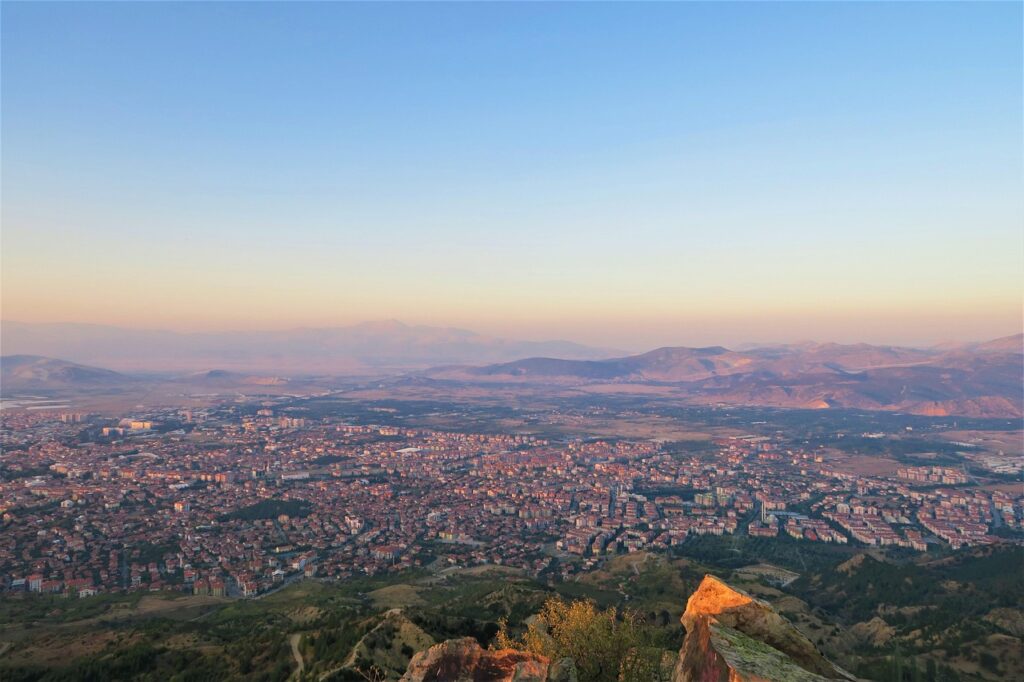
The Ottomans absorbed the Hamidid lands in the late fourteenth century, and Isparta entered a long period of stability as a provincial town. The city grew around its mosques, markets, and medreses, and by the sixteenth century it was a noted center of trade on the routes between the interior and the Mediterranean coast.
Ottoman records describe a town of craftsmen and merchants: weavers, tanners, dyers, and builders, supported by the rich agricultural land around it. The old quarter of Isparta, with its timber-framed houses and narrow lanes, dates largely from this period, as do the great mosques and the bedesten, the covered market, that anchored commercial life.
As Ottoman power shifted, Isparta and its lakes became part of the wider governance of the south, and its towns produced officials, scholars, and soldiers for the empire. A nineteenth-century wave of reform brought new schools, a newspaper, and better roads, slowly pulling the region toward the modern age.
The Rose Economy
The defining chapter of Isparta’s modern story began in the late nineteenth century, when rose growing for oil took hold on the plain around the city. Farmers found that the region’s soil, water, and dry summers suited the Damask rose, and within decades Isparta had become one of the world’s great producers of rose oil.
The harvest still sets the rhythm of the year. In May and June, fields turn pink, pickers work before dawn, and distilleries run day and night, turning thousands of kilograms of petals into the concentrated oil used in perfumes worldwide. Rose water, rose jam, and rose-scented sweets follow from the same raw material.
This is not a heritage industry preserved for tourists; it is the backbone of the local economy and a source of deep pride. The rose appears in the city’s markets, in its festivals, and in the speech of its people, who will happily explain the difference between the first and second pressings of the season’s petals.
Isparta Carpets and Crafts
Alongside the rose, Isparta built a reputation for weaving. The province’s carpets and rugs, long known in Turkish and world markets, were traditionally produced in village homes and small workshops, with patterns passed down through generations of women weavers.
The classic Isparta carpet tends toward floral motifs, which suits a region whose signature crop is a flower. In the twentieth century the industry industrialized around the city, and for a time Isparta was one of Turkey’s most important carpet-producing centers, shipping its products to Europe and beyond.
Beyond carpets, the region’s crafts reflect its materials: woodworking in the forested mountains, pottery in the stone villages, and a food craft tradition of cheese, honey, and preserved fruits. Visitors today can see these trades in the bazaars of Isparta and Eğirdir, where modern workshops still carry the older skills.

Eğirdir: The Lake Town Through the Ages
No single place carries Isparta’s history as visibly as Eğirdir, whose old name, Akroterion, reaches back to antiquity. The town’s site, on a narrow neck of land between the lake and a mountain wall, has been fortified for most of its history, and its castle still crowns the harbor.
Under the Seljuks and Hamidids, Eğirdir was a lake port and market town of real importance, trading timber, fish, and grain across the region. The islands, joined by a causeway in the twentieth century, were long inhabited communities of their own, with churches and houses that told the town’s mixed religious history.
Today Eğirdir is the region’s most atmospheric town, and walking it is like reading the history books in person: the fortress, the old houses, the medieval mosque, and the lake itself, which has carried every era of the region’s life.
Apples and the Agricultural Heartland
If roses are Isparta’s glamour, apples are its workhorse. The same plain that grows the flowers produces enormous quantities of apples, and in autumn the orchards of the province are among the busiest in Turkey, with harvests packed and shipped across the country.
The apple economy has deep roots in the region’s farming culture. Villages around Eğirdir and on the plain have grown fruit for generations, and the cold storage warehouses that line the roads in season measure the scale of the trade. For local families, the orchards are a second harvest that rounds out the rose money of early summer.
This agricultural abundance shapes the region’s character: a working landscape where farming is not a backdrop but the main event. The seasonal rhythm of picking, pressing, and packing gives the Lakes Region a particular honesty, and explains the local pride in produce eaten across the country.
Festivals and Living Traditions
Isparta’s culture is kept alive by its festivals. The rose harvest brings its own celebrations, with the Rose Festival drawing visitors to the fields and distilleries, and smaller village events marking the picking season. The city also hosts folk music gatherings that draw on the region’s strong traditions.
Folk dance and song are central to local identity. The region’s dances, performed at weddings and festivals, have their own character within the wider Turkish repertoire, and the zeybek traditions of the southwest live on in the province’s villages. Oral culture, from stories to proverbs, remains rich in rural communities.
Food traditions anchor the calendar as well, from mountain cheese to the fish of the lakes. For visitors, the festivals are the quickest way into this living culture.
The Character of the Lakes Region
Strip away the history books and Isparta’s character is still legible in the present. It is a provincial world of strong family ties, deep local pride, and a work ethic shaped by farming. Outsiders are treated with hospitality, but the region expects you to take it on its own terms: slowly, seasonally, and with respect for the land.
The culture is also deeply practical. Roses, apples, timber, and fish have supported the region for centuries, and that material base shows in the plainspoken manner of its people. There is little pretension here, and much competence, from the distilleries to the orchards.
At the same time, the lakes and mountains give the region a contemplative streak. The great still waters and forested slopes have made the area a byword for quiet retreat in Turkish life. That combination of hard work and calm, of production and reflection, is the real cultural heritage of the Lakes Region.
Frequently asked questions
Why is Isparta famous for roses?
Isparta’s climate, water, and limestone soils suit the Damask rose, and the region became one of the world’s main producers of rose oil starting in the late nineteenth century. The May and June harvest feeds distilleries that supply perfumers worldwide, and rose products dominate the local markets. The same harvest feeds the distilleries that made the city’s name.
What is the old name of Eğirdir?
Eğirdir’s ancient name was Akroterion, and the town has been fortified since antiquity. It was a lake port of real importance under the Seljuks and Hamidids, and its castle, islands, and old houses preserve that long history. A causeway now joins the islands to the mainland. The town’s setting, between lake and mountain wall, explains its long importance.
When is the best time to experience Isparta’s culture?
The rose season, roughly mid-May to mid-June, is the most colorful time, with the harvest and its festival in full swing. Autumn brings the apple harvest and calm weather. For quieter travel with the same lakeside atmosphere, September and October are excellent choices. Spring festivals and autumn harvests both show the culture at its fullest.

All Over Information
The All Over Information editorial team researches and writes practical English-language guides to Turkey. Facts are checked against official and local sources before publication, prices are published as dated ranges rather than quotes, and guides are revised when things change. We accept no sponsored posts, paid placements or paid links.
More guides like this

A First-Timer’s Guide to Isparta
Isparta is the rose capital of Turkey, a city in the heart of the lakes district where the hills turn pink with…

Where to Stay in Isparta
Isparta offers two very different kinds of travel, and your choice of accommodation decides which one you get.
Top Things to Do in Isparta
Isparta is the rose capital of Turkey and the heart of the lakes district, and it offers a rare combination of experiences:…
Best Local Food in Isparta
Isparta sits in the middle of the lakes district, where the cooking draws on the water, the orchards, and the rose gardens…

Day Trip Ideas from Isparta
Isparta sits at the heart of Turkey's Lakes Region, a pocket of inland Anatolia where the Taurus foothills meet a chain of…