Urfa kebab has traveled far beyond Turkey, and like many travelers, it has changed on the road. International versions share the name but often lose the character: different meat, machine mincing, less fat, no butter, and a fire that has never seen charcoal. This comparison lays out the differences side by side, so you can recognize the authentic Turkish kebab and understand exactly what the imitations are missing. The comparison runs from the meat to the ritual, and it explains why the Turkish original tastes the way it does, so that your next order, at home or abroad, is an informed one.
The Two Names on the Menu
The first thing to understand is that the authentic Urfa kebab rarely travels alone. In Turkey, it is always paired with Adana kebab, its spicier sibling, and the two are ordered together so you can taste the family in full.
International menus usually list Urfa kebab alone, often without any reference to the pairing. The context is lost, and with it half of the dish’s meaning, because Urfa kebab was designed to be compared with its hotter cousin.
The name itself is also a marker. In Turkey, the name Urfa carries the city’s authority and standards. Abroad, the name is just a label, applied to whatever the kitchen decides to serve, and the gap between the two meanings is the whole story. Ask a Turkish cook about this and you will hear a patient explanation of what the dish should be; ask an international kitchen and you will usually hear about local preferences. The two conversations are about different dishes.
Lamb and the Question of the Meat
The authentic kebab is made from lamb, and the meat’s flavor is the foundation of the dish. The best versions use lamb from the region, prized for its tenderness and its clean, sweet character.
International versions frequently substitute beef, which is cheaper, more available, and more familiar to local palates. The substitution changes everything downstream: the flavor, the fat, the way the meat behaves on the grill.
Beef can be made into a decent kebab, and some international kitchens do it well. But the dish they are making is not Urfa kebab in the Turkish sense; it is a kebab-shaped product inspired by it, and the difference is visible in the first bite. Lamb has a sweetness and a tenderness that beef, for all its virtues, cannot reproduce, and the whole seasoning of the dish was built around it.

The Hand-Mincing vs. the Machine
The technique of the authentic kebab is the zırh, the curved blade that minces the meat by hand into a fine, cohesive paste. The motion folds the fibers, and the texture that results is dense, silky, and perfectly suited to the skewer.
International kitchens use grinders and food processors for speed and consistency. The texture that results is coarser and looser, and the kebab is more likely to fall apart on the grill or to cook unevenly.
Texture is one of those qualities that is hard to describe but impossible to miss. A hand-minced kebab holds together in one glossy piece; a machine-ground kebab crumbles at the edges. Once you have eaten the first, the second always feels like a compromise.
Tail Fat and the Butter Finish
The authentic recipe uses tail fat from the fat-tailed sheep, kneaded into the mince so the kebab stays moist through the fire. And after cooking, the authentic version receives its signature pour of melted butter.
International versions typically skip both. The meat is trimmed lean for health-conscious diners, and the butter finish is omitted either for simplicity or because the kitchen does not know it exists.
The result is a drier kebab with less richness, and the missing butter is more than a garnish; it is the dish’s final act. In Turkey, the butter is poured at the table, and its absence abroad is the easiest way to tell an adaptation from the real thing.

The Pepper: Heat Levels Compared
Urfa kebab is the mild member of the family, but that does not mean it is unseasoned. It uses a gentle red pepper that adds warmth and a fruity depth without the aggression of the Adana version.
International versions often go further and cut the spice entirely, or substitute generic chili powder that has none of the character of the Turkish flake. The kebab becomes bland, which is a different failure from being too mild. The gentle Turkish pepper is not a compromise; it is a choice, and it gives the kebab a warmth that sits under the other flavors rather than on top of them.
The seasoning of the authentic kebab is subtle by design, allowing the lamb, the smoke, and the butter to carry the flavor. When international kitchens strip the pepper to please everyone, they also strip the dish of its quiet confidence.
The Skewer and the Fire
The authentic kebab is pressed onto wide, flat steel skewers and cooked over charcoal, with the master turning each skewer by eye and by hand. The char, the smoke, and the even cooking are all products of that setup.
International versions use thin skewers, gas grills, and often cook ahead of time, holding the kebab until it is ordered. The convenience is real, but the kebab pays for it with a softer crust and a steamier interior.
In Turkey, the fire is the stage and the griller is the performer. Watching the kebab cook is part of the meal, and the smoke that fills the room is part of the flavor. Neither travels well in a takeaway box.

The Plate: Bread, Onion, and Tomato
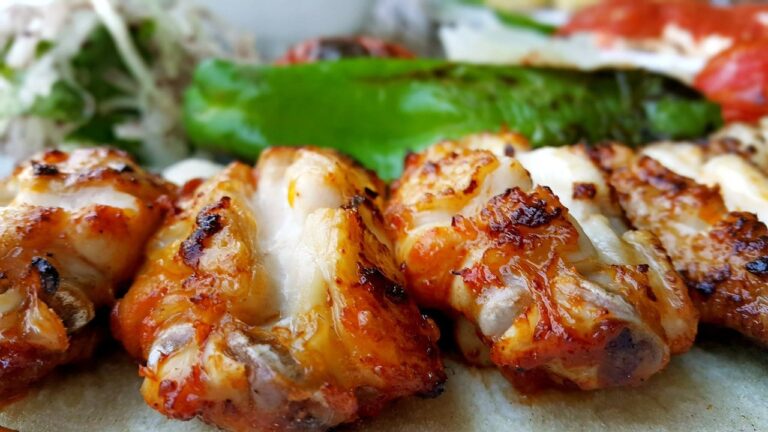
The authentic plate is a composition with a job to do. The kebab rests on fresh flatbread that soaks up the juices and the butter, with charred tomato and pepper from the same fire and a sharp onion salad with sumac alongside.
International versions serve the kebab with rice, fries, or a token salad, accompaniments borrowed from other cuisines. The bread, when it appears, is often a pita warmed in a microwave, a distant echo of the real thing.
The difference matters because the accompaniments are not decoration; they are the balance of the meal. The bread, the char, and the onion cut the richness and carry the kebab, and a plate without them is a dish without its support system.
The Ritual: Butter, Tea, and Time
The authentic meal is a ritual with a rhythm. The butter is poured at the table, the tea arrives at the end, and the meal is allowed to take the time it takes. Nobody rushes a guest in a Turkish kebab house.
International versions are built for speed. The kebab is served fast, eaten faster, and the table is cleared for the next customer. The meal is fuel rather than ceremony.
This is not a criticism of fast food, which has its own virtues. But the ritual is part of what makes Urfa kebab Turkish, and a version that strips the ritual is serving the dish without its soul. The unhurried table is also practical, because a kebab that has rested and been eaten properly, with the butter still warm and the bread fresh, simply tastes better than one consumed on the move.

Why the Imitations Fall Short
Look at the pattern and the conclusion is inescapable. Each substitution, taken alone, is a reasonable adaptation; taken together, they dismantle the dish piece by piece, until the name is the only part that survives.
The authentic version is a system. The lamb needs the tail fat, the fat needs the charcoal, the charcoal needs the pepper, the pepper needs the bread, and the whole thing needs the ritual. Remove any element and the architecture weakens.
That is why the best international restaurants do not adapt; they import. The zırh, the skewers, the pepper, the butter, and the patience all come with the tradition, and the result is recognizable at first bite. These kitchens treat the kebab as a craft with a standard, not as a menu item to be localized, and their customers can taste the difference.
What the Turkish Version Teaches
Eating the authentic version teaches you to taste in a different register. The kebab does not announce itself with heat; it persuades with texture, smoke, and a quiet depth that builds over the course of the meal.
It also teaches you about Turkish food culture, which values the table as a place of gathering and the meal as a gift of time. The kebab is the medium, and the message is hospitality.
The next time you see Urfa kebab on an international menu, you will know what to look for: the pairing with Adana, the lamb, the butter, the charcoal, and the unhurried table. And you will know what to order when you reach Turkey, where the real thing waits at the fire.
Frequently asked questions
Why does international Urfa kebab taste so different?
Because most international versions adapt the recipe for local ingredients, equipment, and speed. They substitute beef for lamb, use machine mincing, reduce the fat, skip the butter finish, and cook on gas grills. Each change is small, but together they produce a dish that shares the name while losing the texture, the richness, and the ritual of the Turkish original.
What is the single most important difference?
The butter finish is the most visible marker, but the foundation is the combination of hand-minced lamb, tail fat, and charcoal. These three elements create the texture, the moisture, and the smokiness that define the dish. The butter is the signature, and the meat, the fat, and the fire are the substance behind it.
Can international restaurants make an authentic Urfa kebab?
Yes, and several do. They import the lamb, source tail fat, mince by hand, use wide skewers and real charcoal, and pour the butter at the table. The effort is visible in the result. The restaurants that fail are the ones that adapt the recipe for convenience, removing one authentic element after another until the name is all that remains.

All Over Information
The All Over Information editorial team researches and writes practical English-language guides to Turkey. Facts are checked against official and local sources before publication, prices are published as dated ranges rather than quotes, and guides are revised when things change. We accept no sponsored posts, paid placements or paid links.
More guides like this

Turkey for Foodies: A Complete Guide
Turkey is one of the great cuisines of the world, and for the foodie it is a destination of the first rank.

How to Make Authentic Turkish Soups (Corba) at Home
Turkish soups look simple, but their deep flavor comes from a few essential techniques that are easy to learn at home.
Urfa Kebab: A Taste of Turkish Culture
Food is the quickest way into a culture, and in Şanlıurfa no dish opens more doors than the kebab that bears the…

Where to Find the Best Iskender Kebab in Turkey
Iskender kebab is a dish with one true home, the city of Bursa, and a reputation that has spread across the whole…

The Ultimate Guide to Karniyarik
Karniyarik is one of the most loved home dishes of Turkey, a stuffed eggplant that carries the warmth of the family table…

Turkey’s Craft Beer Scene: A Growing Trend
For a country long associated with one national lager, the rise of Turkish craft beer has been remarkably fast.