Oludeniz is one of the most famous paragliding sites in the world, and the view from its launch point is the reason. From the summit of Babadag mountain, you step off a cliff nearly two thousand meters above the sea and glide down toward one of the most photographed beaches on earth, the Blue Lagoon of Oludeniz. It is a flight that beginners and experts alike make every day, and it is the closest most people will ever come to flying. This guide covers the whole experience, from choosing a pilot to landing on the beach.
Why Oludeniz Is the Paragliding Capital
Oludeniz has become the paragliding capital of the world for reasons that are written into its geography. The mountain of Babadag rises almost vertically from the coast, giving pilots a huge altitude gain within minutes of the beach, and the valley’s thermal winds provide the lift that keeps wings in the air.
The conditions are remarkable. The mountain faces the sea, the winds are consistent through much of the year, and the flight path runs down a dramatic valley to a turquoise lagoon. The combination of reliable flying weather and a spectacular backdrop is rare, and it is what made the site.
The scale is unlike anything else. On a good day, the sky above Oludeniz is full of wings, and the flight is a shared experience with dozens of other pilots and passengers. The industry has grown around the site, and the town has become a year-round center of the sport.
The Flight: What Actually Happens
A tandem flight in Oludeniz is simple to book and simple to do, because the flying is done by your pilot. You are strapped into a harness in front of the pilot, the wing is laid out behind you on the launch slope, and on the signal, you run a few steps and the ground drops away.
The flight itself lasts around half an hour, though the duration depends on the conditions. The pilot finds the thermals, the wing climbs, and the valley, the lagoon, and the coastline spread out below. The sensation is not falling but floating, a slow, silent ride with the wind.
The landing is as gentle as the launch. The pilot steers the wing toward the landing field beside the beach, flares the canopy at the last moment, and you touch down standing, often with a round of applause from the spectators who gather to watch the landings.

The Launch: Babadag Mountain
The flight begins with the journey up. The paragliding companies run shuttle vehicles from Oludeniz to the launch points on Babadag, and the road, climbing through the pine forest with views expanding at every switchback, is part of the experience.
The launch sites sit on the mountain’s western face, at altitudes chosen for the conditions of the day. The lower launch offers a shorter flight; the upper launch, near the summit, offers the full experience, with the valley opening below and the sea on the horizon.
Launching is the moment everyone remembers. The pilot checks the wing, the wind, and the timing, and the run takes a handful of steps. The transition from solid ground to open air is the sharpest moment of the whole flight, and the valley dropping away beneath you is a sensation no photograph fully captures.
The Landing: The Blue Lagoon
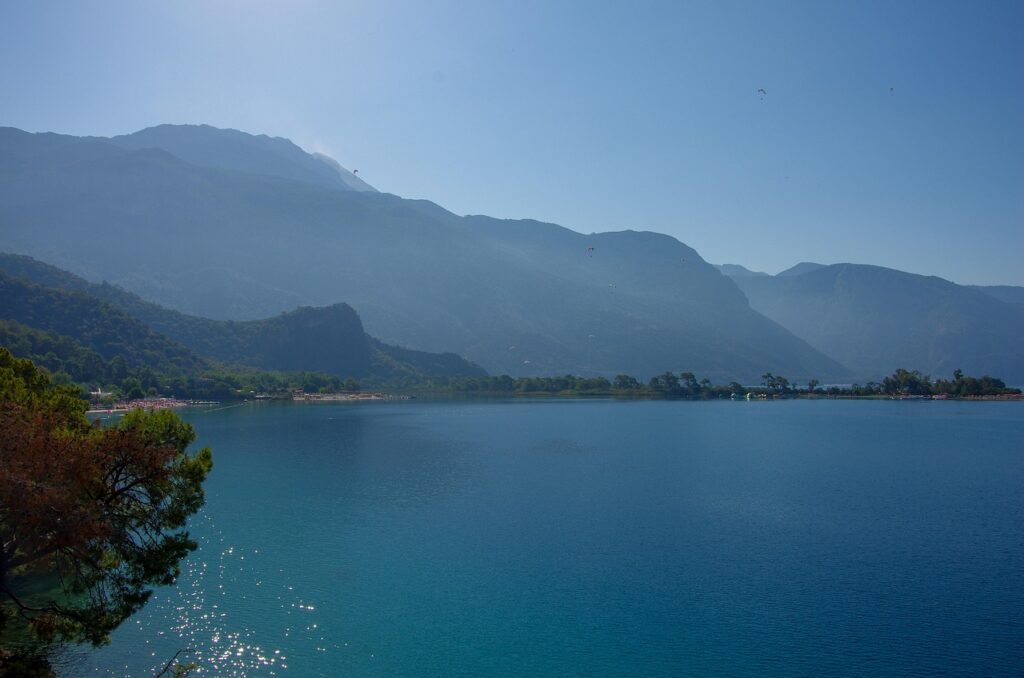
The flight ends at the beach of Oludeniz, and the landing zone is as scenic as the sky. The pilots aim for the field at the edge of the lagoon, and the approach passes over the famous Blue Lagoon, the turquoise bay that appears in every photograph of the site.
The lagoon is the visual anchor of the flight. From the air, its colors shift from pale turquoise to deep blue, and the sandbars and the headland give the bay its postcard shape. The approach gives you the view that draws paragliders and photographers from around the world.
After landing, the ritual is to watch the sky. The landings continue through the afternoon, the wings turn and descend over the lagoon, and the beach becomes a grandstand. The flight ends, but the spectacle of the site goes on around you.

Choosing a Tandem Operator
The choice of pilot matters more than any other decision in your paragliding day, and Oludeniz has no shortage of operators. The market is competitive, and the quality varies, so the selection deserves care rather than impulse.
The reputable operators share the same structure: licensed tandem pilots, current equipment, and insurance that covers tandem passengers. The signs of quality are visible: organized offices, well-maintained equipment, and pilots who explain the flight before and during it rather than rushing to the launch.
The advice is to book with an established operator, ask about the pilot’s experience and licensing, and treat unusually low prices as a warning rather than a bargain. Paragliding is safe when done professionally, and the professional standard is the one you are paying for.
Safety: What to Look For
Paragliding in Oludeniz has a good safety record when the normal standards are followed, and the risks are managed by the same factors as anywhere in the sport: the pilot, the equipment, and the weather. Your part is to choose wisely and follow instructions.
The visible safety signals are the ones that matter. The operator should run an office with published credentials, the equipment should look current and well cared for, and the pilot should explain the flight and check your harness carefully before launch. A pilot who skips the checks is a pilot to skip.
The weather is the final gate. The conditions in Oludeniz are flyable for much of the year, but the pilots still read them daily, and flights can be delayed or moved to another launch point. Trust the pilot’s judgment on the day; the disappointment of a delayed flight beats the alternative.
What to Wear and Bring
The dress code for paragliding is simpler than the occasion suggests. Comfortable clothes, closed shoes with good grip for the launch run, and layers for the altitude are the essentials, because the mountain is cooler than the beach, especially in the morning.
The practical extras are minimal: a small bag for your belongings, which the operator carries, and nothing loose that could be lost to the wind. Glasses can be worn under the helmet, and in the cooler months a light jacket makes the difference at altitude.
Leave the expectations of a formal experience at home. The flight is casual and practical, and the operators have done it thousands of times. You arrive, you are briefed, you fly, and you land, and the whole process, from booking to touchdown, takes a few hours.
The Experience: Weather and Timing
The paragliding day in Oludeniz follows the weather, and the timing of your flight affects everything. The mornings are often calmer and cooler, the midday brings the strongest thermals, and the afternoon is when the sky is busiest.
The summer conditions are the most reliable, with the long season running from spring through autumn. The winter months are flyable on good days, and the low season offers the quietest skies, when the flight feels more personal and the landing zone is empty.
The advice is to book flexibility into your day. The operators fly according to conditions, and a flight may be delayed for the wind or moved to a different launch point. Allow a half day for the experience, and treat the weather forecast as part of the planning.

Photography and Video
The flight is recorded as routinely as it is flown, and the photography is part of the Oludeniz package. Most pilots carry cameras, and the operator’s photographer or the pilot’s wing-mounted cameras capture the flight from the launch to the landing.
The footage is worth having. The video of the launch, the flight over the lagoon, and the landing is the record of one of the great travel experiences, and the stills from the wing are the shots that will make your trip photos memorable.
The practical note is to ask before the flight what the photography includes, because the packages vary: some flights include the photo and video service, others sell it separately. Decide before you fly, and make sure the camera work is agreed at the booking.
Planning Your Paragliding Day
Planning the day is simple once you know the sequence. Book in advance for the summer months, when the slots fill early, and choose your flight time: morning for calm, midday for the thermals, and afternoon for the busiest sky.
The location is easy to reach: Oludeniz sits on the Turquoise Coast near Fethiye, and the paragliding offices line the main street and the beachfront. Your hotel can arrange the transfer, and the whole experience, from the pickup to the landing, is designed around the visitor.
The final advice is to enjoy the day as an event. Watch the sky before your flight, chat with the pilots, and stay on the beach after landing to see the wings come down. The flight is the highlight, but the day around it, the mountain, the lagoon, and the crowd of flyers, is the full Oludeniz experience.
Frequently asked questions
Do I need experience to paraglide in Oludeniz?
No. The vast majority of flights in Oludeniz are tandem flights, in which a licensed pilot flies the wing and you are a passenger. You simply follow the pilot’s instructions: a short run at launch, a gentle landing. No training, experience, or fitness level beyond ordinary health is required, which is why the site is so popular with first-time flyers.
When is the best time of day to fly?
The mornings offer calmer air and cooler conditions, while midday brings the strongest thermals and the longest flights. The afternoon is the busiest time in the sky. Summer offers the most reliable conditions, and the flight season runs from spring through autumn. The exact timing on your day depends on the wind, which the pilots read each morning.
Is paragliding in Oludeniz safe?
Yes, when the normal standards are followed. The pilots are licensed, the equipment is current, and the site’s conditions are well understood, giving Oludeniz a strong record for tandem flights. Your part is to choose an established operator, follow the pilot’s instructions, and trust the pilot’s judgment about the weather on the day.

All Over Information
The All Over Information editorial team researches and writes practical English-language guides to Turkey. Facts are checked against official and local sources before publication, prices are published as dated ranges rather than quotes, and guides are revised when things change. We accept no sponsored posts, paid placements or paid links.
More guides like this
Salt Lake (Tuz Golu): Turkey’s Natural Wonder
Tuz Golu, Turkey's Salt Lake, is a natural wonder unlike anything else in the country.

Hot Air Ballooning over Cappadocia: What to Expect
Flying over Cappadocia in a hot air balloon is one of the world's great travel experiences, and it is the reason thousands…
Exploring the Kure Mountains National Park: A Complete Guide
The Kure Mountains National Park is Turkey's wild Black Sea forest: a protected expanse of ancient woodland, deep canyons, and cave systems…
Exploring the Cappadocia Fairy Chimneys: A Complete Guide
Cappadocia's fairy chimneys are among the most surreal landscapes on earth: tall, slender rock pillars capped with hard stone, scattered across valleys…

How Geography Shaped Turkish History
Every civilization that ever ruled Anatolia was, in a real sense, a prisoner of its geography.

Best Hiking Trails Around Ihlara Valley
Ihlara Valley offers some of the most atmospheric walking in Turkey, and its trails range from an easy riverside stroll to full-day…