Arnavutkoy is a photographer’s village, and the camera sees it better than the tour bus. The wooden yali mansions, the weathered hillside lanes, the fishermen at the pier, and the light on the Bosphorus give the lens a subject at every turn, and the village changes character completely with the hour. The spots below are the ones worth standing still for, arranged from the water to the heights, with the practical notes on when each one delivers. Bring your camera, arrive early, and let the village fill your card.
Why Arnavutkoy Is a Photographer’s Village
The gift of Arnavutkoy is its concentration of subjects in a small space. The waterfront gives the grand shots, the yalis and the strait, and the hillside gives the intimate ones, the lanes, the timber, and the life of the village. Nothing is far from anything else.
The light is the second gift. The Bosphorus air is clear, the sun moves across the water all day, and the golden hours are long and dramatic. The same corner photographs completely differently at dawn, noon, and dusk, which means the small village can fill a whole photographer’s day without a single repeated frame.
The third gift is the scale. The village is small enough to walk, photograph, and return to a spot when the light turns. The photographer controls the timing, which is the whole game.
The Pier and the Promenade at Dawn
The pier at dawn is the first stop of the photographer’s day. The first ferry arrives before the village wakes, the fishermen take their places along the rail, and the light comes up over the Asian hills in a slow unfolding of pink and gold.
The promenade at this hour is empty and silver. The benches, the lamps, and the waking cafes give the clean compositions that the daylight crowds erase, and the reflections in the calm water double every shot. The morning mist, when it sits low over the strait, adds the layer that turns a good dawn into a rare one.
The dawn light is short, so be in position early and shoot through the change. The softness of the early hour, before the sun tops the hills, is the Arnavutkoy secret that the postcards never quite capture.

The Yali Mansions from the Shore
The yalis are the village’s grandest subject, and the shore is the classic vantage. From the promenade, the wooden mansions stand in a row along the water, their painted timber, their eaves, and their water stairs framed against the strait.
The morning light is the friend of the yalis. The low sun rakes across the facades, bringing out the texture of the weathered wood and the colors that the flat midday light flattens. The detail shots, the carved balconies and the bay windows, come alive in this hour.
The composition trick is the frame. Use the trees, the benches, or the mooring posts of the shore to frame the mansions, and let the water carry the foreground. The yalis photograph best when they share the frame with the life of the shore, and the passing ferry or the moored boat gives the scale that the mansions need.
The Yalis from the Water
The water is the other vantage, and the ferry is the moving tripod. From the deck of a passing boat, the yalis take their place in the long row of the Bosphorus shore, and the view shows the mansions as their builders meant them to be seen.
The ferry photography is a matter of timing. The boats pass at a steady pace, and the best frames open and close in seconds, so keep the camera ready and shoot in bursts. The seagulls in the foreground, the wake below, and the village receding behind give the images their sense of place.
The return crossing at golden hour is the money shot. The low sun catches the facades, the water turns to metal, and the whole row of mansions glows against the darkening hills. Ride the ferry for the view, and shoot from both rails.

The Hillside Views Over the Rooftops
The climb above the shore is the reward of the patient photographer. From the upper lanes, the village falls away in a cascade of rooftops, timber, and tiles, down to the Bosphorus and across to the Asian hills. It is the wide Arnavutkoy, the one the shore never shows.
The rooftops photograph best in the long light. The late afternoon sun carves the houses in relief, the chimneys and the dormers cast long shadows, and the strait beyond turns bright and blue. The composition writes itself.
The hillside also gives the layered shots: a foreground of timber and tile, a middle of water and yalis, and a background of the far shore and the hills. The depth is the strength of the village, and the heights are where it lives.
The Timber Houses and the Old Lanes
The lanes of the hillside are the village’s intimate subject. The timber houses in their faded reds and ochres, the narrow stairs, the carved doors, and the washing lines give the photographer the textures that the grand views lack.
The lanes photograph best in the soft hours. The morning light filters through the trees, and the shaded corners hold their detail; the late afternoon rakes the facades and stretches the shadows across the cobbles. The mid-day flatness is the enemy of the lane shot.
The human element is the bonus: the cat on the doorstep, the neighbor at the window, the bicycle against the wall. The lanes are lived in, and the life is part of the frame. Shoot respectfully, and the village poses generously.

The Fishermen and the Village Life
The people of Arnavutkoy are the photographer’s living subject. The fishermen at the pier, the shopkeepers at their doors, the cafe regulars at their tables, and the children with the seagulls fill the frames with the village’s daily life.
The respectful photography is the working method. A smile, a raised camera, and a nod go before every shot, and the village responds to courtesy with warmth. The candid moments, the line tightened, the catch lifted, are the ones to wait for.
The pier is the stage for the human shots. The fishermen work through the morning, the ferry passengers arrive and depart, and the rhythms of the shore give the photographer the repeated moments that make the good images.
The Sunset Hour on the Bosphorus
The sunset is the village’s daily performance, and the promenade is the front row. The sun drops behind the hills of the European shore, the water turns gold, rose, and deep blue, and the lights of the Asian side come on across the strait.
The sunset shots are the ones to plan. Arrive early for the bench, the pier, or the cafe table, and shoot through the whole transition, because the best color often comes after the sun itself has gone. The afterglow, the first lights, and the reflected sky are the sequence.
The silhouettes are the classic frame: the yalis black against the burning water, the ferry cutting a dark line through the gold, the fishermen standing in profile against the light. The sunset gives the village its most dramatic portrait.

The Night Lights Across the Strait
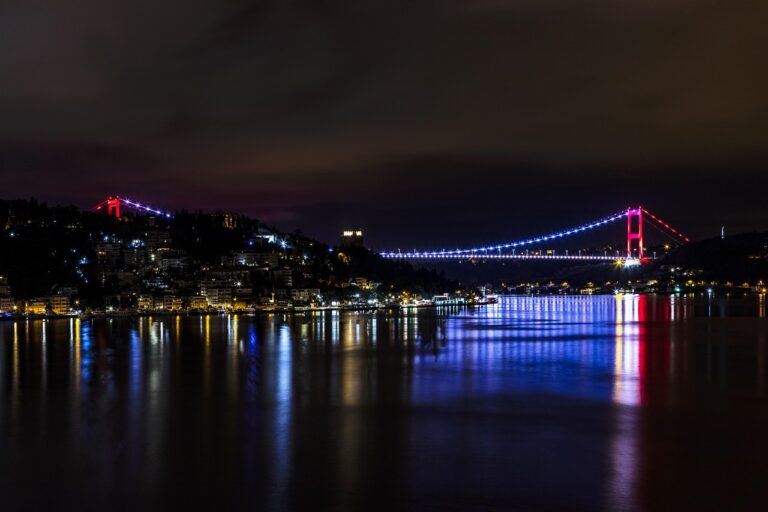
After dark, Arnavutkoy becomes a night photographer’s subject. The lights of the Asian shore reflect in the black water, the ferries cross with their windows glowing, and the village’s own lamps throw warm pools onto the promenade.
The night shots need the long exposure. A steady rail, a bench, or a small tripod holds the scene, and the water smooths into the mirror that the long shutter creates. The passing ferries paint their light trails across the frame.
The night is also the time of the quiet details: the lamp on the pier, the cafe window steamed from within, the timber house glowing through the trees. The village after dark photographs as warmly as it lives, and the last ferry, crossing the dark water with its lights on, is the perfect closing frame of the night.
Practical Photography Notes
The practical notes of the village photography are simple. Carry a wide lens for the shore and the heights, and a longer one for the yalis across the water. A small tripod earns its place for the dawn and the night, and the phone camera does surprisingly well in the golden hours.
The light is the schedule. The dawn hour, the golden hour, and the blue hour after sunset are the working times, and the midday is for the shaded lanes and the interiors. Plan the day around the light, and the village delivers.
The final note is the respect. The yalis are private homes, the lanes are private streets, and the fishermen are working men. Shoot from the public ground, ask before the close portraits, and leave the village as you found it. The courtesy is part of the craft.
Frequently asked questions
What is the best time of day for photography in Arnavutkoy?
The golden hours. The dawn gives the empty village and the soft water, the sunset gives the dramatic light over the strait, and the blue hour after dark gives the night reflections. The midday light is for the shaded lanes, not the shore.
Do I need special equipment to photograph Arnavutkoy?
No. A phone camera handles the golden hours beautifully, and a wide and a long lens cover the range of the village. A small tripod helps with the dawn and the night shots, but the light, the subjects, and the patience are the real equipment.
Are there restrictions on photographing the yalis?
The yalis are private homes, so the photography is from the public promenade and the ferries. That is also where the mansions photograph best. Keep the shots to the public ground, respect the residents, and the village remains generous to photographers.

All Over Information
The All Over Information editorial team researches and writes practical English-language guides to Turkey. Facts are checked against official and local sources before publication, prices are published as dated ranges rather than quotes, and guides are revised when things change. We accept no sponsored posts, paid placements or paid links.
More guides like this
Arnavutkoy in Summer: A Complete Travel Guide
Summer is when Arnavutkoy performs. The Bosphorus fills with ferries and pleasure boats, the promenade crowds with families and strollers, and the…
Best Time of Year to Visit Arnavutkoy
Arnavutkoy is a village of seasons, and each one shows a different face to the water.

A Foodie’s Guide to Arnavutkoy
Arnavutkoy is one of the great eating villages of the Bosphorus, and the foodie who passes through without stopping misses the point…

History and Culture of Arnavutkoy
Arnavutkoy is a small village with a long memory.

Arnavutkoy in Winter: What to Expect
Arnavutkoy in winter is a different village from the summer one, and in some ways a better one.
How to Get to Arnavutkoy from Istanbul
Arnavutkoy sits on the European shore of the Bosphorus, and reaching it is half the pleasure of the visit.