Karakoy is the photographer’s gateway quarter — the water and the bridge, the tower and the old streets, the graffiti and the fashionable corners, the light over the Golden Horn and the city’s lights at night. It is the Istanbul of the classic frames and the new ones: the panorama from the tower and the street life of the port, the baroque stairs and the murals of the alleys. This guide covers the essential photography spots of the quarter — the viewpoints, the streets, the buildings, and the light — for the photographer who wants the gateway city on the card.
The Bridge: The Working Water
The Galata Bridge is the quarter’s essential frame — the working water of the city’s port at its most photogenic. The shots are the classics: the fishermen’s rods in a row along the rail, the balık ekmek boats at the shore, the crowds crossing between the two sides, the trams and the ferries in the frame. The light is the key: the morning for the soft light and the long shadows, the golden hour for the amber on the water, the night for the lights of the old city reflected in the Golden Horn. The bridge rewards the patient eye: the angles, the people, the working life of the water. It is the photographer’s gateway shot, and it is the quarter’s signature frame.
The Panorama from the Tower
The Galata Tower — rising above the quarter on the hill — is the elevated panorama, and the view from its top is the classic Istanbul frame: the Golden Horn below, the old city’s skyline across the water, the Bosphorus and the Asian shore beyond, the whole city in one turn. The tower’s platform gives the photographer the god’s-eye view of the quarter: the bridge, the piers, the rooftops of Karakoy at the feet. The light is the golden hour — the amber over the city, the shadows long — and the blue hour after it, when the lights come on and the sky holds the last color. The tower is the quarter’s essential viewpoint, and the panorama is the shot that explains Istanbul in a single frame.

The Camondo Stairs: The Baroque Curves
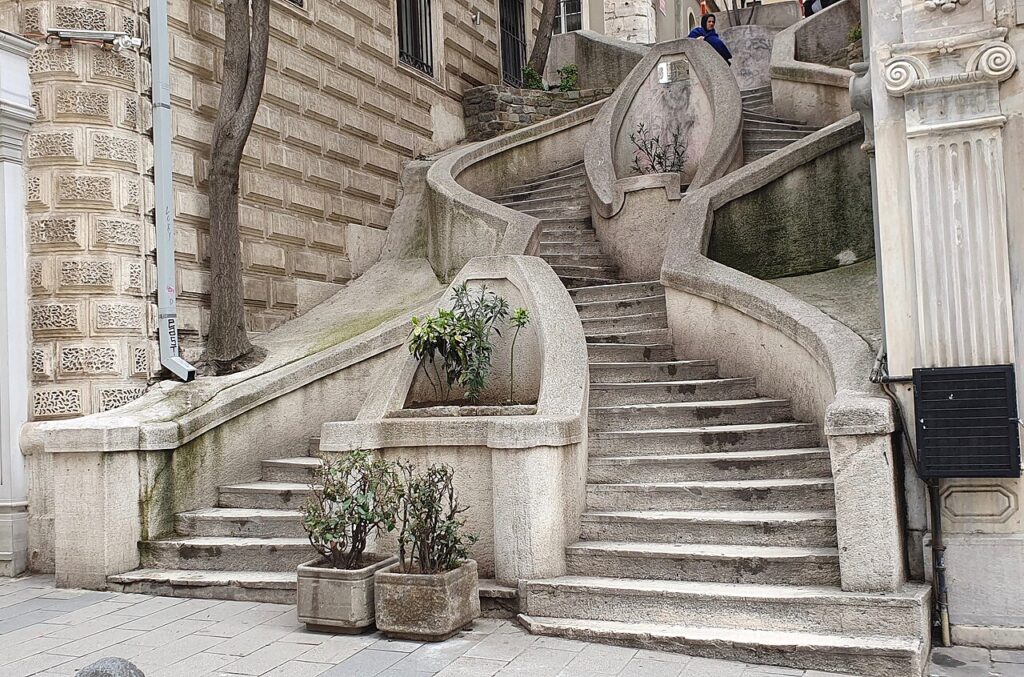
The Camondo stairs — the baroque stone staircase of the great banking family — are the quarter’s most beautiful composition: the elegant curves climbing the hill, the stone worn by the century of feet, the old houses rising above. The shots are the geometry: the curves from below and above, the lines and the shadows, the figures on the stairs for the scale. The light is the soft morning or the late afternoon, when the stone glows and the shadows carve the curves; the early morning, before the crowds, is the stairs at their cleanest. The stairs are the quarter’s most photographed monument after the bridge, and they reward the photographer who waits for the quiet hour.
The Waterfront and the Piers: The Port Life
The waterfront and the piers of the quarter are the port photography — the working life of the water at the quarter’s edge. The shots are the ferries and the gulls, the passengers and the gangways, the cruise ships at the Galataport and the fishing boats at the bridge, the daily crossings of the city’s water life. The light is the morning for the clearest air and the golden hour for the amber on the water; the ferries in the low light, the wakes and the spray, are the classic frames. The piers give the close-ups and the details: the ropes, the signs, the life of the port. The waterfront of Karakoy is the photographer’s port, and it rewards the walk with the camera ready.

The Graffiti: The Walls of the New Quarter
The graffiti of the quarter’s alleys are the street photography of the new Istanbul — the murals and the tags that have made Karakoy one of the city’s most photographed corners. The walls of the side streets carry the work of the city’s street artists: the portraits and the abstractions, the political pieces and the pure color, the art of the public streets. The shots are the walls whole and the details: the murals against the old facades, the colors against the stone, the people passing through the frames. The light is the flat midday for the colors at their fullest, or the golden hour for the walls glowing. The graffiti of Karakoy are the quarter’s free gallery, and the photographer walks the alleys with the eyes open.
The Streets and the Stairs: The Old Quarter
The old streets of the quarter — the lanes climbing from the water to the hill — are the street photography of the historic port: the old buildings and the cobbles, the working streets and the hidden corners, the life of the quarter away from the waterfront. The shots are the layers: the old facades and the new signs, the washing lines and the doorways, the cats and the shopfronts, the daily life of the old streets. The light is the side light of the late afternoon, when the lanes catch the gold and the shadows deepen; the black-and-white is the classic for the old stone and the textures. The old streets of Karakoy are the quarter’s hidden photography, and the wander is the shoot.

The Night: The Gateway Lit
The night photography of the quarter is the gateway city at its most cinematic. The bridge and the waterfront light up after dark: the old city’s skyline across the Golden Horn, the tower above the quarter, the lights reflected in the water, the ferries crossing in the dark. The shots are the night classics: the long exposures of the bridge and the water, the light trails of the trams and the traffic, the reflections on the wet pavements, the skyline across the strait. The tripod is the equipment for the night — the long exposures need the steady base, and the bridge and the promenade give it the level ground. The blue hour — the minutes after the sunset, when the sky holds the last color and the lights come on — is the night’s best light. The night of Karakoy is the quarter’s last great subject, and it rewards the tripod and the patience.
The Practical Notes
A few things make the photography smooth. The golden hours are the day: the low sun of the late afternoon and the blue hour after it are the quarter’s best light — plan the outdoor shooting around them. The tripod is the night kit: the long exposures of the bridge and the water need the steady base — pack the small travel tripod. The tower needs the ticket: the panorama from the top is the paid viewpoint of the quarter — go early or at the sunset for the light and the crowds. The respect is the rule: the working port and the private buildings ask for the courtesy of the working spaces — shoot from the public streets and the public spaces. And the weather is the ally: the storm light and the rain-slicked streets and the fog over the water are the dramatic conditions — shoot in them when they come.
The Seasonal Light
The season changes the light, and the quarter’s calendar matters. The spring brings the soft light and the clear air — the water and the facades at their gentlest. The summer brings the long evenings and the golden hours stretched — the sunset over the Golden Horn at its most dramatic. The autumn brings the low golden light — the amber on the water and the stone, the quarter’s most photogenic season. And the winter brings the dramatic light — the gray skies, the fog over the water, the rare snow on the bridge and the tower — the conditions that the dramatic shots wait for. Match the season to the light, and the quarter delivers the frames you came for.
The Takeaway
The photography of Karakoy is the gateway city on the card — the bridge and the working water, the panorama from the tower and the curves of the stairs, the waterfront and the graffiti, the old streets and the night lights. The quarter is the photographer’s Istanbul in miniature: the classic frames and the new ones, the water and the stone, the day and the night. Shoot the golden hours and the blue hour, the ferries and the fishermen, the tower’s panorama and the bridge’s lights — and the gateway quarter comes home in the frames: the port, the bridge, and the tower, the photography of the quarter whole.
Frequently asked questions
What is the best photography spot in Karakoy?
The Galata Bridge — the working water, the fishermen, and the skyline of the old city, the quarter’s signature frame.
When is the best light?
The golden hour of the late afternoon and the blue hour after it — the amber over the Golden Horn and the lights coming on.
Is night photography good in Karakoy?
Excellent — the bridge, the waterfront, and the old city’s skyline across the water, from the safe and well-lit streets of the quarter.
Do I need a tripod?
For the night shots — the long exposures of the bridge and the water — yes; the day is hand-holdable in the quarter’s light.
What should I shoot in black and white?
The old streets and the stone of the historic port — the textures and the shadows reward the monochrome.

All Over Information
The All Over Information editorial team researches and writes practical English-language guides to Turkey. Facts are checked against official and local sources before publication, prices are published as dated ranges rather than quotes, and guides are revised when things change. We accept no sponsored posts, paid placements or paid links.
More guides like this

48 Hours in Karakoy: The Perfect Itinerary
Two days is exactly the right amount of time for Karakoy — long enough to walk the quarter whole and to cross…

Best Local Restaurants in Karakoy
Karakoy is the dining quarter of the new Istanbul — the waterfront where the fish sandwiches of the bridge sit beside the…

Where to Stay in Karakoy: Neighborhood Guide
Karakoy is the fashionable base of modern Istanbul — the waterfront quarter where the ferries cross and the cruise ships dock, where…

A Foodie’s Guide to Karakoy
Karakoy is the food capital of the new Istanbul — the quarter where the city's dining life happens.
Hidden Gems of Karakoy Most Tourists Miss
Karakoy has a public face — the bridge and the balık ekmek, the Istanbul Modern and the coffee shops — and most…

Shopping Guide: What to Buy in Karakoy
Karakoy is the boutique shopping of the new Istanbul — the quarter where the city's independent commerce lives.