If you travel in Turkey, you will quickly notice that older people are treated with a courtesy that may be stronger than what you are used to at home. Young people rise for them, give them seats, address them with special words, and even kiss their hands. None of this is theater for tourists; it is a daily habit with deep roots. This guide explains how respect for elders works in Turkey, what the gestures mean, and exactly what you can do to fit in comfortably, even before you speak a word of Turkish.
The One Idea to Understand First
Everything about Turkish elder respect rests on a single idea: age deserves honor. In Turkish culture, growing old is not a problem to be managed but a status to be respected. The years of a person’s life are understood as a store of experience, wisdom, and rightful authority.
This idea shapes behavior at every level of society, from the family table to the bus queue. It is not limited to one region, one religion, or one generation. You will see the same courtesy in a village guest room and in a modern Istanbul office.
For a foreigner, the practical takeaway is simple: when you show respect to an older person in Turkey, you are not performing an exotic ritual, you are simply doing what everyone around you does naturally. The culture will appreciate the gesture even from a visitor who speaks no Turkish.
Why Elders Matter So Much
Two traditions built this value. The Turkic nomadic world of Central Asia depended on the memory and judgment of its elders, who carried the tribe’s laws, stories, and survival knowledge. The old were the tribe’s living library, and their word carried weight.
Islam added its own commandment, urging kindness, gratitude, and care toward parents and the elderly. The two traditions met in Anatolia and reinforced each other, producing a culture where honoring the old felt both natural and sacred.
The result has survived every change: empires, republics, urbanization, and the internet. Turkish grandparents are still consulted, visited, and cared for, and the society still expects its young to treat every older person with the courtesy owed to a parent.

The Words That Show Respect
Turkish has built respect for elders into its language. The most important words are “abi” for an older man and “abla” for an older woman, which literally mean older brother and older sister. Turks use them for strangers of any age senior to themselves, creating instant warmth.
There is also the choice between “sen” and “siz,” the familiar and the formal “you.” Younger people use “siz” with elders and wait for permission to switch to the intimate form. The distinction is subtle but meaningful, and Turks notice it.
Then come the family words: “dede” and “nine” for grandfather and grandmother, and “amca” and “teyze” for uncle and aunt, which Turks extend to older strangers on the street. Calling an elderly neighbor “teyze” is not odd; it is the affectionate norm.
Gestures You Will See Every Day
Watch any Turkish gathering and you will see elder respect in motion. People rise from their seats when an older person enters the room. The best place, the corner seat or the softest chair, is offered to the oldest guest without discussion.
At the table, elders are served first and begin eating first. Younger family members wait, talk less, and let the older generation set the rhythm of the meal. Conversations are steered to include elders, and their opinions are asked for, often before anyone else’s.
The same logic runs through public life. Doors are held, heavy bags are taken from older hands, and on crowded streets, younger people step aside to let the old pass freely. These gestures happen so quickly and naturally that visitors sometimes do not even notice them.
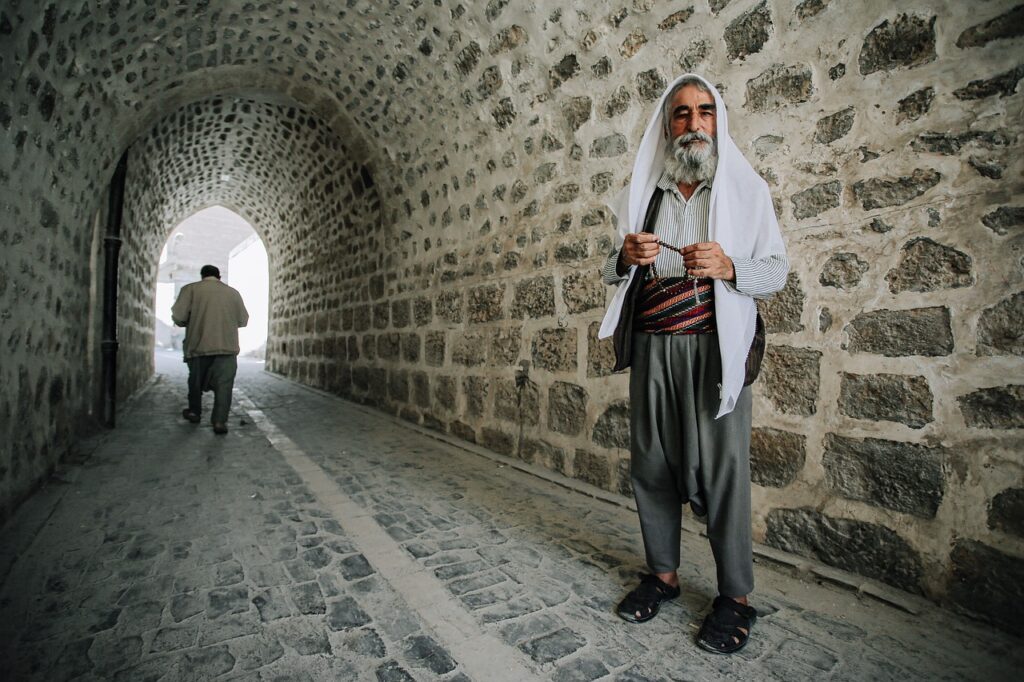
The Famous Hand Kiss
The hand kiss is the most distinctive Turkish gesture of respect, and it deserves its own explanation. A younger person takes the elder’s hand, raises it to the lips, and often touches it to the forehead, then releases it. It is a sign of profound respect, reserved for grandparents, parents, and elders of honor.
You will see it at holiday visits, family gatherings, and sometimes in daily encounters between close relatives. The elder receives it with warmth, often blessing the younger person and patting their head or shoulder. The exchange takes two seconds and carries a lifetime of meaning.
Foreigners are never expected to perform the hand kiss, and nobody will be offended if you simply shake hands warmly or nod with respect. If an elder offers their hand to you in this way, accept the honor gracefully and let them guide the gesture.
On Buses and in Queues
Public space in Turkey is governed by the same respect. On buses, trams, and metros, giving a seat to an older person is close to a rule. Young people rise instantly, and the offer is made with a small gesture and a smile, without words or fuss.
Queues work the same way. An older person arriving at a queue is often quietly invited to go ahead, and no one objects. In shops and markets, older customers are served with particular patience and attention.
Visitors should simply join the pattern. If you have a seat on public transport and an older person stands near you, rise and offer it. The gesture needs no Turkish; the smile says everything. You will not only avoid looking out of place, you will genuinely brighten someone’s day.

When You Are a Guest
Hospitality and elder respect meet at the Turkish guest table. When you visit a Turkish home, the oldest members are greeted first, and the greeting is warm and personal. Even in a room of twenty people, the elders are singled out for the first words.
As a guest you will be treated royally, and the elders will often take a personal interest in you, asking about your family, your country, and your journey. Answer with patience and warmth; these questions are not intrusion but hospitality.
When tea or food is served, the elders receive it first, and you may notice that your own glass is refilled before anyone else’s. Accept the abundance gracefully, compliment the food and the tea, and let the elders lead the conversation. You will be remembered as a wonderful guest.
Visiting an Older Turkish Home
If you are invited into the home of an older Turkish person, a few gestures will make you beloved. Greet the elders first and warmly, remove your shoes at the door if shoes are set aside, and accept the tea, coffee, or food that is offered, since refusing hospitality can feel like a slight.
Take the seat you are offered; it is likely the best one. Let the elder speak first and listen with visible interest to their stories, which are often wonderful. Ask about their family and their health; in Turkey, asking after someone’s health is a sign of genuine care.
Before you leave, thank the elders personally, and if it feels natural, say goodbye with a hand on the heart or a slight bow of the head. Turkish elders are accustomed to grand farewells, and a sincere one will send you off with blessings.

How to Show Respect Without Knowing Turkish
You do not need the language to show elder respect in Turkey. A smile, a nod, and a hand on your chest as you greet someone are universal signs of deference. Letting an older person pass first, or offering a seat, communicates everything.
Small attentions speak loudly: holding a door, carrying a bag, steadying an arm on a staircase. The elderly in Turkey are not treated as fragile burdens but as honored people, and a visitor who mirrors that attitude fits in instantly.
If you learn just one word, make it “tesekkurler,” thank you, said with a smile and a slight nod. If you can add “abi” or “abla” when addressing an older shopkeeper or neighbor, you will have mastered the essence of Turkish elder courtesy.
What Not to Do
The rules of elder respect in Turkey are mostly about presence, not perfection, so the list of offenses is short. Do not argue loudly with an older person in public; the culture expects younger voices to soften before age. Do not interrupt an elder who is speaking.
Do not refuse food or tea too firmly in an elder’s home, and do not wave away their hospitality as unnecessary. Accepting with thanks is the respectful path. And do not treat the hand kiss or the formal words as strange; receiving them with warmth honors the giver.
One more: do not assume that all older Turks expect traditional formality. Many modern elders prefer plain friendliness. Let each person set the tone, and let respect be your default. In Turkey, that default is never wrong.
Frequently asked questions
Will I cause offense if I do not know the customs?
Almost certainly not. Turks are genuinely warm toward visitors and expect foreigners to be learning the culture. The gestures of respect will be offered to you, not demanded from you. As long as you are polite, smile, and accept hospitality gracefully, no one will judge your level of local knowledge.
Should I give up my seat on public transport?
Yes, and it is one of the easiest ways to fit in. In Turkey, offering a seat to an older person on a bus, tram, or metro is standard practice. The offer needs no words, just a smile and a gesture. Turks will notice and appreciate it, and it may earn you a warm blessing from the person you helped.
What is the hand kiss and should I do it?
The hand kiss is a gesture where a younger person takes an elder’s hand, raises it to the lips, and touches it to the forehead. It is reserved for grandparents, parents, and elders of honor, and is most common at holidays and family gatherings. Visitors are never expected to perform it; a warm handshake and a respectful smile are always sufficient.

All Over Information
The All Over Information editorial team researches and writes practical English-language guides to Turkey. Facts are checked against official and local sources before publication, prices are published as dated ranges rather than quotes, and guides are revised when things change. We accept no sponsored posts, paid placements or paid links.
More guides like this

Understanding the Alexander the Great’s Anatolian Campaigns: A Beginner’s Guide
In 334 BCE, a twenty-two-year-old king led an army across the narrow strait between Europe and Asia and began one of the…

A Deep Dive into Turkish Street Food Culture
Turkish street food is one of the world's great culinary traditions, yet it is rarely studied with the seriousness it deserves.

Turkish Hamam (bath) Rituals Explained for Foreigners
As a visitor, walking into a Turkish hamam for the first time can feel both exciting and intimidating.

Traditional Turkish Folk Instruments Explained for Foreigners
Turkish music can sound strange and wonderful to foreign ears: sliding strings, breathy flutes, and rhythms that are hard to count.

Understanding Turkish Dairy Products
Dairy is woven into the fabric of Turkish food. Yogurt accompanies meat, cheese anchors breakfast, ayran cools spicy kebabs, and kaymak crowns…

Contemporary Turkish Literature Explained for Foreigners
Contemporary Turkish literature can feel like a vast, unknown territory for foreign readers, but it is one of the most rewarding literary…