There is a smell that carries the whole of rural Turkey: the smell of dough hitting a hot griddle, of the thin bread blistering and browning over the fire. It is the smell of gozleme, the folded flatbread of the villages, and for Turks it is inseparable from home. The dish is made by hand, from flour and water and whatever the garden provides, and it is served with tea to family, guests, and strangers alike. More than any restaurant dish, gozleme is the taste of Turkish hospitality. This article explores the culture folded inside that thin bread.
The Smell of the Griddle
The smell of the sac is the first chapter of the gozleme story. Dough and fire combine in a warm, floury, slightly smoky aroma that reaches across the courtyard and pulls the household toward the kitchen.
For Turks, that smell is memory itself. It belongs to grandmothers’ kitchens, to village visits, to the market stalls of childhood, and the first sniff of a hot griddle brings the whole past back without warning.
The smell is also the invitation. No one who smells gozleme cooking can walk past, and the griddle becomes the center of the house for the hour of the making, drawing children, neighbors, and guests to the same spot.
The making of gozleme also marks the passing of time in the village year. The first gozleme of the spring greens, the ones made at the harvest, and the folded stacks of the winter evenings each belong to their season, and the dish marks the year better than any calendar.
A Village Ritual
In the village, gozleme is more than food; it is a rhythm of life. The dough is made in the morning, the fillings are chosen from the garden, and the sac is set over the fire when the household gathers.
The ritual belongs to the unhurried hours. Gozleme is not fast food in the village; it is made for the moment, eaten hot, and followed by tea and conversation, and the whole process takes its own time.
The seasons set the rhythm. In the harvest weeks, the gozleme feeds the field workers; on the long winter evenings, it warms the room; and on the feast days, it appears in quantity, folded and stacked for the guests.
The craft has recently found new recognition. Food writers and documentary makers have turned to the village kitchens, and the women of the sac have begun to receive the attention their skill deserves, though the makers themselves remain modest.

The Women of the Sac
The craft of gozleme belongs to the women of the villages, who have passed the rolling and the folding down through generations. The sac is their stage, and the rolling pin their instrument.
The skill is real and visible. A practiced hand rolls the dough to an even thinness without tearing, spreads the filling without wasting it, and turns the bread on the hot sac at the exact moment. It is a craft of years.
These women are the guardians of the dish, and their knowledge is the reason gozleme tastes the way it does. When they teach a daughter or a granddaughter, the dish continues, and the village tradition survives another generation.
The Dough That Remembers
The dough of gozleme is simple, but it carries the memory of the land. The flour comes from the wheat of Anatolia, ground and milled for generations, and the water and the salt are the household’s own.
The making of the dough is also memory. The kneading, the resting, and the rolling follow the same motions that grandmothers used, and the hands that work the dough today are repeating a pattern older than any written recipe.
There is a philosophy in the simple dough. It trusts the ingredients, the hands, and the fire, and it asks for nothing more. The culture of gozleme is in that trust.
There is also a geography of fillings. The villages of the wheat lands favor the plainest dough and cheese; the eastern regions add spice and meat; the coasts bring herbs and sometimes fish to the fold. The gozleme map of Turkey is the food map of Turkey.
The Fillings of the Seasons
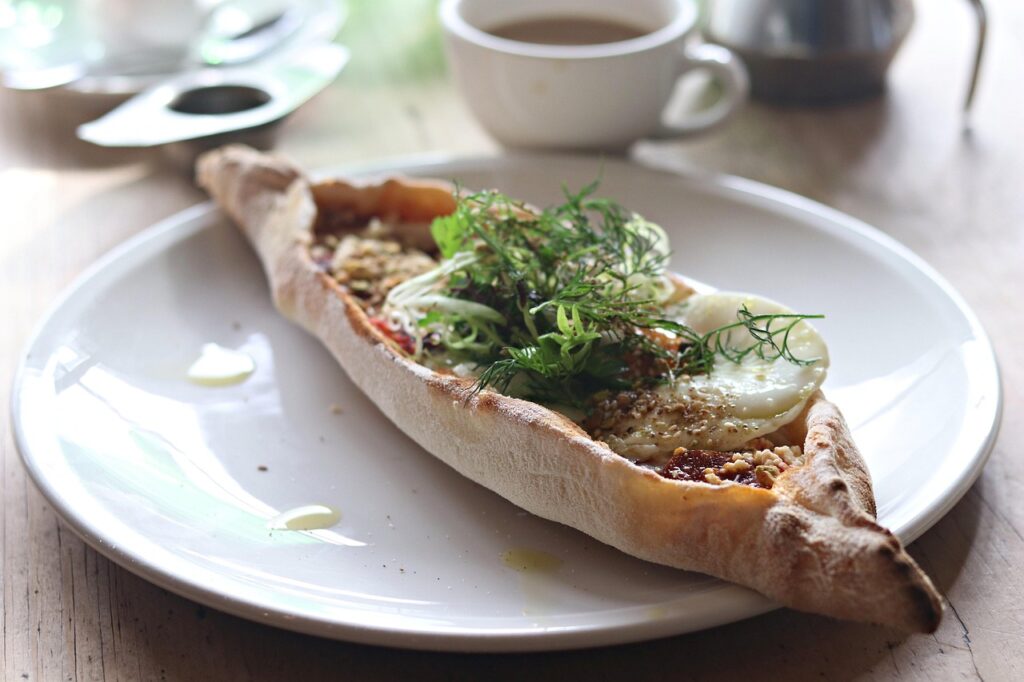
The filling of gozleme is the diary of the countryside. In the spring, the wild greens of the fields; in the summer, spinach and fresh white cheese; in the autumn, the first potatoes; in the winter, the stored herbs and the spiced meat.
Each season’s gozleme has its own character, and the villagers know which greens belong in the filling the way a cook knows a recipe. The dish is a calendar of the land.
The cheese is the constant. The white cheese of the local dairy, salty and crumbly, appears in most fillings, and its taste is the taste of the region’s pastures. Gozleme is the countryside on a plate.
The city also added new habits to the dish. The gozleme of the cafes arrives with a salad and a fork, and the market version comes rolled for eating on the move, both adaptations of the same village bread to the pace of urban life.
Gozleme in the City
The city discovered gozleme when the village came to town. The migrants who moved to Istanbul and Ankara brought the sac with them, and the gozleme cafes and market stalls turned the village bread into urban food.
The city version is faster and simpler, but the essentials survive: the rolled dough, the honest filling, and the hot sac. The market gozleme, made in front of you and served with tea, has become one of the great street foods of modern Turkey.
For the city dweller, gozleme is a bridge to the countryside. It tastes of visits to relatives, of summers in the village, and of a slower life, and that taste has made it beloved across the generations.

The Tea and the Table
Gozleme and tea belong together, and the pairing is part of the culture. The strong black tea of the Turkish glass cuts the richness of the bread and the filling, and the two arrive at the table as one.
The table itself is part of the ritual. In the village, the gozleme comes on a shared tray, the pieces are torn by hand, and the tea is poured and refilled through the meal. The eating is slow and sociable.
The rhythm is the point: gozleme, tea, conversation, more tea, and another piece. The dish is not a course in a meal but the center of a gathering, and the table stays warm as long as the sac does.
The festivals are also where the generations meet. The grandmothers and the grandchildren work the sacs together, and the crowds eat what the families make, so the celebration becomes a living lesson in the continuity of the dish.
The Festival Gozleme
At the festivals and the fairs, gozleme takes the stage. The market stalls and the festival grounds fill with the smoke of the sacs, and the flatbread becomes the food of celebration.
The festival gozleme is made in quantity, rolled and folded by teams of hands, and the crowds eat standing, with the music and the crowd around them. The dish shows its sociable side, feeding strangers as easily as family.
The festivals have also carried gozleme beyond Turkey. The Turkish markets of Europe serve it to new crowds, and the folded flatbread has become an ambassador of the village kitchen.

Learning from the Masters
The best way into the culture of gozleme is to watch the masters. The market maker who rolls with one hand, the village grandmother who works the sac without looking, the festival team that folds a hundred parcels an hour: each is a lesson.
The lessons are simple and deep. Use the best flour, rest the dough, roll thin, fill generously, and never rush the sac. The craft is passed by watching, and the watching is a pleasure in itself.
If you are lucky, a master will hand you the rolling pin. The first gozleme you make will be crooked and thick, and the master will smile and roll it again, and you will have been given a small piece of the tradition.
The Taste of Home
Ask a Turk what gozleme means, and the answer is usually the same: home. The dish is the taste of childhood kitchens, of village summers, and of the people who made it, and no restaurant version quite replaces it.
For the Turkish community abroad, gozleme is one of the strongest tastes of home. Families make it for gatherings, the smell fills the house, and for a moment the distance disappears.
That is the culture of gozleme: not a recipe but a belonging. Eat it hot off the sac, with tea and company, and you will understand why a simple flatbread carries so much.
A final observation: gozleme is one of the few foods that can be called completely democratic. It is made from the cheapest ingredients, it feeds anyone who arrives, and it has never needed a restaurant to survive. That is its quiet power.
Frequently asked questions
Why is gozleme so connected to Turkish home life?
Because it is the food of the village kitchen and of hospitality. Gozleme is made by hand from simple ingredients, cooked on the family griddle, and served with tea to family and guests. The taste carries memories of home for most Turks, which is why it means more than its simple ingredients.
Is gozleme still a village dish?
It began as one, and the village tradition is still the heart of the dish, with the craft passed down through generations of women. But the city has adopted it completely, and the market stalls and cafes now serve gozleme across Turkey and beyond, carrying the village kitchen into urban life.
What makes gozleme different from other Turkish flatbreads?
The fold and the griddle. Where lahmacun is topped and pide is boat-shaped, gozleme is a thin dough rolled out, filled, folded over, and sealed before it is cooked on a convex sac griddle. The filling steams inside the bread, which gives the dish its soft center and crisp, blistered crust.

All Over Information
The All Over Information editorial team researches and writes practical English-language guides to Turkey. Facts are checked against official and local sources before publication, prices are published as dated ranges rather than quotes, and guides are revised when things change. We accept no sponsored posts, paid placements or paid links.
More guides like this

The History Behind Testi Kebab (Pottery Kebab)
Testi kebab is a dish with a deep past and a thin paper trail.

How Turkish Cuisine Varies by Region
Ask a Turk about the national cuisine, and you will get a gentle correction: there is no single Turkish food, but seven…
Urfa Kebab: A Taste of Turkish Culture
Food is the quickest way into a culture, and in Şanlıurfa no dish opens more doors than the kebab that bears the…

The Ultimate Guide to Gozleme
Gozleme is the great comfort food of the Turkish countryside: a thin, hand-rolled flatbread, folded over a savory filling, and cooked on…

The Ultimate Guide to Turkish Simit Sandwiches
The simit sandwich is one of Turkey's simplest and most beloved meals, a sesame-crusted ring of bread split open and filled with…

How to Make Authentic Turkish Pastries at Home
You do not need a wood-fired oven or a pastry shop's decades of experience to make good Turkish pastries at home.