Respect for elders is one of the first things visitors notice about Turkey. In shops, on buses, and around family tables, older people occupy a special place, and the courtesy shown to them is woven into the language itself. This is not a formal rule or a fading custom; it is a deep value with ancient roots that still shapes daily behavior. This guide explains where that respect comes from, how it shows itself in words and actions, and what visitors need to understand to feel at home.
The Deep Roots of Elder Respect
The Turkish reverence for elders has two great sources. The first is the nomadic Turkic tradition of Central Asia, where tribal life depended on the wisdom of the old. Elders were the keepers of memory, law, and survival knowledge, and their counsel carried real authority.
The second source is Islam, which commands kindness to parents and the old in its central texts. The two traditions reinforced each other so completely that elder respect became one of the most reliable features of Turkish society across centuries and regions.
The result is a cultural assumption, learned from childhood, that age deserves honor. A Turkish child grows up watching adults kiss the hands of grandparents and rise when an elder enters the room. The value is not taught as theory; it is demonstrated every day.
This continuity is worth emphasizing for visitors: respect for elders is not a museum custom preserved for tourists. It is a living habit practiced in skyscrapers and villages alike. The young doctor in Istanbul and the shepherd in the Taurus Mountains are both raised on the same unspoken rule, that age carries a claim on the younger generation’s courtesy and care.
The Family as the Center of Life
The family is the heart of Turkish society, and the respect for elders begins inside it. The household is traditionally multigenerational in spirit, even when families live apart, and the oldest members hold a natural position of honor and authority.
The father’s and mother’s families both command loyalty, but the paternal grandparents traditionally hold particular weight. The eldest son in some families carries special duties, though modern families adapt these roles freely. What remains constant is the obligation of care: children are expected to look after aging parents.
This duty is not felt as a burden. Looking after one’s parents is a point of pride, and placing an elderly parent in care is a difficult decision that families resist. The expectation that children will be the comfort of their parents’ old age is central to Turkish family ethics.
The Language of Respect: Terms of Address
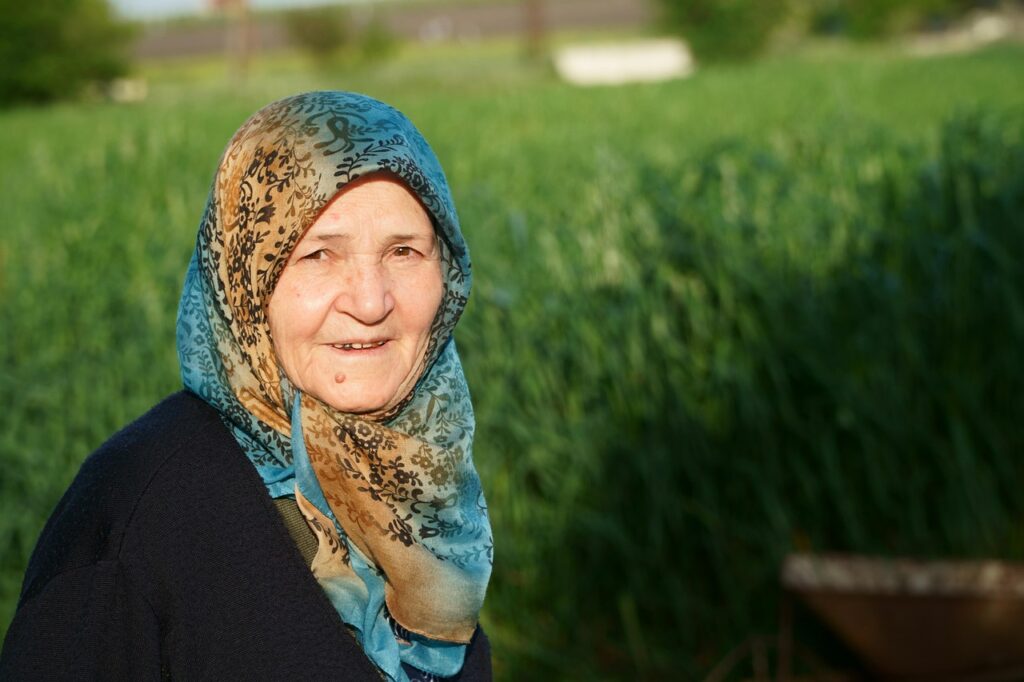
Turkish has built respect for elders directly into its grammar of address. The words “abi” and “abla,” meaning older brother and sister, are used not only for siblings but for any older person, creating an instant family feeling between strangers.
The formal “siz” form, as opposed to the intimate “sen,” marks respect and distance. Younger people use “siz” with elders until invited to switch, and the choice of pronoun quietly signals the relationship’s temperature. Visitors hear this contrast constantly.
For the oldest generation, the terms “dede” and “nine,” grandfather and grandmother, are used affectionately for elderly strangers on the street. There is no Turkish word for a generic old person that carries disrespect; the language itself pushes speakers toward honorifics.
Respect in Daily Gestures and Behavior
Respect for elders expresses itself in a thousand small actions. Younger people rise when an elder enters the room and offer their seat on crowded transport. Doors are held, packages are carried, and heavier tasks are quietly taken over.
The hand kiss is the most distinctive gesture. Younger people take an elder’s hand, touch it to their forehead, and kiss it, a sign of deep respect shown to grandparents, parents, and sometimes honored teachers. It is performed in daily life and especially at bayram, the holidays.
Conversation follows the same pattern. Elders are allowed to speak first and without interruption, their opinions are solicited, and disagreement is softened. Even in arguments, the final word tends to belong to the oldest person present.

Elders in the Home
Inside the Turkish home, the elder’s position is visible everywhere. The most comfortable seat, the first serving of food, and the place of honor at the table belong to the oldest family members. Children are taught to wait for elders to begin eating.
Decisions, from small domestic choices to large family matters, are brought to the elders for their blessing. The family listens to their views even when the young will do something different, because dismissing an elder’s counsel outright would feel like a breach.
The bond cuts both ways. Elders contribute childcare, cooking, and family memory, and their homes often become the gathering place for the whole family. The arrangement is less a hierarchy than an exchange: honor for care, memory for energy.
The Role of Grandparents
Grandparents are among the most powerful presences in Turkish family life. They are often deeply involved in raising grandchildren, providing daily childcare while parents work, and their homes are the natural meeting point for the extended family.
The grandparent-grandchild bond is celebrated in language and custom. Grandfathers take grandsons to the mosque or the tea house, grandmothers teach granddaughters cooking and crafts, and the stories of the old generations pass down through these hours together.
The loss of a grandparent is a major family event, marked by mourning and remembrance that binds generations. The naming tradition, where grandchildren carry grandparents’ names, keeps their memory permanently alive in the family’s next generations.

Respect Beyond the Family: The Wider Community
The respect for elders extends far beyond the home. On the street, younger people defer to the old; in queues, elders are let ahead; and in shops and offices, older customers receive particular attention. The courtesy is automatic and universal.
In public transport, offering a seat to an elder is so standard that failing to do so draws quiet disapproval. On stairs and crowded streets, a hand offered to steady an older stranger is ordinary kindness, not exceptional chivalry.
The community also watches over its elders. Neighbors check on the elderly, shopkeepers know their regular older customers by name, and the whole street may rally around an old person in difficulty. The village or neighborhood operates as a single extended family.
Elders in Turkish Social Life and Hospitality
Elders are the centerpiece of Turkish social occasions. At family gatherings, weddings, and holiday visits, the oldest guests are greeted first, seated in the place of honor, and served before anyone else. Their blessing is often requested for the occasion.
Hospitality, Turkey’s most famous value, is directed especially at the old. Guests of any age are treated lavishly, but an elderly guest receives extra ceremony: the best chair, the first tea, the most attentive host. Refusing a gift or a meal from an elder is considered deeply impolite.
At religious holidays, the custom of visiting elders is sacred. Families travel to the homes of grandparents and elderly relatives, and the hand kiss is performed with special formality. Missing these visits is one of the few family sins that is genuinely hard to forgive.

How the Tradition Is Changing
Turkish society is changing fast, and the elder tradition is adapting with it. Urbanization has scattered extended families, and the multigenerational household is now a choice rather than a default. Young professionals in Istanbul may see their grandparents only on holidays.
Yet the values show remarkable resilience. Mobile phones keep grandparents connected to grandchildren, video calls have replaced some visits, and city families still schedule the weekend pilgrimage to the family home. The care obligation remains strong even at a distance.
What is changing is form, not feeling. The hand kiss survives, but with less formality; “siz” is less automatic among the young; and elders themselves often prefer to be treated as active partners rather than honored monuments. The respect endures, updated for modern life.
What Visitors Should Know
For visitors, the respect for elders is easy to practice and warmly rewarded. Stand up for an older person on transport, offer a seat, and let elders go first through doors. These small gestures are noticed and appreciated everywhere in Turkey.
Learn the basic words. Addressing an older man as “abi” or an older woman as “abla” in a shop or a market instantly warms the encounter. Adding the respectful “siz” form in Turkish, if you know any, signals that you understand the culture.
Do not be surprised by the hand kiss or by elders being served first at a table. Join the pattern without self-consciousness. In Turkey, honoring the old is simply the natural order, and visitors who embrace it find doors opening everywhere they go.
One final note: if an older Turk calls you ‘evlat,’ meaning child, or pats your shoulder with a blessing, accept it warmly. It is the language of a culture that has just adopted you into its family, and it is the highest compliment a visitor can receive.
Frequently asked questions
Why is respect for elders so strong in Turkey?
The value grows from two deep roots: the Turkic nomadic tradition, where tribal survival depended on elders’ wisdom, and Islam, which commands kindness to parents and the old. These traditions reinforced each other for centuries, making elder respect a foundational Turkish value that families teach from early childhood through daily example.
How should a visitor greet an older person?
A warm smile and a respectful greeting work everywhere. In Turkish, use the formal “siz” form and address older people as “abi” for men or “abla” for women. Offering your seat, holding a door, or letting an elder go first are all appreciated. The hand kiss is a family custom; visitors are never expected to perform it, but should receive it gracefully.
Is respect for elders fading among young Turks?
The forms are changing, but the value is not. Young urban Turks may use less formal language and visit grandparents less often, yet the care obligation and the emotional bond remain strong. Mobile communication has even strengthened ties across distance. Most young people still rise for elders, offer seats, and feel genuine duty toward their parents’ old age.

All Over Information
The All Over Information editorial team researches and writes practical English-language guides to Turkey. Facts are checked against official and local sources before publication, prices are published as dated ranges rather than quotes, and guides are revised when things change. We accept no sponsored posts, paid placements or paid links.
More guides like this
Turkey’s Secularism and Religious Traditions Explained
Few countries present a more fascinating puzzle than Turkey when it comes to religion and the state.

Understanding the Alexander the Great’s Anatolian Campaigns: A Beginner’s Guide
In 334 BCE, a twenty-two-year-old king led an army across the narrow strait between Europe and Asia and began one of the…

How the Turkish Republic Was Founded
The Republic of Turkey was not born in a single moment.
Understanding the Turkish Republic Era: A Beginner’s Guide
If you are planning a trip to Turkey, you will quickly notice that the country explains itself through one story above all…

Religious Diversity in Turkey Explained for Foreigners
Turkey surprises many visitors with the depth and complexity of its religious life.

Understanding Turkish Football Fan Culture
Football in Turkey is not a pastime; it is a passion that runs through the whole society.