Ortaköy is one of the most compact shopping districts in Istanbul, and that is exactly why it works. The whole neighborhood sits between the Bosphorus shore and the hills behind it, so a serious shopping session takes no more than a few blocks. You will find the famous square lined with stalls, the back streets hiding workshop boutiques, and the meydan itself crowded with everything from handmade jewelry to Ottoman-style souvenirs.
What makes Ortaköy different from the Grand Bazaar is the scale. Nobody expects you to haggle for forty minutes over a carpet. The prices are moderate, the vendors are friendly, and the atmosphere is relaxed. You can buy a woven bracelet for a few lira, then walk ten steps and sit down with a kumpir the size of your head. That mix of shopping and pleasure is the real charm of the neighborhood.
This guide covers the best things to buy in Ortaköy, where to find them, and how to avoid overpaying.
The Ortaköy Square Stalls
The heart of Ortaköy shopping is the square in front of the Büyük Mecidiye Camii, the ornate neo-baroque mosque that looks like it belongs in a wedding cake. Every day, dozens of stalls spread across the cobblestones selling the same reliable range of goods: evil eye beads, ceramic bowls, copper tea sets, pashmina scarves, and wooden toys.
Start your shopping here because it gives you a baseline for prices. Notice how much a ceramic bowl costs at the first stall, then check the same item two stalls down. The difference is often twenty or thirty percent, and it is perfectly acceptable to ask for a small discount when you buy more than one piece.
The evil eye, or nazar, is the item most visitors take home. You can buy a single blue bead on a string for pocket change, or a beautifully framed panel of mixed nazar designs. Turkish people genuinely believe in the protective power of the eye, so the gift carries meaning as well as decoration.

Handmade Jewelry and Accessories
Ortaköy has become a favorite place for young Turkish designers, and the jewelry stalls reflect that. You will find hammered silver rings, oxidized copper pendants, leather wrap bracelets, and earrings made from vintage Ottoman coins. Prices range from cheap costume pieces to serious handmade silver, so ask about the material before you pay a high price.
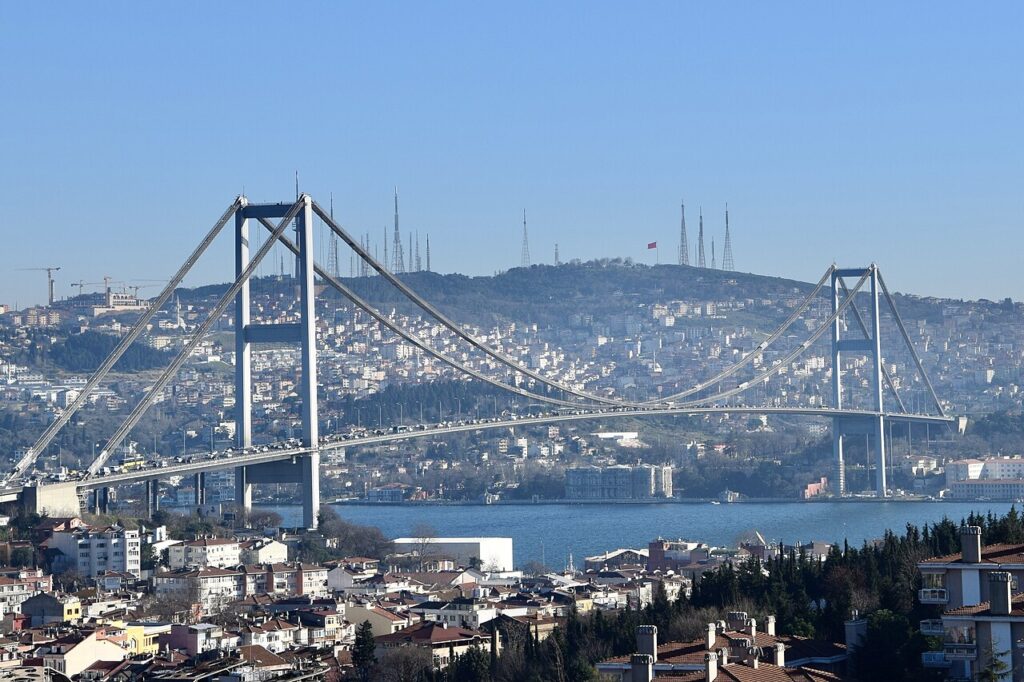
The Bosphorus theme runs through much of the jewelry. Look for pendants shaped like the Maiden’s Tower, the Galata Tower, or the silhouette of the 15 Temmuz Şehitler Bridge. These make thoughtful, lightweight gifts that pack easily and remind the recipient of Istanbul every time they wear them.
For something more personal, several workshops in the back streets will engrave a name or a date onto a bracelet or a pendant while you wait. This is a lovely idea for a couple’s souvenir or a gift for a child.
Ceramics and Tableware
The ceramics sold in Ortaköy come mostly from the traditional kilns of Kütahya and İznik, the two towns that have produced Turkish tiles for centuries. You will recognize them by the cobalt blue, turquoise, and tomato red patterns that cover plates, bowls, and vases.
A set of small ceramic bowls makes a beautiful gift, especially when packed in a wooden box. The vendors will wrap them carefully for travel, and most will ship larger pieces if you ask. Before you buy, hold the piece up to the light and check for even glaze and no visible cracks — quality varies from stall to stall.
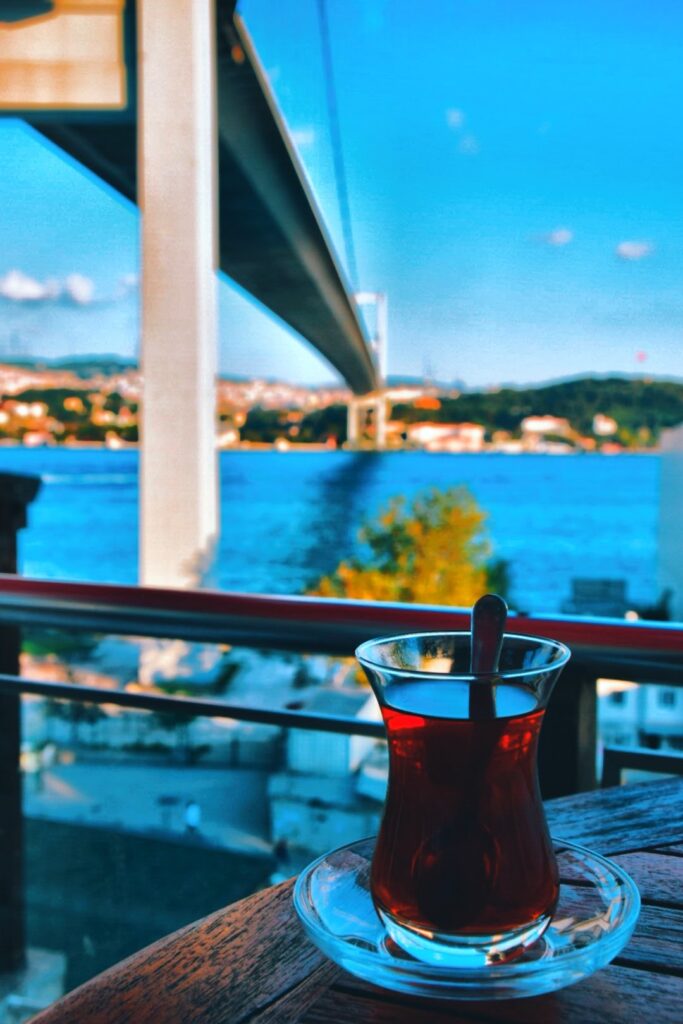
Tea culture is central to Turkish life, so a tulip-shaped tea glass set is one of the most authentic souvenirs you can take home. Look for the classic thin-waisted glasses with gold rims and saucers. Complete the set with a copper or brass çaydanlık, the double-decker teapot that keeps the tea strong at the bottom and diluted at the top.

Textiles, Scarves, and Hammam Towels
Turkish cotton is famous for a reason. The pashmina scarves and cotton shawls sold in Ortaköy are soft, warm, and reasonably priced, especially when you buy several at once. The vendors will happily show you the difference between cotton, wool, and synthetic blends — a genuine cotton piece feels heavier and cooler than a synthetic one.
Hammam towels, known as pestemals, are one of the best-value souvenirs in all of Istanbul. These thin, striped cotton towels dry quickly, pack flat, and are used both at the beach and in the bath. In Ortaköy you will find them in a rainbow of colors, from traditional red and white stripes to modern pastels.
If you want a traditional woven rug without paying Grand Bazaar prices, look for the small kilim bags and runners sold in the back streets. A kilim bag is practical, authentic, and much easier to carry home than a full carpet.
Copper, Brass, and Traditional Crafts
The copper workshops of Istanbul have a long history, and Ortaköy is one of the best places to see their work. Look for hammered copper coffee pots, known as cezve, which are used to brew Turkish coffee on the stove. A cezve, a small brass tray, and a packet of Turkish coffee beans make a complete gift set for any coffee lover.
Brass and copper items need a little care — they tarnish over time — but that is part of their charm. The vendors usually include a small polishing cloth with each purchase, and the patina that develops over years gives each piece its own character.
Wooden crafts are also worth a look. Hand-carved olive wood spoons and bowls, wooden trays with marquetry patterns, and the traditional Turkish backgammon sets, known as tavla, are all available. A well-made tavla set is a beautiful object, with a hinged wooden case that opens into the playing board, and it makes a conversation piece in any home.
What to Skip
Not everything in Ortaköy is worth your money. The mass-produced trinkets — plastic mosque models, keychains with your name in fake gold, and “genuine” designer bags — are cheap for a reason. They are the same items sold at every souvenir stall in every Turkish resort town, and they will not remind you of Istanbul the way a handmade piece will.
Similarly, be cautious with any stall claiming to sell antiques or “real Ottoman” artifacts. Genuine antiques require export permits and are rarely sold from a table in a public square. If a price seems too good for a claimed antique, it is almost certainly a reproduction — which is fine, as long as you know that is what you are buying.
Food souvenirs are the happy exception to the skip list. Spices, dried fruits, Turkish delight, and lokum from the market stalls are all worth buying, provided you check the packaging is sealed. Just remember that customs rules limit how much food you can bring home, so buy modest amounts.
Practical Shopping Tips
Bring cash for the market stalls. Many vendors accept cards now, but the stalls in the square often add a surcharge for card payments, and cash gives you more room to negotiate. Small denominations help, since vendors may not have change for a large bill early in the day.
Haggling is expected but gentle in Ortaköy. Start at about two-thirds of the asking price for stall goods, and settle around three-quarters. Do not haggle over the price of a kumpir or a simit — those prices are fixed and tiny anyway. The vendors are friendly and will often throw in a small gift, like a free evil eye bead, when you buy several items.
Check the quality of everything before you pay. Run your fingers over ceramics for cracks, hold scarves up to the light, and test that zippers and clasps work. Most vendors are honest, but a quick check prevents a disappointing souvenir.
If you are shopping in summer, go early in the morning or in the evening. The midday sun on the square is intense, and the stalls get crowded with tour groups between eleven and three. The evening hours, when the square lights up and the restaurants fill, are the most pleasant for browsing.
Getting Your Purchases Home
Most small items — jewelry, scarves, evil eyes, kilim bags — fit easily in a carry-on. Ceramics and glass need careful packing; the vendors will wrap them in layers of bubble wrap and newspaper if you ask, and it is worth buying a small roll of bubble wrap at the market to add extra protection.
For large items like carpets or full tea sets, ask the vendor about shipping. Many Ortaköy shops ship internationally and can handle the customs paperwork, but always get a written price before you agree. Shipping a carpet can cost more than the carpet itself, so weigh that against carrying it home.
Frequently asked questions
What is Ortaköy known for shopping?
Ortaköy is known for its compact market square with stalls selling evil eye beads, ceramics, jewelry, scarves, and hammam towels, all at moderate prices compared to the Grand Bazaar.
Is haggling expected in Ortaköy?
Gentle haggling is expected at the market stalls — start at about two-thirds of the asking price. Prices for food and drinks are fixed.
What is the best souvenir from Ortaköy?
A handmade ceramic piece, a hammam towel, or a hammered copper cezve are the most authentic souvenirs, all locally crafted and easy to pack.
Is it better to shop in Ortaköy or the Grand Bazaar?
Ortaköy is more relaxed, with fixed moderate prices and a pleasant waterfront setting, while the Grand Bazaar offers a wider range and more intense bargaining. Both are worth visiting for different reasons.

All Over Information
The All Over Information editorial team researches and writes practical English-language guides to Turkey. Facts are checked against official and local sources before publication, prices are published as dated ranges rather than quotes, and guides are revised when things change. We accept no sponsored posts, paid placements or paid links.
More guides like this
Ortakoy on a Budget: Money-Saving Travel Tips
Ortakoy is the budget day-trip of the Bosphorus — the village where the famous sights are free and the famous food is…

Family-Friendly Activities in Ortakoy
Ortakoy is a family village — safe, small, and full of the things children actually enjoy.

How to Get to Ortakoy from Istanbul
Ortakoy sits on the Bosphorus at the foot of the first bridge — the buses along the shore, the ferries at the…

A Solo Traveler’s Guide to Ortakoy
Ortakoy is one of the easiest places in Istanbul for the solo traveler — safe, small, and welcoming, with the postcard at…

Where to Stay in Ortakoy: Neighborhood Guide
Ortakoy is the character base of the Bosphorus — the waterfront village where the boutique rooms fill the old houses, where the…

Hidden Gems of Ortakoy Most Tourists Miss
Ortakoy has a famous face — the mosque and the bridge, the kumpir and the square — and most visitors never see…