Ortakoy is a family village — safe, small, and full of the things children actually enjoy. The kumpir and the gulls, the ferries and the shore, the mosque and the bridge, the tea and the dondurma: the village runs on the waterfront’s family life, and the traveler with children fits right in. It is the easiest half-day of the family trip — the postcard with the playground energy, the Bosphorus at the children’s level. This guide covers the best family activities in Ortakoy — the food, the rides, the walks, and the days that keep the whole family happy.
The Kumpir: The Family Meal
The kumpir — the stuffed baked potato of Ortakoy — is the family meal of the village, and the stalls of the square are the children’s favorite counter. The baked potato is split and filled with the toppings of the choice: the cheese and the butter, the sausage and the corn, the olives and the pickles, the salads and the sauces. The children love the choosing: the counter of the fillings, the potato piled high with their picks. The adults love the price: a full family lunch at the square costs a fraction of the sit-down tables. The kumpir is the family’s essential Ortakoy meal — the famous food, chosen by the children, eaten in the hand with the bridge overhead.
The Gulls: The Children’s Companions
The gulls of Ortakoy are the children’s companions — the birds of the waterfront, circling the square and following the ferries, waiting for the bread of the visitors. Feeding them at the water’s edge — the crust from the kumpir, the simit crumbs, the bread of the shore — is the family’s simplest pleasure: the gulls diving, the children delighted, the waterfront life of the Bosphorus in the hand. The gulls are the village’s free entertainment: the birds of the square, the diving of the water, the delight of the smallest travelers. For the family, the gulls are the first pleasure of the village — the welcome of the Bosphorus, in its feathered form.

The Ferries: The Rides the Children Love
The ferries from the nearby piers are the rides the children love — and the crossing is the family’s best hour. The crossing to the Asian side — the twenty minutes across the strait — is the classic family ride: the water, the gulls, the skyline, the breeze, the village’s postcard receding behind. The Bosphorus cruise — the ferry that runs the length of the strait — is the full adventure: the palaces and the fortresses, the villages and the bridges, the hour and a half that the children call the best part of the trip. The ferries are cheap, safe, and endlessly entertaining — the family activity that requires nothing but a card and a deck rail. For the family in Ortakoy, the water is the ride, and the crossings are the memory.
The Shore and the Promenade: The Running Room
The shore and the promenade of the village are the family’s running room: the open waterfront, the benches and the paths, the fishing boats and the gulls. The children stretch their legs along the water; the parents watch the strait; and the breeze does the cooling. The promenade both ways from the square — the views of the Asian side, the villas and the boats — is the family’s walk: the easy stroll, the water at the side, the village’s life around it. The shore is also the family’s picnic spot: the benches with the postcard in view, the kumpir and the tea from the square. The waterfront of Ortakoy is the family’s free hour, and the promenade is the walk.

The Mosque and the Bridge: The Family Landmarks
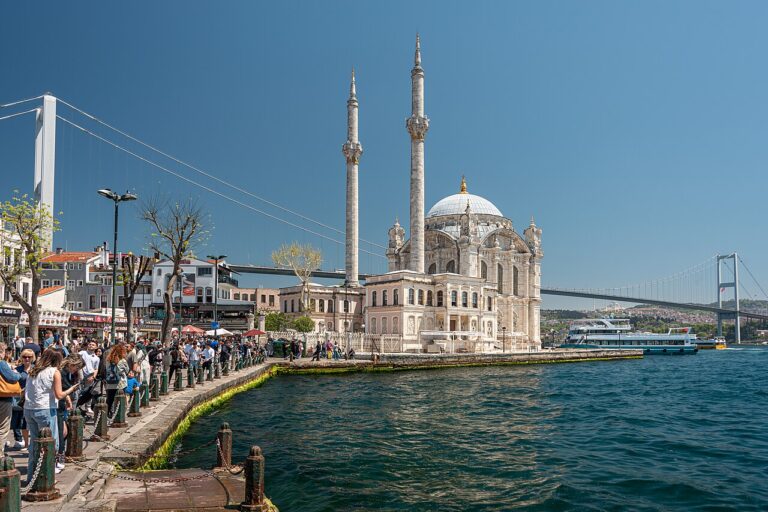
The mosque and the bridge of the village are the family landmarks — the postcard that the children recognize and the history that the parents tell. The Ortakoy Mosque at the water’s edge — the baroque dome, the slender minarets — is the landmark of the village, the quiet visit of the family’s day: the shoes off at the door, the respect of the working place of worship, the wonder of the children at the water’s edge. The Bosphorus Bridge overhead — the great span leaping the strait, the first bridge between the continents — is the children’s engineering wonder: the towers, the span, the cars crossing between the continents. The mosque and the bridge are the family’s landmarks — the postcard’s two halves, seen through the children’s eyes.
The Days: The Family Itineraries
A sample family day shows how the pieces fit. Morning: the postcard — the mosque and the bridge in the morning light, the photographs with the family — then the promenade walk with the gulls. Midday: the kumpir at the square — the children’s choices, the family lunch in the hand — then the dondurma for the treat. Afternoon: the ferry — the crossing to the Asian side, the gulls and the water — or the Bosphorus cruise for the full adventure. Evening: the tea at the water’s edge, the sunset over the bridge, the gulls at the shore — then the quiet walk back through the village. The day is the family rhythm of the village: the postcard, the potato, the rides, and the water — and the whole family, from the toddler to the grandparents, covered at every step.

The Practical Notes
A few things make the family trip smooth. The card is the transport: the Istanbulkart covers the buses and the ferries, and the children under a certain age ride free — check the rules at the station. The morning is the postcard: the mosque and the bridge are at their best and their quietest early — start the day there. The kumpir is the meal: the square’s stalls feed the whole family cheaply and well — the children’s choice is the pleasure. The stroller is the question: the square and the shore are easy, while the back streets are steeper — the carrier wins on the climb. And the pace is the family’s own: the village is small and the day is easy — the slow hours are the good ones.
The Family Practical Notes: Strollers and Bathrooms
Ortaköy is small and manageable with children, but a few practical notes make the difference between a good day and a great one. The square and the waterfront are cobblestone, which is charming for walking but bumpy for strollers — a lightweight stroller with good wheels is worth it, or a baby carrier for the youngest travelers. The back streets have steps and narrow pavements, so plan the stroller route along the waterfront and the square.
Public toilets are scarce, so the strategy is to time your visits around the cafés and restaurants. Order a tea at a café with a terrace, use the facilities, and enjoy the break — the staff are universally friendly to families. The restaurants near the square all have high chairs and most have children’s portions, and the kumpir stands are the perfect family meal, with each child customizing their own loaded potato.
Finally, keep an eye on the sun. The square has little shade, and the reflective water intensifies the heat on summer afternoons. Bring hats, sunscreen, and water, and plan the main sightseeing for the morning hours, saving the shaded tea gardens and the waterfront benches for the hottest part of the day.

The Takeaway
Ortakoy is the family’s village — the kumpir for the choosing, the gulls for the delight, the ferries for the rides, the shore for the running, and the mosque and the bridge for the wonder. The village runs on the waterfront’s family life, and the traveler with children joins it without effort: the morning postcard, the midday potato, the afternoon ferry, the evening tea at the water. Come with the children, and the village meets them at their level — the gulls, the fillings, the deck rail, and the dondurma — the Bosphorus postcard, built for the families who live there and the families who visit.
Frequently asked questions
Is Ortakoy good for families?
Excellent — safe, small, and full of the things children enjoy: the kumpir, the gulls, the ferries, and the shore.
What is the best family activity?
The ferry — the crossing or the Bosphorus cruise is the ride the children love, cheap and endlessly entertaining.
Is the kumpir good for kids?
Yes — the choosing of the fillings is the children’s favorite part, and the potato in the hand is the family meal of the village.
Is the mosque visit suitable for children?
Yes — the quiet visit with the respect of the working place of worship suits the children, and the wonder of the building at the water’s edge is theirs.
Where do families eat?
The kumpir at the square for the lunch and the tea at the water for the pause — with the dondurma for the treat.

All Over Information
The All Over Information editorial team researches and writes practical English-language guides to Turkey. Facts are checked against official and local sources before publication, prices are published as dated ranges rather than quotes, and guides are revised when things change. We accept no sponsored posts, paid placements or paid links.
More guides like this

Ortakoy in Summer: A Complete Travel Guide
Summer is Ortakoy's liveliest season — the long days, the full square, the kumpir stalls at their busiest, the ferries crossing through…

A Solo Traveler’s Guide to Ortakoy
Ortakoy is one of the easiest places in Istanbul for the solo traveler — safe, small, and welcoming, with the postcard at…

Top 10 Things to Do in Ortakoy
Ortakoy is the postcard of the Bosphorus — the waterfront village where the baroque mosque stands beside the great bridge, where the…
Ortakoy in Winter: What to Expect
Winter changes Ortakoy the way it changes every waterfront — the crowds thin, the square returns to the village, and the strait…
Photography Spots in Ortakoy You Can’t Miss
Ortakoy is a photographer's dream because the whole village is a set.

Hidden Gems of Ortakoy Most Tourists Miss
Ortakoy has a famous face — the mosque and the bridge, the kumpir and the square — and most visitors never see…