The Spice Bazaar has stood on the waterfront of Eminönü since the 1660s, and in that time it has witnessed the transformation of Istanbul from an imperial capital to a modern metropolis. It was built as the commercial wing of a great mosque complex, prospered through the golden age of the Ottoman spice trade, survived fires and earthquakes, outlived the empire that created it, and emerged as one of the world’s most beloved markets. Its long story is the story of Istanbul in miniature, and tracing it century by century reveals how a single building can carry the memory of an entire city.
The Seventeenth Century: Building for the New Mosque
The story of the Spice Bazaar begins in the mid-seventeenth century, when the Ottoman court undertook one of the great building projects of the age: the construction of the Yeni Mosque on the waterfront of Eminönü. The mosque was to be the centerpiece of a vast complex, and the market was planned as its commercial support.
The project was long and troubled. The mosque’s construction stretched over decades, interrupted by the political turbulence of the century, and the market rose alongside it, part of the same slow campaign. The builders followed the traditional pattern: the mosque for worship, the market for revenue, together sustaining a great charitable foundation.
When the complex was finally completed and opened in the 1660s, the Spice Bazaar began its working life. The new market gave the waterfront a covered, orderly home for its trade, and the district of Eminönü became, in a stroke, the commercial heart of the old city.
The 1660s: The Market Opens
The opening of the Spice Bazaar was an event in the life of the city. The new market, with its vaulted galleries and its gates on the busy streets, was immediately the center of the waterfront trade, and the merchants of the district moved their stalls under its roof.
The first century of the market was shaped by the spice trade. The Ottoman world was a great crossroads of commerce, and Eminönü, at the meeting of sea and land routes, handled goods from the Black Sea, the Mediterranean, and the East, with the spices of Asia among the most valuable cargoes of all.
The market also settled into its social role. The lanes filled with the vendors, the shoppers, and the servants of the great households, and the bazaar became a meeting place, a source of news, and an institution of the neighborhood, roles it has never entirely lost.
The Waqf: How the Market Was Governed
The long life of the Spice Bazaar owes much to the institution that governed it: the waqf, the charitable foundation that owned the market on behalf of the mosque. In the Ottoman system, a waqf held property in trust, dedicating its revenues to a religious or charitable purpose.
The waqf of the Yeni Mosque owned the Spice Bazaar, collected its rents, and spent them on the mosque’s upkeep, its staff, and its charities. The system was designed to be permanent, and its permanence was the market’s good fortune: the building had a guardian whose interest was its survival.
The waqf also preserved the market’s purpose across the centuries. Because the building existed to support the mosque, it was maintained as a market through every change of government, and the tradition of trade was never allowed to lapse, which is why the bazaar still functions today.
The Eighteenth Century: The Spice Trade in Full Swing
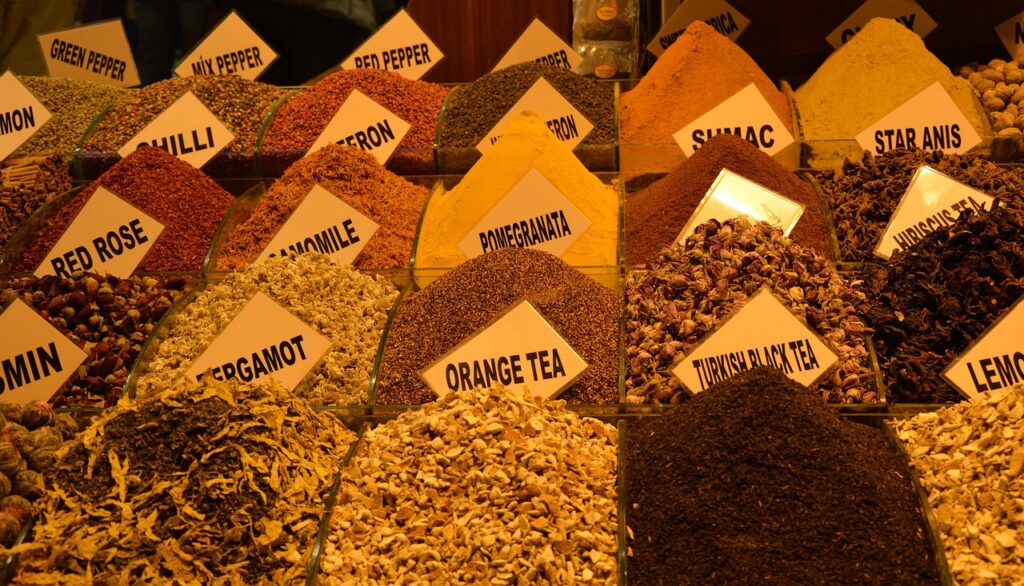
The eighteenth century was the great age of the Spice Bazaar’s traditional trade. The Ottoman Empire was at peace for long stretches, the sea routes were busy, and the market handled the spices, the remedies, and the delicacies that flowed through the capital.
The merchants of the bazaar flourished in this era. The trade was organized and profitable, the stalls were passed down through families, and the market’s reputation grew, so that the Spice Bazaar became known across the empire as the place to find the finest pepper, the most fragrant saffron, and the most expert herbalists.
The building itself aged gracefully through the century, with repairs and renewals keeping it sound. The vaults stood firm, the gates served their crowds, and the market entered the modern era as one of the great working institutions of the Ottoman city.
The Nineteenth Century: Change on the Waterfront
The nineteenth century brought profound changes to Istanbul, and the Spice Bazaar felt them all. The empire was reforming, the city was modernizing, and the waterfront of Eminönü was transformed by new docks, new ferries, and new crowds.
The market adapted as it always had. The old trade continued, but new customers and new goods arrived with the steamships, and the bazaar absorbed them into its lanes, proving the flexibility that has kept it alive for centuries.
The century also brought the first great wave of modern travel writing, and the Spice Bazaar entered the imagination of the world. The European travelers who described Istanbul with such fascination inevitably devoted pages to the exotic market of Eminönü, fixing its image in the mind of the world.
Fire and Survival in the Modern Era
Like every Ottoman market, the Spice Bazaar has faced the great enemy of the old city: fire. The crowded stalls, the wooden fittings, and the careless flames of daily life made the markets of Istanbul perpetually vulnerable, and the bazaar suffered its share of damage.
Each time, the market was rebuilt and reopened. The vaults were repaired, the stalls were restored, and the trade resumed, because the Spice Bazaar was simply too important to the city’s life to be abandoned. The building that survives today is the proof of that stubborn continuity.
The era of fire also became the era of restoration. As the twentieth century advanced, the authorities took the market’s preservation seriously, and the old fabric was repaired with increasing care, so that the building emerged from its trials sounder than it had been for centuries.
The Republic: A New Istanbul, an Old Market
When the Turkish Republic was founded in 1923, the Spice Bazaar began a new chapter in its long life. The empire was gone, but the market remained, and it settled into the rhythms of the modern city with the ease of long habit.
The republican era transformed Eminönü around it. The ferries multiplied, the Galata Bridge was rebuilt, and the waterfront became one of the busiest corners of Istanbul, and the Spice Bazaar, at the center of the district, grew busier with every passing decade.
The market also began to serve the new world of mass travel. The visitors who came to see the mosques of Istanbul found their way to Eminönü, and the bazaar’s merchants, ever adaptable, learned to serve them alongside their local customers.
The Late Twentieth Century: The Rise of Tourism
The late twentieth century was the era of the Spice Bazaar’s transformation into a world-famous landmark. As Istanbul’s tourism boomed, the market became one of the city’s most photographed places, and its lanes filled with visitors from every continent.
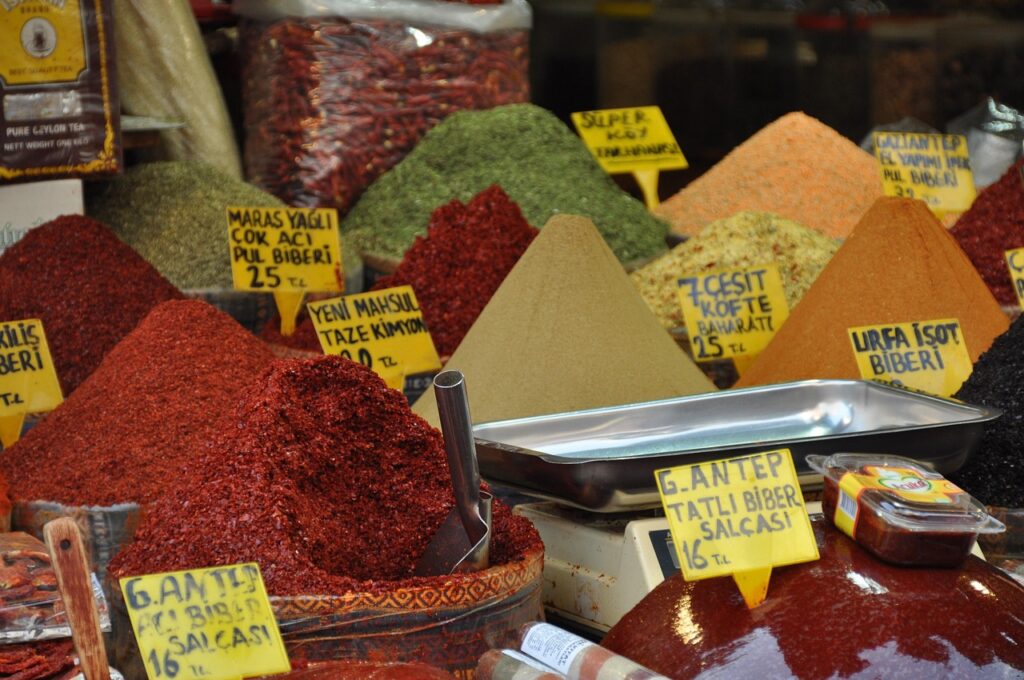
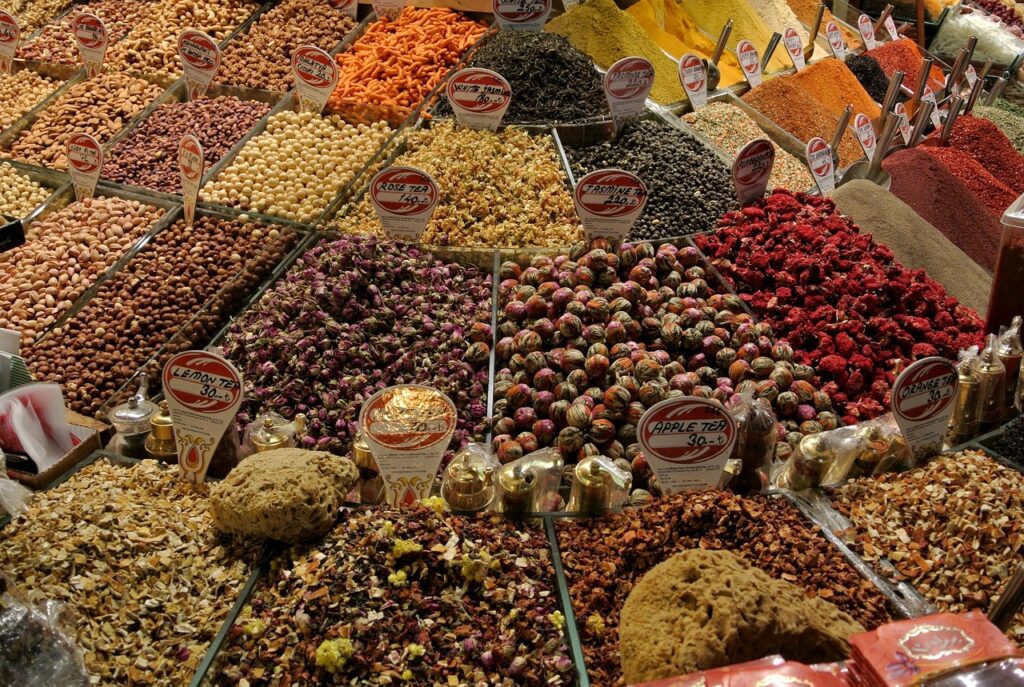
The trade evolved to match. The traditional spices and remedies remained, but the sweet stalls expanded, the Turkish delight and baklava became the market’s calling cards, and the souvenirs joined the provisions. The bazaar balanced its two lives, monument and market, with the poise of long practice.
The building itself was protected in this era. The Spice Bazaar was recognized as a historic monument, restoration continued, and the market’s future as both a working bazaar and a national treasure was secured for the new millennium.
The Twenty-First Century: Restoration and Renewal
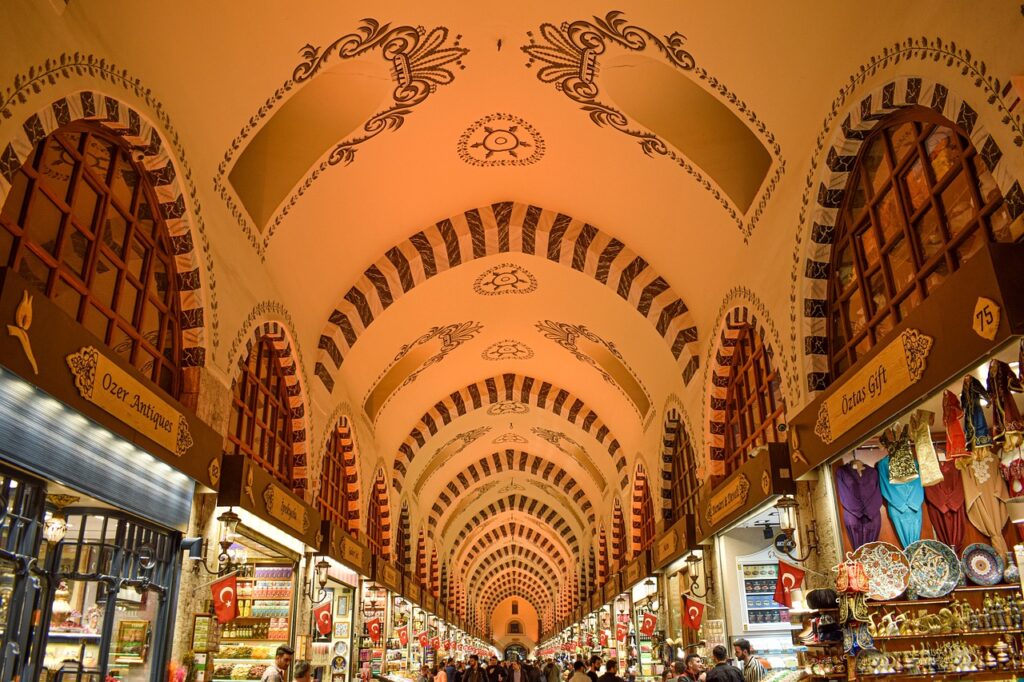
The twenty-first century opened with one of the most thorough restorations in the Spice Bazaar’s history. The building was cleaned, the stone and brick were repaired, the vaults were secured, and the market was brought back to its full seventeenth-century glory.
The restoration was a statement of the market’s importance. In a city crowded with monuments, the Spice Bazaar had earned its place among the first rank, and the investment confirmed its status as one of the essential buildings of Istanbul.
The renewed market reopened to a new generation of visitors. The vaults gleamed, the gates were crisp, and the trade continued as it had for three and a half centuries, demonstrating that restoration and commerce, far from being enemies, are the oldest of partners.
The Bazaar and the City Today
Today, the Spice Bazaar stands at the center of the liveliest district of old Istanbul, and its daily life continues the traditions of three and a half centuries. The merchants weigh the spices, the customers taste the sweets, and the ferries call at the docks beyond the gates.
The market’s relationship with the city has never changed. It is still the meeting point of the waterfront, still the place where the neighborhood shops and the travelers gather, and still the commercial engine of the great mosque complex that surrounds it.
To visit the Spice Bazaar today is to touch all of its centuries at once. The seventeenth-century vaults, the layers of repair, the modern stalls, and the eternal smell of the spices all coexist in one small building, and that living continuity is the market’s greatest gift to the traveler.
Frequently asked questions
How old is the Spice Bazaar?
The Spice Bazaar was built in the 1660s as part of the Yeni Mosque complex, which makes it more than three and a half centuries old. It has traded continuously since it opened and remains a working market today.
What was the Spice Bazaar originally built for?
It was built as the commercial wing of the Yeni Mosque complex, designed to generate revenue for the mosque’s upkeep through rents. The market and the mosque were planned as one ensemble, and they still stand together.
How has the Spice Bazaar survived for so long?
The market has survived through a combination of sound construction, continuous use, and repeated restoration. Its fire-resistant brick vaults have endured the city’s disasters, and each generation has repaired and renewed the building to keep the trade alive.

All Over Information
The All Over Information editorial team researches and writes practical English-language guides to Turkey. Facts are checked against official and local sources before publication, prices are published as dated ranges rather than quotes, and guides are revised when things change. We accept no sponsored posts, paid placements or paid links.
More guides like this

Best Time to Visit Suleymaniye Mosque to Avoid Crowds
The Suleymaniye Mosque is one of the quietest of Istanbul's great monuments, but that does not mean it is never busy.

Rumeli Fortress Through the Centuries
The Rumeli Fortress — the great castle that commands the narrowest point of the Bosphorus — is one of the most dramatic…

Why Hagia Sophia Should Be on Your Turkey Bucket List
Every travel list for Turkey includes Hagia Sophia, and the lists are right. This is not a monument you visit to tick…

The Complete History of Rumeli Fortress
On the European shore of the Bosphorus, where the strait narrows to its tightest point, stands one of the most dramatic monuments…
Visiting Suleymaniye Mosque: Tickets, Hours, and Tips
The Suleymaniye Mosque is the great imperial mosque of the Ottoman golden age, a masterpiece by the architect Mimar Sinan set on…
Visiting Basilica Cistern: Tickets, Hours, and Tips
Descending into the Basilica Cistern is one of the most atmospheric experiences Istanbul offers, a step from the noise of the streets…