The Istanbul Biennial is one of the most significant contemporary art events in the world, a vast exhibition that transforms the city every two years. Since its founding in 1987, it has grown from a modest gathering of galleries into an international landmark, bringing hundreds of artists to Istanbul and placing the city firmly on the map of contemporary art. More than a simple exhibition, the Biennial is a statement about Turkey’s place in the world of culture, and its history is a mirror of the country’s modern journey. This guide explores its origins, its evolution, and its meaning.
The Origins of the Biennial
The idea of a biennial in Istanbul emerged in the mid-1980s, at a moment when Turkey was opening up to the world after years of isolation. The country’s cultural institutions were seeking international connections, and contemporary art was a natural vehicle.
The Istanbul Foundation for Culture and Arts, the same organisation behind the city’s festivals, took on the project. The first edition opened in 1987, with a modest number of artists and venues, yet the ambition was clear from the start.
The first Biennial was organised in a traditional format, with national pavilions and an international selection of artists. It drew the attention of the art world, and the response encouraged the organisers to continue.
Within a few editions, the Biennial had found its identity. The format was reinvented, the international participation grew, and Istanbul began to appear on the itineraries of curators and collectors from around the world.
Finding a New Model
In the 1990s, the Biennial abandoned the traditional pavilion format and adopted the model that defines it today: a single themed exhibition, curated by a prominent international curator, spread across multiple venues.
This change was decisive. The themed format gave each edition a strong intellectual identity, and the dispersal of the exhibition through the city made Istanbul itself part of the show. The Biennial became an event about place as much as about art.
The venues chosen in these years were revealing. Industrial buildings, historic warehouses, and abandoned structures were transformed into exhibition spaces, and the city’s neglected architecture was given new life.
By the end of the decade, the Biennial had become one of the most respected events of its kind, and its curators and participants read like a who’s who of contemporary art. The model it developed has since been imitated around the world.

The Biennial and Global Contemporary Art
The Istanbul Biennial has played a significant role in the globalisation of contemporary art. In the decades since its founding, the art world has expanded far beyond its traditional centres, and the Biennial has been part of that expansion.
Its position at the meeting point of Europe and Asia gives the event a particular character. The Biennial brings together artists and ideas from both sides of the divide, and its programmes have consistently crossed boundaries of geography and culture.
The Biennial has also been a platform for artists from regions little represented in the Western art world. Its selection has introduced audiences to the contemporary art of the Middle East, the Caucasus, and Central Asia, and many careers have been launched here.
For the international art world, the Biennial is a window onto a wider world of practice. It is a place where the art of the region meets the art of the globe, and the meeting has shaped both.
The Biennial and Turkish Art
The relationship between the Biennial and Turkish contemporary art is central to its meaning. The exhibition has been the principal international showcase for Turkish artists, and it has accompanied the remarkable growth of the country’s art scene.
In the 1980s and 1990s, contemporary art was a small world in Turkey, and the Biennial gave it a public platform and an international audience. The generation of artists who emerged in those years became the foundation of the scene.
The growth since then has been extraordinary. Museums, galleries, and collectors have multiplied, and Turkish artists now exhibit at the major international events. The Biennial has been both witness and catalyst to this transformation.
For Turkish artists, the Biennial remains a special moment in the calendar, a chance to present their work at home in an international context, and to measure their practice against the best of the world.
The City as Exhibition Space
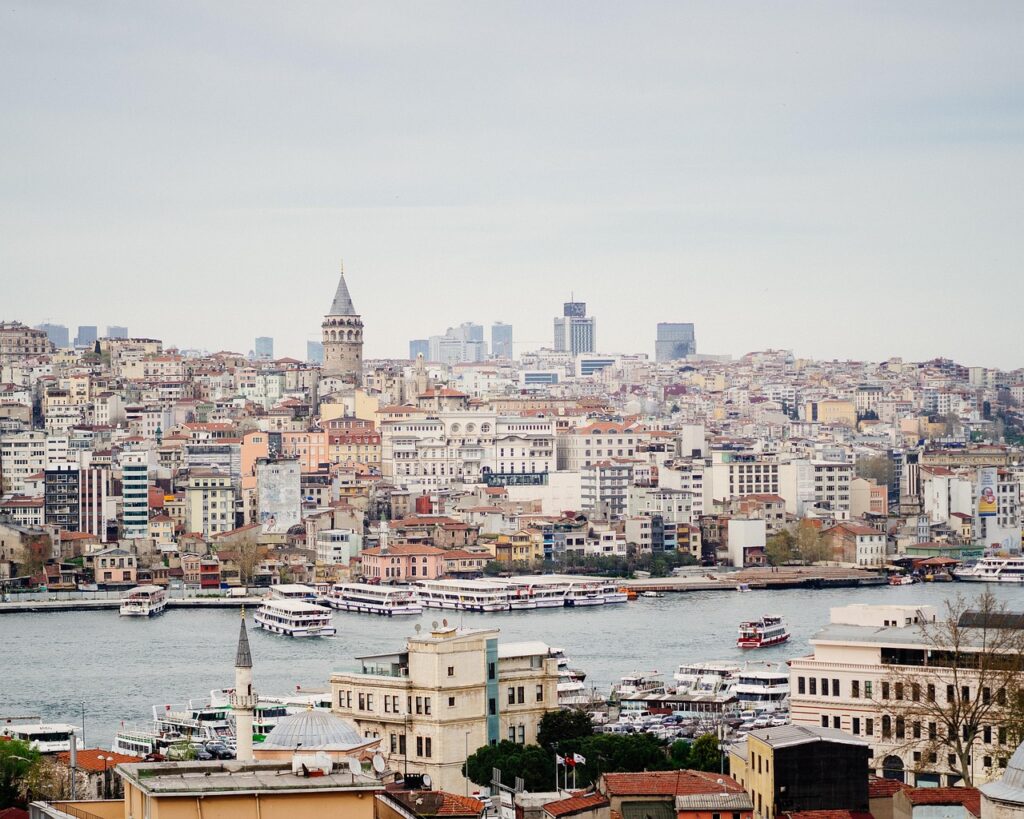
The Biennial’s use of the city is its most distinctive feature. The venues are not neutral galleries but buildings with their own histories, and the works are made in dialogue with their settings.
The main venues have varied over the years, from the warehouses of the waterfront to the grand buildings of the historic centre. Each edition rediscovers the city, and the venue list is one of the most anticipated announcements of the event.
The dispersal of the exhibition has also shaped the visitor experience. The Biennial is seen through movement, through the journeys between venues, and the city is experienced as part of the show.
This use of the city has had lasting effects. Buildings that hosted the Biennial have been reborn as cultural spaces, and the event has contributed to the transformation of whole districts of Istanbul.
The Curatorial Model
The Biennial’s curatorial model has been central to its success. Each edition invites a single curator, or a small curatorial team, to develop a theme and to build an exhibition that responds to it.
The themes have been ambitious, addressing questions of history, memory, identity, and the future. The curators have come from across the world, and each has brought a distinct sensibility to the event.
The commissioned works have been a defining feature. Many of the Biennial’s most memorable pieces were created specially for the exhibition, in response to the theme and to the city, and they could not exist anywhere else.
The model has given each edition a strong identity while keeping the event open to constant reinvention. The Biennial changes shape with every iteration, and that capacity for renewal is part of its vitality.
The Biennial’s Growing Audience
The audience for the Biennial has grown enormously since its early editions. The first events drew the art world’s insiders; the recent editions attract visitors by the hundreds of thousands.
The growth reflects both the expansion of contemporary art’s audience worldwide and the Biennial’s success in engaging the city itself. The event has become part of Istanbul’s cultural calendar, and local audiences take it to heart.
The education programme has been key to this growth. Tours, talks, and workshops make the exhibition accessible, and the Biennial has invested heavily in reaching visitors who are new to contemporary art.
The international visitors have multiplied as well, and the Biennial now draws travellers who plan their trips around it. For many, the event is their first encounter with Istanbul, and the city makes the strongest of impressions.
The Biennial and the Art Market
The Biennial has also played a part in the commercial life of contemporary art. Its exhibitions have been a platform for the international art market, and its openings are attended by collectors and dealers from around the world.
The Turkish art market has grown in step with the Biennial, and the event has helped connect Turkish galleries and artists to international buyers. The commercial dimension is real, though it sits alongside the Biennial’s broader cultural ambitions.
The market attention has its complications, and the relationship between the biennial format and commerce is a subject of debate in the art world. The Istanbul Biennial has navigated this terrain with care.
For the visitor, the market dimension matters little. The exhibition itself, the works, and the city are what remain, and the commercial noise recedes behind them.
The Meaning of the Biennial Today
Today the Istanbul Biennial stands at the centre of a thriving cultural landscape. The art scene it helped to build is now one of the most dynamic in the region, and the event itself continues to evolve.
The Biennial’s meaning has deepened with the years. It is a celebration of contemporary art, but it is also a demonstration of the importance of cultural exchange, of open dialogue, and of the connections between Turkey and the world.
In a time of rapid change, the Biennial is a constant, returning every two years to ask the large questions through art. It is an event that looks outward, to the world, and inward, to the city, at the same time.
For the visitor, the Biennial offers an immersion in the present of art, and in the life of one of the world’s most fascinating cities. The two experiences are inseparable, and together they are unforgettable.
The Experience of the Exhibition
The meaning of the Biennial is finally found in the experience of walking through it. The vast halls, the historic buildings, and the works that fill them combine into an experience like no other.
The scale is part of it. Some installations fill entire floors, and the journey through the exhibition has the quality of a pilgrimage, with the city itself as the route.
The encounter between the ancient and the contemporary is the Biennial’s signature note. The works of the present inside the buildings of the past create a dialogue that runs through every edition.
To attend the Biennial is to take part in that dialogue. The visitor is not a spectator but a participant, moving through the city and the exhibition, and the memory of the journey becomes part of the work.
Frequently asked questions
When was the Istanbul Biennial founded?
The first Istanbul Biennial was held in 1987, organised by the Istanbul Foundation for Culture and Arts. It adopted its current format of a single themed exhibition curated by an international curator during the 1990s.
What is the theme of the Biennial?
Each edition of the Biennial is built around a theme chosen by its curator, addressing questions of history, identity, ecology, or the future. The themes give each edition a distinct character, and the works are often commissioned specially in response to them.
Why is the Biennial important?
The Istanbul Biennial is one of the world’s leading contemporary art events and a key bridge between the art worlds of Europe, Asia, and the Middle East. It has launched the careers of many artists, supported the growth of Turkish contemporary art, and placed Istanbul on the global cultural map.

All Over Information
The All Over Information editorial team researches and writes practical English-language guides to Turkey. Facts are checked against official and local sources before publication, prices are published as dated ranges rather than quotes, and guides are revised when things change. We accept no sponsored posts, paid placements or paid links.
More guides like this

The History and Meaning of the International Izmir Festival
The International Izmir Festival has brought world-class music to the Aegean coast of Turkey for more than three decades, and it has…

When and Where to See the International Izmir Festival
The International Izmir Festival offers a summer of music on the Aegean coast, and seeing it is a matter of good planning.

Experiencing the Cappadocia Hot Air Balloon Festival as a Foreign Visitor
Few spectacles in the world match a Cappadocia sunrise, when scores of hot air balloons rise over the fairy chimneys and valleys…

The History and Meaning of Hidirellez Spring Festival
Hidirellez is one of the oldest and most beloved festivals of Turkey and the Balkans, a celebration of spring that arrives on…

The History and Meaning of the Istanbul Film Festival
The Istanbul Film Festival has grown from a small cinematic gathering into one of the most important cultural events in Turkey and…

Experiencing Republic Day Celebrations as a Foreign Visitor
On October 29, Turkey celebrates Republic Day, the anniversary of the founding of the Turkish Republic in 1923, and the whole country…