The Istanbul Biennial transforms the city every two years, and seeing it is a matter of planning rather than luck. The exhibition runs for three months in the autumn, spreads across a handful of venues in the heart of the city, and is open to everyone who buys a pass. With a little organisation, you can see the whole event comfortably and enjoy Istanbul around it. This practical guide covers the dates, the venues, the tickets, and the strategies that make a Biennial visit a pleasure rather than a scramble.
The Biennial Dates
The Biennial opens in September and runs until November, about three months in total. The exact dates are announced well in advance on the event’s website, together with the full programme.
The opening week is the most intense, with the international art world in town and a packed programme of events. The later weeks are calmer, and the venues are easier to visit at leisure.
The autumn timing is ideal for travel. The Istanbul weather is mild and pleasant, the light is beautiful, and the city is less crowded than in summer. The Biennial and the season suit each other perfectly.
If you are planning a trip, two or three days give you time to see the main venues thoroughly, with room for the city’s other sights and for a return visit to a favourite work.
The Main Venue
The Biennial’s principal venue has been a grand waterfront complex on the European side of the city, a former industrial building whose vast halls have been transformed into exhibition spaces.
The building is a destination in itself, and the journey to it, by metro or by the road along the water, is part of the experience. Its position on the shore makes it one of the most striking art venues in the world.
The main venue holds the largest part of the exhibition, and a full visit takes several hours. The halls are arranged in a sequence, and the route through them is designed to build the experience.
Check the venue’s opening hours, as the closing day varies from edition to edition. The weekend hours are long, and the weekday mornings are the quietest time to visit.
The Secondary Venues
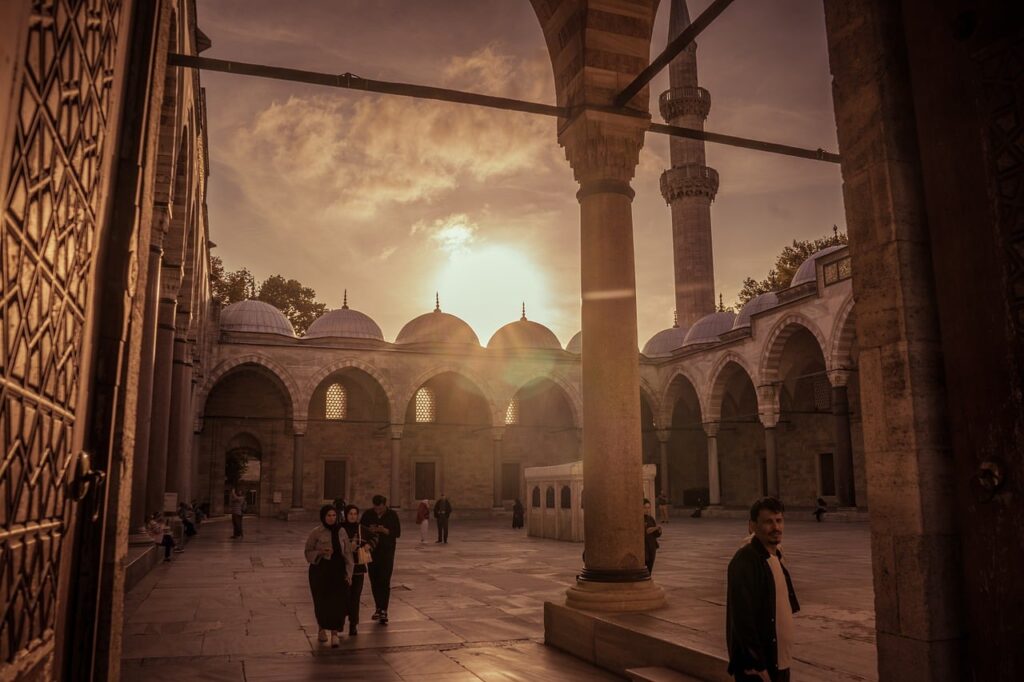
Alongside the main site, the Biennial uses a number of other venues across the city. These include museums, cultural centres, and historic buildings, each giving the works a different setting.
The secondary venues are smaller and more intimate, and they often hold some of the exhibition’s most rewarding works. They are worth the journey, and each has its own character.
The venue list changes with every edition, and it is announced with the programme. The distances between the venues are considerable, and the routes between them take you through some of Istanbul’s most interesting districts.
A few venues sit outside the centre, on the Asian side of the city or further along the shore. These are quieter and easier to visit, and they reward the traveller who makes the effort.
Planning Your Route
The Biennial provides a map and a suggested route, and planning your visits around the venues is the key to an efficient trip. The main venue deserves a morning or an afternoon to itself.
The secondary venues can be grouped by area, with two or three visited in a day. The transport connections are good, and the journeys between the venues are manageable by public transport.
Allow more time than you expect. The exhibition is large, and the works reward attention, so a rushed visit is a wasted one. Better to see fewer venues well than to see all of them badly.
Build in rest time. The Biennial is physically demanding, and a quiet lunch between venues makes the afternoon visit far more enjoyable.

Tickets and Passes
A single pass covers all the Biennial venues, and it is valid for the whole duration of the exhibition. The pass is modestly priced, and reduced rates are available for students and for groups.
The pass can be bought online in advance or at the main venues. Buying online is convenient, and the pass is delivered as a simple electronic ticket that you show at each venue.
Some of the Biennial’s events, including talks and performances, are free, while others require separate tickets. The programme notes make this clear, and the free events are worth seeking out.
Keep your pass with you throughout the day, as you will need it at every venue. The entry process is simple and quick at all the sites.
Getting Around the Venues
Istanbul’s public transport connects the Biennial venues, and a travel card is the practical way to use it. The card works on the metro, trams, buses, and ferries.
The main venue is served by the metro, and the other venues are reachable by combinations of lines and short walks. The ferries are the most pleasant option for the venues on the Asian side.
Taxis are available, but the traffic in the centre can be heavy, and the public transport is often faster. Plan your routes in advance, and allow generous time for the journeys.
The walking between venues is part of the experience, and the routes take you through the life of the city. Comfortable shoes are the single most important item to pack.

What to Wear and Bring
The Biennial venues are large and often cool, even when the weather outside is warm. Bring a light layer, and wear comfortable shoes, as the walking is considerable.
The floors in the historic and industrial buildings can be uneven, so watch your step. The lighting in some halls is dim, and your eyes need a moment to adjust.
A small bag for your pass, water, and a map is practical, and a camera is useful if photography is allowed at the venues. Check the signs, as some works cannot be photographed.
The venues are mostly accessible, with lifts and ramps at the main sites, but the older buildings can be challenging. Check the accessibility notes for each venue if you have specific needs.
The Guided Tours
The Biennial runs a programme of guided tours, and they are the best way to make sense of the exhibition. The tours are led by knowledgeable guides and are available in English.
The tours give the exhibition a shape, explaining the theme, the curatorial choices, and the works. They last about an hour and a half, and they are suitable for every level of art knowledge.
The tours are included with the pass or offered at a small additional charge, depending on the edition. They run regularly, and the times are published with the programme.
For first-time visitors to contemporary art, a guided tour transforms the experience. For the experienced, it offers an introduction to the specific concerns of the Istanbul edition.

The Programme of Events
Alongside the exhibition, the Biennial presents a full programme of talks, performances, and events. Many are free, and they extend the exhibition into the evenings and the weekends.
The talks feature artists, curators, and writers from around the world, and the discussions continue the themes of the show. English is widely spoken, and the audiences are international.
Performances take place in the venues themselves, and they are among the most memorable events of the Biennial. The programme is published with the exhibition, and it is worth planning around.
The events give the Biennial a living dimension, and they are the best opportunity to meet people and to hear the ideas behind the works. They are an essential part of the full experience.
Combining the Biennial with the City
The Biennial is best experienced in dialogue with Istanbul. The venues sit among the city’s monuments and markets, and the journeys between them pass through the life of the city.
The historic peninsula, with its great mosques and bazaars, is close to the exhibition area, and a Biennial visit can be combined with the classic sights. The contrast between the ancient city and the contemporary art is one of the event’s pleasures.
The Bosphorus is the city’s great stage, and the ferries are both practical transport and a highlight in themselves. A crossing between venues is never wasted time.
Give the city its due. The Biennial is a magnificent exhibition, but Istanbul is the reason the world’s art lovers make the journey, and the two belong together.
Practical Advice for Your Visit
Start early. The venues are quietest in the morning, and you can see the largest spaces before the crowds arrive. A 10 o’clock start makes for a productive day.
Take breaks. The exhibition is demanding, and the cafes at the venues and in the city offer a welcome pause. A rested eye sees more.
Ask questions. The staff and the volunteers at the venues are knowledgeable and friendly, and the information desks are there to help you understand what you are seeing.
And be flexible. The best moments of a Biennial visit are often the unexpected ones, the work that stops you in your tracks, or the conversation that changes how you see the show.
Making the Most of Your Trip
To experience the Biennial fully, give it two or three days, and spend the rest of your time in the city. The balance of art and place is what makes the event special.
See the main venue early, then work through the secondary sites at a relaxed pace. Join a guided tour, and attend at least one of the talks or performances.
Eat well and walk a lot. The food of Istanbul and the streets between the venues are as much part of the experience as the exhibition itself.
Above all, keep an open mind. The Istanbul Biennial rewards the visitor who comes without expectations and leaves with a new way of seeing.
Frequently asked questions
How long does the Istanbul Biennial run?
The Biennial runs for about three months, opening in September and closing in November. The exact dates are announced on the event’s website in advance, together with the venue list and the programme of events.
Where are the Biennial’s venues?
The main venue is a grand waterfront complex on the European side of the city, with additional venues in museums, cultural centres, and historic buildings across Istanbul. The venue list changes with each edition and is published with the programme.
How much do tickets cost?
A single pass covers all the venues and is modestly priced, with reduced rates for students and groups. The pass is valid for the whole exhibition, and it can be bought online or at the venues. Some events in the programme are free.

All Over Information
The All Over Information editorial team researches and writes practical English-language guides to Turkey. Facts are checked against official and local sources before publication, prices are published as dated ranges rather than quotes, and guides are revised when things change. We accept no sponsored posts, paid placements or paid links.
More guides like this

The History and Meaning of the International Izmir Festival
The International Izmir Festival has brought world-class music to the Aegean coast of Turkey for more than three decades, and it has…

Experiencing the Efes Pilsen Blues Festival as a Foreign Visitor
Every spring, Istanbul turns up the volume for the Efes Pilsen Blues Festival, one of the longest-running music events in Turkey.

The History and Meaning of Hidirellez Spring Festival
Hidirellez is one of the oldest and most beloved festivals of Turkey and the Balkans, a celebration of spring that arrives on…
The History and Meaning of the Camel Wrestling Festival
The camel wrestling festival is one of the oldest and most distinctive traditions of western Anatolia, a winter spectacle in which decorated…
Experiencing the Istanbul Tulip Festival as a Foreign Visitor
Every April, Istanbul turns itself into a garden.

Experiencing Nowruz in Eastern Turkey as a Foreign Visitor
Every spring, as the snows begin to melt in the mountains of eastern Turkey, the region comes alive with the oldest celebration…