Turkish pastries are a world of their own, stretching far beyond the baklava you know. There are the flaky savory layers of börek, the crisp filo sweets of the east, the sesame rings sold from street carts, and the soft cheese-filled pockets that appear on every breakfast table. This guide maps the whole family, from the doughs and the fillings to the regional styles and the rituals that surround them, so you can order, buy, and taste with confidence anywhere in Turkey.
What Are Turkish Pastries
The term covers an enormous family, unified by one thing: dough. Turkish pastry culture is built on thin layers of dough called yufka, stretched, folded, and filled in a thousand variations, and on the leavened doughs that make the country’s bread-like pastries.
The family divides into savory and sweet. Savory pastries are filled with cheese, spinach, potato, or meat, and include börek, poğaça, pide, and the breakfast pastry called açma. Sweet pastries are dominated by baklava and its relatives, soaked in syrup and rich with nuts.
Pastries also occupy every level of Turkish food life, from the breakfast table to the celebration feast, and from the street cart to the palace kitchen. Understanding them is understanding a large part of how Turkey eats.
The Dough Family: Yufka and Beyond
The foundation of most Turkish pastries is yufka, paper-thin sheets of unleavened dough rolled out with extraordinary skill. Good yufka is translucent, elastic, and strong enough to be folded and layered without tearing.
Baklava and börek both begin with yufka, but they treat it differently. Börek folds the sheets around savory fillings, brushing them with butter or oil; baklava layers dozens of sheets with nuts and butter, then bakes and soaks them in syrup.
The other great dough family is the leavened one, used for pide, poğaça, and simit. These are softer, bread-like pastries, risen with yeast, and they bring a different texture and a different rhythm to the table.

The Key Ingredients: Flour, Butter, Cheese
Turkish pastries depend on a short list of high-quality ingredients. The flour must be strong enough to roll thin; the butter, ideally clarified, gives flavor and flake; and the cheese, the white sheep’s milk cheese of the country, fills the savory pastries.
Nuts are the sweet side’s essential: pistachios, walnuts, and hazelnuts, layered generously into baklava and its relatives. The syrup that soaks the sweets is a simple sugar or honey solution, flavored with lemon or rose.
What the ingredients lack in number, they make up in quality and in proportion. Turkish pastry is generous with its butter and its nuts, and the discipline is all in the handling of the dough rather than in complicated seasoning.
Börek: The Savory King
Börek is the great savory pastry, and it comes in endless forms. The classic is a large tray of layered yufka filled with cheese, spinach, or minced meat, baked until golden and cut into squares. The name alone can mean a hundred different things.
The smaller, individual forms are just as beloved. Sigara böreği rolls cheese in thin pastry like little cigars; kol böreği braids the layers into a long twisted loaf; and the breakfast versions bake in muffin pans with egg and yogurt.
Every region, every family, and every pastry shop has an opinion on the best börek, and the debates are part of the pleasure. What unites the versions is the goal: crisp, golden layers around a generous, well-seasoned filling.

Sweet Pastries: Baklava and Its Relatives
On the sweet side, baklava is the emperor. Dozens of paper-thin layers of dough, buttered, filled with pistachio or walnut, baked until pale gold, and soaked in syrup until the layers catch the light. The best is eaten fresh, while the syrup still glistens.
Around baklava stands a whole court of relatives. Katmer is the flat, folded sweet of Gaziantep, crisp with pistachio and cream; şöbiyet is the cream-filled cousin; and the rolled versions, wrapped around nuts and cut like little pillows, each have their own names and cities.
The sweets of the southeast are the most famous, but every region has its own. The common thread is generosity: plenty of butter, plenty of nuts, and syrup that penetrates to the last layer.
The Everyday Pastries: Poğaça, Simit, Pide
Beyond the famous names, the daily pastries carry Turkish life. Poğaça is the soft, savory muffin-like pastry filled with cheese or olives, eaten for breakfast or as a snack with tea. Every pastry shop bakes a batch in the morning.
Simit is the sesame bread ring, sold from street carts and eaten by hand with cheese or jam. It is the country’s default breakfast-on-the-run, and its smell is part of the morning air in every Turkish city.
Pide is the boat-shaped flatbread, filled with cheese, sucuk, or minced meat and baked in a wood oven. It is the casual pizza-like meal of the country, ordered by the boat and shared.

Regional Variations
The pastry map of Turkey is wonderfully varied. Gaziantep is the capital of pistachio sweets, and its baklava and katmer are the national standard. The Black Sea region favors corn flour and butter, making its pastries dense and rich.
The Aegean cooks with olive oil instead of butter, producing lighter pastries, and its spinach and cheese böreks are famous. The east makes its own doughs and its own sweet pastries, and the southeast specializes in the layered nut sweets.
The variety means you can eat pastries across Turkey for weeks and rarely repeat yourself. Each region’s climate, crops, and history shaped its doughs, and tasting the differences is a delicious geography lesson.
Where to Eat Them in Turkey
The best place to start is the neighborhood pastry shop, the fırın, where the day’s börek, poğaça, and simit come out of the oven in waves. Morning is the golden hour, when everything is warm and the tea is brewing.
For baklava, the destination is Gaziantep, where the pistachio sweets are a matter of civic pride, and the shops display their trays like jewelry. Istanbul and Ankara have excellent emulations, but the source is the southeast.
For börek, look for the specialist shops and the breakfast houses where börek is baked to order. The queues at lunchtime are the best review you can get, and the börek that comes out of the oven in front of you is the one to order.

The Serving Ritual: Tea and Timing
Turkish pastries are eaten on a rhythm. The morning pastries go with tea, the baklava comes with coffee or tea after a meal, and the simit is a standing-up breakfast eaten with a glass of tea from the cart.
The tea is not an afterthought; it is the pastry’s partner. The bitterness of the tea balances the sweetness of baklava, and the warmth of the tea pairs with the flakiness of börek. The two are rarely separated in Turkish eating.
Timing matters too. Pastries are at their best within hours of baking, and the serious eater learns to visit the fırın when the oven is due, when the smell is strongest and the trays are full.
The Culture of the Pastry Shop
The Turkish pastry shop is a social institution, part bakery, part neighborhood gathering place. The same faces appear every morning, the same orders are placed, and the staff know their regulars by name and preference.
The shop is also a stage for craft. In the good ones, you can watch the dough being rolled, the fillings spread, and the trays slid into the oven, and the skill of the bakers is part of the show.
For travelers, the pastry shop is the friendliest door into Turkish food culture. The pastries are affordable, the welcome is warm, and the staff are usually happy to explain what is in the tray if you ask.
Start with the names you can rely on. Ask for börek, and specify the filling: peynirli for cheese, ıspanaklı for spinach, kıymalı for meat. Ask for poğaça and simit for the everyday morning.
When buying baklava, ask which nut it is filled with and whether it is fresh from the day. The pistachio versions from the southeast are the famous ones, but walnut and hazelnut versions have their own devoted fans.
Finally, do not be shy about asking for a taste. Turkish pastry shops are generous with samples, and the offer to taste is part of the hospitality. You will leave with a bag of something delicious and a better understanding of what to order next time, and the morning routine of tea and warm dough will have a new place in your memories of Turkey.
Frequently asked questions
What is the difference between börek and baklava?
Börek is the savory pastry family, made with layered yufka dough filled with cheese, spinach, or meat, baked or fried until crisp, and eaten as a meal or snack. Baklava is the sweet family, built from dozens of buttered layers of thin dough with nuts, baked and soaked in sugar syrup. Both begin with the same thin dough, but they end in entirely different worlds.
Why is Turkish baklava considered the best?
Turkish baklava, especially from Gaziantep, is celebrated for its quality standards: thin handmade layers, generous pistachios, good butter, and a syrup that penetrates every layer without leaving the pastry soggy. The craft is centuries old, and the region’s pistachios are prized. The combination of skill, ingredients, and tradition sets the standard that other countries aim for.
Where should I try Turkish pastries first?
Start at a neighborhood fırın, the pastry shop, in the morning, when börek, poğaça, and simit are coming out of the oven warm. For baklava, go to Gaziantep for the definitive pistachio version, or find a serious baklava shop in Istanbul or Ankara. Order with tea, and let the shop’s regulars guide you by their orders.

All Over Information
The All Over Information editorial team researches and writes practical English-language guides to Turkey. Facts are checked against official and local sources before publication, prices are published as dated ranges rather than quotes, and guides are revised when things change. We accept no sponsored posts, paid placements or paid links.
More guides like this

Where to Find the Best Turkish Meze Platters in Turkey
The best meze platters in Turkey are found in the cities where the tradition runs deepest, and the search is one of…

A Guide to Turkish Street Food Vendors
Turkish street food is a full cuisine served on the move, and its vendors are folk heroes.

The Ultimate Guide to Midye Dolma (Stuffed Mussels)
Midye dolma, or stuffed mussels, is the great street food of the Turkish coast.
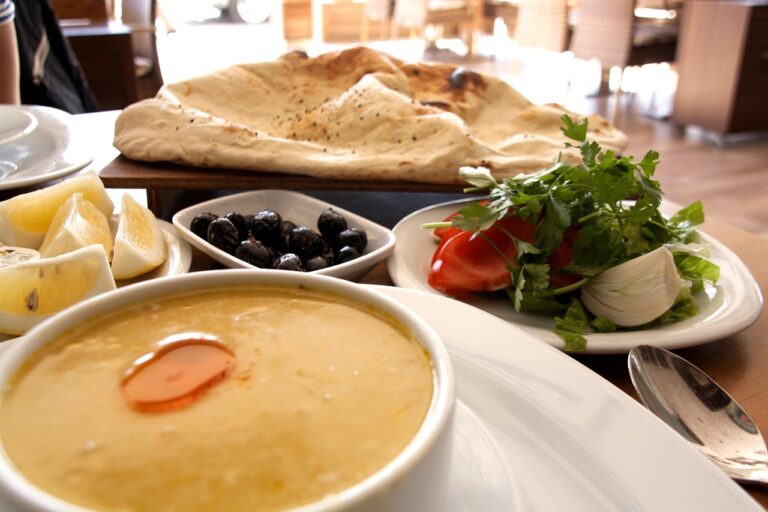
The Ultimate Guide to Turkish Flatbread (Bazlama)
Bazlama is the soft, puffy flatbread of the Turkish countryside, baked on a griddle and served warm with almost anything.

Turkish Pastries: A Taste of Turkish Culture
You can read a great deal about Turkey from its pastries.
Turkish Breakfast (Kahvalti) Vs. International Variations: What Makes It Turkish
Breakfast is the most personal meal of the day, and every culture defends its own version fiercely.