Turkish miniature painting is a window into centuries of history, painted small enough to hold in your hands. In these jewel-like images, sultans ride to war, poets recite in gardens, and the whole court of the Ottoman world unfolds in luminous color. For more than five hundred years, miniature artists illustrated manuscripts, chronicles, and scientific works, creating one of the great pictorial traditions of the Islamic world. This article traces the art from its origins to its modern revival.
What Is a Miniature?
A miniature is a small painting that illustrates a manuscript or album, usually executed in opaque watercolor and gold. The name comes from the Latin for the red lead pigment used in early manuscripts, not from the paintings’ size, though most are indeed small. Turkish miniatures are characterized by flat, decorative compositions, brilliant colors, and a deliberate disregard for perspective and shading that gives the scenes an otherworldly clarity.
The art is descriptive rather than realistic. A miniature tells a story through composition, gesture, and symbol, and it reads like a picture-book page for an educated audience. Architecture is shown in cutaway, crowds are compressed, and the most important figures are made the largest, all conventions that make the scenes legible and beautiful. Understanding these rules transforms how you look at the paintings, which reward close attention more than any art form.
The Persian Inheritance
Turkish miniature painting grew from the great tradition of Persian manuscript illustration, which reached its height in the courts of the fifteenth century. When the Ottomans expanded eastward, they inherited the workshops, artists, and albums of the Persian world, and the early Ottoman court employed Persian masters alongside Turkish and other painters. The style they brought, with its lyrical gardens, elegant figures, and rich color, became the foundation of Ottoman art.
The inheritance was transformed rather than copied. Ottoman painters developed their own subjects, especially the recording of historical events, and their own sensibility, more direct and documentary than the Persian lyric mode. The result was a distinctive school that shared the parent tradition’s love of color and ornament but spoke with a Turkish voice, one shaped by the empire’s ambitions and its sense of its own history.
The Ottoman Court Atelier
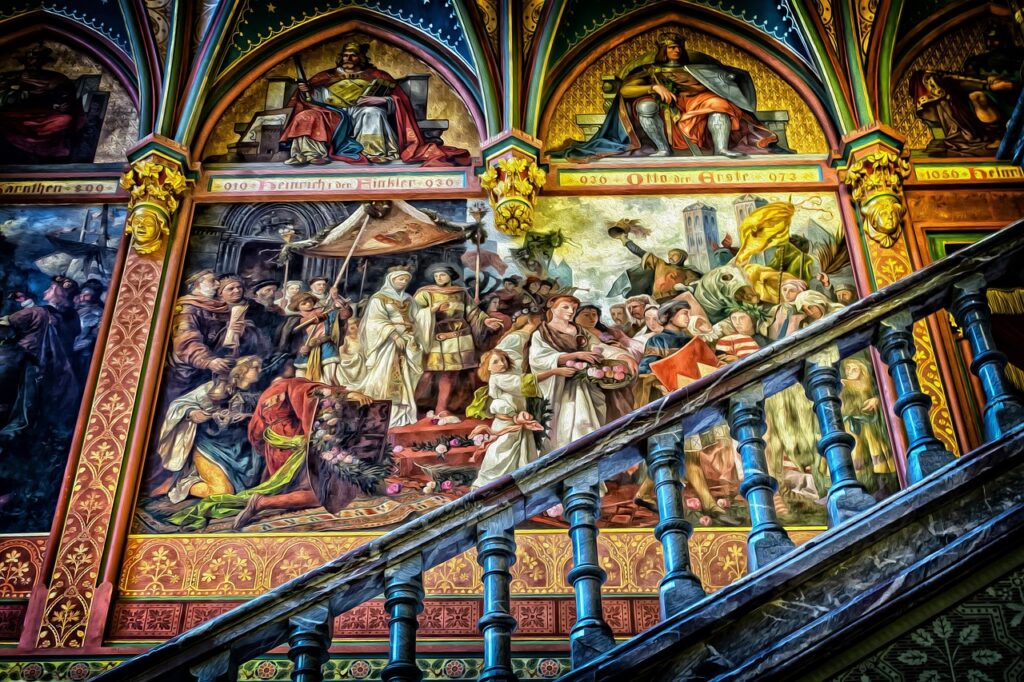
The heart of Ottoman miniature painting was the imperial workshop in Istanbul, where a staff of painters, gilders, and calligraphers produced the illuminated manuscripts that documented the empire. The artists were organized under the court’s chief painter, and they worked collectively: one might draw the composition, another color it, another paint the faces, and another apply the gold. The workshop trained apprentices, passed down techniques, and kept the art alive across generations.
The subjects reflected the court’s priorities. History was the great theme: sultans wanted their campaigns, conquests, and ceremonies recorded for posterity, and the miniatures that resulted are primary sources for Ottoman history as much as works of art. Portraits of sultans formed a distinct genre, with each ruler’s image standardized so he could be recognized at a glance. The atelier also illustrated poetry, science, and geography, producing masterpieces in every field.
The Reign of Suleyman and the Golden Age
The art reached its peak during the reign of Suleyman the Magnificent in the sixteenth century, when the empire was at the height of its power and the workshop at the height of its achievement. Under the chief painter Matrakci Nasuh, a genius of topographical painting, artists produced panoramic views of cities, campaigns, and naval expeditions with extraordinary accuracy and beauty, combining the functions of map, chronicle, and art.
Suleyman’s reign also saw the flowering of the illustrated histories that recorded his conquests, from the campaign in Persia to the naval wars in the Mediterranean. The miniatures of this period are confident, rich, and technically brilliant, and they set the standard for what followed. The period’s manuscripts, now scattered across the world’s great libraries and museums, are among the most treasured objects of Ottoman art.

The Great Illustrated Chronicles
The Ottoman tradition of illustrated chronicles is unique in the Islamic world. While other courts commissioned illustrated poetry and fables, the Ottomans commissioned vast historical manuscripts that recorded the deeds of their sultans in both words and pictures. These chronicles, some containing hundreds of miniatures, document campaigns, sieges, ceremonies, and daily life at court with a wealth of detail no written source alone could match.
The most famous of these projects were produced in the sixteenth and seventeenth centuries, including the history of Suleyman’s campaigns and the massive chronicles commissioned by later sultans. The artists who worked on them were effectively war reporters and court photographers, traveling with armies and observing ceremonies so they could paint them accurately. For historians, the chronicles are invaluable; for lovers of art, they are inexhaustible sources of wonder.
The Illustrators of Poetry and Science
Miniature painting was not confined to history. The court atelier also illustrated the great works of Ottoman poetry, and the miniatures in these manuscripts show lovers in gardens, mystical scenes from Sufi verse, and the allegorical worlds of Persian and Turkish classics. The illustrated Divans and the epics of the poets are among the most beautiful books ever made, their pages alive with gold and color.
Science and geography also received the painter’s attention. Matrakci Nasuh’s topographical works functioned as illustrated guides to cities and campaigns, and the illustrated medical and astronomical manuscripts of the Ottoman world show that the art served practical knowledge as well as beauty. The curiosity of the court extended to the natural world, and albums of flowers, birds, and fantastic creatures show the painters’ delight in observation.

Women in the Miniature Tradition
The art of the miniature also has its female chapter. In the Ottoman world, women were largely excluded from the professional workshops, but the princesses and ladies of the court were patrons and sometimes painters themselves, and the famous Levni, the last great master of the eighteenth century, worked for a time in the women’s quarters of the palace, painting portraits for the imperial family.
More importantly, women appear throughout the miniatures themselves, and the paintings are a precious record of female life in the Ottoman court: the sultanas in their apartments, the women of the harem at leisure, and the scenes of marriage and ceremony that the artists were commissioned to record. For scholars, these images are rare visual evidence of a world that written sources describe only obliquely, and they give the art a significance beyond its beauty.
The Decline and the Last Masters
By the eighteenth century, the Ottoman miniature was in decline. European painting, with its perspective, shading, and oil colors, entered the Ottoman world through ambassadors, merchants, and the sultans themselves, who increasingly preferred the new style. The workshops shrank, and the commissions for illustrated chronicles dried up as the empire’s fortunes changed. The tradition’s last great master, Levni, worked in the early eighteenth century, and his portraits of the sultan’s court are both a culmination and a farewell.
The art did not die instantly. Late miniatures show the influence of European conventions, with shadows and perspective creeping into compositions, and the tradition lingered in provincial workshops and in the illustration of religious and folk books. But by the nineteenth century, the miniature had effectively given way to Western painting, and the old ateliers were a memory, preserved in the albums and manuscripts that survive in the world’s collections.
The Modern Revival
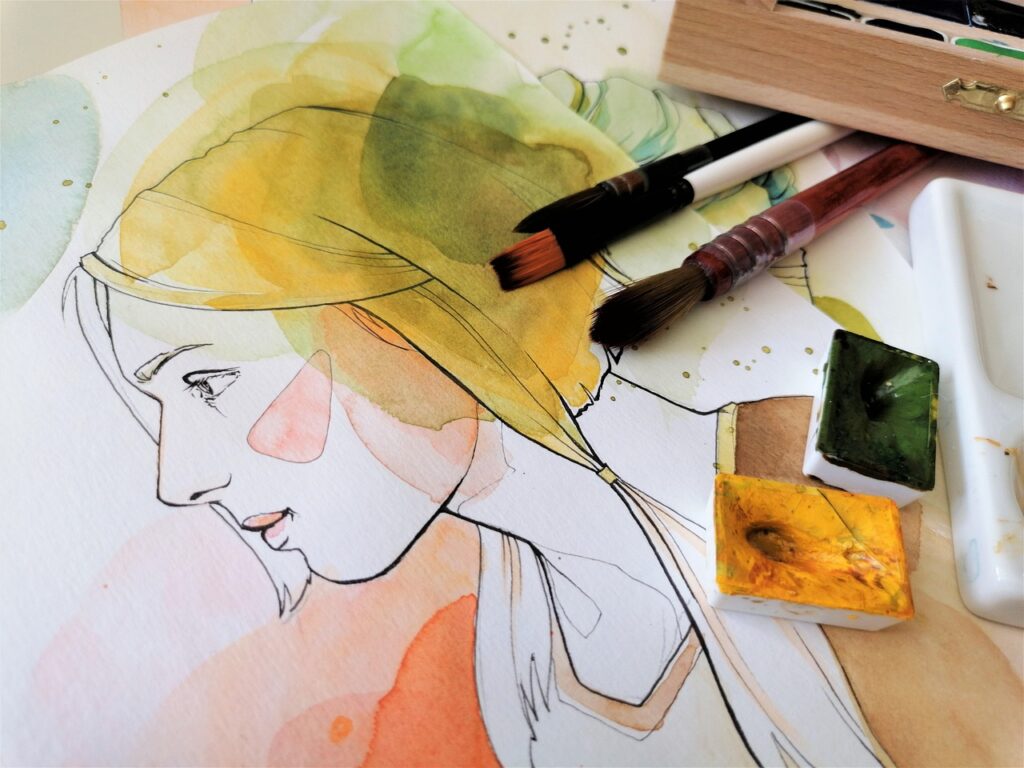
The twentieth century brought a remarkable revival. Turkish artists rediscovered the miniature tradition, studying the old manuscripts and teaching the techniques in the art academies, and the art found new life as a living, evolving form. Contemporary miniature painters work in the traditional materials, but their subjects range freely: some continue the historical themes, while others use the miniature’s conventions to comment on the modern world.
The revival is visible in Istanbul, where the Turkish and Islamic Arts Museum and the Topkapi Palace collections display the masterpieces of the tradition, and where contemporary painters exhibit and teach. Courses and workshops allow visitors to try the art themselves, from preparing the paper to grinding the pigments. The miniature has thus completed a full circle: from the court workshops of the sixteenth century to the revival studios of today, a tradition that was almost lost now flourishes again.
The miniatures also reward a closer look at the lives they record. Beneath the courtly scenes, the artists preserved details of daily Ottoman life: the costume of every rank, the tools of craftsmen, the layout of ships and tents, the animals and landscapes of the empire’s many provinces. Modern historians use the paintings as visual documents, reading them for evidence that written sources omit, which gives the art a double life as both beauty and archive.
Techniques and Materials
The making of a miniature was a craft of many skills. The paper was prepared by polishing and sizing until its surface was smooth enough for the finest brushwork, and the pigments were ground by hand from minerals, plants, and insects, then mixed with gum arabic and water. The gold that illuminates the finest pages was beaten into leaf and applied with astonishing precision.
The miniatures also reward a closer look at the lives they record. Beneath the courtly scenes, the artists preserved details of daily Ottoman life: the costume of every rank, the tools of craftsmen, the layout of ships and tents, and the animals of the empire’s many provinces. Modern historians use the paintings as visual documents, reading them for evidence that written sources omit, which gives the art a double life as both beauty and archive.
Frequently asked questions
What are the characteristics of Turkish miniature painting?
Turkish miniatures are small, flat, decorative paintings executed in opaque watercolor and gold. They typically avoid perspective and shading, using composition, gesture, and color to tell stories, with important figures shown larger and architecture presented in cutaway. The subjects range from history and court life to poetry and science, and the finest examples are distinguished by brilliant color, intricate detail, and masterful composition.
Where can I see Turkish miniatures today?
The finest collections are in Istanbul, at the Topkapi Palace Museum and the Turkish and Islamic Arts Museum, which hold the illuminated manuscripts of the Ottoman court. Other significant collections exist in the world’s major museums and libraries. Contemporary miniature painting is exhibited in Istanbul galleries, and workshops and courses in the city allow visitors to see the art being made and even try it themselves.
Is miniature painting still practiced in Turkey?
Yes. The tradition was revived in the twentieth century and is now taught in Turkish art academies and workshops, with many contemporary artists working in the traditional materials and techniques. Their subjects range from classical themes to modern interpretations. The revival means that visitors to Istanbul can not only see the historical masterpieces but also meet living practitioners and buy contemporary miniatures.

All Over Information
The All Over Information editorial team researches and writes practical English-language guides to Turkey. Facts are checked against official and local sources before publication, prices are published as dated ranges rather than quotes, and guides are revised when things change. We accept no sponsored posts, paid placements or paid links.
More guides like this
Turkey’s Contemporary Art Galleries
Turkey's contemporary art scene has grown from a quiet cultural niche into one of the most dynamic in the region, and travelers…

Understanding the Seljuk Empire: A Beginner’s Guide
The Seljuk Empire is the great missing chapter in most people's knowledge of Turkish history, and it is one of the most…

How Friday Prayers Shape the Turkish Workweek
For a traveler, one of the most visible rhythms of Turkish life is the week itself, and Friday has a special place…

Understanding Ottoman Calligraphy Traditions
Calligraphy is the most Turkish of arts, yet many visitors walk past it.

Winter Sports in Uludag and Palandoken
When winter arrives in Turkey, the country's two most famous ski mountains take center stage: Uludag, the classic resort above Bursa, and…

Understanding Gender Roles in Modern Turkish Society
Gender roles in Turkey are a study in contrasts.