Turkish tea is not simply a beverage; it is the rhythm of daily life, the language of hospitality, and the backdrop of every conversation in the country. From the steaming double pot in a village kitchen to the tray of tulip glasses crossing a busy square, cay marks the moments of Turkish life, both ordinary and extraordinary. To understand Turkish culture, you must understand its tea, and this article explores the many ways the drink shapes the country. The glass is small, the refills are endless, and the conversation is the point of it all.
The National Drink
Tea is the undisputed national drink of Turkey, consumed throughout the day in quantities that visitors find astonishing. It is served at breakfast, at work, at the shop, and at the dinner table, always in small tulip glasses.
The drink’s dominance is a modern story. Turkish coffee held the cultural throne for centuries, but tea, cheaper and easier to serve in quantity, rose to take its place in the twentieth century.
Today, tea is the democratic drink: the same glass is poured for the statesman and the shepherd, and the ritual of offering is identical in the palace and the village.
This universality is the key to its cultural role. Tea does not belong to any class, region, or occasion; it belongs to everyone.
A Short History of Cay
Tea arrived in Turkey through the trade routes, but its great expansion came in the early twentieth century, when the new republic encouraged tea cultivation on the Black Sea coast.
The Rize region, with its rainy hills and foggy valleys, proved ideal, and the tea gardens spread rapidly across the coast, turning a mountain province into the country’s tea garden.
The government’s support made tea affordable and ubiquitous, and the habit spread from the east to the whole country within a few decades.
By the middle of the century, the double pot was bubbling in every kitchen, and tea had replaced coffee as the drink of the many.
The Ritual of the Double Pot
The caydanlik, the double pot, is the symbol of Turkish tea culture. The lower pot boils water, and the upper pot holds a strong tea concentrate, kept hot by the steam below.
The system is brilliantly practical: the concentrate stays strong for hours, and every glass can be poured to the drinker’s exact preference, koyu and strong or açik and light.
The pouring is a ritual of its own. The host pours a little concentrate, adds hot water, checks the color, and adjusts until the glass glows a clear, bright red-brown.
The caydanlik is always on, from the first light of the morning to the last hour of the night, and its soft bubbling is the background music of Turkish daily life.
The Tulip Glass and the Tray
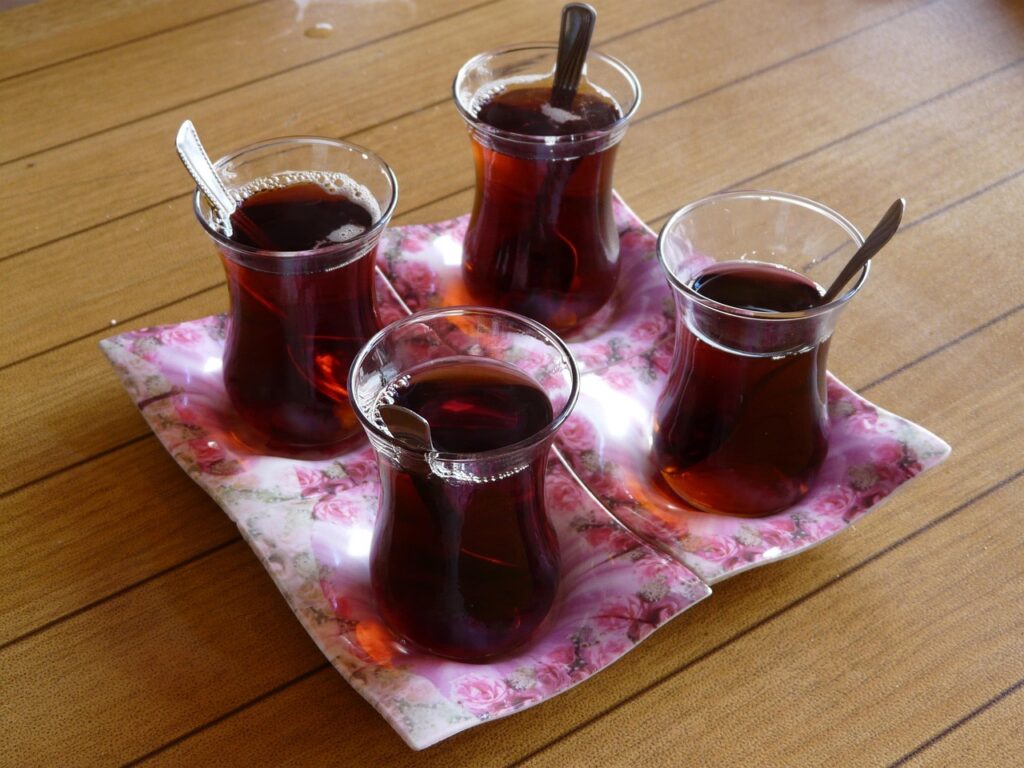
The ince belli, the tulip glass, is the iconic vessel of Turkish tea. Its narrow waist holds the heat, and its flared rim lets the tea cool, so every sip is perfectly warm.
The glass is filled only partway, leaving room for the color to show, and the amber glow of the tea is part of the pleasure. The glass is small, so the tea is drunk hot, in the Turkish manner.
The tray is the other essential: a small round tray holding the glass, often with a sugar bowl and sometimes a spoon. The tray is carried through crowds, gardens, and offices all day long.
The image of the tray of tulip glasses, balanced through a crowd or passed across a table, is the defining picture of Turkish sociability.

The Tea Garden
The cay bahcesi, the tea garden, is the outdoor living room of Turkey. Under the trees, at small tables, the tea flows and the hours pass in conversation.
The tea garden has no hurry. The glasses are small, the refills endless, and the talk is the point. It is where friends meet, where games are played, and where the world is watched go by.
The great tea gardens of the cities, with views over the water or the old quarters, draw families and friends for long afternoons that stretch into evenings.
For the visitor, the tea garden is the essential experience of Turkish tea culture, the place where the country does its talking.
Tea in Daily Life
Tea structures the Turkish day. The morning begins with tea at the breakfast table, and the first glass of the day is a small ritual of its own.
The workday runs on tea, with the tea house and the workplace pot refilled through the morning and the afternoon. The tea break is a national institution, observed everywhere.
The evening tea follows dinner, and the last glasses of the night are poured over the day’s final conversations. Tea is the frame around the hours.
This constant presence is why tea is so deeply woven into the culture: it is not an event, but the texture of every day.

Tea and Hospitality
Turkish hospitality revolves around tea. When a guest arrives, the tea pot goes on, and the first glass arrives within minutes, offered with a warmth that is part of the welcome.
Refusing the first offer of tea is difficult and often impossible, because the offer is the hospitality itself, and the acceptance is the courtesy.
The offering is not limited to the home. The shopkeeper pours tea for the customer, the tradesman for the visitor, and the office for the guest, at every hour of the day.
This generosity is the character of the culture, and the tea tray is its universal messenger.
Tea in the Workplace and the Shop
The workplace tea culture is one of the country’s great institutions. Many offices and workplaces employ a tea maker, and the pot is kept bubbling from morning to evening.
The bazaar merchants pour tea as part of the bargaining ritual, and the glass is the pause that lets the deal breathe. No negotiation is complete without it.
The tea houses of the neighborhoods serve the daily gatherings of men playing games and discussing the news, and the pot is never empty.
Everywhere work happens, the tea happens with it, and the small glass is the standard currency of the working day.
The Black Sea Tea Fields
The tea itself comes from the green hills of the Black Sea, and the journey of the leaf connects every tulip glass to the foggy valleys of Rize.
The terraced gardens climb the hillsides above the coast, and the harvest runs through the warm months, with the leaves picked by hand and rushed to the factories.
The character of Turkish tea, smooth and robust, comes from this particular soil and climate, and the growers of the coast are proud of their terroir.
For the traveler, a visit to the tea country, with its endless green gardens and its steaming glasses at every roadside stop, completes the picture of the national drink.
A Conversation in Every Glass
The deepest meaning of Turkish tea is the conversation. The glass is the excuse, and the talk is the point, and the tea keeps the talk flowing for hours.
In Turkey, nothing important is decided without tea, and nothing trivial is discussed without it either. The drink levels the table, and the tulip glass is passed between friends and strangers alike.
This is the true taste of Turkish tea: not just the leaf and the water, but the hours of talk, the warmth of the welcome, and the country that has built its days around a small glass.
For the visitor, every glass is an invitation, and accepting it is the beginning of every Turkish friendship.
The tea culture varies subtly across the country. In the east, the tea is often brewed stronger and drunk darker, while the coastal cities pour the lighter glasses of the long summer afternoons.
The Black Sea, the tea homeland, treats the drink with the intimacy of a producer, and the glasses along the coast are poured from pots that never go cold.
The big cities mix the traditions, and the tea gardens of Istanbul serve every style to every guest, from the dark eastern brew to the pale western pour.
Wherever you travel in Turkey, the tulip glass is waiting, and the local habit of the pot gives each region its own small accent on the national ritual.
The Turkish day ends as it began, with tea. The last glass of the evening is poured over the final conversation, and the pot is finally set down until the morning.
The rhythm is so constant that travelers carry it home: the double pot, the small glasses, and the hours of talk that the tea makes possible.
To have shared tea in Turkey is to have shared a piece of the country itself, and the habit, once learned, is never quite forgotten.
The steam rises, the glasses are passed, and the conversation continues, as it has every day, in every corner of the land.
Frequently asked questions
Why is tea so important in Turkish culture?
Tea is the rhythm of Turkish daily life, served from morning to night at breakfast, work, and dinner. It is also the language of hospitality, offered to every guest, customer, and visitor. The drink is democratic, belonging to everyone, and the conversation around it is the point of the culture.
How is Turkish tea traditionally served?
Turkish tea is brewed in a double pot, the caydanlik, and served in small tulip glasses called ince belli. Each glass is poured from a strong concentrate, diluted with hot water to the drinker’s preference, and served on a small tray, often with sugar.
What role does tea play in Turkish hospitality?
Tea is the first thing offered to any guest, and the offer is the hospitality itself. The pot goes on when visitors arrive, the shopkeeper pours for the customer, and the tray is passed at every meeting. Refusing the first glass is difficult, because the tea is the welcome.

All Over Information
The All Over Information editorial team researches and writes practical English-language guides to Turkey. Facts are checked against official and local sources before publication, prices are published as dated ranges rather than quotes, and guides are revised when things change. We accept no sponsored posts, paid placements or paid links.
More guides like this

The History Behind Turkish Pilav
The history of Turkish pilav is the history of rice itself, carried across continents by trade routes and empires, perfected in the…

How to Make Authentic Baklava at Home
Baklava may look like the work of a pastry wizard, but with good ingredients, a little patience, and the right method, you…

Where to Find the Best Kazandibi Dessert in Turkey
Kazandibi is one of the easiest Turkish desserts to find, because it is a staple of pastry shops and restaurant menus across…

Where to Find the Best Doner Kebab in Turkey
Doner kebab is served in every city of Turkey, and while the turning spit is everywhere, the best versions are found by…

Turkish Breakfast Culture: Why It Takes Hours
If you sit down to a Turkish breakfast expecting a quick bowl of cereal, you are in for a surprise.

The History Behind Urfa Kebab
Every famous dish has a story, and Urfa kebab has the story of a whole region behind it.