Turkish tea, cay, is more than a drink in Turkey; it is the national beverage, the social glue of the country, and the companion to every conversation, meal, and negotiation. Served strong in tulip glasses from a double pot, it is a ritual with its own rules, vocabulary, and etiquette. This guide covers everything you need to know, from how it is grown and brewed to how to drink it like a local. Once you understand the ritual, you will order, pour, and sip like a local, and the small glass will follow you through every city.
What Is Turkish Tea
Turkish tea is black tea, usually grown on the Black Sea coast of Turkey, brewed strong and served in small, tulip-shaped glasses. It is the most consumed drink in the country, outpacing even Turkish coffee.
The tea is brewed with a distinctive method, using a double pot, so that each glass can be poured to the drinker’s preferred strength: koyu for dark and strong, açik for light and mild.
Turkish tea is drunk throughout the day, from the first cup of the morning to the last one of the night. It accompanies breakfast, meetings, games, and conversations.
The culture around it is as important as the drink itself. Offering tea is hospitality, discussing tea is sociability, and refusing tea is nearly impossible, and nearly rude.
The Black Sea Tea Gardens
Turkish tea comes from the tea gardens of the Black Sea coast, a narrow band of green hills between the mountains and the sea where the climate suits the tea plant perfectly.
The Rize region is the heart of the tea country, and its terraced gardens cover the hillsides above the coast. The fog, the rain, and the cool air of the region produce the distinctive character of Turkish tea.
Tea was introduced to the region in the early twentieth century, and the gardens expanded rapidly until tea became one of the country’s most important crops.
The harvest runs through the warm months, with the leaves picked by hand, and the fresh green tea is processed in the factories of the coast.

The Double Pot: The Caydanlik
The heart of Turkish tea making is the caydanlik, the double pot that steams tea and water together. It is a two-tiered kettle: a large pot of water on the bottom, and a smaller pot of concentrated tea on top.
The water boils on the lower level, and its steam and heat keep the strong tea concentrate brewing on the upper level. The two are never mixed until the glass is poured.
This system keeps the tea concentrate hot and strong for hours, so the caydanlik sits bubbling all day long in homes, shops, and tea gardens.
The proportions in the glass are the drinker’s choice, and the caydanlik makes that choice possible at every moment of the day.
Brewing the Perfect Cay
The brewing begins with the loose black tea leaves, measured generously into the upper pot. Water is added, and the pot sits over the steaming lower level.
The tea must brew long enough to become dark and strong, often twenty minutes or more, and the concentrate is topped up with hot water from below as it is used.
The pour is a ritual of its own. A little concentrate, then hot water, then a check of the color. The glass should be a clear, bright red-brown, not murky and not pale.
The perfection of the brew is judged by color and by aroma, and the regulars of a tea house can tell from across the room whether the pot is ready.

The Tulip Glass
Turkish tea is served in the ince belli, the narrow-waisted tulip glass, a design as iconic as the drink itself. The glass tapers to a waist and flares at the top.
The shape is practical as well as beautiful. The narrow waist keeps the tea hot while the flared top lets it cool enough to drink, and the small size keeps the tea strong in small sips.
The glass is held by the rim or the waist, and it is filled only partway, leaving room for the drinker to judge the color and to appreciate the glow of the tea.
The tray of tulip glasses, carried by a waiter or passed by a host, is one of the defining images of Turkish social life.
Tea Culture and Etiquette
Tea in Turkey is offered constantly, and the etiquette is part of the culture. When tea is offered, the guest usually accepts, because refusal is a small rejection of hospitality.
The first offer of tea is almost always accepted, and the conversation runs with the refills. The tea is the excuse for the conversation, and the conversation is the point of the tea.
The waiter in a tea garden pours with practiced hands, and the regulars have their preferences known: koyu for the strong drinker, açik for the mild one.
The tea culture is democratic. The same tulip glass is served to the prime minister and the fisherman, and the ritual of offering is the same in the palace and the village.

Where to Drink Tea
Tea is served everywhere in Turkey, but some places do it better than others. The tea garden, the cay bahcesi, is the classic setting, a garden of tables under the trees.
The tea houses of the towns, where the men of the neighborhood gather for games and talk, are the daily temples of the drink, and the tea flows from morning to night.
The lokantas and the restaurants serve tea after every meal, and the workplaces of the country keep the caydanlik bubbling through the working day.
For the visitor, the tea garden is the essential experience, and the tea house offers the deepest view of daily life.
The Tea Garden Experience
The tea garden is a Turkish institution: a shaded garden of small tables, where tea is served by the glass and time passes slowly. It is the place for conversation, chess, and watching the world go by.
The tea garden has no rush. The glass is small, the refills are endless, and the hours dissolve into talk. It is the opposite of the coffee shop’s hurry.
The gardens of the big cities, especially those with views over the water, draw families, friends, and lovers, and the tea tray is the constant companion.
For the visitor, sitting in a tea garden with a tulip glass and no schedule is the most authentic way to absorb Turkish daily life.
Tea with Food
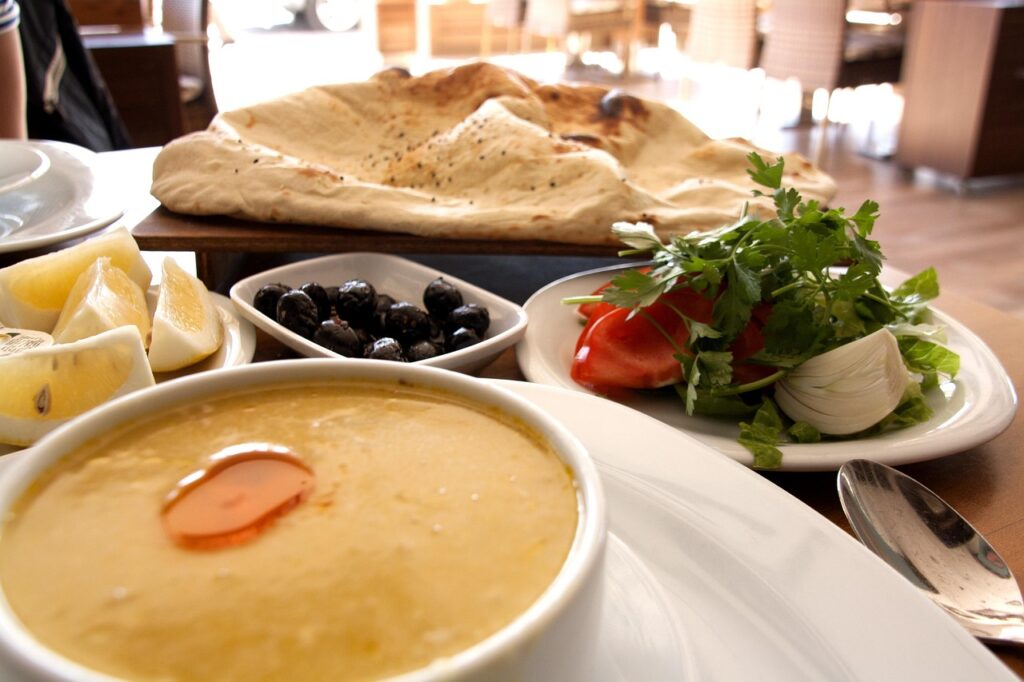
Tea accompanies Turkish food at every meal. The breakfast table is built around the tea pot, and the glasses are refilled throughout the long morning spread.
After lunch and dinner, the tea arrives as the closing ritual, clearing the palate and keeping the conversation going at the table.
The great snack partnerships are tea with borek, tea with simit, and tea with the sweets of the country, from baklava to the puddings of the patisseries.
The rule is simple: tea goes with everything, and no Turkish meal feels complete until the tea has been poured.
Bringing Turkish Tea Home
Turkish tea is easy to bring home. The tea itself, loose leaves from the Black Sea region, is sold everywhere and travels well in sealed packages.
The caydanlik is the essential equipment, and the double pots are available in the bazaars and the kitchen shops of the country, in sizes from personal to family.
The tulip glasses complete the kit, and the small sets of glasses on their trays make excellent souvenirs that will be used for years.
Once home, the ritual travels with you: the strong brew, the careful pour, and the small glasses that turn an ordinary afternoon into a Turkish one.
The caydanlik is as much a fixture of the Turkish workplace as the desk itself. The shops of the bazaars brew tea continuously, and the merchants pour glasses for their customers as part of the bargaining ritual.
The offices of the country run on tea, with a tea maker employed in many workplaces to keep the pot full through the day. The tea break is a national institution.
The tradesmen of the streets drink tea at their stalls, and the delivery of tea from the neighborhood tea house is a familiar sight in every town.
Wherever work happens in Turkey, tea happens with it, and the offer of a glass is the standard currency of the working day.
The Turkish love of tea is often described as a national habit, and the numbers behind it are written in every tea garden and every office pot. The drink accompanies the country from the first light of the morning to the last conversation of the night.
The habit is so deeply woven into daily rhythm that travelers notice it within hours of arrival: the tray of glasses crossing a street, the pot bubbling in a shop doorway, the steam rising from a hundred tables at once.
The tea is strong, the glasses are small, and the refills are endless, which is the secret of the ritual. Each glass is a pause, and a country of pauses is a country that talks.
For the visitor, joining the habit is the quickest way into Turkish life, and the tulip glass becomes a small passport to every conversation.
Frequently asked questions
What is the difference between Turkish tea and Turkish coffee?
Turkish tea is black tea brewed strong and served in tulip glasses, while Turkish coffee is a distinct drink made from finely ground coffee beans, brewed in a cezve and served with the grounds in the cup. Tea is the daily drink of the many; coffee is the special occasion.
How do I order Turkish tea at a tea garden?
Order cay for tea, koyu for a dark, strong glass, and açik for a light one. The waiter will bring the glass on a small tray, and refills follow as long as you stay. The word for a refill is taze, meaning fresh, or simply another cay.
What makes Turkish tea taste different from other black teas?
The combination of the Black Sea terroir, the strong concentrate brewing method, and the tulip glass ritual creates a distinctive, smooth, and robust character. The tea is served without milk, and the strength is adjusted with hot water in the glass.

All Over Information
The All Over Information editorial team researches and writes practical English-language guides to Turkey. Facts are checked against official and local sources before publication, prices are published as dated ranges rather than quotes, and guides are revised when things change. We accept no sponsored posts, paid placements or paid links.
More guides like this

Where to Find the Best Turkish Tea (Cay) in Turkey
You can find a glass of çay almost anywhere in Turkey, from a village bakery to a five-star lobby, but the best…

The History Behind Sutlac (Rice Pudding)
Sutlac is a dessert with a history as long and as layered as its texture.
Where to Find the Best Turkish Pastries in Turkey
Turkish pastries are everywhere, but the best of them are tied to places.

Turkish Flatbread (Bazlama): A Taste of Turkish Culture
In the villages of Turkey, the day is measured by bread. When the griddle heats and the first bazlama puffs into a…

A Guide to Turkish Coffee Culture and Fortune Telling
Turkish coffee is far more than a drink; it is a ceremony, a social ritual, and a window into a culture that…
Ayran Vs. International Variations: What Makes It Turkish
Yogurt drinks exist across the world, from Indian lassi to Iranian doogh, and at first glance they all look alike: a cold,…