If you have never been to Turkey, prepare for a surprise: tea will appear in your life within minutes of arrival, and it will never stop appearing. The waiter, the shopkeeper, the office host, and the taxi driver’s friend will all offer it. This guide explains everything a foreigner needs to know about Turkish tea: what it is, how it is made, how to order it, when to accept it, and how to bring the habit home with you.
The One Thing to Expect: Tea Everywhere
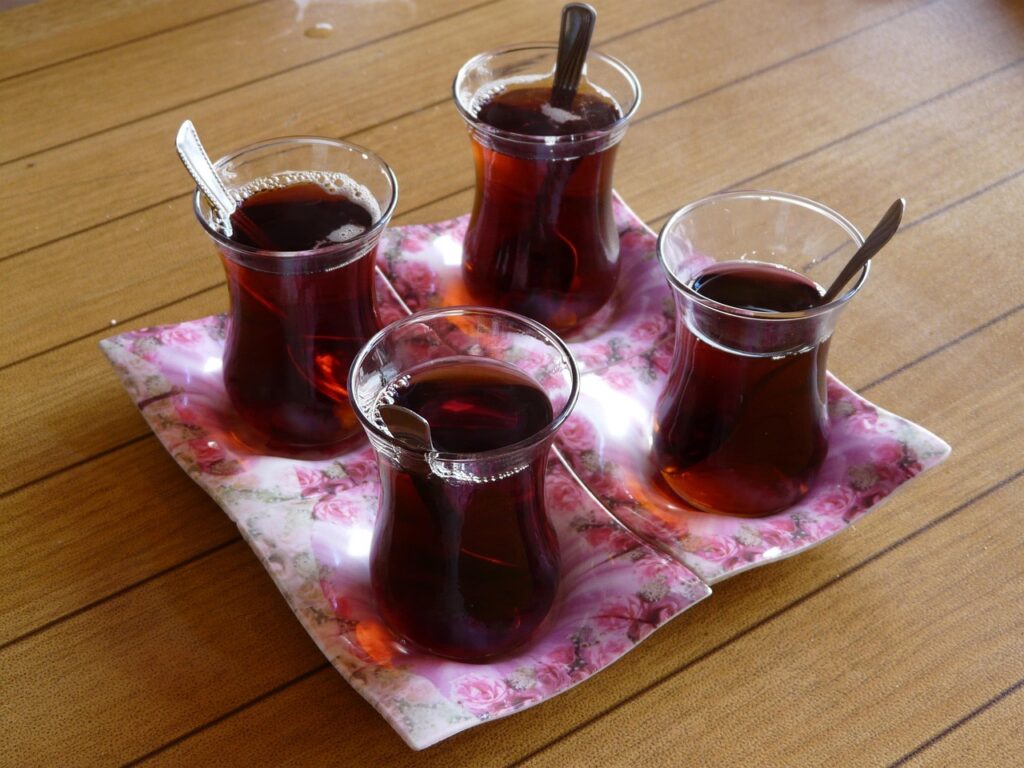
Turkish tea is not a beverage you request; it is a ritual that happens to you. Within moments of sitting down at a restaurant, entering a shop, or visiting a home, a small tulip-shaped glass of tea will arrive, often before you have spoken a full sentence.
The drink crosses every setting. At breakfast it is the table’s constant companion, after meals it appears without asking, and in offices it circulates on trays at regular intervals. There is no meeting, negotiation, or friendly visit in Turkey that is not conducted over tea.
Understand this early and your trip will be smoother. Tea is not a billable extra or a sales tactic, though shopkeepers certainly use it well; it is the universal social greeting. The sooner you accept the tea, the sooner you are inside Turkish daily life.
What the Tea Actually Is
Turkish tea is black tea, grown on the rainy slopes of the Black Sea coast and brewed in a style all its own. The tea is strong, dark, and red in color, and it is served in small glasses rather than large cups, encouraging many glasses over a long conversation.
The tea has no milk and no lemon in the traditional style. It is taken with sugar, usually as small white cubes, and the sweetness is entirely the drinker’s choice. Some take two cubes, some take none, and the debate about the right amount is part of the ritual.
The strength matters as much as the taste. Turks judge a glass of tea first by its color: the deep, clear red of a properly brewed tea is a small work of art. A pale, weak glass is a disappointment, and a good host would never serve one.
The Double Teapot System
The secret of Turkish tea is the double teapot. A large pot of boiling water sits below, and on top of it rests a smaller pot filled with a very strong, concentrated tea brew. The steam from the lower pot keeps the upper pot warm for hours.
When a glass is ordered, the server pours a small amount of the concentrated tea from the upper pot and then fills the glass with boiling water from the lower one. The proportions determine the strength, and the server adjusts them to each drinker’s taste.
The system means that every glass is made to order, even in a busy tea garden. It also means the tea never cools or weakens over a long session; the pots stand ready all day. This is why Turkish tea can flow for hours without losing its quality.
The Glass and the Sugar
The tulip-shaped glass, called “ince belli,” slender-waisted, is the perfect design for hot tea. The narrow waist keeps the drinker’s fingers safe from the heat, and the flared top releases the aroma. It holds only a modest amount, which is exactly the point.
Each glass arrives on its own small saucer with a tiny spoon and sugar cubes. The spoon is used to stir, and the cubes are dropped in one by one. Some Turks add sugar directly to the glass with a small pair of tongs kept on the tray.
The glass is a symbol as much as a vessel. Its shape appears in Turkish design, art, and souvenirs, and the image of the tulip glass with its red tea has become an emblem of the country. Drinking from it is participating in a national icon.
How to Order and Customize Your Tea
Ordering tea in Turkey is simple once you know a few words. The basic order is “bir cay,” one tea, and it will arrive in the classic glass. If you want to control the strength, ask for “acik” for light tea or “demli” for strong tea.
For a larger serving, ask for “buyuk bardak,” a big glass, or “tabakta,” served in a larger glass on a saucer. You may also ask for “sekersiz,” without sugar, if you take none. These few phrases will make you sound wonderfully local.
In a tea garden or cafe, you can also ask for the strength you prefer as the server pours. Most servers will remember your preference after the first glass, and your tea will arrive already adjusted from then on. That small attention is the Turkish way.
Tea Gardens: Where to Find Them
The tea garden, “cay bahcesi,” is the heart of Turkish social life and the best place for a foreigner to experience tea culture. It is an open-air or garden cafe where tea is served from morning until night, often with a view of the sea, a park, or the old town.
The tea garden has no hurry. People sit for hours over a few glasses, playing backgammon, reading, or simply watching the street. The waiter circulates constantly, refilling glasses without being asked, and the bill, settled at the end, is always modest.
Find the tea garden near the waterfront, the old mosque, or the main square, and you will find the town’s soul. Go in the evening, take a glass, and watch the life of the place flow past. This is Turkey at its most natural.

Tea in Shops and Markets
In Turkish commerce, tea is part of the transaction. The moment you show interest in a carpet, a leather jacket, or a ceramic bowl, the shopkeeper will call for tea. The glass appears as if by magic, and the conversation begins.
The tea serves several purposes at once. It is hospitality, since the Turkish tradition demands that a guest be offered refreshment. It is also a pause that lets both sides relax and talk, and it is a subtle bridge between strangers.
For the visitor, the meaning is simple: accepting the tea is accepting the conversation. If you truly do not want to buy, you may still accept the tea, thank the shopkeeper, and leave with goodwill on both sides. The tea is not a contract; it is a courtesy.
When Tea Is Offered, Say Yes
The single best rule for a foreigner in Turkey is this: accept the tea. When a shopkeeper, a host, or a new friend offers tea, say yes with a smile, even if you only take a sip. Refusing hospitality in Turkey can feel like a small rejection to the giver.
You will be offered tea dozens of times a day: at the pharmacy, at the bank, at the travel agency, at the simit shop. The pattern is not aggressive; it is the national reflex of welcome. Accepting the glass is the cheapest and fastest way to earn warmth.
If you genuinely do not want tea, decline gently, with thanks and a hand on the heart. But do decline sparingly. Every glass you accept is a small conversation opened, and the travelers who accept the most tea are the ones who are told the most stories.
Tea and Time: The Pace of Turkey
Turkish tea carries a philosophy: time is not to be rushed. The small glass, the long conversation, and the endless refills are all designed for slowing down. A Turk does not drink tea to save time; the tea is the time.
This pace surprises visitors from fast cultures. A five-minute meeting in Istanbul can become a forty-minute session over two glasses of tea, and the extra half hour is not wasted; it is the relationship being built. The deal is made after the tea, not despite it.
Embrace the pace on your trip. When the tea arrives, put the phone down, let the conversation wander, and watch the rhythm of the place. You will find that the Turkish relationship with time is one of the most restful things about the country.
Taking the Tea Habit Home
Bringing Turkish tea culture home is easy, and it is one of the best souvenirs of any trip. Start with the essentials: a packet of Black Sea tea, a small double teapot, and a set of tulip glasses. The entire kit fits in a suitcase and changes every future tea you drink.
At home, brew the Turkish way: strong concentrate in the top pot, water below, and a glass that shows the color. Serve it with sugar cubes and a small saucer, and let the glasses be small so the conversation can be long.
Better still, take the habit itself. The Turkish tea ritual is really a habit of hospitality: offering a drink to every guest, refilling before being asked, and letting conversation set the clock. That habit is portable, and it will make you a more generous host anywhere in the world.
Frequently asked questions
Is it rude to refuse tea in Turkey?
Refusing tea is acceptable if done gently, with thanks and a smile, but it can feel like declining hospitality to the giver. The Turkish custom is to offer tea to every guest, and accepting is the warmest response. If you do not want a full glass, a small sip still honors the gesture.
What does “acik” and “demli” mean?
These are the two key words for tea strength in Turkey. “Acik” means light tea, with more water and less concentrate, while “demli” means strong, dark tea with more concentrate. You can also ask for “tavsan kani,” rabbit’s blood, the deepest red brew. Using these words will impress any Turkish server.
Can I get tea with milk in Turkey?
Traditional Turkish tea is always served without milk, and asking for it will usually produce a puzzled smile. The tea is brewed strong and taken with sugar cubes, or plain. If you are used to milky tea, try the Turkish way for the duration of your trip; the clear, red brew is the authentic experience.

All Over Information
The All Over Information editorial team researches and writes practical English-language guides to Turkey. Facts are checked against official and local sources before publication, prices are published as dated ranges rather than quotes, and guides are revised when things change. We accept no sponsored posts, paid placements or paid links.
More guides like this

Turkish Miniature Painting: A Historical Art Form
Turkish miniature painting is a window into centuries of history, painted small enough to hold in your hands.

Turkish Etiquette: Dos and Don’ts for Visitors
Turkish culture runs on warmth, respect, and hospitality, and the rules visitors worry about are simpler than they fear.

Studying at a Turkish University as an International Student
Turkey has become one of the world's most popular destinations for international students, and the reasons are easy to see.

Turkish Wedding Traditions Explained
A Turkish wedding is a festival that can last for days, drawing in families, neighbors, and whole neighborhoods.

Traditional Turkish Weaving and Textile Arts
Textiles are the oldest and most personal art of the Turkish people.

Understanding Turkish Superstitions
Turkish superstitions are everywhere once you know what to look for: the blue glass beads hanging in taxis and shops, the salt…