Deep in the Aydin countryside, far from the Aegean coast’s biggest tour routes, lies Aphrodisias, a city that worshipped Aphrodite and spent centuries carving her beauty into marble. Named for the goddess of love and devoted to her cult, it became one of the Roman world’s most important centers of sculpture. Its stadium survives almost intact, its sanctuary was celebrated across the ancient world, and its UNESCO World Heritage listing since 2017 confirms what archaeologists have long argued. If your Turkey itinerary already includes Ephesus and Pamukkale, Aphrodisias deserves a place beside them. Here is why it should be on your bucket list.
A City Built for a Goddess
Aphrodisias was no ordinary Roman provincial town. The site was settled long before the Romans arrived, but it rose to fame when the local cult of Aphrodite attracted imperial attention. A great temple was built around the goddess’s sanctuary, and pilgrims came from across Anatolia to pay their respects. The city’s name declared its identity, and its people proudly called themselves Aphrodisians.
The bond with the goddess shaped everything, from the city’s coinage to its civic monuments. When Augustus won the civil wars that created the Roman Empire, Aphrodisias had backed the winning side, and the emperor rewarded the city with special status and tax privileges. That favor turned a regional sanctuary town into a wealthy, confident city that could afford marble on a scale most contemporaries could not.
Walking the site today, you feel that confidence in every column and relief. Few ancient cities are so clearly the product of one guiding idea: to honor the goddess with the finest art the Mediterranean could produce.
The Stadium That Time Forgot
The stadium is the monument that makes people gasp. It is widely considered the best-preserved stadium of the ancient world, its rows of stone seating surviving almost in full around an oval running track. Early visitors could stand on the starting line and still see the grooves worn by athletes’ feet thousands of years ago.
The stadium was built for athletic contests, the Greek-style games that continued under Roman rule. At one end, later modifications added high walls and gates, converting part of the arena for gladiatorial combat and animal hunts. The city adapted the old Greek building to new Roman tastes without losing the original structure.
You can walk the entire circuit, climb the seating, and look down at the track where runners once competed. You simply stand where thousands of spectators once stood, and the silence is extraordinary.
The Sebasteion
The Sebasteion was Aphrodisias’s grandest statement of loyalty to Rome. Built in the first century AD, it was a monumental complex honoring the Julio-Claudian emperors, whose family name, Sebasteion, gave the building its title. A long, colonnaded processional way led to a temple of the imperial cult, lined on both sides with three-story facades.
What makes the Sebasteion unique is its sculpture. Hundreds of relief panels once decorated the facades, showing emperors, gods, and mythological scenes. The panels that survive include portraits of Augustus and other rulers, allegories of conquered peoples, and scenes from Greek myth, all carved with the technical brilliance that made Aphrodisian sculptors famous.
The reliefs were discovered collapsed and broken, then painstakingly restored. Many now hang in the site museum, arranged so you can trace the political message of each panel.
The Tetrapylon
The Tetrapylon is the monument that defines Aphrodisias in photographs. This four-sided gateway, literally a structure of four groups of columns, once marked the ceremonial entrance to the sanctuary of Aphrodite. Pilgrims passed beneath it on their way to the temple, and its ornate, curving pediments made it one of the most elaborate gateways in the Roman world.
The gateway collapsed in antiquity, probably during one of the earthquakes that repeatedly shook the region. For centuries it lay as a jumble of carved marble, until a major restoration project in the 1990s re-erected it using the original blocks. Today it stands again as it did nearly two thousand years ago, its columns framing the sacred way behind it.
The Tetrapylon is also one of Turkey’s great photo opportunities. Early in the morning, or late in the afternoon when the marble glows warm, it looks exactly as it must have when the city was alive.

The Sculpture Workshops
Aphrodisias’s most lasting gift to the ancient world was its sculptors. The city sat beside excellent marble quarries, and its workshops produced statues, portrait busts, and sarcophagi that were shipped across the empire. Sculptors from Aphrodisias signed works found as far away as Italy and North Africa, and the city’s distinctive style became a recognizable brand.
The Aphrodisian style combined technical perfection with a soft, polished finish. Carvers rendered drapery in deep, flowing folds, hair in tight, precise curls, and faces with a calm, idealized serenity. Portrait busts from the workshops are among the finest survivals of Roman sculpture anywhere, capturing real individuals with astonishing vividness.
The tradition lasted for centuries, and it explains why so much sculpture survives on the site: when the city declined, its statues were buried rather than burned, preserving the workshops’ output for modern archaeologists.
The Museum on Site
The Aphrodisias Museum, built beside the ancient site, holds the city’s greatest treasures and explains its story better than most Turkish archaeological museums. Its galleries are organized around the site’s major monuments, with rooms devoted to the Sebasteion reliefs, the portrait busts, the mythological friezes, and the elaborate sarcophagi that made the city famous.
The museum’s masterpiece is the hall of Sebasteion reliefs, where panels showing emperors and gods are mounted at eye level so you can study their detail up close. Another gallery displays the remarkable portrait gallery of the city’s leading citizens, each face a vivid study of a real person from the Roman imperial period.
Allow at least an hour in the museum, ideally before you walk the site, so the monuments make sense when you reach them.

Fewer Crowds Than the Big Names
Part of Aphrodisias’s charm is simply being able to experience it. Ephesus, Hierapolis, and Pamukkale receive enormous visitor numbers, especially in summer, and the experience can feel like moving with a herd. Aphrodisias, by contrast, receives a fraction of that traffic, and tour groups are rare.
The practical result is that you can photograph the stadium without strangers in the frame, walk the colonnaded streets in quiet, and sit in the theatre with the whole space to yourself. For travelers who value atmosphere over box-ticking, this solitude is the strongest reason to come.
The site is also more relaxed to explore. There are fewer vendors, fewer queues, and fewer logistical hassles. You are free to move at your own pace, linger where you like, and let the place speak to you. That is a rare luxury in the ancient sites of Turkey, and it is worth traveling for.
UNESCO Status and Ongoing Care
Aphrodisias was inscribed on the UNESCO World Heritage List in 2017, recognition of its outstanding universal value and its exceptional state of preservation. The listing also brought renewed commitment to conservation, with ongoing excavation, restoration, and site management under Turkish archaeologists and their international partners.
The city’s modern excavation story is remarkable. From the 1960s, the American archaeologist Kenan Erim led decades of work that uncovered the Sebasteion, the Tetrapylon, the stadium, and thousands of sculptures, many of which had lain hidden for over a millennium. Erim loved the site so much that he asked to be buried there, and his grave now rests beside the city he devoted his life to revealing.
Since his death, the work has continued under successive teams, and the site is maintained to a very high standard. You are visiting not just ruins, but one of the best-managed archaeological parks in the Mediterranean.
The Setting in the Aydin Countryside
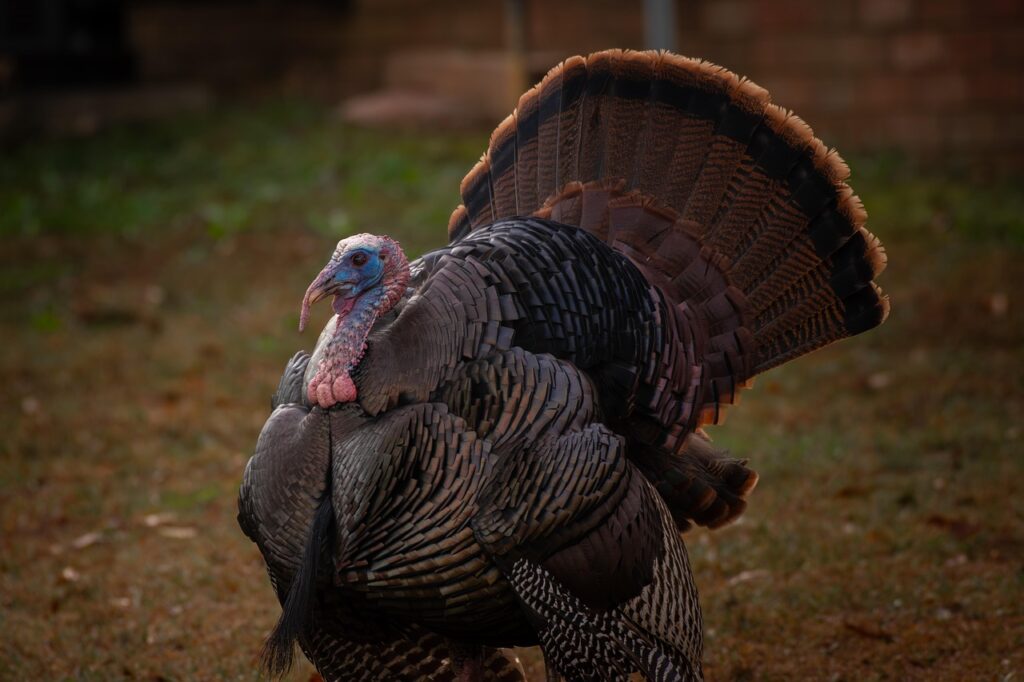
Aphrodisias sits in the valley of the Dandalas River, surrounded by the agricultural plains of Aydin province. The landscape is not dramatic mountains or sea coast, but rolling fields of cotton, wheat, and olive groves, with village life carrying on around the site. This rural setting adds to the sense of discovery.
The nearest settlement, the village of Geyre, sits beside the ancient city, and the modern road winds past farms and orchards before arriving at the entrance.
The isolation that once protected the city now protects your visit. There is no sprawling resort development, no strip of souvenir shops, just a clean, quiet archaeological park in the middle of rural Turkey. For many visitors, the peace of the setting is as memorable as the monuments themselves.
Easy to Combine with a Broader Turkey Trip
Aphrodisias fits naturally into a southwestern Turkey itinerary. It lies roughly two and a half to three hours from the Kusadasi and Ephesus area, and about the same from Pamukkale and Denizli, making it a realistic day trip from either base. Many travelers combine it with a night in the area, breaking the journey between the Aegean coast and the interior.
The site can be visited as a long day trip from the coast, but a better plan is to spend the preceding night nearby so you can arrive at opening time, when the light is soft and the site is empty. From Aphrodisias, the onward road continues to Pamukkale, which makes a logical two-day circuit that takes in the marble city and the travertine terraces together.
Whether you are building a two-week tour or just passing through, Aphrodisias rewards the slight detour.
Frequently asked questions
What is Aphrodisias best known for?
Aphrodisias is best known as the ancient city of Aphrodite and as one of the most important sculpture-producing centers of the Roman world. Its finest surviving monuments are the Sebasteion, a grand complex honoring the Roman emperors, the Tetrapylon gateway, and the remarkably well-preserved stadium. Its on-site museum displays a superb collection of statues, reliefs, and sarcophagi.
How much time do you need at Aphrodisias?
Most visitors spend three to four hours, which covers the museum, the stadium, the Sebasteion, the Tetrapylon, and a slow walk through the rest of the site. Enthusiasts can easily spend a full day, especially with the extra monuments outside the main enclosure. Arriving at opening time in good weather and taking breaks in the shade makes the visit more comfortable.
Is Aphrodisias worth visiting if you have limited time?
Yes, if you can spare one day. Aphrodisias is compact enough to be seen thoroughly in a single visit, and its combination of an intact stadium, spectacular reliefs, a fine museum, and peaceful crowds makes it one of the most rewarding ancient sites in Turkey. If you must choose between it and a more famous site, consider that it offers comparable quality with a fraction of the crowds.

All Over Information
The All Over Information editorial team researches and writes practical English-language guides to Turkey. Facts are checked against official and local sources before publication, prices are published as dated ranges rather than quotes, and guides are revised when things change. We accept no sponsored posts, paid placements or paid links.
More guides like this
The Architecture of Kaymakli Underground City Explained
Kaymakli Underground City is one of the great works of ancient engineering, a city carved into the living rock of Cappadocia and…

Why Ani Ruins Should Be on Your Turkey Bucket List
Ani is the ghost city that haunts every traveller who visits.

The Architecture of Perge Explained
Perge is one of the best places in Turkey to learn how an ancient city actually worked, because its architecture is not…
Aspendos Through the Centuries
Aspendos is one of the oldest cities of the Turkish coast, and its story spans more than two and a half thousand…

Sardis Through the Centuries
Sardis is one of the oldest and most storied cities of Anatolia, and for a few centuries in the first millennium BC…

Best Time to Visit Xanthos to Avoid Crowds
Xanthos is one of the quietest of Turkey's great ancient sites, a hilltop of ruins on the Lycian coast that most travelers…