Karakoy sits at the gateway of Istanbul’s transport — the tram across the bridge, the ferries at the piers, the Tünel up the hill — and the quarter’s connections are among the best in the city. The airport routes reach the quarter in about an hour; the old city is one tram stop across the Golden Horn; the Asian side is a ferry ride away; and the buses and the walking cover the quarter itself. This guide covers the airports and the transport of Karakoy — the routes, the cards, the times, and the tricks of the quarter’s network.
Istanbul Airport (IST): The Metro and the Tram
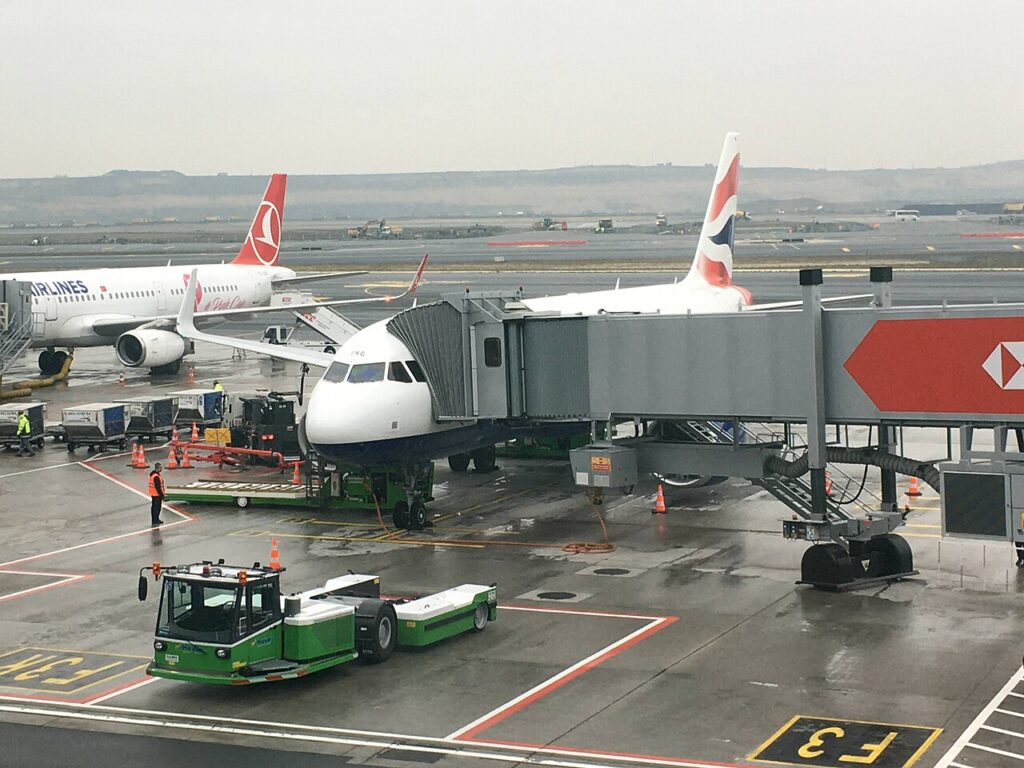
The main airport of the city connects to Karakoy by public transport in about an hour. The route: the M11 metro from the airport to Kağıthane, the M7 onward, and the connection to the tram T1, which runs through the quarter — the Karaköy stop at the foot of the hill. The route is one card and three legs, and the last leg — the tram across the Golden Horn, the old city’s skyline in the window — is the arrival worth having. The alternatives: the HAVAIST shuttle runs from the airport to the city’s main hubs, with the tram or a short taxi covering the last stretch; the taxi is the door-to-door option, forty minutes to an hour depending on the traffic, at the city’s higher prices. For most travelers, the metro and the tram are the answer — cheap, fast, and immune to the traffic.
Sabiha Gökçen (SAW): The Crossing Route
The city’s second airport, on the Asian side, connects to Karakoy by public transport in about an hour and a half. The route: the M4 metro from the airport to the Asian side’s main transfer, the Marmaray under the Bosphorus to the European side, and the tram or the metro onward to the quarter. The route is longer than the IST route but scenic: the underwater crossing of the Marmaray, the two sides of the city connected in minutes, the old city glimpsed through the tunnel’s brief openings. The alternatives: the HAVAIST shuttle with the tram for the last stretch, or the taxi — an hour or more in the traffic, the city’s most expensive ride. The Sabiha route rewards the traveler with the crossing itself, and the time passes quickly.

The Tram T1: The Quarter’s Spine
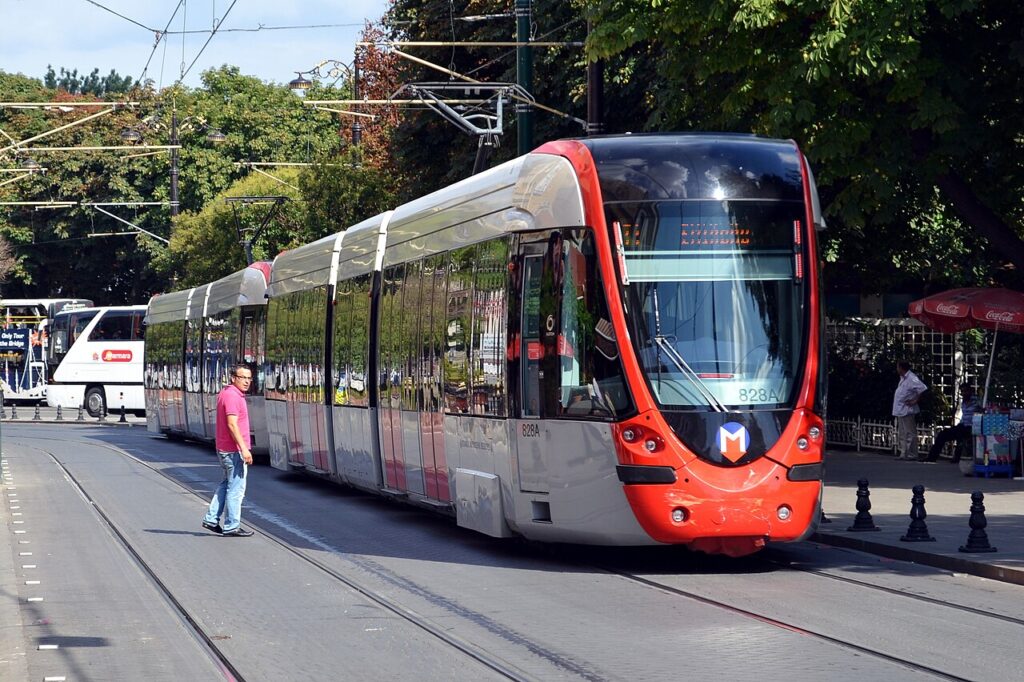
The tram T1 is the spine of Karakoy’s transport — the line that runs through the quarter and connects it to the city. The Karaköy stop sits at the foot of the hill, and the T1 runs across the Galata Bridge to the old city: Eminönü, Sultanahmet, the Grand Bazaar, the monuments of the peninsula — all of them one tram ride from the quarter. The line is the city’s classic connection: the two sides of the Golden Horn joined by the bridge and the tram, the old city and the gateway quarter on a single line. The traveler in Karakoy learns the T1 first: the stop at the foot of the street, the crossing of the bridge, the old city minutes away — and the whole city opens from the spine.
The Ferries: The Water Routes
The ferries are the quarter’s water transport, and the piers are at the quarter’s feet. The crossing to the Asian side — the ferry from the quarter’s piers to Kadıköy or Üsküdar — is the classic route: the twenty minutes across the strait, the gulls and the spray, the skyline of both shores. The Bosphorus cruise — the ferry that runs the length of the strait — is the scenic route: the palaces and the fortresses, the villages and the bridges, the hour and a half of the city’s great view. And the Golden Horn ferries run the inlet to the old quarters at its head. The ferries run frequently through the day, the Istanbulkart covers them at the price of a metro ride, and the piers are a walk from the tram. For the traveler who wants the city’s views and its water life, the ferries are the essential transport — and the crossing is the ride.

The Tünel: The Funicular to the Hill
The Tünel — the world’s oldest surviving subterranean funicular — connects the quarter to the hill above in ninety seconds. The funicular climbs from the quarter’s station to the avenue of Istiklal, the little cars carrying the travelers up the slope since 1875. The ride is the quarter’s most charming shortcut: the descent from the modern avenue to the port, the two worlds of the hill joined by the century-old line. The Tünel is the transport to Galata and Beyoğlu — the tower, the avenue, the cultural life of the hill — and it is the ride that the travelers remember. The Istanbulkart covers it, and the ninety seconds are the city’s most delightful commute.
The Buses and the Walking: The Local Routes
The buses and the walking cover the quarter’s local routes. The buses thread the avenues and the connections beyond — the routes to the quarters of the European side, the night buses for the late hours. And the walking is the quarter’s real transport: the waterfront, the side streets, and the hill are the quarter’s scale, and the walker covers it all — from the bridge to the tower, from the piers to the galleries. The pavements are wide along the waterfront and the main streets; the hill’s lanes are steeper and cobbled; and the quarter’s compact scale makes the walking the natural transport. The Istanbulkart covers the buses; the walking is free — and the quarter rewards the walker with the views and the life of the port.
The Practical Notes
A few things make the transport smooth. The Istanbulkart is the key: buy it at any station, load it once, and it covers the trams, the ferries, the metros, and the buses — the whole city on one card, at a fraction of the taxi price. The tram and the ferry are the spine: the T1 through the quarter and the ferries at the piers cover the city’s two sides — learn them and the quarter is yours. The traffic is the enemy: the taxis sit in the city’s traffic while the rail runs beneath it — for the speed and the price, the tram and the metro win. The rush hours are real: the tram and the ferries fill at the peaks of the working day — travel outside them when the schedule allows. And the crossings are the sights: the bridge and the ferries are the city’s great views — take the water when the time allows, and the transport becomes the destination.
The Night Connections: The Late Hours
The transport of the quarter runs late, and the night connections cover the late arrivals and the long evenings. The tram runs past midnight on the main lines — the T1 carrying the late travelers through the quarter — with the night reduced and the weekend service extended. The night buses take over after the tram closes: the routes of the city’s night network, running through the quarter and the old city. The ferries run to the late hours on the main lines, with the reduced frequency of the night schedule. And the taxis are at the ranks of the main points at all hours, the standard city taxis of the well-lit waterfront. The practical notes: know the last tram, carry the card for the night buses, and keep the taxi app ready for the late hours — the quarter’s transport covers the night, and the traveler who knows the last connections moves through it easily.
The Takeaway
The transport of Karakoy is the gateway city’s network at its best — the airport routes under the hour and a half, the T1 spine through the quarter, the ferries at the piers, the Tünel to the hill, and the walking that ties it all together. The Istanbulkart unlocks the whole of it: one card, every mode, the city at the traveler’s feet. Arrive by the metro and the tram from the airport, ride the T1 to the old city, cross by the ferry to the Asian side, take the Tünel to the hill, and walk the quarter’s streets — the gateway quarter of the city, connected to everything, with the transport as smooth as the port’s own life.
Frequently asked questions
How do I get from Istanbul Airport to Karakoy?
The metro and the tram — the M11 to the city, the M7 onward, and the T1 through the quarter — about an hour, cheap and traffic-proof.
How do I get from Sabiha Gökçen?
The M4 to the Asian side, the Marmaray under the Bosphorus, and the tram or the metro onward — about an hour and a half, with the crossing as the scenic highlight.
How do I get from the old city?
The T1 tram — one stop across the Galata Bridge from Eminönü, with the view of the Golden Horn from the crossing.
Is the taxi worth it?
Only for the door-to-door convenience and the heavy luggage — the metro and the tram are faster in the traffic and a fraction of the price.
Do I need a car in Karakoy?
No — the tram, the ferries, the Tünel, and the walking cover the quarter and the city, and the traffic makes the car the slowest option.

All Over Information
The All Over Information editorial team researches and writes practical English-language guides to Turkey. Facts are checked against official and local sources before publication, prices are published as dated ranges rather than quotes, and guides are revised when things change. We accept no sponsored posts, paid placements or paid links.
More guides like this
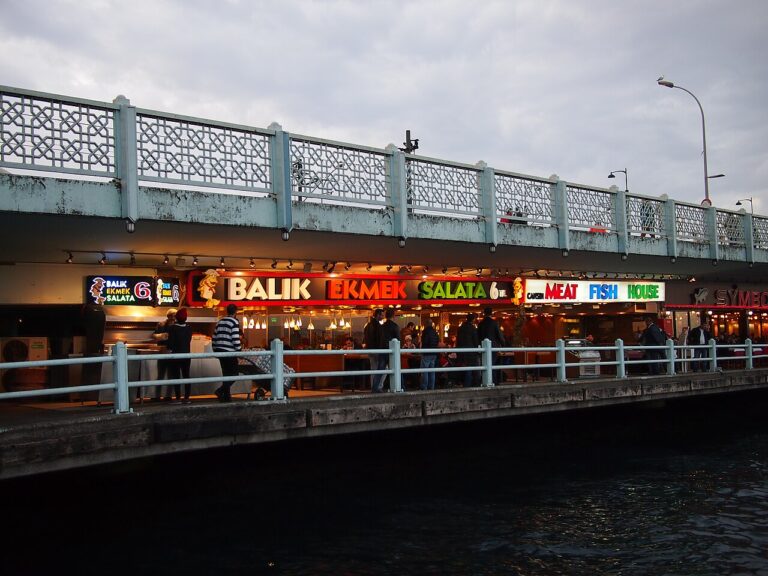
Family-Friendly Activities in Karakoy
Karakoy is a family quarter — safe, easy, and full of the things children actually enjoy.
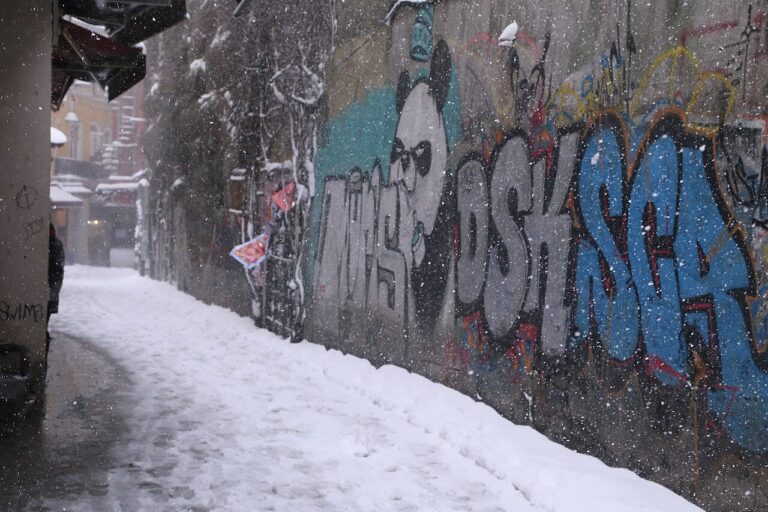
Best Time of Year to Visit Karakoy
Karakoy is a year-round quarter — the ferries and the galleries, the fish tables and the coffee shops run through all four…

Karakoy on a Budget: Money-Saving Travel Tips
Karakoy has a reputation as the fashionable quarter — the coffee shops and the design hotels, the galleries and the trendy restaurants…

Where to Stay in Karakoy: Neighborhood Guide
Karakoy is the fashionable base of modern Istanbul — the waterfront quarter where the ferries cross and the cruise ships dock, where…
Karakoy in Winter: What to Expect
Winter changes Karakoy the way it changes every city, but the quarter takes the season well.

A Solo Traveler’s Guide to Karakoy
Karakoy is one of the best quarters in Istanbul for the solo traveler — safe, easy, and sociable, with the tram and…