Ortakoy is the character base of the Bosphorus — the waterfront village where the boutique rooms fill the old houses, where the mornings begin with the mosque and the bridge at the window, and where the water life of the strait runs past the door. It is not the central base of the tourist hotels — the old city’s monuments are a ride away — but it is the stay with the atmosphere: the postcard of the Bosphorus as the view, the village’s life around the room, the ferry and the shore at the doorstep. This guide walks through the stay in Ortakoy — the micro-neighborhoods of the village, the accommodation, and the trade-offs of each.
The Square and the Waterfront: The Postcard Views
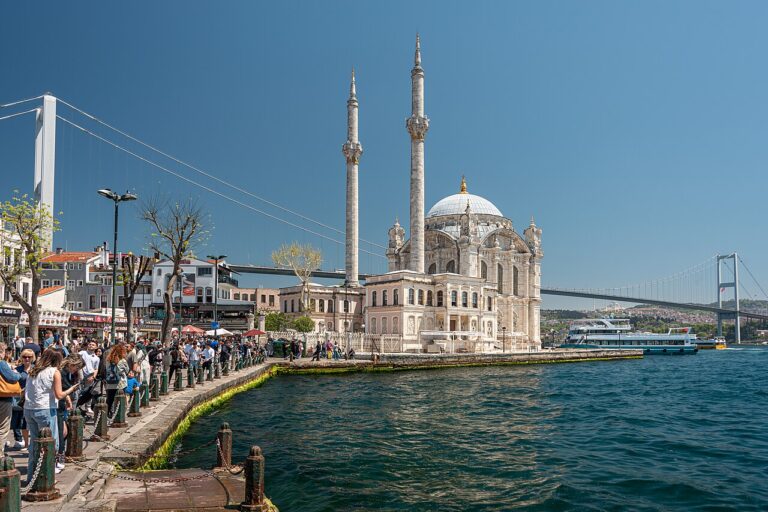
The square and the waterfront — the heart of the village, where the mosque stands and the bridge leaps — hold the postcard stays: the rooms and the hotels with the views of the Bosphorus, the mosque and the bridge in the window. The accommodation is the boutique range of the village: the small hotels and the design rooms of the waterfront, the terraces with the strait’s views, the style of the Bosphorus at the door. The character is the village at its fullest: the square’s life below, the ferries at the piers, the sunset over the bridge from the window. The trade-offs: the price — the waterfront is the village’s top address — and the crowds: the square fills with the day-trippers through the day. For the traveler who wants the postcard at the window, the waterfront is the stay.
Best for: couples, romantics, and anyone who wants the Bosphorus views. Watch out for: the price, and the daytime crowds of the square.

The Back Streets: The Village’s Calm
The streets behind the square — the old houses and the lanes climbing the hill — hold the village’s quieter stays: the boutique rooms and the guesthouses of the back streets, the garden houses and the terraces with the water views beyond the rooftops. The accommodation is the character range: the restored houses of the village, the small hotels of the lanes, the calm of the neighborhood away from the square. The character is the village behind the postcard: the gardens and the doorways, the cafes of the back streets, the life of the residents around the room — with the square a short walk down the hill. The trade-offs: the lanes are steep, and the views are the rooftops rather than the water itself — the postcard is a walk away. For the traveler who wants the village’s calm, the back streets are the stay.
Best for: travelers who want the quiet village, and anyone who prefers the neighborhood to the square. Watch out for: the steep lanes and the walks down to the water.

The Shore Beyond the Square: The Quieter Waterfront
The shore beyond the square — the waterfront extending north and south of the village’s heart — holds the quieter water stays: the rooms and the hotels along the promenade, the views of the strait without the crowds of the square. The accommodation is the calm range of the village: the small hotels and the pensions of the shore, the water at the door, the ferries and the fishing boats in the frame. The character is the Bosphorus at its most peaceful: the promenade walks, the sunsets over the water, the village’s life at the edges. The trade-offs: the village’s center is a walk along the shore, and the rooms are the simpler end of the range. For the traveler who wants the water without the crowds, the shore beyond the square is the stay.
Best for: peace-seekers and anyone who wants the quiet water views. Watch out for: the walks to the square and the simpler rooms.

The Practical Notes
A few things make the choice easier. The village is small: the whole of Ortakoy is the walking, and every stay is within a short walk of the square and the water — the micro-neighborhood choice is the view and the calm, not the distance. The days bring the crowds: the square fills with the day-trippers through the day — the back streets and the shore beyond offer the calm, and the evenings return the village to itself. The nights are quiet: the village winds down after the day-trippers leave, and the evenings belong to the residents — the quiet is part of the character. The old city is a ride away: the monuments are a bus or a ferry ride from the village — Ortakoy is the base for the water life, not for the history. And the character is the point: the stay in Ortakoy is the stay with the Bosphorus — the mosque and the bridge, the water and the village — and the traveler who comes for it gets the postcard as the view.

Where to Stay for Nightlife
Ortaköy is not a late-night party district, but it sits close enough to the city’s nightlife that you can have the best of both worlds. If you want to roll out of your hotel and into a bar, choose one of the boutique hotels near the square, where the evening crowd gathers at the waterside cafés until late. The hum of the square is gentle — music, laughter, the occasional ferry horn — and most rooms have double glazing, so light sleepers are not punished for the location.
If you prefer a quieter night and a short ride to the action, stay in the hills above the village. The walk down to the square takes ten minutes, and a taxi to Beşiktaş or Kabataş takes less than five. From there the whole of European Istanbul opens up: the clubs of Beşiktaş, the bars of Karaköy, and the late ferries across the Bosphorus.
The one thing to plan around is the weekend. Ortaköy is a magnet for Istanbul residents on Saturdays and Sundays, and the square stays busy until late. If your sleep matters more than the view, ask for a room on the back side of the building, away from the waterfront.
Booking Tips and Seasonal Prices
Ortaköy hotels are small and few, so they fill up fast. Book at least a month ahead for summer weekends, and three months ahead if you want a specific room with a Bosphorus view. The view rooms cost roughly twice as much as the street-facing ones, and the difference is worth it for at least one night — waking up to the bridge and the mosque is the memory you will keep.
Prices follow Istanbul’s two high seasons: May to June and September to October, when the weather is perfect and the cruise ships arrive. July and August are hot but still busy, and you can often find last-minute deals in August as families head to the coast. Winter is the bargain season, with rates dropping by thirty to forty percent, though the seaside breeze makes a warm coat essential.
When you book, check whether breakfast is included. Many of the small hotels serve a generous Turkish breakfast on a terrace overlooking the water, and that alone can save you the price of a café breakfast for two. Ask about airport transfers too — the hotels have fixed-rate drivers who will meet you at arrivals, which removes the one genuinely stressful part of an Istanbul trip.
The Takeaway
The stay in Ortakoy is the stay with the Bosphorus — the postcard views of the square and the waterfront, the calm of the back streets, the quiet water of the shore beyond. It is not the central base of the tourist hotels; it is the character base of the village — the mosque and the bridge at the window, the ferries at the door, the sunset over the strait from the terrace. Match the corner to the trip — the views, the calm, or the quiet water — and Ortakoy becomes the stay you remember: the smallest village of the Bosphorus, slept in rather than visited, with the postcard of Istanbul in the frame of the window.
Frequently asked questions
Is Ortakoy a good base for the city?
It is a character base rather than a central one — the water life at the door, with the old city’s monuments a ride away.
Which part of Ortakoy is the best stay?
The square and the waterfront for the postcard views, the back streets for the calm, the shore beyond for the quiet water — the choice is the trip’s mood.
Is Ortakoy safe at night?
Yes — the village is quiet and well-policed at night, and the evenings belong to the residents.
Are the old houses comfortable?
They are atmospheric rather than luxurious — the village’s charm, the steep lanes, the character rooms — and the Bosphorus is the point.
How far is the airport?
Istanbul Airport connects via the metro and the bus in about an hour; Sabiha Gökçen via the metro, the Marmaray, and the bus in about an hour and a half.

All Over Information
The All Over Information editorial team researches and writes practical English-language guides to Turkey. Facts are checked against official and local sources before publication, prices are published as dated ranges rather than quotes, and guides are revised when things change. We accept no sponsored posts, paid placements or paid links.
More guides like this
Ortakoy on a Budget: Money-Saving Travel Tips
Ortakoy is the budget day-trip of the Bosphorus — the village where the famous sights are free and the famous food is…
Photography Spots in Ortakoy You Can’t Miss
Ortakoy is a photographer's dream because the whole village is a set.

History and Culture of Ortakoy
Ortakoy sits on the European shore of the Bosphorus, roughly halfway between the old city and the Black Sea, and its history…

Ortakoy Airport and Transport Guide
Ortakoy sits on the European shore of the Bosphorus, in the heart of Istanbul's most scenic waterfront, and reaching it is easier…

Family-Friendly Activities in Ortakoy
Ortakoy is a family village — safe, small, and full of the things children actually enjoy.

The Best Day Trips from Ortakoy
Ortakoy sits on the Bosphorus at the foot of the first bridge — the ferries at the nearby piers, the buses along…