The simit sandwich is one of Turkey’s simplest and most beloved meals, a sesame-crusted ring of bread split open and filled with cheese, tomatoes, and a few perfect ingredients. It sits at the crossing of two great Turkish food traditions: the simit, the golden street bread that has fed the country for centuries, and the sandwich, the quick meal of the modern city. This guide covers everything you need to know, from the character of the simit itself to the classic fillings, the regional styles, and the right way to eat one in the streets of Turkey.
What Is a Simit Sandwich?
A simit sandwich is a simit, the round sesame bread that vendors carry in towers on their heads, split in half and filled like a sandwich. The fillings are usually simple, white cheese, tomatoes, and perhaps a few olives, but the combination is greater than the sum of its parts.
The dish is known by several names, most commonly simit arası, which means between the simit, and it is sold everywhere from bakery counters to cafe menus. It occupies the same place in Turkish daily life as the croissant does in France or the bagel does in New York.
Its genius is its honesty. The simit brings a crisp, sesame-flecked exterior and a soft, chewy interior, and the fillings are chosen to complement, not overwhelm, that character. A great simit sandwich tastes of toasted sesame, ripe tomato, and good cheese, nothing more and nothing less.
The Simit Itself
Everything begins with the simit, a ring of bread dipped in grape molasses and water and then rolled in sesame seeds before baking. The molasses gives the crust its deep amber color and a whisper of sweetness, while the sesame coating turns golden and fragrant in the oven.
A proper simit has a crisp, glossy shell and a soft, slightly chewy crumb. It is made fresh throughout the day, and the best sandwiches are built from simit that are still warm from the oven, when the crust crackles and the interior is at its most tender.
The simit is eaten at every hour, but it is most closely associated with the morning, when the simit seller is a fixture of every street corner. For the sandwich, a same-day simit is essential, because a stale ring loses the crispness that makes the sandwich work.
The Classic Fillings
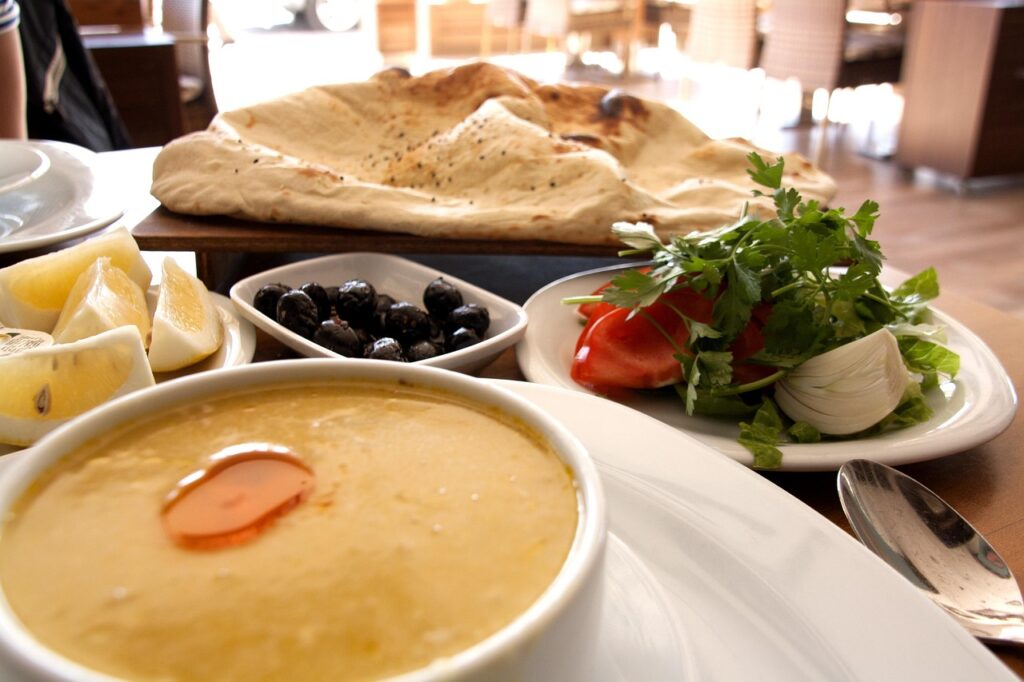
The classic Turkish simit sandwich keeps its filling short and seasonal. White cheese, usually a mild, crumbly feta-style cheese, is the heart of it, providing the creamy, salty base that holds the sandwich together.
Tomatoes and a few leaves of fresh parsley are the other essentials. The tomato must be ripe and juicy, sliced thickly enough to taste but thinly enough to stay in place, and the parsley adds a bright, grassy note that lifts the whole sandwich.
Some versions add cucumber, a few black olives, or a slice of fried sausage for a heartier meal, but the purists keep it to cheese, tomato, and parsley. The sandwich is meant to be assembled in seconds, eaten in minutes, and remembered for the freshness of its few perfect ingredients.
Building the Perfect Sandwich
Building a simit sandwich is an act of restraint. Split the simit horizontally with a sharp knife, keeping the halves intact, and toast the cut sides briefly if the simit is not fresh, so that the interior gains a little warmth and structure.
Layer the cheese first, covering the surface of the bread, then add the tomato slices and the parsley. Press the halves together gently, so that the juice of the tomato moistens the cheese without soaking the bread, and serve immediately.
The proportions matter. The cheese should dominate, the tomato should be present in every bite, and the parsley should be a whisper rather than a handful. A well-built simit sandwich holds together cleanly and delivers a balanced bite from the first mouthful to the last.

Regional Variations
The simit sandwich changes character as you travel across Turkey. In Istanbul, the classic cheese-and-tomato version rules, served at bakeries and tea gardens throughout the city, and the sandwich is eaten at every hour of the day.
In Izmir, the simit is called gevrek, which means crisp, and the local version is baked with a lighter hand, producing an even crunchier ring. The Izmir sandwich often adds a few slices of salami or sausage alongside the cheese, reflecting the city’s love of hearty breakfasts.
In the southeast, around Gaziantep and beyond, the fillings grow bolder, with spicy sausage, hot pepper paste, and stronger cheeses joining the table. Wherever you travel, the sandwich follows the local taste for breakfast, and the regional variations are part of the pleasure of exploring Turkish food.
Where to Eat Them
The simit sandwich is everywhere, and part of the joy is that you never have to search for it. The simit seller on the corner sells plain rings, but the bakery behind him will usually build you a sandwich on the spot, with the cheese and tomato ready at the counter.
Tea gardens and cafes across Turkey serve simit sandwiches as a light breakfast or an afternoon snack, always accompanied by a glass of Turkish tea. The sandwich and the tea are a pairing as natural as bread and butter.
For the best experience, buy a warm simit from a bakery in the morning, ask for it to be filled, and eat it at a table with a view, whether it is the Bosphorus, a cobbled market street, or a quiet park. The setting is part of the meal.

The Breakfast Table
The simit sandwich is the anchor of the Turkish breakfast table, where it often appears alongside the grand spread of olives, cheeses, jams, and eggs. For those who want a lighter morning, the sandwich alone, with its cheese and tomato, is a complete and satisfying breakfast.
It is also the great traveler’s breakfast. In hotels and guesthouses, the simit sandwich is a familiar sight on breakfast buffets, and on the road, it is the sandwich you buy from a bakery and carry with you, wrapped in paper and eaten on the way.
Because it is assembled from bread, cheese, and tomato, the simit sandwich is naturally vegetarian, and it suits both the early riser and the late sleeper. It is flexible, filling, and always appropriate, which is why it has survived so long in a country of rich breakfast traditions.
Serving and Pairing
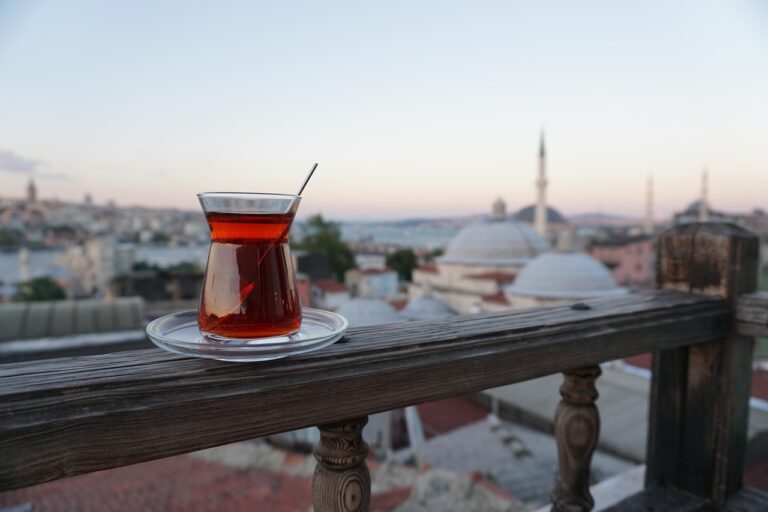
The simit sandwich is almost always served with Turkish tea, poured dark and strong into a tulip-shaped glass. The tannic warmth of the tea cuts through the cheese and the sesame, and the ritual of sipping between bites is part of the pleasure.
For a heartier meal, the sandwich pairs well with a plate of olives, a few slices of cucumber, or a boiled egg, turning a light snack into a proper breakfast. Some people enjoy it with a glass of ayran, the salty yogurt drink, especially on a hot day.
The sandwich is best eaten fresh and warm, within minutes of being assembled. It does not travel well, because the tomato juice softens the bread, so the tradition is to buy it, eat it, and enjoy it on the spot, which is exactly what the street culture encourages.

Street Culture
The simit sandwich belongs to the street, and the street has its own rhythm. In the morning, the simit sellers fan out across the city with their trays, and the sandwich stands and bakeries follow the same tide, serving office workers and students on the move.
The sandwich is democratic in the best sense. It is cheap, portable, and eaten by everyone, from the banker to the builder, and the quality of the simit, not the price, is what separates the good from the great. A warm simit and a well-built sandwich are available to anyone in any neighborhood.
This street culture is also a culture of freshness. The simit is baked throughout the day, the tomatoes are bought daily, and the cheese is cut to order, and all of that freshness lands in your hands, wrapped in paper, for the price of a cup of tea and a few minutes of your time.
Making the Choice
When you order a simit sandwich, the choice is simple: cheese and tomato, with perhaps a few olives or a slice of sausage if you want more. Let the baker build it for you, and do not overcomplicate it, because the sandwich’s virtue is its purity.
Ask for your tomato ripe and your simit warm, and take the first bite quickly, while the sesame still crunches. The sandwich rewards immediacy, and the first bite, with its contrast of crisp crust, soft crumb, salty cheese, and juicy tomato, is the one you will remember.
Whether you eat it on a ferry crossing the Bosphorus, in a tea garden under the plane trees, or standing at a bakery counter, the simit sandwich is a small masterpiece of Turkish food culture, and a perfect introduction to the way the country eats.
Frequently asked questions
What is simit arası?
Simit arası means between the simit, and it is the Turkish name for the simit sandwich, a sesame-covered bread ring split in half and filled like a sandwich. The classic filling is white cheese, tomato, and parsley, with olives, cucumber, or sausage as popular additions. It is sold at bakeries, cafes, and tea gardens across Turkey and is most often eaten for breakfast or as a light snack. The name describes exactly what it is: everything good in Turkey, tucked between two halves of golden simit.
Are simit sandwiches eaten all day?
Yes, though they are most strongly associated with breakfast and the morning hours, when simit is freshest and the simit sellers are out in force. Many people eat a simit sandwich for a quick lunch or an afternoon snack with tea, and cafes serve them throughout the day. The key is freshness, since a morning simit is crisp and warm while an evening one may have lost its edge. Whenever you buy one, ask for a warm simit, and it will be a good meal at any hour.
Can I make a simit sandwich at home?
Absolutely. The sandwich itself is simple: split a simit, fill it with white cheese, ripe tomato, and parsley, and press it together. The challenge is the simit, which needs to be fresh, so the best plan is to buy one from a bakery and build your sandwich the same morning. If you cannot find a simit, a good sesame-covered bread ring makes a reasonable stand-in, though the true crust will be hard to match. The sandwich is quick enough to make every day once you have the bread.

All Over Information
The All Over Information editorial team researches and writes practical English-language guides to Turkey. Facts are checked against official and local sources before publication, prices are published as dated ranges rather than quotes, and guides are revised when things change. We accept no sponsored posts, paid placements or paid links.
More guides like this

Where to Find the Best Pide in Turkey
Pide is baked in every city of Turkey, but the best versions come from the regions where the craft runs deepest.
The History Behind Kazandibi Dessert
Kazandibi is a dessert with a royal story and a humble soul.
Turkish Tea Farms in Rize: A Behind-the-Scenes Look
The tea that fills tulip-shaped glasses across Turkey comes from one place above all: the steep, rainy hills of Rize on the…

Turkey’s Best Food Tours
Turkey is one of the world's great food destinations, and there is no better way to explore its flavors than on a…

Turkey’s Best Cities for Foodies
Turkey is a country of regional cuisines, and each city tells its own culinary story. While the country as a whole is…

The Anatolian Plateau Explained
The Anatolian Plateau is the heart of Turkey, the vast, high tableland that fills the center of the country and shapes its…