Istiklal Avenue is Beyoglu’s billboard, and it is where most visitors spend their time — walking the same kilometer of shops and crowds as everyone else. But the district’s real character lives in what the billboard hides: the residential hillsides, the cobbled lanes behind the arcades, the courtyards and stairways and rooftop terraces that the crowds never find. These are the hidden gems of Beyoglu — the places that make the district feel like a neighborhood instead of a theme park.
The Kamondo Steps
At the edge of Bankalar Caddesi, the old Ottoman banking street in Karaköy, stands one of Istanbul’s most beautiful surprises: the Kamondo Steps, a sweeping double staircase of curved stone built in the 1880s for the wealthy Kamondo family. It looks like something from a Parisian dream, and it appears in photographs and films more often than in guidebooks. Visit in the late afternoon, when the light rakes across the curves, and you will understand why it keeps turning up in Istanbul movies.
Bankalar Caddesi and the Ottoman Banking Quarter
Two minutes from the Kamondo Steps, Bankalar Caddesi runs between Karaköy and the foot of Galata, lined with the neoclassical facades of the Ottoman empire’s great banks — the Ottoman Bank, the Imperial Ottoman Bank building, the marble columns and stone lions of a financial district that once rivaled any in Europe. Most visitors walk straight past it on the way to the ferries. It is a free, silent, and atmospheric half-hour: the architecture, the history, and almost no one else.
Asmalımescit and the Old Tavern Quarter
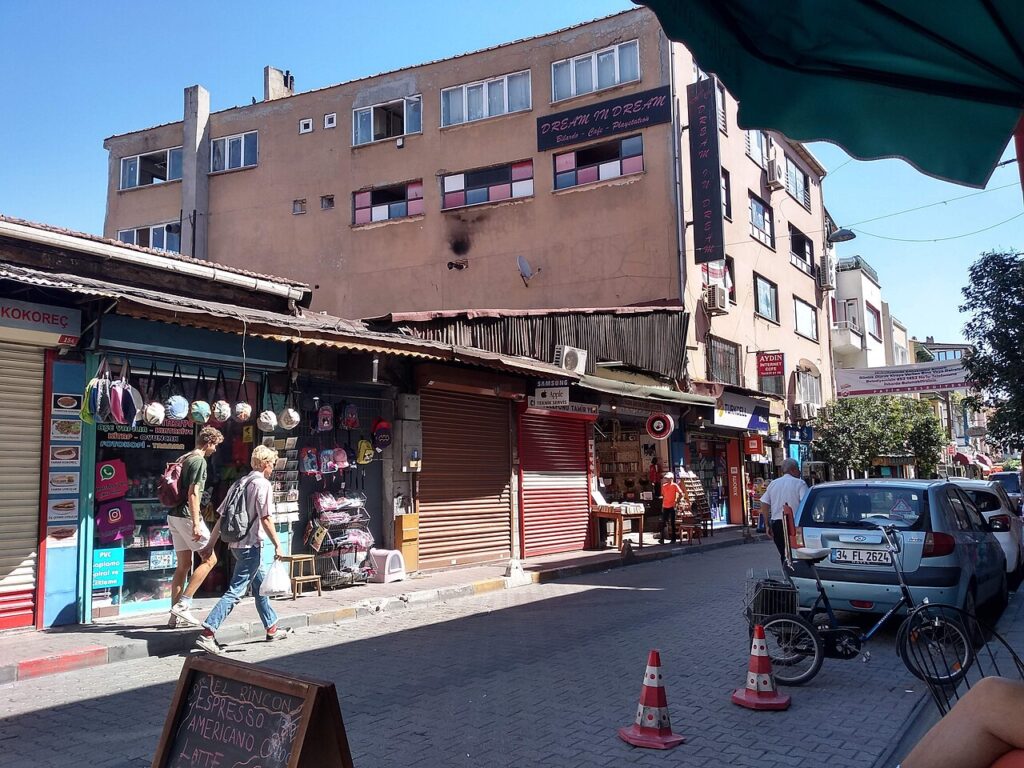
On the hillside above the Tünel end of Istiklal, the lanes of Asmalımescit form the district’s old bohemian quarter — the street of the Ottoman-era taverns, now a quiet daytime maze of music shops, instrument makers, and small cafes. The daytime version is the hidden gem: the violin makers’ workshops, the coffee houses where the neighborhood’s old men play backgammon, the lanes that feel like a village a hundred meters from the avenue. Go in the morning, before the nightlife crowd claims it.
The Ağa Camii Courtyard
Halfway down Istiklal, the Ağa Camii sits behind its fountain, and its courtyard is the district’s accidental meeting point — a pocket of calm in the middle of the crowds, with tea, shade, and the sound of the street reduced to a murmur. It is where the avenue’s shopkeepers take their breaks, and it is the best people-watching seat in Beyoglu that no one books. Sit, order cay, and watch Istanbul pass by.

Cihangir’s Rooftop Streets
Cihangir, the hillside neighborhood above Taksim, is known to the cafes’ regulars and almost unknown to visitors — and its streets are the hidden viewpoint of the district. Walk down the side lanes toward the water and the Bosphorus opens out between the buildings: the strait, the bridges, the Asian shore, all free, all yours. The neighborhood’s terraced cafes and the small parks give the district’s best golden-hour views without a rooftop bill.
The Pera Museum’s Rooftop Cafe
The Pera Museum, in the old Bristol Hotel building, is known for its “Tortoise Trainer” painting and its exhibitions. Its rooftop cafe is the hidden prize: a terrace overlooking the roofs of Pera with the Galata Tower rising behind them, serving good coffee at museum prices. It is the quiet alternative to the rooftop bars — same view, no reservation, no minimum spend, and a fraction of the crowd.

The Galata Tower’s Back Streets
Everyone queues for the tower; almost nobody walks the lanes behind it. The streets climbing the hill on the far side of the tower — Şahkulu and its neighbors — are the old Galata, the Genoese quarter: narrow, steep, and lined with timber and stone houses from three centuries of rebuilding. The cats own the stairs, the vintage shops hide in the basements, and the view back at the tower from the top of the lane is better than the official one.
The Fishermen’s Gallery on the Galata Bridge
The Galata Bridge’s upper deck is one of Istanbul’s great free shows: the fishermen, dozens of them, with their lines and their buckets and their patient conversations. It is not a hidden place, but the tradition of standing among them — watching, listening, smelling the sea — is something most visitors walk past. Stay twenty minutes, watch a catch come in, and you have seen a side of the bridge the cruise boats never show.

Practical Notes for the Hidden Side
- The hidden gems are morning places. Asmalımescit, the banking quarter, and the courtyard are at their best before the crowds claim the district.
- Wear walking shoes. The hidden Beyoglu is uphill and cobbled — the Kamondo Steps, Cihangir, and the tower’s back lanes are all on slopes.
- Carry small bills. The hidden side is small business: tea gardens, workshops, vintage shops.
- Get slightly lost. The district’s charm is in the accidental finds. Keep the tower or the water in sight and you can always navigate home.
A Hidden-Gems Walk: The Route
If the individual spots sound scattered, here is a single half-day route that stitches the best of them together:
- 10 a.m. — Start at the Tünel end. Take the funicular up from Karaköy and turn immediately into Asmalımescit, the old bohemian lanes above the Tünel. The violin makers and the daytime cafes are at their best before the district wakes; give it forty minutes.
- 11 a.m. — Down Istiklal to the Ağa Camii. Walk the avenue’s edge (not the middle) to the Ağa Camii courtyard, and take tea in the calm pocket where the shopkeepers rest. Fifteen minutes of people-watching.
- 11:45 a.m. — The Cihangir descent. Cut up the side streets toward Cihangir and walk downhill through its lanes toward the water — the Bosphorus opens out between the buildings, and the golden-hour-style light comes free in the late morning too.
- 1 p.m. — Lunch in the lanes. Any of the small lokantas or grills on the way down feeds you like a local for pocket money.
- 2 p.m. — Bankalar Caddesi and the Kamondo Steps. Cross to the old banking street, walk the silent facades, and photograph the curved stone staircase that looks transplanted from Paris.
- 3 p.m. — Back up through Galata. The lanes behind the tower, the vintage shops, the view back at the tower from the top of Şahkulu. Finish with coffee in a Galata gallery cafe.
The whole route is about five kilometers, mostly downhill, with tea, lunch, and two coffees built in — the hidden Beyoglu in one unhurried afternoon.
The Takeaway
The hidden gems of Beyoglu are hiding in plain sight — a staircase from another century, a silent street of Ottoman banks, a courtyard of calm in the middle of the avenue, and the hillsides that look out over the whole city. They cost nothing, they take half a day, and they are the difference between visiting Beyoglu and understanding it. Take the detours, and the district will show you the Istanbul the crowds walk past. One more tip: the hidden side is at its best on weekdays, when the lanes belong to the residents rather than the weekend strollers — plan the Kamondo Steps and Asmalımescit for a Tuesday morning and you will have them almost to yourself. That quiet, in a district famous for its crowds, is the hidden gem inside the hidden gems. Seek it out, and you will see the Beyoglu the postcards leave out — the one the residents have always known, and the one worth every step of the detour.
Frequently asked questions
What is the most surprising hidden gem in Beyoglu?
The Kamondo Steps — a curved stone staircase from the 1880s that looks transplanted from Paris, sitting at the edge of the old banking quarter.
Is Beyoglu worth exploring beyond Istiklal?
Absolutely. The avenue is the headline, but Cihangir, Asmalımescit, Bankalar Caddesi, and the lanes behind the tower are where the district’s real character lives.
Are the hidden gems free?
Nearly all of them. The Kamondo Steps, the banking quarter, the courtyard, and the Cihangir viewpoints cost nothing; only the Pera Museum’s cafe asks for a purchase.
How much time do you need for the hidden side?
A half day covers the highlights: the banking quarter and the steps, a morning in Asmalımescit, and a late-afternoon walk through Cihangir.
What is the best hidden viewpoint?
The streets of Cihangir at golden hour — the Bosphorus opens out between the buildings for free, with the tower in the frame.
Can you combine the hidden gems with the main sights?
Easily — the gems sit within the district’s normal geography. The Kamondo Steps and the banking quarter are at the bottom of the Galata walk; the Ağa Camii courtyard is literally on the avenue; and Cihangir is a ten-minute detour above Taksim. Add them as stops on your normal routes rather than separate expeditions.

All Over Information
The All Over Information editorial team researches and writes practical English-language guides to Turkey. Facts are checked against official and local sources before publication, prices are published as dated ranges rather than quotes, and guides are revised when things change. We accept no sponsored posts, paid placements or paid links.
More guides like this

The Best Day Trips from Beyoglu
Beyoglu sits at the northern end of Istanbul's transport web, which makes it one of the best bases in the city for…

Shopping Guide: What to Buy in Beyoglu
Beyoglu is the shop window of modern Istanbul — the district where the old crafts and the new design scene stand side…

Photography Spots in Beyoglu You Can’t Miss
Beyoglu is a photographer's playground that hands you the composition before you ask for it: the medieval tower on its hill, the…

48 Hours in Beyoglu: The Perfect Itinerary
Two days in Beyoglu is enough to see why this district — not the old city, not the Bosphorus palaces, but this…

Where to Stay in Beyoglu: Neighborhood Guide
Beyoglu is where travelers who want the modern Istanbul base themselves — the district of rooftops, restaurants, and nightlife, with the old…

How to Get to Beyoglu from Istanbul
Beyoglu is one of the easiest districts in Istanbul to reach, because the city's transport network is built around it: the M2…