Beyoglu is a four-season district, and each season sells a different version of it. Spring brings the tulips and the terrace season; summer brings the long nights and the rooftop culture; autumn brings the golden light and the calm; winter brings the festive lights and the half-price hotels. There is no bad season — only the question of which Beyoglu you want. This guide lays out each season honestly, with the district’s own calendar of festivals and rhythms, so you can choose the version that fits you.
Spring (April–June): The Terrace Season
Spring is the classic answer for Beyoglu. The temperatures climb into the high teens and the twenties, the days lengthen, and the district’s terraces — the rooftops, the cafes of Cihangir, the waterfront of Karaköy — come into their own. April also brings the city’s tulip festival, and the parks and squares of the district bloom with the color.
The highs. Perfect walking weather, the terrace season, the tulips, and the crowds still moderate before the summer peak.
The lows. April can be damp; the festival weeks bring their own crowds to the parks; prices climb from May.
The verdict. The safe, comfortable, beautiful answer — especially for a first visit.
Summer (July–August): The Long Nights
Summer is Beyoglu at full volume: the avenue shoulder-to-shoulder into the small hours, the rooftops packed, the ferries shuttling, the nightlife at its peak. The heat is real — 30°C plus — but the district is built for the season: the Bosphorus breeze in the evenings, the water at your feet, and a night culture that starts late and runs long.
The highs. The long evenings, the rooftop scene, the nightlife, the ferries and the islands in full swing.
The lows. The heat, the crowds, and the hotel prices — the district’s most expensive season.
The verdict. For the traveler who wants maximum atmosphere and doesn’t mind paying for it, this is the district’s show season.

Autumn (September–November): The Insider’s Pick
Early autumn is the season the district’s regulars quietly prefer. September and October keep the summer warmth — the terraces open, the water still swims — while the crowds and the prices fall. The light turns golden, the avenue becomes walkable again, and November brings the first dramatic skies without the winter cold.
The highs. Warm days, thin crowds, falling prices, and the most photogenic light of the year. October is the sweet spot.
The lows. November turns properly autumnal — rain returns, the terrace season ends.
The verdict. The connoisseur’s choice, and the one most repeat visitors recommend.
Winter (December–February): The Lights and the Bargains
Winter is Beyoglu’s counterintuitive best buy. The crowds thin, the hotel prices drop to half the summer rate, and the district’s indoor life — the museums, the coffeehouses, the meyhanes — comes into its own. From late November, Istiklal strings up its festive lights, and the winter evenings turn the avenue into the closest thing Istanbul has to a European Christmas-market mood.
The highs. Half-price hotels, empty avenues, the festive lights, and the meyhane rooms at their warmest.
The lows. Short days, damp cold, rain on many days, and some rooftop venues closed for the season.
The verdict. For the flexible and the budget-conscious — the district’s most intimate, most affordable season.
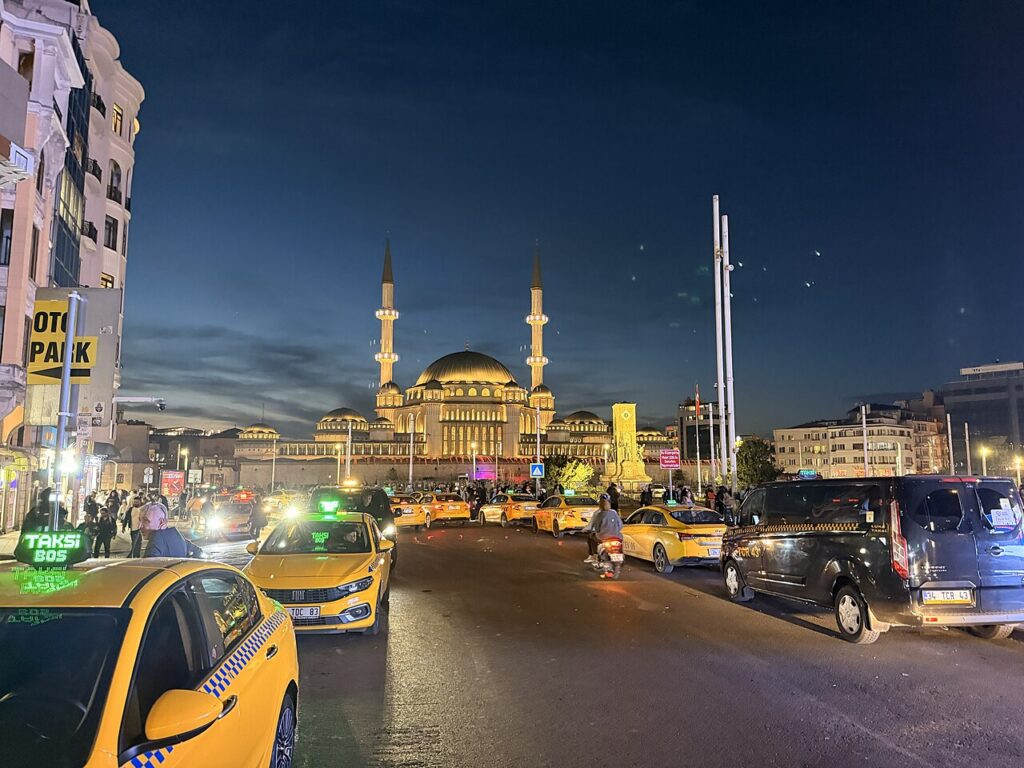
The District’s Own Calendar
Beyoglu’s year runs on its own rhythm:
- April: The tulip festival; the terrace season begins.
- May–June: Prime walking season; the Istanbul Biennial and the art world’s events bring the galleries to life in alternating autumns.
- Ramadan (moving dates): The evening fast-breaking brings street food and crowds to the avenue; the nightlife adjusts its hours.
- July–August: Peak season — book everything ahead.
- September–October: The sweet spot: summer warmth, autumn light, thin crowds.
- Late November–January: The festive lights on the avenue; the winter lull; the New Year’s peak.
- Year-round: The Istanbul Modern, the Pera Museum, and the galleries change exhibitions constantly — check what’s on before you come.
The Month by Month
The season breakdown gives the shape of the year, and the month by month fills in the details. January and February are the deep winter: the low season at its lowest — the cheapest hotels of the year, the empty avenue, the meyhanes and the museums carrying the district’s life. March is the turning: the first mild days, the terrace doors opening, and the crowds still thin. April and May are the classic spring: the tulips, the perfect walking weather, and the avenue at its most beautiful — the recommended first-visit window. June holds the summer’s best balance: long days, warm evenings, and the crowds not yet at the peak. July and August are the high season: the full energy, the full prices, and the rooftop culture at its liveliest. September and October are the connoisseur’s months: the summer warmth with the autumn light and the thinning crowds. November is the quiet transition: the terraces closing, the prices falling, the avenue still pleasant. And December brings the festive lights and the New Year’s crowds — the district’s most theatrical month, and its most expensive nights.
The practical month-by-month advice is simple: the first visit goes in April, May, September, or October; the budget visit in January or February; the atmosphere visit in December; and the nightlife visit in June or July. Every month in Beyoglu has its version, and the district’s own calendar — the biennial, the festivals, the Ramadan nights — adds the events that make any month richer.

The Practical Season Notes
The seasons of Beyoglu come with practical realities that shape the packing and the plans. The summer requires the light clothes, the evening layers for the terrace hours, and the advance bookings — the hotels and the famous tables fill, and the August heat makes the midday indoor culture the sensible plan. The winter requires the warm coat, the waterproof shoes for the rain, and the flexible spirit — the short days and the damp cold are the trade for the half-price hotels and the empty avenue. The spring and the autumn require the light layers and the umbrella — the classic travel seasons with the classic packing, and the months when the district’s walking is at its best. And the festive December requires the reservations — the New Year’s nights and the holiday weekends are the district’s busiest, and the lights are worth the planning.
The other practical note is the events calendar: the art openings and the exhibitions of the galleries run year-round, the biennial years (the autumn of every two years) bring the cultural crowds, and the Ramadan evenings shift the night rhythm of the avenue. The visitor who checks the calendar before booking gets the district at its richest — and the visitor who comes in any season gets a Beyoglu that works, because the district’s rhythms are built to carry every month of the year. In short, the timing is real, but the district’s strengths — the nightlife, the culture, the food — are constants, and the right season is simply the one that matches the traveler’s priorities.
The Decision Guide
Do you hate heat and crowds? Go April–May or September–October — the best weather with the least friction.
Is your budget the priority? Go December–February — half-price hotels, empty avenues, and the festive lights.
Do you want the maximum nightlife? Go June–September — the rooftops, the meyhanes, and the avenue run longest and loudest.
Are you combining with the rest of Turkey? Match the shoulder seasons — May–June and September–October — and the coast, the old city, and Beyoglu all align.

The Takeaway
The best time to visit Beyoglu is the time that fits you: spring for the terraces and the tulips, summer for the long nights and the full show, autumn for the golden light and the calm, winter for the lights and the bargains. Match the season to your priorities — weather, budget, or nightlife — and the district will meet you more than halfway in any of them. The only real mistake is missing it entirely.
Frequently asked questions
What is the best month to visit Beyoglu?
October is the strong all-round answer: summer warmth, autumn light, thin crowds, and reasonable prices. May is the runner-up.
Is Beyoglu worth visiting in winter?
Yes — half-price hotels, the festive avenue lights, and the district’s indoor life (museums, coffeehouses, meyhanes) at its best. The short days are the only real cost.
When is the tulip festival in Istanbul?
Through April, when the parks and squares bloom. Beyoglu’s share is in the parks and the gardens around the district.
When is the Istanbul Biennial?
In alternating autumns (odd-numbered years, most recently); the galleries and the public installations take over the district. Check the current schedule if art is your reason.
What is the liveliest time in Beyoglu?
The summer evenings — the avenue, the rooftops, and the nightlife run at full volume from June to September.

All Over Information
The All Over Information editorial team researches and writes practical English-language guides to Turkey. Facts are checked against official and local sources before publication, prices are published as dated ranges rather than quotes, and guides are revised when things change. We accept no sponsored posts, paid placements or paid links.
More guides like this

Best Local Restaurants in Beyoglu
Beyoglu is the restaurant district of Istanbul — the place where the city goes out to eat, drink, and argue happily over…

Where to Stay in Beyoglu: Neighborhood Guide
Beyoglu is where travelers who want the modern Istanbul base themselves — the district of rooftops, restaurants, and nightlife, with the old…

Beyoglu on a Budget: Money-Saving Travel Tips
Beyoglu has a reputation as the expensive side of Istanbul, and the reputation is half true: the avenue, the rooftops, and the…
Beyoglu in Summer: A Complete Travel Guide
Summer is when Beyoglu shows its full hand.
Top 10 Things to Do in Beyoglu
Beyoglu is the district where Istanbul's modern life happens, and its best experiences are a mix of the iconic and the everyday:…

History and Culture of Beyoglu
Beyoglu is the young side of Istanbul — young by this city's standards, which means only about eight hundred years of history…