Every first visit to Istanbul splits into two neighborhoods: the ancient old city across the water, where the monuments live, and Beyoglu, where the city actually lives. Beyoglu is the modern Istanbul — the pedestrian avenue of Istiklal, the rooftop bars, the art galleries, the meyhane taverns, the street musicians, and the crowds that spill out of the side lanes until past midnight. It is the district that shows you what Istanbul feels like today, and no trip to the city is complete without at least an evening, and preferably a full day, on this side of the Golden Horn.
This guide gives first-timers the lay of the land: the geography, the must-do experiences, the food, and the practical details that make Beyoglu easier than it looks.
What Beyoglu Actually Is
Beyoglu is the district north of the Golden Horn, directly across the water from Sultanahmet. Its backbone is Istiklal Avenue, a pedestrian street about 1.4 kilometers long that runs from Taksim Square in the north down to Tünel in the south, lined with shops, restaurants, cinemas, churches, and the little red nostalgic tram that clanks its way through the crowds.
The district is really three neighborhoods in one: Taksim and its square at the top; the Pera district in the middle, where the historic hotels and the embassies’ old palaces line the boulevards; and Galata, the hilly quarter at the bottom, crowned by the medieval Galata Tower. Around them cluster the side neighborhoods — Cihangir, Asmalımescit, Karaköy at the foot of the hill — each with its own character.
The short version for first-timers: Taksim is the meeting point, Istiklal is the spine, Galata is the charm, and everything else is a happy accident off the main street.

Getting There: The Three Easy Routes
Beyoglu sits across the Galata Bridge from the old city, and three routes get you there without stress:
- The tram and the Tünel. Ride the T1 tram from Sultanahmet to Karaköy, then take the Tünel — the tiny funicular railway from 1875, the second-oldest underground line in the world — up the hill to the bottom of Istiklal. Fun, cheap, and historic.
- The funicular from Kabataş. Take the T1 to Kabataş, then the short funicular up to Taksim Square, and walk down Istiklal from the top.
- The M2 metro. The modern metro serves both Taksim and Şişhane, at the two ends of the district. From anywhere on the metro network, these two stops put you inside Beyoglu.
First-timers should also just walk across the Galata Bridge at least once — the fishermen on the upper deck, the fish restaurants below, and the view back at the old city’s minarets make it the most scenic fifteen minutes in Istanbul.

The Must-Do Experiences
Walk Istiklal end to end. The avenue is a theater: musicians at every corner, street food carts, bookshops, and a cross-section of Istanbul that goes from grandmothers to teenagers in the space of a block. The red tram is the emblem — hop on at the Taksim end and ride it through the crowds for the classic photo and the easy way down.
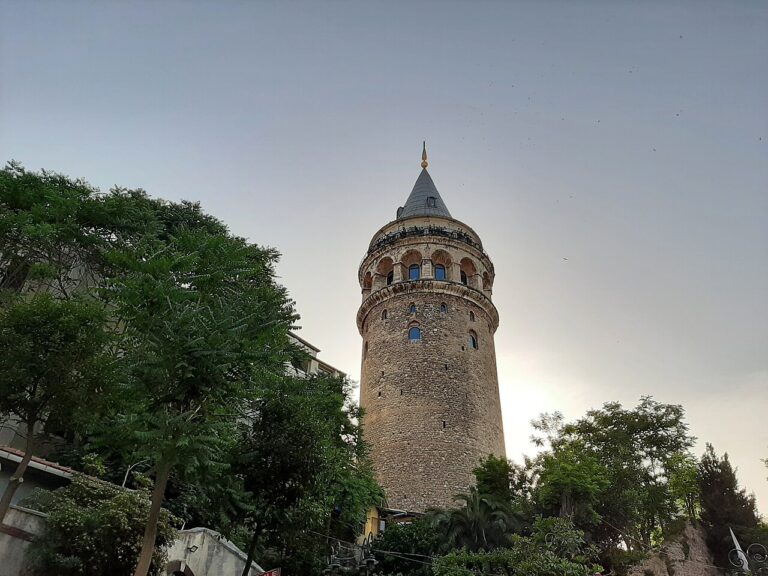
Go up the Galata Tower. The fourteenth-century Genoese tower is the district’s crown, and its viewing gallery gives you the single best panorama of the old city, the Golden Horn, and the Bosphorus. The queue moves; the view is worth it. Go late afternoon and stay for the lights.
Walk from Galata down to Karaköy. The lanes below the tower — steep, cobbled, full of cafes and galleries — are the most atmospheric part of the district. Bankalar Caddesi, the old Ottoman banking street, and the Kamondo Steps, the famous curved stairway, are the hidden highlights.
See the night from a rooftop. Beyoglu’s rooftops — 360 Istanbul, the terraces of the Pera hotels — are the classic Istanbul night experience: the old city glowing across the water, the Bosphorus in the middle, and the city’s whole skyline as the backdrop.

The Food: What First-Timers Should Eat
Beyoglu is the eating-out district, and the first-timer’s shortlist is simple:
- Midye dolma. The stuffed mussels sold from the carts on Istiklal and the surrounding streets are the district’s signature street food — plump mussels filled with spiced rice, a squeeze of lemon, eaten standing up. Cheap, delicious, and very Istanbul.
- Fish under the Galata Bridge. The two levels of restaurants beneath the bridge’s lower deck have fed the waterfront since the bridge’s early days. The menu is fish and meze, the view is the old city, and the balık ekmek — the fish sandwich — is the budget version.
- A meyhane dinner. The taverns of Nevizade Street and Çiçek Pasajı are the true Beyoglu dining ritual: raki, meze, fish, and the slow, loud, joyful dinner that defines the district. Go with an appetite and no plans for the rest of the evening.
- Kumpir. The loaded baked potatoes — cheese, olives, corn, sausage, whatever you like — are sold in the cafes around the avenues. A full meal in a jacket potato.

Where to Start: A First-Timer’s Day
A balanced first day in Beyoglu:
- 10 a.m. Arrive at Taksim, walk down Istiklal slowly, stopping for the churches, the bookshops, and a coffee in the Pera district.
- 1 p.m. Lunch on the Galata Bridge or in Karaköy.
- 2:30 p.m. The Galata Tower, then wander the lanes down to Karaköy’s waterfront and galleries.
- 6 p.m. Back up to the Pera district for a rooftop drink at sunset.
- 8 p.m. A meyhane dinner on Nevizade, then an evening walk back up the avenue while the street is at its liveliest.
Practical Notes for First-Timers
- The crowds are real, and they’re the point. Istiklal at 8 p.m. is shoulder-to-shoulder; go with the flow and you’ll enjoy it.
- Watch the pickpockets in the crush. The avenue and the tram are the classic spots. Keep valuables zipped.
- The little red tram is slow and crowded. It’s for the experience, not the transport; walk if you’re in a hurry.
- Prices are higher than the old city. Beyoglu is where Istanbul spends its money; the restaurants near Taksim Square charge accordingly. Walk two streets off the avenue and the prices drop.
- Cash for the street food, cards for the restaurants. The midye and simit carts are cash-only; everything sit-down takes cards.
- The trams and funiculars run until around midnight. The night buses and the metro cover the early hours.
The Neighborhoods Within: A Quick Orientation
Beyoglu is not one street — it is a family of neighborhoods that share the hill, and knowing which is which makes the district readable in an afternoon:
- Pera is the middle district around the boulevards — the historic hotels, the embassies’ old palaces, the museums. This is the classic hotel-and-culture heart.
- Taksim is the northern square and its commerce — the meeting point, the transport hub, and the top of the avenue.
- Galata is the old Genoese quarter at the bottom of the hill, crowned by the tower — the cobbled, atmospheric part.
- Karaköy is the waterfront below Galata — the ferries, the galleries, the modern cafes and restaurants.
- Cihangir is the hillside above Taksim — the bohemian quarter of cafes, views, and residential calm.
For the first-timer, the map matters less than three principles: the avenue is the spine and everything else is off it; the good food, the character, and the calmer streets are two lanes away from the crowds; and the water is always downhill. Keep those in your head, and Beyoglu stops being confusing and becomes the easiest district in Istanbul to explore.
The Takeaway
Beyoglu is the other half of Istanbul — the half that isn’t a museum. It is loud, crowded, modern, and alive in a way the old city never is, and that is precisely the point of it. Walk the avenue, ride the little tram, climb the tower, eat the mussels, and let a meyhane evening run long. First-timers who only see Sultanahmet have seen half of Istanbul; Beyoglu is the half that makes you want to come back.
Frequently asked questions
How do you get from Sultanahmet to Beyoglu?
Tram to Karaköy, then the Tünel funicular up the hill — about twenty minutes total. Or tram to Kabataş and the funicular to Taksim.
Is Beyoglu safe at night?
The main streets and the avenue are busy and safe until late. The side lanes are fine with normal city sense. It is the liveliest, most policed nightlife district in Istanbul.
How long do you need in Beyoglu?
A day and an evening covers the avenue, the tower, and a proper meyhane dinner. Most visitors find the evening is the part they keep.
Is Beyoglu expensive?
The avenue and the rooftop bars are, by Istanbul standards. The side streets, the street food, and the galleries are affordable — Beyoglu rewards the curious over the spenders.
What is the best view in Beyoglu?
The top of the Galata Tower for the panorama, and the rooftops of the Pera hotels for the night skyline. The Galata Bridge gives the best free view of the old city.

All Over Information
The All Over Information editorial team researches and writes practical English-language guides to Turkey. Facts are checked against official and local sources before publication, prices are published as dated ranges rather than quotes, and guides are revised when things change. We accept no sponsored posts, paid placements or paid links.
More guides like this

How to Get to Beyoglu from Istanbul
Beyoglu is one of the easiest districts in Istanbul to reach, because the city's transport network is built around it: the M2…

Nightlife Guide to Beyoglu
" Where the old city rolls up its streets by ten, Beyoglu is just getting started: the avenue crowded until the small…
Top 10 Things to Do in Beyoglu
Beyoglu is the district where Istanbul's modern life happens, and its best experiences are a mix of the iconic and the everyday:…

The Best Day Trips from Beyoglu
Beyoglu sits at the northern end of Istanbul's transport web, which makes it one of the best bases in the city for…

A Foodie’s Guide to Beyoglu
For a serious eater, Beyoglu is the center of the gastronomic universe in Istanbul — the district where the city's old traditions…

Best Time of Year to Visit Beyoglu
Beyoglu is a four-season district, and each season sells a different version of it.